
Aesthetic [es-thet-ik]: a particular individual’s set of ideas about style and taste, along with its expression. (dictionary.com)
I’ve been thinking about aesthetics a lot these first few months of the new year.
I started the new year by creating a bookstagram page (follow me! FOLLOW MEEEEEEEE!), a fun thing I was doing on my Instagram story blooming into a page of its own. Since getting called out on my less-than-stellar book photos
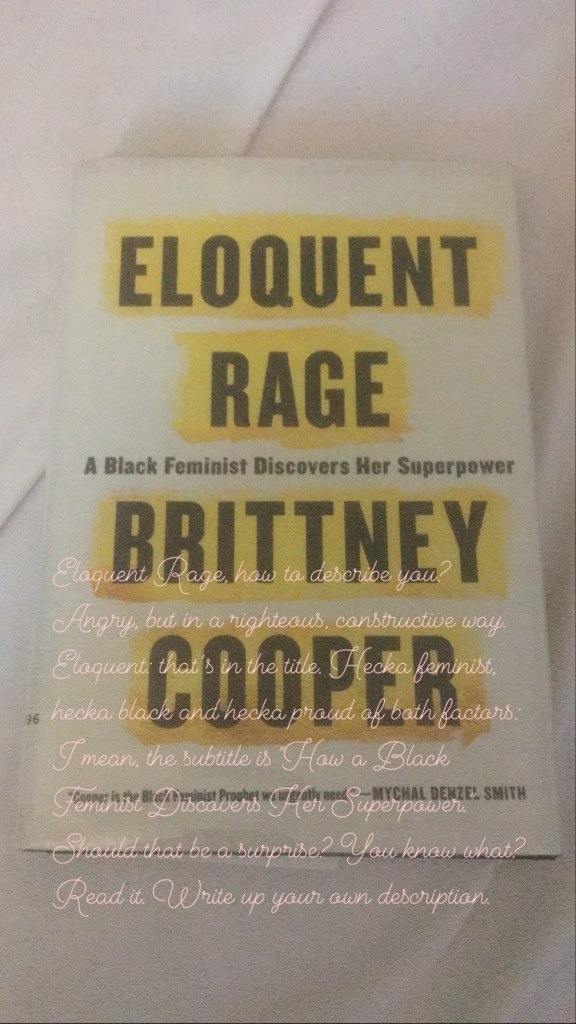
I’ve been making an effort to improve my photo-taking game. My aesthetic, if you will.
I’ve also been binging this fantastic YouTube channel called SunnyV2, where the narrator goes through the history of social media stars who’ve fallen from grace. The most recent episode I watched was about Dan Bilzerian, a poker player and businessman whose aesthetic of a self-made millionaire has been steadily whittled away by accusations of cooking his books, the revelation that his wealth came from his father’s chicanery on Wall Street, and that what money he has made was used to pay for the women on his arm and rent the mansion he claimed to have bought.
I’ve seen a trend on TikTok where people show the aesthetics of their Instagram profiles. (The two examples I could find were from friends’ pages, so in the interest of not doxxing their TikToks, you’ll have to take my word for it.) And speaking of TikTok, I started following @becauseimmissy_, who makes parody videos of the aesthetics of different types of social media posts.
Because I’m obsessed with going down rabbit holes, I read up on “dark academia,” an aesthetic originating from Tumblr focused around higher education, classical art and literature, and Gothic architecture. (Think Donna Tartt’s The Secret History or shows like The Queen’s Gambit and Sherlock for examples of the vibe.)
Lastly, I’ve been thinking about aesthetics because my personal life is on pause.
Yep. This is another ‘Noah has a problem, so you’re getting a blog post out of it’ post. (Is there another kind? [There’s ‘The Lost Stories of Spain,’ ‘TIWTTA,’ and possibly more book content. The answer is yes.])
Life is at a standstill, dear reader. I’m a recent grad on the recent grad grind for a job. (Which is probably exacerbated by me being a recent English grad on the recent grad grind for a job. Stupid STEM-to-career pipeline.)
During times in your life like this, it’s easy for your mind to wander in the wrong directions:
Envy: everyone else has a job! She went to Costa Rica–how? With what money?
Resentment: isn’t there a labor shortage? As in, companies need people? So hire me, you feet-dragging jerks!
Regret: I should have gone into education. I should have gone to community college. I should have done another internship. I should have gone to that career fair.
Catastrophizing: if I don’t find a job soon, then I’ll be screwed when I need to start paying back loans. I’ll get behind on those, and then my credit will be garbage. I won’t be able to get a credit card or buy a house or rent an apartment or buy a car. And then my parents will get sick of me and throw me out, and I’ll freeze to death living out of a cardboard box!
(If you couldn’t tell, catastrophizing is something I struggle with.)
I don’t talk much about my writing life, but one way of reaching your goals is to have many accountability partners. I’ve been drafting a novel, with varying levels of seriousness about finishing and trying to publish it, since summer 2017. This past New Year’s, I drew a line in the sand: by my birthday, September 7 of 2022, the story would be finished. Publishing is a different matter, but I want to ring in my 23rd birthday by having a completed manuscript. The last two weeks or so have been a lot of imposter syndrome and not a whole lot of writing. It’s also been a lot of fantasizing, thinking of what I would want out of writing for a living.
The mobility that lifestyle affords. Being able to meet other authors, writers of my generation and writers I grew up reading. Getting to tour schools and meet kids who have enjoyed my work. Getting to speak at conferences. Being recognized when I walk into bookstores, or even better, happening on someone reading a book of mine and hearing them gush about it and then being able to make their day by telling them they’re talking to the author.
Now did you notice anything missing from my writer fantasies? Go back and read that last paragraph. Read it once. Read it twice. One more time.
Writing.
That’s what I’ve started using to jar myself out of my slump. When I’m focused on the aesthetic of being a writer rather than doing what makes me a writer by trade, writing regularly, my writing life shrivels and dies.
So many problems show up because people want to look like something rather than embodying that thing. Let’s go back to Dan Bilzerian.
Even after his scandals, Dan is still successful. A peek at his Instagram reveals the man is sitting on a comfy 32.7 million followers. But his image has been compromised. Why? Because the public now knows Dan’s concern lies with looking like a self-made millionaire playboy rather than being a self-made millionaire playboy.
What about dark academia? The trend has received criticism for glorifying the unhealthy aspects of academic life like caffeine dependency and poor sleep habits and demographical elitism in excluding academic work from nonwhite countries or media with diverse leads from the “canon” of dark academia. In other words, dark academia is more concerned with looking intellectual than being intellectual.
People have known for a long time that social media is about making your life look a certain way rather than presenting it as it is. You don’t need to look at celebrities like Dan Bilzerian to see examples of that. Think about the kinds of accounts Missy Chanpaibool parodies. How many times have you watched a couple post mushy tributes to each other, only to delete them all when the toxicity behind the happy façade reaches critical mass? Multi-level marketing schemes make their dollars off of making people look like self-made businesspeople, even if the nature of the scheme means only about 1% of investors will make money from it. Scandal after scandal has happened because a public figure or an institution has acted one way in public and another in private.
And speaking of institutions, governments pursue aesthetics all the time, often at the expense of the people they govern. Financial crises like the Great Depression and the 2008 recession happened after the US government let the banks (in the case of 2008) and the rich (in the case of the Great Depression) off their leashes, letting them foolishly overspend with margins or derivatives. The economy slowly rotted from the inside out while the US had the aesthetic of a strong economy. To get more recent, COVID-19 ravages the US because in the first months of the pandemic, the previous administration was more focused on looking like coronavirus was under control, by keeping the economy open, refusing to supply COVID tests to keep statistics low, etc. We’ve spent the last two years feeling the consequences of those decisions.
(Does anyone else suddenly feel like re-watching Avatar: The Last Airbender? Specifically the Ba Sing Se episodes? …I’m the only one? OK.)
Conclusion?
A few posts ago, I stole a quote from my friend Haley: “The grass isn’t greener on the other side, it’s green where you water it.” Aesthetics are like fake grass, put down to make something look better than it is and impossible to one-up. So don’t bother. Aspire for a better life while being happy with the life you have now, dear reader.
…
…
And if you know anyone who’s hiring, pass my name along, willya?
 The Keene Chronicles
I’ve been enjoying SunnyV2’s videos too! And that’s such a great distinction you made between being aesthetic and actually working on your craft. Keep on keeping on, Noah!
LikeLike
Sunny makes great videos. You keep on keeping on, too! And congrats on the new follower.
LikeLiked by 1 person