100+ Books. 3 Sentences.

In 2021, a lot of things happened. But there was only one thing that happened more than a hundred times: I finished a book.

Yep. I read more than a hundred books.

Some people suggested I make a blog post out of this, and I like the idea. However, I’d like this to be a post you can finish in one day, so each book’s summary will be three sentences or less. So here we go.

The Books I Read in 2021

Children of Blood and Bone (Tomi Adeyemi, 2018; Legacies of Orisha #1). Set in a West African-inspired kingdom where different tribes have different powers, but are ruled by an unpowered king with an iron fist. After her village is attacked by the king’s forces, diviner Zélie, her brother Tzain and the king’s rebellious daughter go on the run, hoping to awaken a new generation of diviners. Think Avatar: The Last Airbender written by Afrofuturists.

The Color of Compromise: The Truth About the American Church’s Complicity in Racism (Jemar Tisby, 2019). A black historian combs through American history and maps out how the American church has been complicit in racist institutions. Book #1 of my antiracism reading list. Depressing, but very informative.

The Son of Neptune (Rick Riordan, 2011; The Heroes of Olympus #2). Percy Jackson can only remember his name and a mysterious beautiful girl. Maybe the camp he’s chased into can help him remember the rest of his life. Book #2 in the sequel series to Percy Jackson and the Olympians; I read book #1 in 2020.

The Tommyknockers (Stephen King, 1987). A woman unearths an alien spacecraft. Things go badly from there. The first Stephen King book of the year.

The Comic Book Heroes from the Silver Age to the Present (Gerard Jones and Will Jacobs, 1985). Terribly boring book of comic book history. If you want to learn about comic books, don’t read this.

Have Black Lives Ever Mattered? (Mumia Abu-Jamal, 2017) An incarcerated Black Panther writes about race. Book #2 of my antiracism reading list.

In the Country of Last Things (Paul Auster, 1987). Anna Blume looks for her brother in a city with no government, no laws, and a lot of people doing weird stuff because there’s no government and no law. It’s…not easy. Very creative in its depiction of total anarchy.

The Mark of Athena (Rick Riordan, 2012; The Heroes of Olympus #3). Greek and Roman demigods must work together to keep Gaia, mother of the gods, from waking. It’ll be easier when evil spirits aren’t possessing them and engaging in friendly fire. This was my second time reading this; the first time, I read it in one day.

Alienated America: Why Some Places Thrive While Other Places Collapse (Timothy Carney, 2019). How is it a New York businessman overwhelmingly won rural voting districts? Tim Carney has a possible answer: the breakdown of communities. Political, but not partisan.

Jesus and the Disinherited (Howard Thurman, 1949). White racists have yanked the healing power of Christianity from the hands of marginalized people, so said black theologian Howard Thurman in 1949. He also said how marginalized people can take back that healing power. Retroactively added to the antiracism reading list, so #3.
Caring for Words in a Culture of Lies (Marilyn Chandler McEntyre, 2009). An author, professor and linguist talks about how the beauty of language can be preserved in a world that wants to misuse words every way they can be misused. Originally presented as the 2004 Stone Lectures, a series of speeches that are tradition at Princeton Theological Seminary.

I Know Why the Caged Bird Sings (Maya Angelou, 1969). The first in a series of memoirs, Maya Angelou details her early life in the Deep South, up to the birth of her son. Book #4 on the antiracism reading list. RIP Maya Angelou.

Maya Angelou’s I Know Why the Caged Bird Sings: A Casebook (various authors, 1999). An anthology of academic essays discussing I Know Why the Caged Bird Sings. Inferior to Maya Angelou in every way. I wouldn’t have read it had I not been reading IKWTCBS for a class.

Thinner (Stephen King, writing under his Richard Bachman pen name, 1984). A lawyer is cursed to lose weight by a Gypsy after killing the Gypsy’s daughter in a hit-and-run. Way more intense than it sounds. Stephen King book #2 of the year, and the first Bachman Book of the year.

The Water Dancer (Ta-Nehisi Coates, 2019). Surviving an accident that kills his half-brother awakens a power in slave boy Hiram Walker. He’ll use it to run himself and others to freedom. Good story, beautiful prose, meh ending.

The Last Report on the Miracles at Little No Horse (Louise Erdrich, 2001; Love Medicine series #6). On an Ojibwe reservation in the middle of nowhere, 100-year-old Father Damien tries to have Pauline Puyat, an abrasive Ojibwe Catholic, canonized. Oh, and Father Damien is a woman who has been disguised as a man for over 80 years. Yeah, this book was weird.

Flash Burnout (L.K. Madigan, 2009). Blake’s first relationship is complicated by his friend’s transient mother coming back on the radar. One really stupid plot development late in the game knocked this from a 9/10 to a 5 or a 6. RIP L.K. Madigan.

The House of Hades (Rick Riordan, 2013; The Heroes of Olympus #4). As above, so below: Jason, Leo, Piper, Frank and Hazel race to open the Doors of Death to free Percy and Annabeth from Tartarus, while Percy and Annabeth fight their way through Tartarus to meet their friends at the Doors of Death. Like its predecessor, this is my second read, and it was read in one day the first time. (Middle school Christmases were absolutely lit.)

The Poet X (Elizabeth Acevedo, 2018). Xiomara Batista concentrates everything frustrating in her life–her strict mother, her semi-closeted brother, her Afro-Latina heritage, the Catholicism she’s not sure she believes, and the first boy who’s ever liked her for her–into slam poetry. Won about every award a young adult novel can win.

Motherhood So White: A Memoir of Race, Gender, and Parenting in America (Nefertiti Austin, 2019). Nefertiti Austin found out firsthand the challenges a single black woman faces adopting. Tied with Children of Blood and Bone for the Book Written by the Author with the Coolest Name Award. Book #5 on the antiracism reading list.
Daring Greatly: How the Courage to Be Vulnerable Transforms the Way We Live, Love, Parent, and Lead (Brené Brown, 2012). Shame sucks. No, sucks is too weak a word; shame inhibits us from being our best us. Adapted into the Netflix documentary The Call to Courage, so says Google.

To Drink from the Silver Cup: From Faith Through Exile and Beyond (Anna Redsand, 2016). A missionary kid chronicles her faith journey after being forced out of the Christian Reformed Church because of her lesbianism. That’s the paragraph.

The Eyes of the Dragon (Stephen King, published in limited capacity in 1984, republished in 1987). The kingdom of Delain experiences a succession crisis when King Roland dies under mysterious circumstances and all evidence points to Crown Prince Peter. Flagg, the king’s adviser, totally had nothing to do with it, guys. Stephen King book #3 of the year.

The Blood of Olympus (Rick Riordan, 2014; The Heroes of Olympus #5). Greek-Roman civil war is near; Gaia’s awakening is nearer. There are seven chances to stop both and seven to make them inevitable, and their names are Percy, Annabeth, Jason, Piper, Leo, Frank and Hazel. After finishing this, I decided a reread of Riordan’s other series were in order.

Soul Keeping: Caring for the Most Important Part of You (John Ortberg, 2014). The importance of soul care, as imparted to John Ortberg by the late Dallas Willard as he dies of cancer. If I had a nickel for every book I read this year where the premise was ‘dying man imparts life wisdom to the author,’ I’d have two nickels, which is not a lot, but it is weird that it happened twice.

Woman at Point Zero (Nawal El Saadawi, 1975 [Saadawi’s native Arabic], 1984 [English]). Nawal El Saadawi makes a novel out of the final interview of Firdaus, a prostitute on death row for murdering her pimp. Perhaps the most depressing book I have ever read. Not for the faint of heart, both because it’s unbelievably depressing and its brutally realistic depictions of rape and genital mutilation.

Educated (Tara Westover, 2018). Tara Westover was raised in the sticks of Idaho by survivalist Mormon parents counting down to the end of the world. How did a girl who’d never stepped in a school building and didn’t know the Holocaust happened end up getting her Ph.D. from Cambridge? You’ll have to read to find out.

The Freak Observer (Blythe Woolston, 2010). In less than a year, the genetic disease that made Loa Sollilja’s sister Asta biologically 8 but physically 1 killed her and her best friend was killed in a car accident. Whether or not Loa and her family will survive their tragedies seems as random as the concepts Loa learns in her physics class. This one was a’ight.

Cajas de Carton: Relatos de la vida peregrina de uno niño campesino (Francisco Jiménez, 1997). Panchito’s family crosses the border into California in the hopes of a better life. It ain’t easy. Translated as The Circuit: Stories from the Life of a Migrant Child.

Tuesdays with Morrie: An Old Man, a Young Man, and Life’s Greatest Lesson (Mitch Albom, 1997). Morrie Schwartz, Mitch Albom’s professor at Brandeis University, muses on life as he slowly succumbs to ALS. Really beautiful. My other ‘dying man imparts wisdom on author’ nickel.
The Fire Next Time (James Baldwin, 1963). The book that convinced me Ta-Nehisi Coates is James Baldwin reincarnated. Seriously, read James Baldwin and Ta-Nehisi Coates back-to-back; it’s creepy how similar the two are. Book #6 on the antiracism reading list.

Hello Lighthouse (Sophie Blackall, 2018). A lighthouse keeper lives his life. It’s a children’s book, it doesn’t need to be complex. Gifted to a friend as the first book in her classroom library.

Academ’s Fury (Jim Butcher, 2005; Codex Alera #2). Book 2 of a series I’d started a few years prior and never finished. Set in a world where everyone has powers except the main character. (No, not My Hero Academia; if anything, MHA stole from Codex Alera.)

The Dark Half (Stephen King, 1989). Thad Beaumont’s writing career has been long overshadowed by the trashy crime novels of his pen name George Stark, so he “kills” the guy. It’s not that easy, because it’s a Stephen King story, so of course it’s not. Stephen King book #4 of the year.

The Red Pyramid (Rick Riordan, 2010; The Kane Chronicles #1). An explosion at a museum plunges siblings Sadie and Carter Kane into the world of Egyptian mythology. In the same world as, but set separately from, Percy Jackson and The Heroes of Olympus. Netflix plans on making a film trilogy out of the book trilogy; Netflix, do better than your predecessors.

Where Things Come Back (John Corey Whaley, 2011). In a matter of weeks, Cullen Witter’s life goes topsy-turvy: his cousin dies, his brother disappears, and the town goes stir-crazy over the sighting of an extinct bird. Half a world away, Benton Sage is rapidly realizing missionary life isn’t for him. The two young men’s life will cross over in the strangest of ways.

Deadline (Randy Alcorn, 1999; Ollie Chandler Series #1). Trumpianity trash written 17 years before Trump was in the White House. There is a plot; I will not summarize it. There are two sequels; I will not read them.

Blindspot: Hidden Biases of Good People (Anthony Greenwald and Mahzarin Banaji, 2013). People have biases. They have a lot of biases, most of which they don’t realize they hold. Book #7 on the antiracism reading list.

Cursor’s Fury (Jim Butcher, 2006; Codex Alera #3). War is brewing on two fronts: through an invasion by the Canim, Alera’s caninoid neighbors, and through a coup attempt on the part of High Lord Kalare. Tavi, the only person in Alera with no furies, joins the Legion in an attempt to stop the former. I love the fantasy genre, but man, it’s hard to summarize in three sentences.

Breaking the Marriage Idol: Reconstructing Our Cultural and Spiritual Norms (Kutter Callaway, 2018). Marriage has been put on a pedestal in the modern church. It’s important, but many important Biblical figures were single, so… Kutter Callaway offers potential solutions; you’ll have to read to figure out, and I’m definitely saying that because they’re that good and not because I don’t remember them.

Seraphina (Rachel Hartman, 2012; Seraphina #1). In the kingdom of Goredd, uneasy peace exists between humans and dragons…until the Crown Prince is murdered in a draconian manner, on the 40th anniversary of the human-dragon peace treaty, no less. Seraphina, a half-human half-dragon girl, looks for the culprit. Maybe the people who inhabit the garden she’s made in her mind can help.

Four Past Midnight (Stephen King, 1990). King’s second novella collection, consisting of four stories: “The Langoliers” (adapted into the terrible miniseries of the same name), “Secret Window, Secret Garden” (adapted into the film Secret Window), “The Library Policeman” and “The Sun Dog.” Stephen King book #5 of the year and collection #1 of the year. Trigger warning for “The Library Policeman:” it’s easily the most intense thing King has ever written; you’ll see why.

The Throne of Fire (Rick Riordan, 2011; The Kane Chronicles #2). Sadie and Carter Kane have a new mission: prevent Apophis, the Lord of Chaos, from escaping his prison. They need Ra, the Sun God and the one being Apophis fears, but he hasn’t been seen in centuries. Oh, and did I mention they have a few days to do this and are being pursued by the House of Life, the supreme authority of Egyptian magic?

The Purity Principle: God’s Safeguards for Life’s Dangerous Trails (Randy Alcorn, 2003). The book that reminded me Randy Alcorn is a terrible fiction writer, not a terrible writer. Short, sweet and to the point. One of several books that inspired “I’m Really, Really Single.”

How Does It Feel to be a Problem?: Being Young and Arab in America (Moustafa Bayoumi, 2008). At the turn of the 20th century, WEB DuBois asked black America, “How does it feel to be a problem?” In 2008, Moustafa Bayoumi asked the same question to seven young Arab-Americans. Book #8 on the antiracism reading list.

Captain’s Fury (Jim Butcher, 2007; Codex Alera #4). Tavi, still in disguise, has risen in the ranks of the legion. However, a bloodthirsty Senator and the continued Kalare rebellion threaten to blow his cover. You guys really need to read these books; three sentences don’t do them justice.

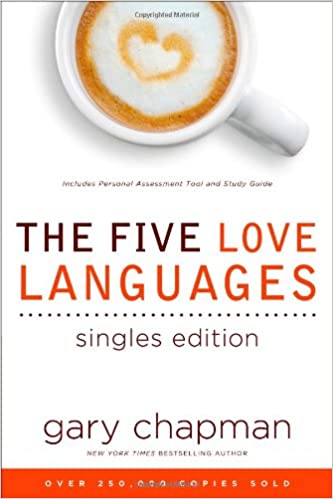
The Five Love Languages: Singles Edition: The Secret that Will Revolutionize Your Relationships (Gary Chapman, 2004). The five love languages, geared towards single people. That’s the paragraph. Actually, that’s not the paragraph: Gary Chapman’s gotta chill with the colons.

Shadow Scale (Rachel Hartman, 2015; Seraphina #2). War between humans and dragons is brewing. Seraphina can stop it, but only if she can gather all the residents of her mind garden and stave off a threat from her past. Huge step down from the original.

Needful Things (Stephen King, 1991). The store shows up in Castle Rock with no notice: Needful Things. The owner, Leland Gaunt, hands the customer what their heart desires for a low, low price: a little prank. Stephen King book #6 and one of his most underrated.

Charm & Strange (Stephanie Kuehn, 2013). Andrew Winston “Win” Winters has been shipped off to a remote boarding school after a family tragedy, and he doesn’t talk about it with anyone. A curious new student and Win’s roommate unwittingly stumble over Win’s dark secrets at an all-night party. In terms of how I received this book, it was a slow burn: I was ambivalent upon initially finishing it, but concluded after a few weeks that it was a really solid mystery/thriller with a fantastic twist.
The Serpent’s Shadow (Rick Riordan, 2012; The Kane Chronicles #3). So the Kane siblings have found Ra; unfortunately, Ra’s senile, and Apophis is days away from rising. There is one way to imprison Apophis without Ra’s help, but it could kill them if it doesn’t work and there’s no do-overs. So, typical week for a Rick Riordan protagonist.

Modern Manhood: Conversations About the Complicated World of Being a Good Man Today (Cleo Stiller, 2019). The feminist movement, as well as scandals like #MeToo and Trump’s Access Hollywood tape, have put manhood in question. Is there a way men can be men without someone having to suffer for it? Cleo Stiller tries to answer that question.

The Crossover (Kwame Alexander, 2014; The Crossover Series #1). A novel in verse that follows basketball prodigy Josh Bell as he navigates basketball, middle school drama, his father’s failing health, and new developments in his twin brother’s life. This and The Poet X convinced me that novels in verse are hot fire. There are talks of an adaptation on Disney+; that plus the Percy Jackson series might make me break my embargo on Disney+.

A Black Women’s History of the United States (Daina Ramey Berry and Kali Nicole Gross, 2020; Revisioning History series #5). American history as told through the black female lens. This is Captain Obvious speaking. Book #9 on the antiracism reading list.

Princeps’ Fury (Jim Butcher, 2008; Codex Alera #5). While the different Aleran factions have been butting heads, an invasive species called the Vord has been steadily taking over the land of Canim. Tavi leads an Aleran-Canim fleet to Canish shores in the hopes of taking back Canim. There’s one more book in the series, so you can guess how well that goes.

Tales of Conjure and the Color Line (Charles Waddell Chesnutt, 1899). An anthology of ten “conjure tales,” voodoo-infused legends. I thought they were entertaining.

Batman: Whatever Happened to the Caped Crusader? (Neil Gaiman, 2009) In a bizarre, contradictory version of Gotham City, the crimefighting lifestyle has finally caught up to Bruce Wayne. Each funeral attendee who speaks tells a different way that the Batman died. Clearly, things aren’t as they seem.

Green River Killer: A True Detective Story (Jeff Jensen, 2011). A fictionalized account of Jeff Jensen’s father, who was the lead investigator in the Green River Killer case. The book that convinced me to pick true crime back up after leaving it behind in high school.

Gerald’s Game (Stephen King, 1992). Kinky sex gone horribly wrong leaves Jesse Burlingame handcuffed to a bed in the middle of nowhere. With no one to help her, Jesse is forced to confront her worst memories. Stephen King book #7, one of his most visceral novels, adapted into a Netflix film of the same name, and the first in the “abused woman trilogy,” a loose trilogy in which battered women are the protagonists.

Gabi, a Girl in Pieces (Isabel Quintero, 2014). Senior year’s a crazy time for anyone, but it’s especially crazy for Gabi Hernandez: her best friend is pregnant, her other best friend has been thrown out after coming out, her strict mother is relentless, and her father’s drug addiction is out of control. It will all work out…won’t it? This reminded me a lot of The Poet X; I liked The Poet X.
The Sword of Summer (Rick Riordan, 2015; Magnus Chase and the Gods of Asgard #1). Magnus Chase has been homeless ever since wolves burst into his apartment and murdered his mother two years ago. Being roped into his mad uncle’s quest for a special sword will land Magnus square in the middle of the Norse pantheon. Set in the same universe as, and has loose ties to, Percy Jackson and the Olympians, The Kane Chronicles, and The Heroes of Olympus.

Simon vs. the Homo Sapiens Agenda (Becky Albertalli, 2015; Simonverse #1). Closeted teen Simon Spier has had a year-long online relationship with “Blue,” another guy in the closet. One of his classmates finds out and blackmails Simon into helping him get with Simon’s friend Abby. Becky Albertalli’s strength is her lovable characters, and they’re on full display.

Booked (Kwame Alexander, 2016; The Crossover Series #2). Standalone sequel to The Crossover that follows soccer prodigy Nick. Life off the field isn’t as nearly as easy: he’s a child of divorce, a duo of bullies are giving him hell, and he’s tongue-tied around his dream girl. But a boy’s gotta stand up for himself.

The Absolutely True Diary of a Part-Time Indian (Sherman Alexie, 2007). Junior is going to beat the odds: he’s a dirt-poor Spokane Indian who’s going to school off the rez. It won’t be easy: he sticks out like a sore thumb among his white classmates and is deemed a traitor by his neighbors, including his best friend. This book takes an honest look at problems in Native American society, like poverty, alcoholism, racism and generational trauma, and I appreciate that.

The Alcoholic (Jonathan Ames, 2008). An autobiographical novel in which Jonathan Ames chronicles the drunken life of a fictional Jonathan A. That’s the paragraph.

I’m Still Here: Black Dignity in a World Made for Whiteness (Austin Channing Brown, 2018). Austin Channing Brown’s parents gave her a unisex white-sounding name in the hope it would help her employment prospects. Upon learning this, it got her thinking: how do black people keep their dignity in a system that thrives on their subduing? Her answers are book #10 on my antiracism reading list.

First Lord’s Fury (Jim Butcher, 2009; Codex Alera #6). First Lord Gaius Sextus is dead, the Vord invasion of Alera is in high gear, and the newly crowned Gaius Octavius is in the middle of the ocean. Tavi’s gotta step up if he wants a kingdom to rule.

Orthodoxy (G.K. Chesterton, 1908). With his trademark irreverence, G.K. Chesterton explains why he believes in Christianity. G.K. Chesterton would get along well with Rob Bell, because they both take forever to get to the point and it’s easy to miss when they do. That being said, the last page of Orthodoxy is one of the most beautiful things I’ve ever read.

Dolores Claiborne (Stephen King, 1992). Housemaid Dolores Claiborne is arrested, suspected of murdering the elderly woman who employed her. Once she starts talking, however, she’s got a much crazier story for the police. Stephen King book #8 of the year, and the second book of the “abused woman trilogy.”

The Hammer of Thor (Rick Riordan, 2016; Magnus Chase and the Gods of Asgard #2). It’s bad enough that Thor’s hammer, the weapon that strikes fear in every monster on the World Tree, has been stolen. But the giants who have it will only give it back if Magnus’ friend Samirah will take a giant’s hand in marriage. It’s up to Magnus and Samirah’s genderfluid sibling Alex to reclaim Thor’s hammer before the ceremony.
The Upside of Unrequited (Becky Albertalli, 2017; Simonverse #2). Molly Peskin-Suso feels likes the last single woman on the planet: her twin sister’s in a new relationship, and the legalization of gay marriage means her moms can make official what’s existed for years. But things change fast. It’s a stretch to call this a sequel to Simon vs. the Homo Sapiens Agenda, it’s more of a spin-off.

Rebound (Kwame Alexander, 2018; The Crossover Series #3). Prequel to The Crossover that follows Josh Bell. One day he will be a world-renowned basketball player, for now he’s a confused 12-year-old who’s recently lost his father. A summer living with his grandparents will be the most important three months of his life.

Cuentos de Eva Luna (Isabel Allende, 1989). An anthology of stories told by Eva Luna, the protagonist of Allende’s novel of the same name. Completely in Spanish, so it took me a little longer than usual.

Batman Beyond: 10,000 Clowns (Adam Beechen, 2013). In a futuristic version of Gotham City, a teenager named Terry McGinnis has succeeded an elderly Bruce Wayne as Batman. Now Terry faces his greatest challenge: an army of Jokerz, acolytes of the Joker, and only one him. Based on the phenomenal ’90s cartoon.

Chokehold: Policing Black Men (Paul Butler, 2017) Paul Butler was once a prosecutor, bringing the hammer of justice down on fellow black men. Then he was wrongly convicted, and he was on the receiving end of the chokehold the justice system had used him to administer. Now, in book #11 on my antiracism reading list, he’s here to explain all the ways society and the justice system are stacked against black men.

Hurt 2.0: Inside the World of Today’s Teenagers (Chap Clark, 2011). In 2004, Chap Clark wrote Hurt, a book meant to help adults understand teenagers and to help teenagers understand themselves. Teenagers change. Here’s the updated version, which I found pretty spot-on, as a recent ex-teenager.

Nightmares & Dreamscapes (Stephen King, 1993). A trail mix of an anthology. Mixed in among the short stories are a screenplay, King’s take on Sherlock Holmes and the Cthulhu mythos, and an essay he wrote for The New Yorker. Stephen King book #9 and collection #2 of the year.

Wolverine: Old Man Logan (Mark Millar, 2009). In a dystopian version of the Marvel Universe, heroes are nearly extinct and the US has been divvied up among supervillains. An elderly Wolverine, who hasn’t popped his claws since the villains took over, agrees to escort a blind Hawkeye cross-country for a pretty penny. The film Logan took a lot of inspiration from this storyline.

Patron Saints of Nothing (Randy Ribay, 2019). Jay Reguero’s life is turned upside-down when his cousin Jun is killed in Rodrigo Duterte’s war on drugs. Over spring break, he travels to Philippines to reconnect with Jun’s side of the family and find answers. He’ll get answers alright, but not the ones he expected.

The Ship of the Dead (Rick Riordan, 2017; Magnus Chase and the Gods of Asgard #3). Loki has escaped his prison and is ready to ship Naglfar, the Ship of the Dead that’s sailing signals the start of Ragnarok. Magnus and co. race (on a bright yellow, silly-looking boat) to cancel the apocalypse. (Pacific Rim was a great movie.)

The Serpent King (Jeff Zentner, 2016). Dill is the son of a pastor incarcerated on child porn charges; Lydia is a popular fashion blogger eager to get out of backwoods Tennessee; and Travis is a geek who retreats into fantasy novels from his home life. In their senior year, the three of them will face tragedy and heartbreak. This is perhaps my favorite book of 2021.

Leah on the Offbeat (Becky Albertalli, 2018; Simonverse #3). Leah Burke, Simon Spier’s best friend, has secrets of her own. As senior year winds to a close, Leah finds the most unexpected person hiding secrets of their own. The weakest of the original Simonverse trio, so the fact that I still enjoyed it should tell you about Becky Albertalli’s talent as a writer.

Speak (Laurie Halse Anderson, 1999). Melinda Sordino starts high school with the worst reputation possible, as the girl who called the police on a house party the summer before freshman year. Melinda will barely talk to anyone, and she definitely won’t tell anyone why she called the police. Made into a movie starring a pre-Twilight Kristen Stewart.

All You Can Ever Know: A Memoir (Nicole Chung, 2018). After becoming pregnant with her first child, Korean-American adoptee Nicole Chung decided to seek out her birth parents. Book #9 on my antiracism reading list.

We Were Eight Years in Power: An American Tragedy (Ta-Nehisi Coates, 2017). Looking forward by looking back. Ta-Nehisi Coates updates eight essays written during the Obama Administration. He ruminates over the eight years a black man was the most powerful person on earth and how America elected its first White president.

Insomnia (Stephen King, 1994). After his wife dies of cancer, elderly Ralph Roberts comes down with insomnia. It’s natural for the sleep-deprived to hallucinate, but Ralph soon realizes the little men he’s seen around town are quite real and enlisting him to stop a tragedy. Stephen King book #10 and, at a hair over 900 pages, the first book of his that made me say, “Dude, get to the important stuff!”

Hellboy Universe: The Secret Histories (Mike Mignola, 2021). Four original stories from the Hellboy Universe in one anthology. I’ve never read a Hellboy comic proper, but I might, because dang, Mike Mignola is creative.

The House of the Seven Gables (Nathaniel Hawthorne, 1851). Decades ago, Colonel Pyncheon executed his poorer neighbor Matthew Maule on bunk witchcraft charges so he could build a house on Maule land, and cursed his family in doing so. Generations later, disparate Pyncheons return to the House of the Seven Gables with their own agendas. Kinda boring, but it gets to the meat of the story quick, so likely an improvement over The Scarlet Letter.

The Hidden Oracle (Rick Riordan, 2016; The Trials of Apollo #1). Zeus demotes Apollo the sun god to a mortal as punishment for one of his children inciting the Greco-Roman civil war. Apollo, mortal, vulnerable, and sired to a surly demigod, is eager to become a god again, but first he must face enemies who have had centuries to scheme.

The Hate U Give (Angie Thomas, 2017). Starr Carter lives in two worlds: her poor predominantly black neighborhood and her wealthy predominantly white private school. They come crashing together when her best friend is shot and killed by a police officer, and Starr has to make the hardest decisions of her life when she’s outed as the witness to Khalil’s murder. Made into an award-winning movie of the same name.

Love, Creekwood (Becky Albertalli, 2020; Simonverse #4). Becky Albertalli has admitted this is a book of fanservice, and it shows. In their first year of college, the Shady Creek gang figure out classes, roommate situations, and long-distance relationships. It’s fluff, but it’s fun fluff.

Feed (M.T. Anderson, 2002). Titus lives in a world connected by the feed, a version of the Internet beamed directly into the brain via microchip. In one night, he meets Violet, a girl who didn’t get a feed until elementary school, and Titus’ feed goes offline after he’s hacked. For the first time, Titus hears nothing…and things will get crazier from there.

Twelve Years a Slave (Solomon Northup, 1853). Solomon Northup, a free black man living in New York, was abducted and sold as a recaptured slave. This is the story of the twelve years it took him to return to freedom and his family. Adapted into the Oscar-winning film of the same name.

Rumours of Glory: A Memoir (Bruce Cockburn, 2014). Award-winning Canadian folk singer Bruce Cockburn recounts his life, from his beginnings to his music to his human rights activism to…actually, those are the two focuses. At a hair under three weeks, this was the book that took me the longest to read this year. Stupid adult responsibilities.

Eloquent Rage: A Black Feminist Discovers Her Superpower (Brittney Cooper, 2018). It’s an unfortunate stereotype that black women are angry…or is it? Brittney Cooper suggests that black women’s righteous anger at their oppression can be channeled into a helpful outlet: Eloquent Rage. Book #11 on my antiracism reading list.

Darius the Great Is Not Okay (Adib Khorram, 2018). Darius Kellner feels like he’s never fit in, not as a Fractional Persian in a predominantly white school, not as the overweight clinically depressed son of seemingly perfect parents, and definitely not in the Persian world his mother comes from. When the Kellners travel to Iran to visit Mrs. Kellner’s terminally ill father, Darius befriends a neighborhood boy. The first real friend he’s ever had has Darius feeling weird, like…he might be OK.

Rose Madder (Stephen King, 1995). After 14 years and a beating-induced miscarriage, Rosie Daniels flees from her abusive husband, Officer Norman Daniels, and starts a new life. Norman is right behind her, but Rosie finds the power to fight back from an unexpected source. Stephen King book #11 of the year and the conclusion of Stephen King’s “abused woman trilogy.”

A Twisted Faith: A Minister’s Obsession and the Murder That Destroyed a Church (Gregg Olsen, 2010). On Boxing Day 1997, a house on Bainbridge Island, Washington, went up in flames, killing Dawn Hacheney, a figure in the local church. The coroner’s finding that there was no smoke in her lungs, along with the affairs with four different church members Dawn’s husband Pastor Nick carried on, led to Nick’s conviction for murder in 2002. This book gave me The Rise and Fall of Mars Hill vibes; I enjoy The Rise and Fall of Mars Hill.

The Dark Prophecy (Rick Riordan, 2017; The Trials of Apollo #2). Apollo and his allies crash-land in Indianapolis. There, they stumble onto a huge secret…and into another one of the ancient Roman emperors trying to make Western civilization his new kingdom.

The Hidden Hand or: Capitola the Madcap (E.D.E.N. Southworth, 1859). …I’m not even going to try to summarize this one. It’s my 100th book of the year. Summary here.
Concrete Rose (Angie Thomas, 2021). 17 years before The Hate U Give, Maverick Carter’s life changes in an instant when an old fling reveals he’s the father of her baby. While trying to be a responsible father and a responsible student, he gets the worst possible news: his current girlfriend is pregnant too. As George Lucas has shown us, it’s easy for a prequel to sour the impact of a good story; thankfully, Angie Thomas wrote this, and Concrete Rose improves on The Hate U Give.

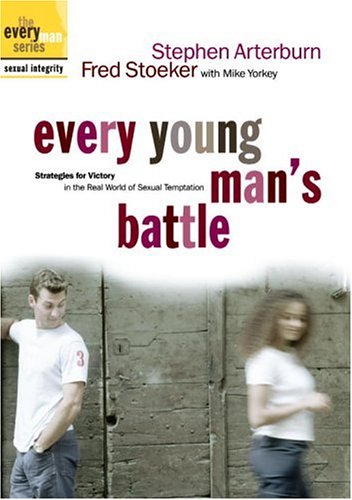
Every Young Man’s Battle (Stephen Arterburn and Fred Stoeker, 2002). Sexual temptation is real. That’s the paragraph.

Single, Gay, Christian: A Personal Journey of Faith and Sexual Identity (Gregory Coles, 2017). After years of trying to pray his feelings away, Gregory Coles concluded his attraction to other men wasn’t going away. So he took a vow of celibacy. And now he’s here to answer the question: how does one stay single, gay and Christian?

Thick and Other Essays (Tressie McMillan Cottom, 2019). Maybe it’s because I read Thick within a few weeks of Eloquent Rage, but they feel like the same book. What I have to say about Eloquent Rage is [basically] what I have to say about Thick.

The Jolly Roger Social Club: A True Story of a Killer in Paradise (Nick Foster, 2016). The tranquility of Bocas del Toro, Panama, was shattered by the arrest of William “Wild Bill Cortez” Dathan Holbert after he was linked to five murders. Part crime reporting and half sociology, Nick Foster spends as much time exploring the history of Panama and what about Bocas del Toro enabled Holbert’s crimes as he does Holbert.

Darius the Great Deserves Better (Adib Khorram, 2019). Since returning from Iran, Darius has come out as gay, found his first boyfriend, started an internship he loves, and joined the soccer team. But depression, family tensions, and an especially persistent bully still try to steal his joy. This sequel could have been hot trash, but it wasn’t.

The Regulators (Stephen King, writing under his Richard Bachman pen name, 1996). Gunfire erupts in a suburban Ohio neighborhood. As the landscape rapidly changes and the survivors try to avoid the shooters and strange cartoonish creatures, a young boy wages a one-man war against an unspeakable evil. Stephen King book #12 and Bachman Book #2.

The Field Guide to the North American Teenager (Ben Philippe, 2019). Haitian-French Canadian Norris Kaplan moves with his mother to Austin, Texas. The notebook he’s given on the first day initially serves as a field guide of sorts, but as he lays down roots, it’s almost like it’s a list of reasons to stay. Norris Kaplan is a massive douche, and his massive douchiness prevents TFGTTNAT from being the instant classic it could have been.

The Burning Maze (Rick Riordan, 2018; The Trials of Apollo #3). The stakes of Apollo’s quest step up when he learns of his third and final enemy: Caligula, the most insane and murderous emperor. Worse yet, Apollo and his allies must head into Caligula’s headquarters if they want to continue their quest. This might be the best book Rick Riordan’s written.

So that’s it. 109 books. A lot of them were great, others *cough*Deadline!*cough* were garbage. But props to you, reader, for making it to the end. As reward, ANNOUNCEMENT TIME!

This year, I’ve been half-hearting this book review shindig, posting my reviews to my Instagram story. Half-heart no more: I’m making it official. This is the first promotion for my Bookstagram. Follow me @peachykeenebooks.

And happy new year to all!
I’m Really, Really Single

I should have known logging every book I read this year would cause problems.

Hi, everyone. It’s been…oh geez, 10 months since I posted. Lot’s happened since then. I experienced a semester that felt like a year, got the COVID vaccine, had a friendship that I tried to spin into a relationship that resulted in both going down in flames, walked in my graduating class’s commencement, and moved into a rental house. But the first noteworthy thing that happened this year was my old admission counselor’s Instagram story. She posted the first book she had read in 2021. I liked the idea so much I decided to join her. Until now, no problem. It’s made for a lot more engagement on my Instagram page: people viewing my stories, DMing me about the books I’ve read and so on.

But of course, it’s never that easy.

As I’ve worked my way through my reading lists, I saw an obstacle splayed across the metaphorical train tracks. I’m simultaneously working through my paper-and-ink personal library, my e-books, and whatever I can grab from the Grand Rapids library. One day, I finished my current read and went to replace it with the next book from my bookshelf. I saw the next read was Randy Alcorn’s The Purity Principle, a book about–shocker!–sexual purity.

There’s a Breaking Bad joke on the tip of my tongue…

Then I went to Apple Books, where I keep my reading lists, and saw the next book on my reading list was Kutter Callaway’s Breaking the Marriage Idol, a book discussing the pedestal marriage has been put on in the American church.

Jesus was single. All I’m saying.

The book after that was Gary Chapman’s The Five Love Languages: Singles Edition.

…do I even need to say anything?

Going back to my bookshelf, I saw down the line Every Man’s Battle and its younger brother Every Young Man’s Battle. Three guesses what they’re about.

Your one hint: it’s not Call of Duty.

Initially, I shrugged it off, thinking, “I haven’t blogged in a minute anyway. I’ll pump out a blog that’s like ‘I’m fine being single, y’all! This is a weird way the cards fell.’ and continue on with chewing through my books.”

Now go back about six paragraphs and four pictures and look for a particular sentence. The one that includes the statement “had a friendship that I tried to spin into a relationship that resulted in both going down in flames.”

So what I’m about to write is a lot of things: life update, grieving personal failures, picking my own brain, critique of the church and society–the list goes on.

The One Where I Ain’t No Doxxer

Now this isn’t the first time I’ve talked about an attempt at a relationship that went the way of the Hindenburg. But this time it’s different. I messed up a good thing. Things are done between “Tracy” and I. Friendship, relationship: FUBAR’d. And it’s unquestionably my fault. But that’s water under the bridge. I can’t undo the stupid things I did to break the trust between “Tracy” and I, and I’ve dedicated enough emotional bandwidth to beating myself up over how it went sour. I’m only bringing it up to highlight that singleness can hurt, yo.

The One Where I Can’t Quite Put My Finger On It

What’s so difficult about being single? The easy answer is human psychology: we want what we can’t have. The soul-rending that comes with rejections, feeling invisible to whoever is your type, being single in a friend group consisting mostly of couples, having all your attempts to start relationships fall on their face, or (in my case) all of the above serve to make the prospect of a relationship like some forbidden fruit you’re desperate to consume. But that’s not the end of it.

Some of it is the human condition. Think back to Genesis. Adam was in community with God in the Garden of Eden, and yet God said, “It is not good for the man to be alone. I will make a helper suitable for him.” (Genesis 2:18, NIV) To end Adam’s loneliness, Eve, the woman, was created. Consider that: community with other people is so important to the human soul that even God cannot check that box. Priests, monks, hermits, nuns–people that dedicate themselves completely to God–still do so in community. One reason singleness hurts as much as it does is because humans weren’t meant to be alone. But that can’t be it, either. After all, most single people, myself included, have friends and family. It’s not like we live in solitary confinement because we’re not seeing anyone.

Maybe it’s a societal thing. Lisa Arnold and Christina Campbell, cofounders of onely.org, wrote an article for The Atlantic laying out ways married people are privileged over single people in modern society. Most of it comes from monetary benefits: it’s easier for couples to buy houses than single people, married people receive more in tax returns than single people, etc. I can come up with non-financial examples: the use of “virgin” and “basement-dweller” as insults, the portrayal of single adults in movies and TV as less mature than their coupled counterparts (see: Barney and Ted in How I Met Your Mother, Josie in Never Been Kissed, and/or any movie with a Manic Pixie Dream Girl) and phrases like “spinster” and “Christmas cake” to describe older single people. That may sound minor, but if you recall, privilege often shows itself as you not having problems that other people do. That’s not the whole picture, either. After all, growing a thick skin can make Xbox trolls and Seth Rogen characters bounce right off.

Maybe it’s a problem with the church. I did read Breaking the Marriage Idol, a book that critiques the church for placing marriage on a pedestal, often at the expense of single members of the church, critiques that were downplayed but also present in The Five Love Languages: Singles Edition. One needs only Google “single people and the church” and receive results with titles like “The Church is failing single people,” “7 reasons why it’s hard to be single in the church,” and “Why Singles Often Give Up on the Church” to realize single people often don’t feel at home in the place that’s supposed to be a weekly reunion for family in Christ. But that’s still only a piece of the pie.

I think it’s a little of all these things, as well as other factors I can’t quite put a name to or find a name on Google that make singleness so hard. Psychology Today introduced me to the idea of “ambiguous loss,” the kind of grief one experiences over a metaphorical loss like ‘losing’ a loved one to dementia or mental illness.

Maybe the reason singleness is so hard is because single people grieve, but they can’t vocalize what they grieve.

The One Where We Can’t Acknowledge a Middle Ground

Post-“Tracy” was far from the first time I got to thinking about being single. In my junior year, frustrations with my love life inspired two documents that together make a 55-page word vomit. In clicking around Google searches as I was writing these documents, I started to notice two distinct camps of thought.

First and more prominent are the doomsayers. These are the people who fit the worst stereotypes of single people. They’re bitter about their romantic unluckiness and ooze jealousy of people in relationships. Some cling to their bitterness so tightly they self-sabotage, screwing up chances at relationships with their relentless negativity and then screaming abuse at whoever ran to avoid getting their head bitten off. For others, that bitterness translates into desperation, resulting in embarrassing DMs on dating apps or critical relationship failure when they spew years of resentment onto someone who was hoping to have a pleasant night with a potential boy- or girlfriend. For others, their resentment translates into fatalism, a shrug and a resigned “what’s the point?” that often dictates their whole life, not only their quest to find Mr. or Mrs. Right. Incels, an Internet movement designated as a hate group by the Anti-Defamation League, are one example of doomsayers. So is the Forever Alone community on Reddit. BuzzFeed asked readers to share the worst messages they’ve received on dating sites, and most of the examples they received reek of desperation borne from bitterness.

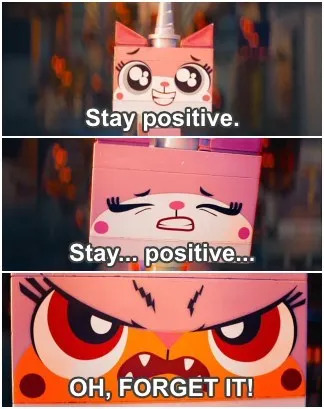
Second and arguably worse are the sugarcoaters. These people are desperate in the opposite way of the doomsayers: if the doomsayers let their bitterness run their lives, the sugarcoaters brush off legitimate grievances and focus on the perks. The perks are typically things like “I have my bed to myself! I’m in control of what I watch on Netflix! I can travel all I want!” (That last one tells me the majority of sugarcoaters have more financial stability than I do.) And while I can understand where they’re coming from, it feels like they’re bottling up their resentment, saying what they’re saying to assure themselves rather than whoever they’re talking to. Whenever I read an article about the perks of being single, I imagine it being written by Unikitty from The LEGO Movie.

And clearly, this is who I want as a life model.

Clicking between incel forums full of people who are convinced women are conspiring to make sure they die alone and blog posts written by people I wouldn’t meet in real life without moving sharp objects out of sight, I feel like screaming. After all, while I certainly would like to be in a relationship, I’ve been single my whole life. Meaning that everything good in my life–every achievement I’ve made, going to Calvin, studying abroad, all the friends I’ve made, my faith life–has happened without that special someone by my side. And yet, I feel like we can’t acknowledge that there’s gray in the black and white of singleness. It’s not all bad, nor is it all good.

So why is it hard for culture at large to acknowledge that?

The One Where the Church Has Some Explaining to Do

I’ve lived in the Christian bubble all my life. I have a pastor for a dad and spent my first three educational years homeschooled with Christian curriculum. One of the earliest pictures of me is baby me sitting with other ’99 babies from my home church. I chose to attend a private Christian university, am listening to Travis Greene as I type this paragraph, and am working on a Bible-in-a-year plan. Much like singleness, I can’t critique the Christian bubble without acknowledging most of the good things in my life happened within its confines.

But critique it I will.

“Believe me, church, this hurts me as much as it hurts you.”

The church has dropped the ball when it comes to singleness. But it’s dropped it in the same way a parent who plays favorites has. If you asked a parent who obviously favors one child over another if they were trying to emotionally scar the un-favorite child, they’d probably answer no. They might say they love their children equally or even try to justify the neglect of the second-fiddle kid as tough love. But damage their kids they will.

Similarly, the Christian bubble didn’t mean to send negative messages about singleness to those who occupy it. Purity culture, the evangelical movement centered around staying sexually pure before marriage which was especially powerful in the 1990s, intended to fight back against a sex-saturated culture. It didn’t mean to teach women that they were responsible for men’s sin as well as their own, that their worth lay wholly in their virginity, and that loss of their virginity before marriage, be it through consensual sex or sexual abuse, tainted them. It didn’t mean to instill young women with an overwhelming sense of shame. And it certainly didn’t mean to be motive for a mass shooting that left 8 people, most of them Asian women, dead. Ring by spring culture, the trend at Christian colleges of couples being engaged by spring of senior year, didn’t mean to inspire feelings of anxiety in single students or jealousy of their engaged counterparts. Yet, both of these feelings are rampant in single students at Christian colleges and universities, according to Stacy Keogh George’s research at Baylor University. Churches didn’t mean to make single people feel like second-class citizens, but according to Breaking the Marriage Idol and many of those articles I found, that’s exactly what’s happened.

The One Where We Ask, “So What Now?”

With a typical blog post, I conclude by neatly tying all the disparate threads of thought. I then schedule the post to publish and hope all the little jokes and wordplay are as clever as I thought they were when I wrote them.

I can’t really do that here, mainly because I feel like I’m only scratching the surface of the topic of singleness. So instead, here are…solutions? takeaways? opinions? somethings.

  1. It’s OK to be single. Tom Cruise lied to you in Jerry Maguire. You don’t need a special someone to be complete. You aren’t broken or defective if you can’t start a relationship. People in relationships aren’t better than you. It’s not some kind of curse from God if your relationship prospects are looking bleak. It’s. OK. To. Be. Single.
  2. Church, you need to convey it’s OK to be single. Like I said earlier, the church hasn’t meant to send negative messages about singleness. But it has, sometimes with horrible outcomes. So, the church needs to start teaching a holy way to be single. I don’t imagine that this transition will be difficult: after all, two of the most important figures in the Gospel were single.
  3. Single people need support spaces, not a dating pool. This is speaking to the religious and secular worlds alike. Too often, spaces specifically for single people is either formed or treated like a “get them married” club. Now granted, some people enter these spaces with that goal. Some, not all. Others want support, someone who can clap them on the shoulder and say, “I’ve been/am where you are, buddy. I’m here for ya.” And for the latter, it can be a special kind of discouraging to have a friend or a relative or a group leader shove a stranger at them and say, “You two are perfect for one another!” To paraphrase Captain America: “Secure my emotional health, then find me a date.”
  4. Stop romanticizing platonic friendships. Men and women can be friends. Similarly, men don’t need to be attracted to other men to want deep, emotionally intimate relationships with other men. In a perfect world, Cap and Bucky resonate due to realism, not idealism. (Two Captain America examples one after the another. Interesting…)
  5. Don’t settle. If you’ve been single, and especially if you’re feeling like the cosmos are dropping relationships into everyone’s laps except yours, it can be tempting to throw yourself at the first person who shows interest. Besides that falling under that desperation I mentioned earlier, a wise man once told me the fail state of a relationship isn’t “single,” it’s “misery.” Ask anyone who’s been in a toxic or abusive relationship. The worst kind of alone is when you feel alone in union. As a wise woman quoting a wise rapper once said, “The grass isn’t greener on the other side, it’s greener where you water it.” (Thank my friend Haley for that nugget of wisdom; follow her on Instagram @ha.le.s–she’s cool.)

Not since The Lost Stories of Spain have I itched to write a sequel to a blog post; I haven’t come anything close to putting down every thought I have on singleness. But that’s for another day.

To my single people: you’re OK. You’re OK if you get into a relationship tomorrow. You’re OK if you don’t have a relationship ever. You’re OK if you screw the pooch with your “Tracy.” You’re OK if you are a “Tracy” and had someone who seemed cool…not be. You’re OK if you’re recovering from an abusive or toxic relationship.

We are OK.

TIWTTA: Privilege

Today I want to talk about privilege: what it is, what it’s not, and what effect it has on our daily lives.

So what is privilege? Merriam-Webster defines privilege as “a right or immunity granted as a peculiar benefit, advantage, or favor.” A good baseline, but not quite what we’re talking about. Privilege, at least on a societal level, can be defined as “benefits or advantages certain people enjoy largely through none of their own doing.” For example, Jeff Bezos’ kids are privileged. Why? They did nothing to contribute to Jeff Bezos’ wealth, being that they weren’t even twinkles in Jeff’s eye at the time Amazon took off, but they still enjoy the perks of having the richest man in the history of mankind as your dad.

The key aspect to societal privilege is it can’t be earned. For example, I am an able-bodied, heterosexual cisgender male. These statuses give me privilege, but I did nothing to earn any of these privileges: I didn’t choose to be born with masculine body parts, without deformities, disabilities or chronic illnesses, and without gender dysphoria or non-heterosexual desires. But I still enjoy the perks of having all of those statuses.

Speaking of statuses, the nature of those statuses are one thing that make privilege so hard to discuss. If I can play devil’s advocate for a second, privileged and marginalized things tend to have two different views of privilege. Privileged people tend to think strictly in class privilege: think the 2019 college cheating scandal, where it was revealed dozens of celebrities had bribed big-name schools to cut corners for their children’s admission, or all the times rich people have waved money to make their problems go away. Hence the most common rebuttal to being privileged, “What do you mean, I’m privileged? My life has had struggles!”

Being rich is definitely a form of privilege, but it’s not the only kind.

To understand why, I’d like to throw out a third way of thinking about it: privilege means not having problems other people do, for no reason of your own doing. One comparison I’ve heard is that privilege is like playing a video game on easy mode. You still have problems, but they’re more easily resolved and some problems, like tough bosses or needing to manually restore your health, aren’t there at all.

Most of the examples I’m about to give are examples of privilege by absentia (yeah, that’s what I’m going to call it).

Examples of Different Types of Privilege

White Privilege

  • If you are a white person, you are always treated as an individual. If, for example, you open fire on a church service with the explicit intent of starting a race war or drive a car through a crowd, your violent actions are never a reflection on white society and will likely be chalked up to mental illness or the failures of society. Heck, some very powerful people will go out of your way to call you a ‘very fine person.’
  • White=default. Your average anything–book, movie, TV show, video game–will feature a straight white protagonist. “History” classes are focused on the action and historical significance of white people, while the history of black, Latinx and LGBT people are relegated to dedicated months on the subjects or elective classes. Even the majority of beauty products are made to complement white skin.
  • There’s a presumption of innocence with white offenders that PoC offenders do not receive. Dylann Roof was apprehended after murdering 9 people with the murder weapon still on him, but was arrested nonviolently and then taken out to eat when he told the cops he was hungry. Meanwhile, the list of heinous crimes black people have been killed for include, but are not limited to: selling loose cigarettes, using counterfeit money, buying junk food, playing with a toy gun, complying during a traffic stop, exercising, eating dessert in their own home, sleeping in their own home, and stopping a mass shooting. Brock Turner was caught in the act of rape and served three months. The Central Park Five were framed for a rape and served hard time for crimes none of them were even tangentially involved in.
  • What is “trashy” or “ghetto” when done by people of color is not so when done by white people. For example, twerking, a dance style created by African-American women, was only acknowledged as a dance style when white singer Miley Cyrus twerked at a 2013 awards show, and despite the numerous Hispanic people ordered to “speak English!” in the presence of white people, it’s newsworthy when a white toddler is bilingual.
  • And finally, if you are a white person, the police are a protective force rather than a tool of oppression with a history of brutalizing and killing people who look like you with little or no provocation.

For a more in-depth list, see here and here.

Male Privilege

  • If you are a man (and myself is included in this), the concern of being victimized is not omnipresent. You do not worry about being dragged into a dark alley when you’re walking at night. You don’t worry about getting murdered when you shoot down someone’s advances. People don’t yell sexually charged comments at you from cars or walk up to you and demand you smile.
  • Your existence is not treated as a motivating factor. If you are a man, you will likely never be told to cover up your body to avoid distracting women. You can get drunk without being concerned about being taken advantage of, wear whatever you want without worrying about hearing that dreaded question, “But what were you wearing?” and go to a social event or a date without setting up a social safety net.
  • In the workplace, you are unlikely to be harassed. Any promotions will be presumed to have been earned and not coerced out of a supervisor with sexual favors. You will always be paid fairly. Having children is not a career-defining/ending move.
  • And finally, your sex life says nothing about you as a person. And if you decide to murder people you don’t know because you can’t get laid, there’s a whole Internet subculture who will treat you as a saint.

For a more in-depth list, see here.

Straight Privilege

  • Much like white skin, society treats heterosexuality as the “default.” Your relationship, if it is ever judged, will likely be on things like compatibility or emotional health and never with descriptions like “unnatural,” “deviant” and “abomination.” It is always assumed your sexuality is natural and never came through something like abuse or a desire to push some kind of agenda.
  • The list of people who have been disowned by their family for being straight is a short, short list, if it even exists.
  • Your sexuality will never be held against you–for example, you will not be excluded from organizations and your home will never be deemed an “unsafe environment” to adopt based on the people who make it up.
  • There are not laws in 28 of 50 states making it legal to fire you based on who you are dating, married to, or attracted to.
  • And finally, you can express affection to your loved ones without it possibly being a motivation for a hate crime.

For more in-depth lists, see here and here.

Cisgender Privilege

For those not in the know, to be cisgender means that you identify with the gender you were identified with at birth. Therefore, men who identify as male and women who identify as female. Moving on…

  • Gendered facilities (i.e. bathrooms, locker rooms) are not an insurmountable challenge to you. There are no bills demanding you use a certain bathroom.
  • Deadnaming? What’s that?
  • Your sexual attractiveness and ability to come off as the gender you identify as is not a worn-out hackneyed joke that comedy writers have fallen back on for decades.
  • Speaking of attraction, flirting with who you’re attracted to comes with a significantly reduced likeliness of being rejected or even physically harmed.
  • And finally, there are not sects of people who see dating people with your gender identity as exotic or some kind of kink.

For a more in-depth list, see here.

Able-Bodied Privilege

  • You have likely never worried whether you will be able to access a building.
  • You can turn on the TV or watch a movie knowing that people like you will have a personality and not be there as a plot device to change the lives of main characters, be a token breaker of the status quo, or be the focus of a Very Special Episode.
  • Physical ability-related insults (i.e. “retarded,” “autistic,” “spastic”) do not apply to you.
  • And finally, at no point in history was your existence seen as a burden on society or something to be exterminated.

For a more in-depth list, see here.

There’s a saying I’ve heard a lot in Christian circles that I think might help you think about this: “be kind, for everyone is fighting a hard battle.”

If you read the lists I wrote out or followed the links and said, “Huh?” at any point, that’s exactly what I’m talking about. Your PoC, disabled or LGBT friends and loved ones will have struggles that would never cross your mind merely for existing. Keep that in mind the next time you join a conversation about hot-button topics. What might be a bullet-point list to you may be someone else’s life experiences.

Conclusion?

Give your friends who belong to marginalized groups some grace.

Speak up for the less fortunate.

And DO. BETTER!

(I got that from a guy I follow on Instagram. Give him a check-out @shymonroe.)

Resources on Privilege

Articles

Videos

Books

Feel free to let me know about any resources you think I should add to this list!

Finding the Sacred in #BlackLivesMatter

Author’s note: I started drafting this post in early August. I researched, wrote, cut, added right back. Then life got busy with school starting back and my own lack of interest, and this post almost went in the deleted bin.

Then Jacob Blake got shot, and I realized I had been lulled into passivity. So here I go.

If you’ve never met Ken Heffner, you’re missing out.

It’s not creepy to look up people you know on Google Images, right? …right?

In my sophomore year at Calvin, I worked with Ken in a position called a Cultural Discerner. Cultural Discerners worked in the dorms to foster conversations about how we as Christians engaged with pop culture. It was through my time as a Cultural Discerner that I was introduced to the concept today’s post is about, finding the sacred in the profane.

We’ll get back to that. Instead, let’s talk about the present. Specifically, three incidents that have started the biggest movement of the century.

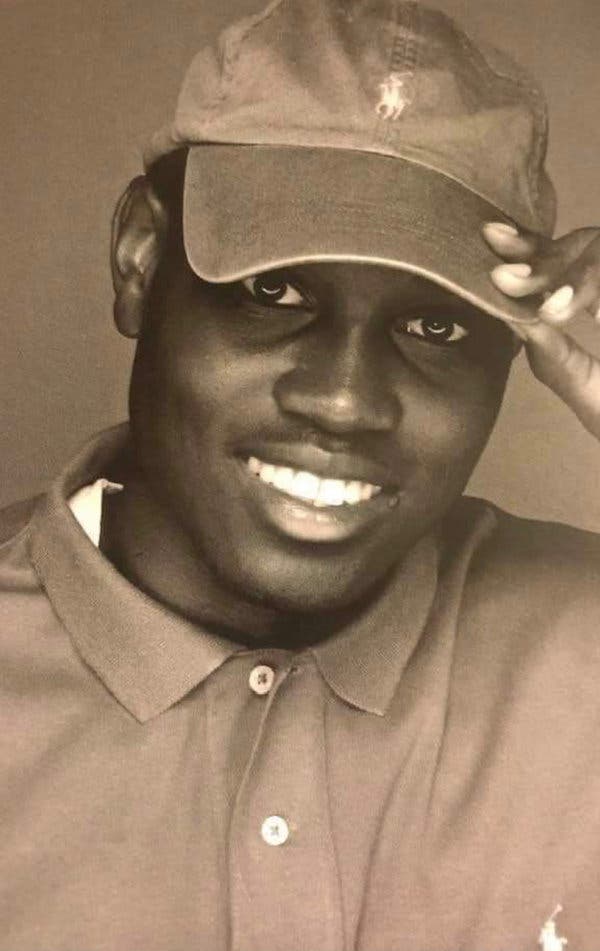
On February 25 in Brunswick, Georgia, 25-year-old Ahmaud Arbery was accosted by a white father and son and one of their neighbors while he was out on a run. Arbery was pursued by the three men in two vehicles, cut off by the neighbor, and fatally shot by the son. Despite the neighbor catching the whole thing on video and none of them being law enforcement (therefore having no authority to use lethal force), it took almost three months for the three men to be arrested and charged.

#SayHisName

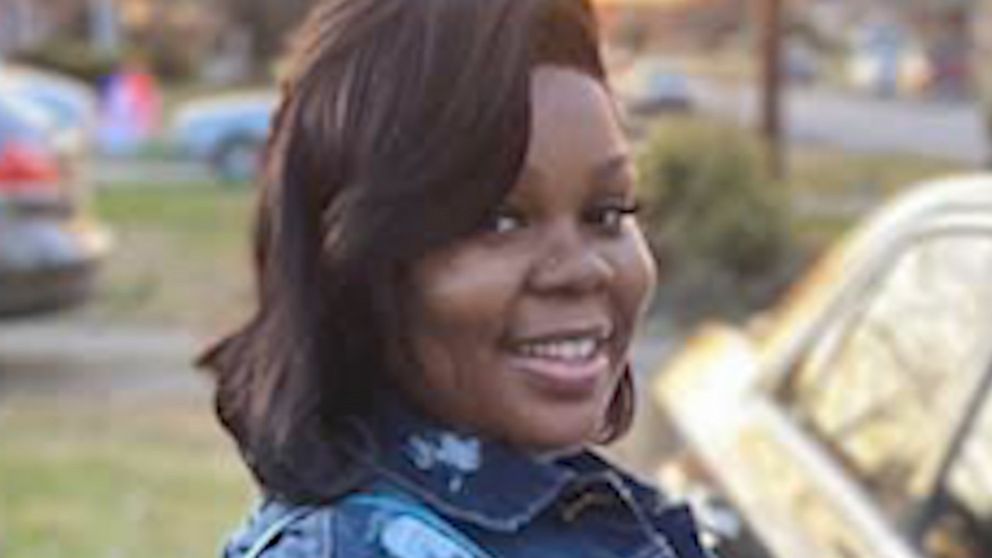
At midnight on March 13, 2020, three members of the Louisville, Kentucky, police department executed a no-knock search warrant on the apartment of 26-year-old medical technician Breonna Taylor and her boyfriend, Kenneth Walker. The warrant was for two men allegedly involved in drug dealing, neither of whom lived in Taylor and Walker’s apartment. The police broke into the apartment using a battering ram, waking the couple from sleep. Walker, a licensed gun carrier, retrieved his gun and fired a shot at the intruders and received almost two dozen rounds of return fire, which killed Taylor. Walker was initially charged with assault and attempted murder of an officer, but the charges were dropped. As of the publishing of this post (September 14), one officer has been fired, but none have been arrested or charged.

#arrestthecopswhokilledbreonnataylor

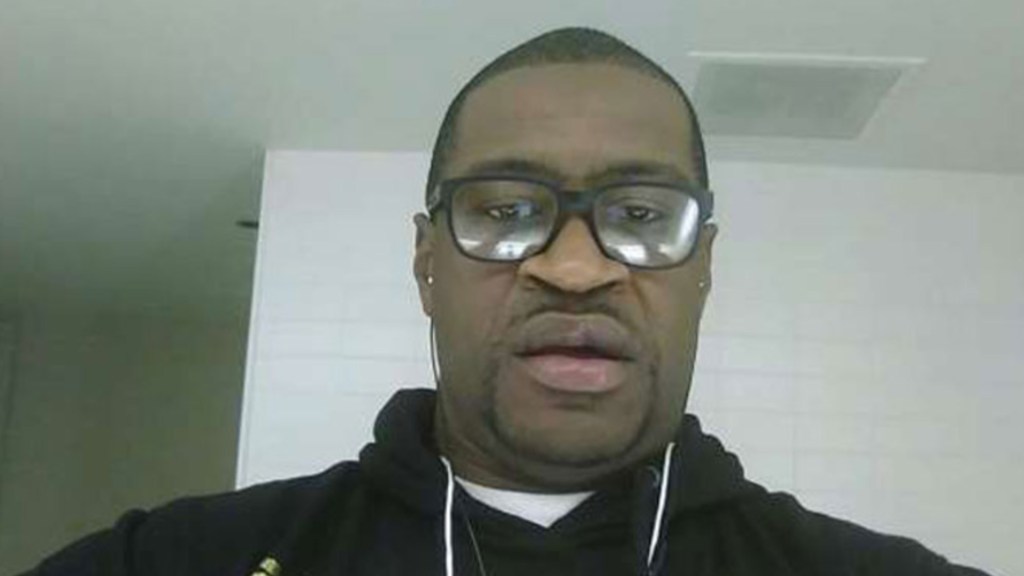
On May 25, George Floyd allegedly paid for a pack of cigarettes with a counterfeit $20 bill. The police were called on Floyd when he refused to return his purchase. After he was cuffed, Floyd was first sat in the back of a police cruiser, then pulled from the car by Officer Derek Chauvin. Four officers restrained Floyd while he was on the ground, one by sitting on Floyd’s chest, and Officer Chauvin by putting a knee on Floyd’s neck. Floyd was in this restraint for 8 minutes and 46 seconds, during which he said multiple times he couldn’t breathe (both because of his air being cut off and his recent recovery from COVID-19), cried for his mother, and finally lost consciousness and stopped breathing. Floyd was pronounced dead an hour later. All four of the officers who restrained Floyd were arrested, Chauvin’s trial for second-degree murder is currently pending, and the other three officers have been charged with aiding and abetting second-degree murder.

#justiceforgeorgefloyd

Everyone (and I do mean everyone–including the founders of Ben & Jerry’s, one of the head honchos of Reddit, Mitt Romney, witches and Batman) had something to say. The protests against police brutality and for systemic reform went international, making the Black Lives Matter cause one of the biggest in history.

Christian communities had a…shall we say, mixed reaction to the protests. On the one hand, Christian sects that had been neutral on the matter of racial equality were finally pushed off the fence; see: the notoriously-conservative Southern Baptist Conference’s change of heart and the United Church of Christ’s affirmation of the Black Lives Matter cause. On the other hand, the protests made bigoted Christians dig their heels in further. But keep in mind, there’s a good reason for the indecision on the topic of Black Lives Matter.

Christianity, especially in America, has a long history of being on the wrong side of racial issues. If we’re strictly talking American Christianity, we could talk about the use of Scripture to justify slavery; the many white supremacist organizations, past and present, who twist theology into evidence for racial purity and calls for violence; that the primary force that stood against Martin Luther King, Jr. and the civil rights movement were white Christians; or the continued support by white evangelicals for President Trump through his many racially-charged and discriminatory statements and policies. If we wanted to go international, we could talk about the long history of antisemitism in European Christianity, coming to a climax with the Third Reich cherry-picking Martin Luther’s writings to make a Christian justification for Nazism.

The end result? What to the rest of the world seems like a black and white issue is subsequently muddled by the church’s history of being complicit or actively engaged in racism.

Flipping the perspective, Christians have their own issues with BLM, as has been expressed both in discussions and to me personally. It’s an issue with a few key parts of Black Lives Matter’s mission statements:

We are guided by the fact that all Black lives matter, regardless of actual or perceived sexual identity, gender identity, gender expression, economic status, ability, disability, religious beliefs or disbeliefs, immigration status, or location.

We make space for transgender brothers and sisters to participate and lead.

We are self-reflexive and do the work required to dismantle cisgender privilege and uplift Black trans folk, especially Black trans women who continue to be disproportionately impacted by trans-antagonistic violence.

We disrupt the Western-prescribed nuclear family structure requirement by supporting each other as extended families and “villages” that collectively care for one another, especially our children, to the degree that mothers, parents, and children are comfortable.

We foster a queer‐affirming network. When we gather, we do so with the intention of freeing ourselves from the tight grip of heteronormative thinking, or rather, the belief that all in the world are heterosexual (unless s/he or they disclose otherwise).

–From the “What We Believe” page on the official Black Lives Matter website, all emphases mine

Now, it is here I have to narrow down my audience. I’m not talking to people who focus on the violence that’s broken out at BLM protests. I’m not talking to conservative Christians who prioritize the “conservative” over the “Christian”. I’m not talking to reactionary Christians. I’m not talking to Christians who reject anything liberal or left-leaning on impulse or are anti-“woke” or who reject BLM for its part in “cultural Marxism,” whatever that even means. I’m talking to Christians on the fence, Christians who believe marginalized people are being crushed under the boot of white supremacy but are still reluctant to embrace the Black Lives Matter cause.

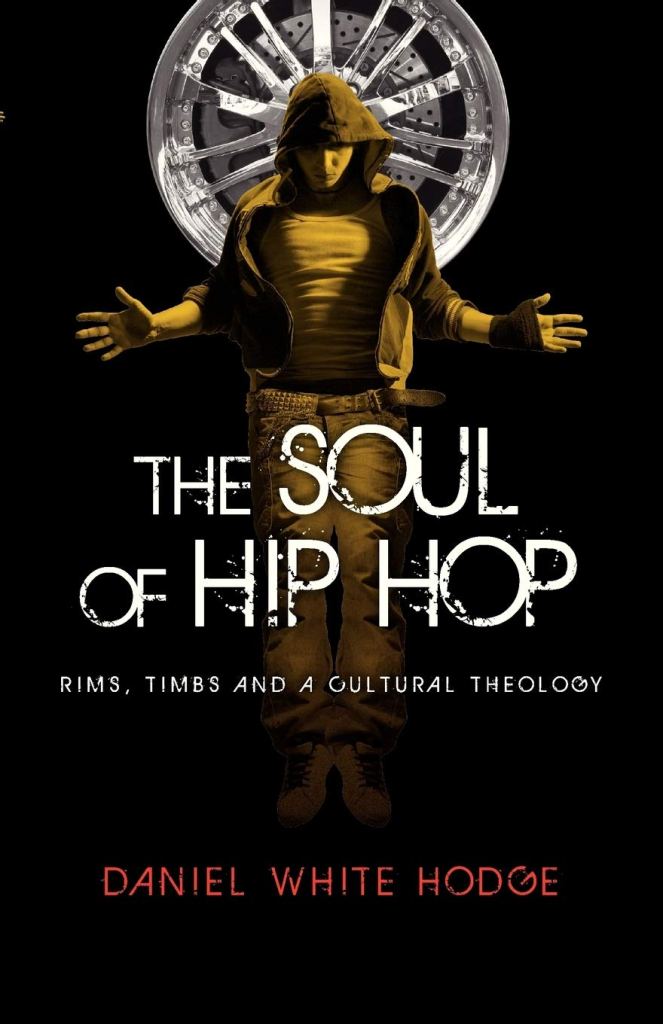
During my time working with Ken Heffner, we read The Soul of Hip-Hop by black theologian Daniel White Hodge.

Give it a read. It’s good.

Throughout the book, Hodge examines rap music, in particular artists like Tupac, KRS-One and NWA, as well as protest music. From his analysis, Hodge pulls a theology of justice from the lyrics: lyrics that look to heaven and cries out to God that He would deliver the justice institutions refuse to. Along with his theological weaving, Hodge criticizes the church’s knee-jerk rebuffs of hip-hop and attempts to co-opt the sound of black music to provide a “Christian” (read: white) alternative for young people.

Above all, Hodge begs his readers to find the sacred in the profane. To refrain from the church’s recoiling at the drug references and tales of sex and violence and look deeper, to the stories of losing friends to gang violence, of being racially profiled by police, of fatherlessness due to mass incarceration, and of groaning under the weight of systemic racism. The music cries out to God for justice because earthly forces of justice have often been the primary tool of their oppression.

If you are reluctant to take up the Black Lives Matter cause, I encourage you to find the sacred in the profane. Look to the roots of Black Lives Matter, a movement created in response to the death of Trayvon Martin.

On February 26, 2012, one man, a man with no legal authority to use lethal force, took the law into his hands and sentenced Trayvon Martin to death for the heinous crimes of wearing a hoodie and buying a bag of candy. It was a story black people everywhere had heard a million times before, but this time it was different: the killer wasn’t a police officer. There was no brass shield for George Zimmerman to hide behind, so maybe, finally, someone would answer for spilling an innocent young black man’s blood. The judge’s reading of “not guilty” gave a message loud and clear: Black Lives Don’t Matter. It wasn’t the brass shield on the breast of your shirt that gave you the permission to be judge, jury and executioner for people of color, but the color of your skin.

We as Christians need to recognize that the Black Lives Matter movement exists largely because of a stinging failure on the church’s part. The days of Martin Luther King organizing marches from a sanctuary are gone. For decades after King’s death, black Christians have been crying and begging at the church’s door for help, any kind of help, only to be turned away with responses of “All lives matter!” “Oh, we don’t talk about that here.” “Racism is a heart issue. That’s between them and God.” After decades of the church whistling and twiddling its thumbs, the church has unintentionally broadcast a tragic message: if people of color want justice, don’t go to church.

But we can do better. We can tell our black brothers and sisters that Jesus weeps for the deaths of his sons and daughters and so do we. We can march. We can advocate. We can educate ourselves. We can start hard conversations, bringing God into what was previously a secular discussion. We can make real change in God’s name.

I encourage you, reader: look for the Christian motivations in Black Lives Matter’s secular language.

Find the sacred in the profane.


Thank you all for reading. I hope you were moved by today’s post. I want to keep making contributions to the conversations we as a nation are currently having. With that in mind, I formally introduce Today I Want to Talk About… (TIWTTA)

This is a new series on the blog, where I break down hot-button topics, sociological concepts, and anything else relevant that comes to mind. With this series, I want to do my research and give a good resource that cuts through all the hysteria and presents information without an agenda. At the end of each post, I’ll present resources for further reading.

The first TIWTTA‘s subject: privilege. Stay tuned!

Collapsing at the Finish Line

I’ve had several false starts to writing this post. Hopefully, this is the real start. Today’s blog involves cross-country and the year 2016. It’ll make sense in a few paragraphs.

On May 20, I finished my junior year at Calvin University. In the days leading up to my last final, I already knew how I’d finish. Whether I was finishing a paper or taking an actual test, I would turn it in by slamming a fist down on the Enter button and then cementing my need for a new laptop by slamming my head down on the keyboard. When the day came, I finished my final paper for my math class, turned it in, and went downstairs to play Call of Duty.

Anticlimactic, innit?

It’s been a tough year for us Calvin kids. Even before coronavirus came sweeping in like a swarm of locusts, the Calvin community dealt with the deaths of three students and one professor, as well as a rape on campus. Not to mention the class of 2020 getting the tease of a lifetime by the school year ending weeks before graduation. I wrote a reflection on my sophomore year around this same time last year, but last year was different. Last year was difficult for me. This year was difficult for everybody (and still is).

I’ve been thinking about why I feel the way I do. I was expecting to feel some huge weight lifted off my shoulders, and yet what’s my reaction to the ending of a school year? Turning in my last assignment and proceeding to get destroyed by drop-shotters. Even now, as I write this blog post, the feeling I have in the moments I feel anything could be called “ambivalent.”

Here’s the connection to 2016. You guys remember 2016, the supposed “worst year ever”? In particular, you remember the last election? By the first month, I was sick of the candidates. By the time of election day, I didn’t care who won, because there was going to be riots no matter who would be sworn in, and judging by the article I linked, I’m not alone with that sentiment. TV Tropes has a term for my feelings about the Clinton-Trump race: Darkness-Induced Audience Apathy.

Maybe Darkness-Induced Audience Apathy is how a lot of us are feeling.

What we are accomplishing right now–whether that be finishing a school year, doing the best for kids, or merely getting out of bed to fight another day–may seem like measly blows against the faceless hulking enemy that is the COVID-19 global pandemic.

Which is where my cross-country season comes in.

AKA the one part of my sophomore year I’ll talk about without a gun to my head.

One race was like every other race. I kept pace, ran three mile-long laps, and for the final stretch, put on a burst of speed, and crossed the finish line.

My legs then gave out, and I took one or two more steps before collapsing.

My mom, coach, and a few onlookers came to check on me. I got out of the way of incoming runners and recovered. To this day, I couldn’t tell you why.

But here’s my takeaway: collapsing at the finish line doesn’t change the fact that you crossed the finish line. An ungraceful finish is still a finish.

Another cross-country story: different race. I was nearing the end, approaching the bend where once I turned it I would break into a sprint. A competitor, a guy from another school, came behind me so we were neck and neck. “Let’s go,” he said, and he kept saying that as we turned the bend. “Let’s go. Let’s go! Let’s go! Let’s go! Let’s go!” We both broke into sprints and booked it for the finish line, the guy chanting the whole time. We crossed the finish line still neck and neck and congratulated one another.

Let this blog post be encouragement like Let’s Go Man. Press on, dear reader, and cross the finish line however you can. A happy Memorial Day to everyone and a congratulations to any graduates reading.

I Still Believe

Hello, everyone! I have more free time than I’ll probably ever have again, so here I am, hopefully back on the blogging grind.

The news cycle is kind of obsessed with one thing and one thing only.

“Jesus” has about a billion results on Google. Coronavirus is bigger than Jesus. Eat your heart out, John Lennon!

Because the world has tunnel vision right now, you’re probably not paying attention to movies (outside of what to binge, in which case I recommend A Quiet Place) so if you haven’t heard of I Still Believe, I don’t blame you.

The film tells the true story of Christian singer Jeremy Camp at the start of his career. Camp, if you don’t know, lost his first wife Melissa to cancer. The film’s title comes from the song of the same name, penned by Camp after her death.

I haven’t seen the movie, but I liked the trailer. It did what a trailer’s supposed to do. As I was watching the trailer, two scenes hit me in the feels. The first shows KJ Apa’s Jeremy hurling a Bible at a wall, and the second has him smashing his guitar.

I’m bringing this up because that level of frustration is where I’ve been for a few weeks now.

OK, you know what? The beer bug is a huge topic, and I’m trying to make this post kinda structured, but it’s not working, so I’m gonna say what I wanna say, and if I lose you, I’m sorry.

First thing: can we admit this is hard? I’ve scrolled past tons of social media posts telling me the spiritual significance of coronavirus’ timing or that my grandparents stormed Normandy, so I can survive a few weeks with Netflix and my thoughts, and I deleted Twitter off my phone because of all the Michael Sandel wannabes and their hot takes about how the coronavirus proves the shortcomings of capitalism. (Not saying I disagree with them. One word: OVEREXPOSURE.)

But among all the politics and the social media sermons and the memes and the bucket lists of things that will be done once quarantine lifts, one opinion that’s been overshadowed? THIS. IS. DIFFICULT. In every way.

For me, I’ve been looking for someone to be mad at. The problem is, that list is constantly growing. I could be mad at:

Once I concluded that trying to find someone to blame for the pandemic was a pointless endeavor, my next question to God was: “Why?” Why all this pointless suffering? Why are people dying, and more importantly, why is this virus so dangerous that gathering to bury them is a health risk? Why are the hard-working citizens of the workforce being left to fend for themselves while the fat cats are swimming in money? Why are high school and college seniors all across the globe having the biggest accomplishment of their lives yanked out from under their noses? Why are governments around the world seeming to compete for who can have the least competent response, and why is my country of residence winning? Why are all the prayers not doing anything?

And I’ve gotten no answer.

I’m fairly certain God invented the frustrating silence.

Which brings us back to that throw-a-Bible, smash-a-guitar feeling. More specifically, that pull-your-hair-out slap in the face of a realization that causes it: that sometimes, what we pray for isn’t God’s will.

Which leads into the even harder realization: if what we’re praying for isn’t God’s will, then God is going to make something good out of this.

And in fact, he is. One other thing lost in the whirlwind of social media negativity? Good news during this tumultuous time.

So, to counterbalance my ‘who to blame’ list, a ‘good things that have happened, coronavirus-related or otherwise’ list:

I’m not writing this in a vacuum. My knowing that God is going to make something good out of this doesn’t mean I’m not sad about the state of the world and that my life is on pause until further notice. No number of blog posts will make cabin fever not real. I can’t see an end in sight.

But you know what?

Even when I don’t see, I still believe.

The Lost Stories of Spain, vol. 5

Welcome back to The Lost Stories of Spain!

Cool intro.

STORIES!

Shenanigans in expresion oral

I had three classes at La Casa de las Lenguas, but the one I enjoyed the most was expresion oral. This is not necessarily because I was a good student, but because of all the shenanigans, as well as the fact that Eduardo, our instructor, was a pretty cool dude.

There were several bouts of shenanigans, most due to my less-than-stellar Spanish.

Shenanigans with Ally

I mentioned my friend Ally from Boston last set of stories. Well, we met through expresion oral.

We were doing an introduction exercise, for which I was partnered with Ally. We were just asking each other estar questions, questions about our current state. I meant to ask Ally, “¿Estás cansado?” (Are you tired?) Instead, I had a slip of the tongue and asked, “¿Estás casado?” (Are you married?) I backpedaled hard when Eduardo called me on my mistake.

But hey, I made a friend out of it.

Shenanigans with Tristan

Another exercise, this time one where I was a waiter and my partner, a guy from Oregon named Tristan, was my customer. Tristan had written out a fake menu, which I was supposed to read from. He sat down at his fake table, I walked over and introduced myself, and then I held up the menu to read from it.

And that’s when I found out that Tristan has really messy handwriting. Like, messy to the point I couldn’t read it.

My likely sleep-deprived mind found this incredibly amusing, and I was probably wheeze-giggling for a solid 45 seconds before regaining my composure and continuing with the skit.

All was fine and dandy until I reached the dessert menu. One of the items was apple pie. I had a brain fart and forgot the Spanish word for pie. (Tarta, if anyone is wondering.) I improvised and asked if he wanted “una pie de manzana.”

Eduardo said from the back of the room that pie (pee-ay) is the Spanish word for foot. I then asked Tristan in English, “Apple feet. You want an apple foot?” and burst out laughing again.

Shenanigans With Oliver (and David, too)

Dialogue assignment. I picked the first person I saw as a partner. In this case, it was David, a super-cool dude from England in the process of moving to Spain to live with his girlfriend.

Well, our day to present came, and David was nowhere to be found. Well, Eduardo insisted I go, so I presented with Oliver, a dude from Ireland who was absent the day we picked partners.

Oliver’s Spanish wasn’t too hot, so you can imagine how good our dialogue was.

The next time I saw David, I asked him what had happened. And…he had a pretty good excuse. He had given his furniture from his flat back in England to some shipping company. Well, said company closed, leaving his furniture floating in the aether. He had spent the last few days kicking down doors, trying to get his stuff back.

Sorry, Dave. Hope things worked out.

Mary, Queen of Scots

In my first volume, I mentioned I had three different professors. On this particular day, our instructor was Carla, and the topic was Scottish literature. She wanted someone to read an excerpt from a Scottish play called Mary Queen of Scots Got Her Head Chopped Off. She looked back to our row and said, “Perhaps one of the American students?”

Now, if there’s one thing I love doing, it’s making voices. And I had a point of inspiration. Benji had this joke where he’d put on a Scottish accent and act like he was from the old country. Let’s call Scottish Benji Old Benji McTavish. So I channeled Old Benji McTavish and raised my hand.

Old Benji McTavish was the right way to go. The excerpt was written in phonetic Scottish English. To give you an idea, here are the first few lines:

Country: Scotland. Whit like is it? It’s a peatbog, it’s a daurk forest. It’s a cauldron o’ lye, a saltpan or a coal mine. If you’re gey lucky it’s a bricht bere meadow or a park o’ kye. Or mibbe…it’s a field o’ stanes. It’s a tenement or a merchant’s ha’. It’s a hure hoose or a humble cot. Princes Street or Paddy’s Merkit. It’s a fistful o’ fish or a pickle o’ oatmeal. It’s a queen’s banquet o’ roast meats and junkets.

I had started out at a normal tone of voice, but I was yelling by the time I was a few lines in. I could hear people giggling at my impression, and I had to stop myself from laughing a few times, but I plowed on. I got an ovation when I reached the last lines. Carla said something about how native speakers could bring more context to the text, and I had to clarify that that was not English I would use on a daily basis.

As we were walking out of class, Tanner said he had been watching the rest of the class as I read. By the way the girls in the class had been looking at me as I was reading, he said, I could have asked any one of them out and gotten a guaranteed yes.

The Rainy Night

It was one of those nights I suspect every college student has had: you desperately want something to happen, but all of your friends are busy. So you take yourself out on a date and just let it be.

Such was this night. I had been checking and rechecking WhatsApp, hoping that someone would drop some plans for the night in the chat. I had even thrown a few offers out, something I didn’t usually do. I was that gassed up to do something.

It was probably about 9:30 or 10 when I decided to fly solo. I walked out the door and then walked back inside when I realized I was still wearing my house shoes. I walked out the door and then walked back inside to grab an umbrella, due to there being a drizzle outside.

Once I had started walking, I realized why there were no plans that night: it was POURING. I think there was a lip over the exit to the Villas’ apartment building, which made me seriously underestimate how much rain was coming down. However, I was going to get wet no matter if I kept walking or turned back, and I was hungry for McDonald’s.

I made it to McDonald’s with soaked pant legs. I ordered some food, sent out a message asking if anyone wanted to join me, and then lingered around after I ate. I wanted to stay out of that rain as long as I could.

I should also add that I did not see Jeremy Renner butchering Japanese gangsters with a katana on my way to my apartment or on the way back.

Endgame jokes…

Asturias Day

My host parents looked at me like I was crazy when I told them we were having an Asturias Day celebration at school. They told me that Asturias Day was long since happened–as in, “I came to Spain during it” long since happened.

I was confused, but it was something to break from the monotony of classes.

On the Not-Asturias Day, I was assigned to read an excerpt from the poetry of Ángel González. Aside from some mic troubles, it went off without a hitch.

And that’s it.

Just kidding.

Once I was back home, Matt invited me to hang out at a sidreria. He said he was “with some people”, which as I was to find out, was like saying Bruce Lee was sort of good at martial arts.

I walked over to Cider Hill and walked into a mob. There were so many people I have to categorize.

From Calvin: Myself, Matt, Jamie, Amy, Noah Shin, Kassidy and Kennedy.

From VTech: Maddie and Meghan.

From Boston: Ally and Madison.

Newcomers:

Alex–one of Matt’s classmates. Every time I saw him, he was wearing a scarf. I introduced him to Ronald Reagan’s jelly bean addiction.

Sara–a girl of confusing national origin. The best I could tell was that she was a native Italian abroad in Spain, who could speak Italian and Spanish, and could understand English but not speak it. Also had one of the most distinctive laughs I had ever heard: combine Spongebob’s squeaky boots with Jamie Foxx imitating a creaking door, and you have Sara’s laugh.

When I first sat down, it was me, Matt, Sara, and Alex. Then MaMeKaKe (Maddie, Meghan, Kassidy and Kennedy) joined us. Then we ran into Ally and Madison, and Jamie and Amy passed by and decided to join in. I felt so bad for the waiter, partially because our group was going through a few dozen bottles of cider and partially because I was on a second bill due to drinking Coke instead of cider.

Much to my relief, we did ask for the check and got out of the waiters’ way. We walked to Mas y Mas so boxed wine could be picked up. After enough cheap alcohol to stock a bar was in our bags/hands/whatever, we walked over to San Fran Park. And we just talked.

This might sound boring, but it was actually a really fun night. It kind of reminded me of that scene in every war movie or team movie where the ensemble sits around a campfire and opens up to one another. Only instead of fighting Nazis or ISIS or aliens, we (with the exception of me) would be fighting hangovers, and instead of sitting around a campfire, we sat around what looked like the foundation of a torn-up fountain.

Either way, great night.

A Night at Bible Study

I don’t talk a ton about the GBU Bible study, but I should.

It was a night close to American Thanksgiving, which Spanish people are aware of, but don’t celebrate. On this particular night, Marita, Jasmin’s roommate, went all out. She had cut pieces of paper into squares and added some VSCO aesthetic by burning the edges with a lighter. We wrote out lists of things we were thankful for. Then, we went around and said something good about someone else in the room.

I got pleasantly surprised. Liz, of all people, said my name and praised the blog. (Which gives me something of a timeline as to when this was: I had published “Humble Idiocy”, but had yet to write “The Hill Point”, so this story takes place sometime between those two posts.

I still have that list. I should probably pull it out and hang it somewhere I can see it.

Always remember to be grateful, people.

Claudia

Speaking of hanging out with Matt…

Wait. That was two stories back.

Eh, who cares?

Matt invited me to a coffee shop called Dos de Azúcar to study. I said “sure!” Spanish coffee shops are cool.

When you can find them.

I looked up the place, and maps.me said it was a few blocks away from the evangelical church. So I walked my route to there…and got lost. I walked around, I asked people, I looked and re-looked at the maps.me route. Thankfully, this was not another Fireworks Fiasco. I found it by coincidence and walked in, now regretful we weren’t meeting at a sidrería. Elise and Elizabeth were sipping tea in a step down area, and Matt and Noah Shin had a table saved. They were sitting with two people I didn’t know.

And that’s how I met Claudia.

Claudia was the daughter of a friend of Matt’s host mother. She was a stunner, and I was considering pulling out my best impression of Joey Tribbiani’s “how you doin’?” until she introduced her boyfriend, Leo. (I’m pretty sure that’s his name.)

Anyway, we just hung out.

End of story. Claudia’s a cool cat.

KKK (Keene, Ken, Kass)

Admittedly, this is a story with a downbeat undertone. Juan, a classmate of ours from Iowa, had been mugged a few nights earlier, and it had kind of poked a hole in our bubble.

Well anyway, I had been talking to Kassidy and Kennedy about studying together. They bounced back and forth as to where we would be studying, before saying “screw it” and asking if I wanted to hang out that night.

I walked to the bottom of Cider Hill and ran into Ally, Madison and Ally’s visiting boyfriend Trevor. In the two minutes I met him, I immediately saw why he and Ally were together: 1. The dude’s an Adonis, and an African-American one at that. 2. He positively identified my T-shirt as a Punisher shirt. Ally, if you’re reading this, marry that man.

Ahem.

I invited them to join my group, but they said they were gunning for the clubs, so I wished them luck (a good time? many free drinks? what do you wish for people trying to club?) and kept walking.

I found Kass and Ken in a restaurant near the bottom of Cider Hill. Once I sat down, I learned something very quickly: if you want free stuff, go abroad and make your travel companions are attractive white women.

The two staffers were both men, and we were their only customers sitting inside. At semi-regular intervals, they’d bring us platters of tapas, and they were chatting with all three of us, but Kassidy and Kennedy in particular. They might have had a chance with Kennedy, who was (is?) single, but Kassidy had earlier said she was essentially waiting on her boyfriend of several years to propose. This may make them sound like scumbags, but despite laying it on a little thick, they seemed like cool dudes.

It was while sitting together that I learned of another unfortunate occurrence: Kassidy had been followed. I didn’t learn all the details, but the skinny was: she was walking in the city by herself, and some dude in a turban had followed her. She pulled some evasive maneuvers and lost the guy. It was yet another needle in our idyllic bubble, a reminder that as much fun as we were having in Spain, creeps who want to get their rocks off by any means possible know no borders.

We eventually decided to pack it up. We said goodbye to Miguel and Antonio, the two waiters, and paid our bill. Kennedy lived pretty close, so she went off on her own. I told Kassidy I’d walk her home. She said it wasn’t necessary and that her place was out of the way of mine. I in turn told her she could either slightly inconvenience me by making me walk out of my way or she could deal with Turban Man again. We compromised: I walked her halfway and then went on my way.

Stay safe, ladies.

Anywho, that’ll do it for now. Two more volumes to go. For now, may your fake menus be legible, your walks to McDonald’s be without a cloud in the sky, and your travels be in the companionship of attractive white women.

1 Year Later…

It seems a hallmark of good sitcoms is that they conclude with characters moving out.

Both Friends and The Fresh Prince of Bel-Air had their finales end with the main characters standing at the door of an empty apartment/mansion, silently reminiscing on the good times they (and we) have had, before turning the lights off for the last time.

The weekend I left for Spain felt like the finale to my personal sitcom.

Friday night, I checked and double-checked my luggage. I had sent an introductory email to my host mom and was waiting on a response. Most of my goodbyes had been said at a bon voyage party the weekend before, or during the week I had been on campus. There was only one thing to do now:

HAHA. Puns.

Out. I need to get out.

I walked over to see my friend Katie. We talked for a few minutes, and then I hugged her goodbye and left. I finally showered and sat down on my bed.

First time out of the country. First time on a plane. Speaking Spanish for 4 months. All with a group of mostly strangers. What a time.

I let the uncertainty flow. 4 months was a long time. Was my money going to last that long? What even was the plan? I still wasn’t 100% certain of when I was going to start school, and the only thing I knew about my host parents was their names. What about group dynamics? There were a few outliers, but the majority of the group was your default Calvin student: tall, Dutch West Michiganders. Experience had taught me that local kids tended to clique up, and that was in their own backyard. How bad could it potentially get thousands of miles from Michigan?

1 year later, I can answer all of those questions: I did have enough money. If you want proof foreign language textbooks are a scam, buying the textbooks for my 301 Spanish class was a bigger hole in my finances than almost anything related to Spain. The first week of traveling through Spain was exhaustive, but I would do it again, albeit after I’ve worked through the jet lag. There did end up being some loose “cliques”, but it wasn’t an exclusive thing. Less Mean Girls and more Scooby gang splitting up: some people hung out with other people more than they did others, but we were all one big happy family at the end of the day.

Anniversaries (or three weeks after them, in this case) are a time to reflect on the event you are celebrating. People celebrate how much they’ve grown between one birthday and another. Couples celebrate years of love on their wedding anniversary. People in recovery use sobriety anniversaries to celebrate the deep hole they pulled themselves out of.

So, what have I taken away from Spain?

Some things can never be replicated, and that’s not something you can mourn too long. I’ve talked about this before, so I’ll quote from that:

On the other hand, I know I’m living in a snapshot, that just as the Detroit and the Calvin [University] I will return to will not be the Detroit or the Calvin I left, the Spain I could return to will not be the Spain I left. My friends, Calvin or otherwise, will scatter.  My host parents are in their golden years; it’s a very real possibility that one or both of them will be dead if I ever return.

The idea of “you can’t go home again” is a particularly hard pill to swallow. As desperately as I want to sit with friends in Guinness or smash some 100 Montaditos, those exact circumstances with those exact people can never be replicated.

And maybe that’s not a bad thing.

Little reunions–collaborating with Spain people for Spanish people, Prof. Pyper holding a mini-reunion in April, chance encounters around campus–get the memories flowing like they just happened. It’s part of the reason why I’m still writing The Lost Stories of Spain: to have written accounts of great memories.

It’s bittersweet that I can never truly travel back to the Spain I left. But as a wise Infinity Stone-wielding android once told us:

Changing opinions. There are many differences between emigrating to another country and studying abroad. Immigrants travel hoping their residence will be permanent; abroad students know from the get-go their time overseas has an expiration date. Studying abroad is a luxury; with many immigrants, leaving their home country is a matter of life and death.

I do think studying abroad makes you look at immigration in a new way.

You are about as vulnerable as you can be when you are abroad. You are often alone, or with a small group of people, surrounded by thousands of people whose intentions are hidden behind a language barrier, and often carrying valuables on you. There are fewer times the importance of hospitality is realized than when you’re abroad.

Now again, this is not a fair comparison. A college student from one first-world country to another so he can live with a host family and go to university does not face the same ordeals as, say, someone fleeing from a civil war or gangs with just the clothes on their backs. But I am more sympathetic to the plight of immigrants. I can understand the vulnerability of putting your well-being in the hands of complete strangers, the fright of being surrounded by people who don’t look like you or speak the language you do. And, even moreso than I would have a year ago, I condemn America’s treatment of immigrants and the anti-immigrant rhetoric so commonplace now. The amount of callousness needed to pass off someone as vulnerable as a human can become a drug dealer or a rapist is alien to me.

*kicks soapbox away*.

And lastly…

You will never be the same after traveling…and that’s good! There’s a webcomic that shows the powerful effect travel can have on someone:

I’m not crying, you are!

And you don’t need to be a Klansman to be positively affected by traveling. There’s a reason pilgrimages are such a big part of many religions. Travelling, by definition, means a disturbance of your normal. And to quote myself when people ask me about coming to Calvin: “If I wanted the same old same old, I would have stayed home.”

So here’s to a great experience abroad, and hopefully more down the line.

The Lost Stories of Spain, vol. 4

Welcome back to The Lost Stories of Spain! If you’re getting sick of those, invent a time machine, go back in time, and twist Past Me’s arm into being more active on the blog.

Anywho, let’s get right into the stories!

Monte Naranco

When I first moved to Grand Rapids, one of the biggest differences was the terrain. Most of Detroit, and especially the area I live in, is as flat as a board, so seeing these weird rises in the ground the locals called “hills” was something to get used to.

Oviedo not only had lots of hills, but the town was something like a bowl. Anywhere in the city, I could look off into the horizon and see houses up in the mountains, as well as a statue of Jesus.

The statue was on top of the Monte Naranco. Benji and Tanner had climbed it, and wanted to make a second trip. I went with the two of them, along with Elizabeth. The walk up was steep, but mostly uneventful…unfortunately? Tanner and Benji had said they’d seen some wild stuff on their first trek. A wild boar had come out of the woods while they were on a footpath, and at somewhere close to the top, they found some kind of a cave that looked like it had been (or was still) occupied. The most eventful thing that happened on the way up was us finding some kind of slug on one of the paths:

Once we got to the top, we took it all in. I snapped the infamous selfie with Jesus

And that’s about it. Anticlimactic, innit? I did whip and nae-nae to the sound of a sheep bleating on the way down, so that’s something.

Iratxe’s Birthday Video

I don’t think I’ve talked about Spanish Netflix yet. It is great. I watched Avatar: The Last Airbender all the way through in Spain. There was a lot of other stuff not available in America, but I didn’t get around to them.

I [might have] been bathing in the glory of Spanish Netflix and looked up from my iPad. José was standing in the doorway of his bedroom, wearing a big New Year’s hat.

This was in October, mind you, two weeks before Halloween and two months before New Year’s. I decided Spanish Netflix (or YouTube; it could have been either) could wait and walked to the living room. I found Elisa and Hugo, their grandson, similarly dressed up. I asked what was going on. Iratxe (e-RA-chay), Hugo’s mother, was celebrating her birthday, and they wanted to send a video.

Being a good host son, I volunteered to be a cameraman. We got it after a few takes, and it was sent to Iratxe.

You ever had one of those moments where you see something so bizarre that your first impulse is to wonder whether you might have unknowingly huffed something? I used to call them “Art Teacher Pushing Himself to the Lunchroom on a Rolling Chair with a Hockey Stick” moments. (Don’t ask.) Now I call it “Host Dad Walking by My Room Wearing a New Year’s Hat in the Middle of October” moments.

Little less of a mouthful.

The Great Blunder

There had been a buzz for a few days prior to this story. King Felipe and Queen Letizia were going to be visiting Oviedo’s Teatro Campoamor. I had been talking with some people about going to see them arrive.

Well, on October 19, the day of, I got a message from Cameron saying he was with a group and that they were waiting on the King and Queen’s arrival.

I was up, explaining what was going on to José and Elisa, and sprinting for the place in about two minutes. This was an instance of God’s good will; I had no red lights on the way, and I managed to keep a good pace, despite a good chunk of the run being uphill. I ended up on the wrong side of the street, but got to where I wanted to be without getting jumped by Spanish police.

I found Tanner, Elizabeth, Elise and Benji waiting for the King and Queen’s arrival. I also bumped into Ivana, one of my classmates who was from South Korea, as well as Ally and Madison, two of my classmates who were from Boston.

Tanner had found some kind of program for the event, which he eventually passed to me. I opened it and was immediately drawn to one name: Martin Scorsese.

That’s right, Martin Scorsese was going to be attending this event.

My mind immediately went to Max. While trying to get a picture with Martin Scorsese was out of the question, getting a picture of Martin Scorsese to send Max was a done deal.

Or that’s what I was thinking until I looked up from the brochure. As if on cue, a car rolled up, and Martin Scorsese stepped from the car.

And me without my camera cued up.

Things to know about Martin Scorsese: 1. The man is a cinematic genius. We’re talking about the guy behind masterpieces like Taxi Driver, Raging Bull, Goodfellas, and The Departed. 2. The guy has as much reverence for the big screen as he has garnered behind the camera. He’s big into film preservation and old movies, hence the presumable reason he was going out for a night at the theater in Spain. 3. The guy is super-short. Like, I’d be surprised if he broke 5’4″. That last fact came back to bite me; a short Italian-American man among the beefcakes the King and Queen had for security meant he got out of his car and disappeared into the crowd by the time I had my camera out.

There is something of a happy ending to this story. After the crowd started to disperse, I ran into Cameron chatting with Ally and Madison. He had been telling them about Guinness, and they were down for some Irish ale. So the four of us hung out at Guinness for a bit.

Sorry, Max. I’ll get around to watching Goodfellas someday.

The Logic Look-Alike

While we were riding back from the Picos de Europas, Kassidy, Kennedy, Maddie and Meghan were talking about going out that night. I already mentioned this, but the four of them were hardcore travel buddies. The four of them (or three of them, occasionally) hit Paris, Dublin, the Basque city of Bilbao, and Portugal, and that’s just the places I can remember off the top of my head. Seeing as this was a chance to hang out with them that didn’t involve paying for a plane ticket or a hotel, I texted Kassidy when I got home asking if I could join them. I got the yes from her and a time and place to meet them. At 11, I put on my best night wear (read: a Punisher graphic tee and a hoodie) bid an “hasta luego” to my host parents, and walked over to Jamón y Jamón, the restaurant I was supposed to meet the girls at.

I found them, and also found out that Spanish people really like eating ham dishes at midnight. The place was packed, and after a few drinks, we decided to peace out. We walked downhill and found ourselves in a bar. I went inside with the girls, then walked back outside when they started ordering drinks. As I stood outside waiting for them to come out with their drinks, I noticed a guy sitting by one of the bar’s windows. Wow, I thought. That dude looks exactly like Logic.

Di 44, ahora 44 más.

Kassidy was the first one out of the bar, and when she joined me, I pointed the guy out and said, “That dude looks exactly like Logic.” She told me not to point, but the guy noticed us and waved.

When Kennedy, Maddie and Meghan joined us, we found a place to sit. I saw the Logic lookalike walk out of the bar. To my surprise, he walked over to us and struck up conversation. His name was Jake, and he was a British student abroad in Spain.

You may have heard of Erasmus. It’s an EU-sponsored exchange program that lets European college students study abroad in other European countries. There was a sizable Erasmus group at La Universidad de Oviedo, and they had a giant group chat that the Calvin group had been added to. Jake recognized me from there.

We started talking comic books and the bit of British TV I had seen. Jake’s girlfriend Aimee joined us and really hit it off with the girls. Then Vasco, Jake’s flatmate, joined our conversation. We really hit it off, and the three of them invited us to their table inside.

We were introduced to more Erasmus students when we sat down: there was Rebecca, an Irish girl, and Dimitra, a girl from Greece; Joe, Rebecca’s boyfriend; Nick, another guy from the UK, and Alex, Jake and Vasco’s flatmate who had yet to follow Vasco on Instagram. I spent the next few hours socializing with the other people and talking rap music with Vasco.

Around 3 AM, talk turned to the clubs, and the consensus was eventually reached that the club district was our new destination. May I remind you of my feeling about the clubs:

I told the group I was good for the night. I got Jake and Vasco’s numbers before I left.

Super good night, with an opportunity to meet some new people. Would do again.

A Story with a Lot of Background

Background piece #1: Early in October, Prof. Pyper asked to speak with me. I went to her office to see what was up. She asked about my experience with José and Elisa. She told me that the two of them were concerned I was unhappy living with them.

My response was bewilderment, followed by comprehension. This was back in the struggle stage, where I only knew bits and pieces of Spanish. I’ve been told I’m pretty quiet in my native language, so I was on a speak when spoken to basis with my host parents due to a lack of language knowledge.

There were several words that could have described my time with José and Elisa. Confusing? Often. Frustrating? Occasionally. But they were good host parents, who were making efforts to breach the language barrier. You should also know I got the long end of the stick when it came to host parents. Elizabeth’s host mom had shipped off to Russia for a month-long vacation, and left Elizabeth alone in the apartment with only one of her host mom’s friends to come cook for her. Benji was living with an elderly, very sick host father, and most of his host mom’s time was spent taking care of him. (Benji eventually changed families, and his first host dad died not too long after.) Jessica’s host mom was trying to enforce a curfew, in spite of Jessica being a grown woman, and Tanner was paired up with a very abrasive host mom. Communicating with the Villas may have been difficult, but they were kind people who put me on a pretty long leash and told me when they were going to be out of the apartment.

Background piece #2: My mom has been long warning me about combining dairy and fish. Allegedly, the two don’t sit together well in Keene stomachs.

Background piece #3: One of the things my host mom frequently made as a meal was a type of sandwich. It was a double-decker, with ham, cheese and tuna fish. It was delicious, and since I felt fine after each time eating one, I had forgotten about my mom’s warning.

OK, all background established. Story now.

Dinner one Saturday night was fish along with personal cheese pizza. Not thinking it through, I ate my fish and helped myself to a few pieces of pizza. I finished dinner and headed back to my room to get ready for bed.

By the time I was out of the shower, my stomach was feeling peculiar. I sat on the toilet, wondering if I just needed to go to the bathroom, but nothing happened. I eventually hitched back up and went to bed. The night consisted of lying, staring at the ceiling, unable to sleep due to feeling like his stomach was going to rupture at any second. Every so often, I got up to try going to the bathroom, but nothing came of it. I saw a Hap commercial a while ago that started by saying, “One of your worst fears as a parent is for your kid to be halfway across the world and email you saying, ‘Mom, I’m sick.'” I can confirm, being the sender of that email is pretty scary as well.

The next morning, the feeling hadn’t gone away. I can’t remember if I told José and Elisa I wasn’t feeling 100% or if they figured it out on their own, but Elisa made me some tea and gave me medicine. I spent most of the day sitting around my bedroom, praying that I would be able to move without feeling like my stomach would drop out of me.

More than anything, I felt tense. Elisa was a great cook, and I was worried trying to tell her fish and dairy mixed poorly in my stomach would come out as an insult rather than an explanation.

José broke the tension. I was fiddling with my iPad when he popped his head into my room. “Noah,” he said sheepishly. He paused, whipped out his translator, and then handed his phone to me. I read the translation: ¿Tienes diarrea? (Do you have diarrhea?)

I almost busted out laughing, and assured him that was not the problem.

I ended up skipping the night service at the evangelical church that night, but I felt good enough to tell Elisa about the volatile cocktail fish and dairy made in my stomach.

Of the four months living with José and Elisa, this was the moment they became like real parents to me. I was a stranger who was still learning to speak their language, and who they were uncertain was happy living with them, and yet they cared for me as if I was their flesh and blood.

Well, that’s it for now. Thank you all for reading. May your hikes be wild boar-free, your encounters with rapper lookalikes result in you meeting some great dudes, and your host parents be understanding when you forget about your dietary no-nos. Adios.

The Lost Stories of Spain, vol. 3

Author’s note: WordPress, I love ya until I don’t. My final draft of this post didn’t save, which left story #4 unfinished and story #5 unwritten. My apologies; it looked finished.

Welcome back to The Lost Stories of Spain! We’re starting off a little before the youth camp and moving into October. Without further ado…

1. The Fireworks Fiasco

I don’t know a lot of things that push my buttons. It’s one of those things that I only know in the moment. One thing I do know of that drives me crazy: bad instructions. The people who constantly revise how they want me to do a task are the people who make me want to jump off a bridge.

Enter maps.me, the reason I ended up angrily eating chicken nuggets in a Spanish McDonald’s at 1 in the morning.

There was going to be some sort of fireworks show in a park. My group was talking in our group chat, giving directions. I bid my host parents hasta luego and started the trek down to San Fran Park, which is where I thought it was going to be.

It wasn’t.

Puzzled, I went back to the group chat. I got an address, Invierno Park. I typed it into maps.me.

Now to explain how this night ended with me eating in angry, I need to explain what maps.me is.

Maps.me is an app that allows for navigation without wifi. The problem with maps.me is its lack of precision. For example, it has a hard time comprehending addresses. Most of the places I found with maps.me I found by following directions to the destination street and then looking around until I found where I wanted to be.

This occasion was not one of those times.

Unbeknownst to me, I passed several future story locales as I wandered in confusion. I walked through the park next to the cachopo restaurant (see story #4) and past the club district (see story #3). The fireworks started as I was en route to wherever I was going. When I made it to a bridge going over the freeway, maps.me went kaput when I was in a roadside tunnel. As I stood in the tunnel, my confusion building into frustration, I got a text from Tanner saying the fireworks were over and they were heading to a McDonald’s down the street from San Fran Park, where I had thought we were originally going to meet.

At around 1, I walked into the McDonald’s, two hours of frustration at my wild goose chase making me look like Frank Castle about to sucker-punch his higher-up.

I reached the table, slammed my hands down on it, and let out my frustrations with maps.me in a noise of frustration vaguely resembling English. Then I turned around and ordered chicken nuggets, which I then proceeded to eat while mean-mugging.

Following that night, my ire with maps.me would become something of a running joke with our group, prominent enough that Matt’s girlfriend (and former resident of my sister floor) Kali would bring it up when I asked her how things were going back at Calvin.

I miss a lot of things from Spain.

Getting around with maps.me isn’t one of them.

2. ¿Amigas?

You know that scene in every horror movie trailer? The main character looks around a corner, and nothing’s there. They relax, turn back around and get attacked.

I think a version of that happened to me, though it resulted in our group making friends and influencing people instead of dying.

I don’t think I’ve mentioned Cider Hill yet. Cider Hill was just what the name says: a hill occupied from top to bottom by sidrerías, restaurants whose selling point was alcoholic cider. We were at the top of the hill, getting ready to go our separate ways. I think I looked down to mess around with my phone. I looked up and jumped. Two girls had joined our group and were chatting away.

I got over my shock as I listened in. The girls’ names were Maddie and Meghan. They were from Virginia Tech and enrolled at La Casa de las Lenguas like we were. They had been walking around and heard our group speaking English, and had run up to us in sheer joy at there being no language barrier. (I don’t know anything about that. I totally didn’t write a blog post about how much the language barrier sucks or anything.)

Maddie and Meghan would end up being the sixth rangers of the Calvin group. They really buddied up with Kassidy and Kennedy and traveled with them a lot. They joined our Bible study, went with us to the Picos de Europas, and Meghan even photo-bombed me in the mountains.

Dang it, Meghan.

Concluding sentence, followed by a group photo.

Bottom row, L-R: Elise, Kassidy, Maddie Rodriguez, and Elizabeth
Middle row, L-R: Jessica, Kennedy, Meghan Poole and some dork who joked about not having to worry about the lighting being too dark moments before the picture was taken
Top row, L-R: Michael Wills, another V-Tech dude, Benji, our church friend Adam Radow, and Tanner
Photographer: Prof. Pyper

3. Exit Max, Enter the Clubs

Max left with a bang.

The weekend that Max was on his way back home, Kennedy’s parents were also in town, and some friends of theirs had come along for the ride. All of our groups–Max and his parents, the Genzinks and their friends, and our group–met at the top of Cider Hill.

Max and his parents turned in early in anticipation of their flight home. Our mega-group headed down to the Guinness, which, were our experience in Spain to be made into a sitcom, would be like the Central Perk in Friends or MacLaren’s Pub in How I Met Your Mother. In the hour or so that we were in Guinness, I learned several things.

First off, I learned that Kennedy has super-cool parents. I won’t legally be able to bar-hop for another year, but I would so hit a few pubs if I could get Kennedy and her parents to accompany me.

Second, there are stages to Cameron getting drunk. First comes the tipsy stage. That’s the easy part. Then comes talking about politics. Before he was a linguistics major, Cam was in the poly-sci department and is still pretty politically aware. Once he starts talking about going to CPAC or whatever, you know he’s good and drunk.Then there’s the slapping the table story time stage. This is interchangeable with stage four, talking about his family. He would start telling stories, oftentimes involving his family. Keyword being start: the alcohol in his system usually makes the story go unfinished as he messily segues into the next story. All of this while slapping the table at random intervals.

Anyhow, after some drinks and us assuring them we would see each other home safely, the Genzinks also turned in for the night. So we went clubbing.

A visual representation on how I feel about going to the club:

We bounced from club to club, waiting on the Funky Room (which was like the club) to open. I wallflowered, drinking nothing stronger than Coke and looking for a good time to make an exit.

That opportunity came as we exited the Joker a few minutes before Funky Room’s opening time. I was flipping through my ebook, contemplating whether or not I should leave. Then I looked at the gates of hell–I mean, the entrance to Funky Room–and I made my decision.

I told everybody I was done for the night, and told everyone to get home safe and unroofied, and then went home.

I think I should start making a checklist of things I don’t miss:

__ The university

__maps.me

__Clubs

3.5. __The Steakhouse Pizza

I don’t have a clue when this happened, but it’s relevant to story #4.

One night, I went to Telepizza. It’s a middle-of-the-road pizza chain–think the Spanish equivalent to Little Caesar’s.

I was there with Tanner, Elizabeth, Elise and Cameron. I ordered the Steakhouse Pizza, which was something like a meat lover’s.

The comparison I made after eating the Steakhouse was like rekindling a relationship with your ex: good for a brief moment, and then all at once, you realize how bad of an idea it was.

The first two pieces were OK. The third piece wasn’t that great. The fourth piece was terrible.

“Steakhouse pizza” is now in my personal dictionary, to define foods that are good for the first few bites, and then just become horrible.

4. The Birthday Cachopo

“What’s the significance?” you may ask.

Matt’s birthday is on October 8. I was going to Bible study that night, but Cam texted me asking if I wanted to go to a cachopo joint for Matt’s birthday. I didn’t know what a cachopo was (and in fact, I had to Google it just now), but hey, time with friends. So I agreed.

I went to Bible study, which was at Marisol’s apartment; coincidentally, on the night of the Fireworks Fiasco, had I crossed the bridge and kept walking, I would have ended up at Marisol’s apartment building. See what I mean about walking by future story locations? After Bible study, I walked straight to the cachopo restaurant.

It was Cam, Matt, myself and Jamie at the restaurant. Jamie wasn’t hungry, I ordered some dish I don’t remember, and Cam and Matt decided to split a cachopo. Whatever I ordered wasn’t a cachopo, and I dodged a bullet.

According to Wikipedia, cachopo is an Asturian dish. It’s two veal filets with cuts of ham and cheese; the whole concoction is breaded in eggs and bread crumbs, and then deep fried. On paper, it sounds amazing.

Well, remember my reaction to the steakhouse pizza? Cam and Matt gave me an idea of what I looked like as I ate the Steakhouse.

When their food arrived, they dug in. Though I don’t remember what I ordered, it was great. I finished before them, and then looked up to see their progress.

You know that look of slow realization people get on their faces when they realize they ordered something bad? Both Matt and Cam were wearing that look on their faces. Their cachopo had been made with blue cheese, which did not make for a good flavor blend. They passed it off to Jamie, who gave up the ghost after a few bites.

After paying, we walked over to Guinness, where we met up with Amy and Noah Shin. They ordered Irish car bombs, and I snapped this picture with Matt:

This one is going to be fun to explain to my kids…

We ended up burning those birthday hats, because why not?

Hope you had a good birthday, Matt. Crapchopo aside.

5. ¡El osoperro!

This might have happened the same night as Matt’s birthday, or it might have been a different night, one where we had the same group minus Cam. You wait six months to write down your experiences, you pay the price.

Anyway, we walked into Guinness and then did a double take. Lounging on the floor of the joint, in between the bar and the step up to the window seats, was this absolute unit of a Golden Retriever. This yeti of a canine was flopped on the floor like a good boy version of a bear rug. While Amy and Noah Shin took pictures with it, I settled for feeding it steakhouse pizza chips we were given with our drinks. (You ate one, and it left a terrible aftertaste, so you ate more to delay the oncoming of the aftertaste.)

We saw the dog a few more times, and it was always when a particular bartender was working, so I presume the Barky Gold Giant was his.

And that will be it for today. May your cachopos not be made with blue cheese, your pizzas not be steakhouse, and your good boys be furry mountains of love. Bai.