The Plagiarism Plague

If you’re not currently in school or academics, then it’s probably been a long time since you’ve thought about plagiarism. However, in the last couple of months, plagiarism suddenly exploded as a topic.

On the Internet, the ball got rolling in early December, when YouTuber hbomberguy dropped a nearly four-hour video titled “Plagiarism and YouTube.” While hbomberguy discussed all kinds of plagiarism on YouTube, two people really bore the brunt of his ire. hbomberguy accused Internet Historian, a documentary YouTuber, of plagiarizing large chunks of one of his highest-profile videos, “Man in Cave,” an animated documentary about the death of cave diver Floyd Collins. However, hbomberguy devoted nearly half of the video to James Somerton, a self-styled LGBTQ+ historian who hbomberguy revealed had plagiarized most of his videos’ content from certified historians and other LGBTQ+ YouTubers. Hours after hbomberguy dropped his video, music YouTuber Todd in the Shadows poured gasoline on James Somerton’s funeral pyre with a 2-hour video bluntly titled “I Fact-Checked the Worst Video Essayist on YouTube,” where Todd demonstrated much of what Somerton hadn’t plagiarized he made up and/or used as a cover for misogyny and transphobia.

But plagiarism isn’t a YouTube-exclusive problem. Offline, the plagiarism ball got rolling on the campus of Harvard University. Claudine Gay, the first African-American president of Harvard, resigned from the position in January following accusations of plagiarism in her dissertation and in her academic work. The accusations were transparently politically motivated: the accusations came from Christopher Rufo, a high-profile conservative activist whose antics have gotten a mention on this blog before, and Aaron Sibarium, a journalist for the openly right-wing Washington Free Beacon, and these accusations conveniently came out as Gay was in Congressional hearings discussing antisemitism on Harvard’s campus. In a delicious case of irony, Neri Oxman, former MIT professor and wife of Bill Ackman, one of Claudine Gay’s loudest accusers, dealt with her own plagiarism accusations from Business Insider. A BI article presented evidence that Oxman’s academic writings were full of plagiarism and that she had plagiarized from Wikipedia in her dissertation.

And this isn’t an exclusively American problem. (As if a video from a British YouTuber focusing on a Kiwi and Canadian’s plagiarism wasn’t enough of an indicator.) Sandra Borch, who’d been acting as Norway’s minister of higher education since 2023, resigned from the role in January due to accusations of her plagiarizing her master’s degree dissertation. Her alma mater, the University of Tromso, announced in March that Borch’s master’s degree would be annulled due to the plagiarism.

There are more examples, especially since plagiarism accusations became a political tool, but those are the big examples. So, with all these examples laid out, let’s ask ourselves the million dollar question: why is plagiarism such a problem?

There are a couple of answers. The first is deadline culture.

Charles Seife, a journalism professor in New York University’s Arthur L. Carter Journalism Institute, wrote an op-ed about the Claudine Gay situation. He made the case that the problem comes from an academic culture where the level of prestige an individual has is directly correlated to the amount of academic content (research papers, academic texts, etc.) you can spew out. A Guardian article discussing plagiarism accusations against British politician Rachel Reeves went for a similar angle, saying that the publishing industry with its high-pressure crunch culture inadvertently rewards authors who cut corners and plagiarize and/or don’t fact-check their sources. While YouTube and other social media sites don’t have deadlines, YouTube favors frequent uploads and long videos, hence the boom of daily vlogs in the late 2010s that made people like the Paul brothers, Casey Neistat and Emma Chamberlain YouTube superstars. James Somerton, by plagiarizing, made his videos algorithmically desirable by being able to upload 25 minute-1 hour videos way faster than if he’d done the research himself.

Second is technological advancements.

When I started writing this post, James Somerton had seemingly left the Internet. He deactivated his Patreon, Twitter and Instagram accounts, set all his videos uploaded to YouTube to private, and wiped his channel–no profile picture, no description, no external links, nothing. However, he recently returned, rebranded himself as James of Telos (Greek for “end” or “finish”) and made 17 of his videos public. I know he made more content than those videos, but that’s what available at this moment. I crunched some numbers: Somerton’s videos come to an approximate total of 14 hours of video content. Now, hbomberguy could have picked Somerton’s videos apart gumshoe-style, finding the videos and books Somerton plagiarized and comparing them side-by-side. More likely, he used technology, something like turnitin.com or some kind of AI that could sift through all that content and find lines or ideas lifted from elsewhere without proper creditation. In an Inside Higher Ed article about the so-called “plagiarism war”, Elisabeth Bik, a former Stanford scientist who now hunts for plagiarism in academic texts, says most of the worst cases of plagiarism she’s encountered happened before 2010. 2010 was the point where plagiarism-detecting websites and software really took off. In that respect, plagiarism isn’t some new problem that suddenly fell on the world of academics and social media like a ton of bricks. It’s always been a problem, but only recently did we get the technological means to show a sixty-minute video is mostly plagiarized and determine where the original writing comes from.

The third piece of the pie is the reason anybody cheats: it can take you places.

Yes, I know people say “cheaters never prosper,” and I guess this sudden exposé of plagiarism and the consequences are examples of that, but look how far the accused got before their fraud caused them problems. Claudine Gay made history by becoming the first African-American president of Harvard, this after a long academic career that included teaching at Stanford and being a dean at Harvard before becoming president. Neri Oxman enjoyed similar success, teaching at MIT and having her designs in museums worldwide. An LGBTQ Nation article about James Somerton estimates that at the time of hbomberguy releasing “Plagiarism and YouTube,” Somerton made $170,000 a year through his Patreon, plus an additional $65,000 he crowdfunded to start an LGBTQ+ movie studio and that sweet, sweet ad revenue money. Sandra Borch got to lead a branch of the Norwegian government before her plagiarism caught up to her.

So…what now?

As interesting and sometimes hilarious it is to see plagiarists get exposed, there’s not much you and me, regular Joe Schmoes, can do. Besides not plagiarize, obviously. Much like how Harvey Weinstein’s exposure as a sexual predator was the first domino in a long line of celebrities, I expect the couple of examples I’ve talked about today to be the first in a series of plagiarism scandals. The only thing I can say?

Don’t be one of them.

The Great Celebrity Downfalls of 2023

2016 was a bad year for a lot of people on all fronts. One of those ways was a lot of celebrity deaths. Prince, David Bowie, Alan Rickman, Anton Yelchin, Gene Wilder, Abe Vigoda, George Michael, Garry Shandling, Muhammad Ali and Christina Grimmie were but a handful of celebrities who died in 2016.

I’m mentioning this to draw a parallel between that year and the year we’re freshly out of. If 2016 was the year celebrities died metaphysically, 2023 was the year celebrities died reputationally.

Yeah, there were a lot of scandals and a lot of ruined reputations in 2023. To name a few:

  • Maybe the most damning scandal was so scandalous because it went beyond bad behavior into criminality. Danny Masterson of That ’70s Show and The Ranch fame received 30 years to life in prison on two counts of rape. Obviously, a possibly-permanent pause in Masterson’s career is a bad look for him, but the trial made a bunch of different people show their butts:
  • Perhaps the most ironic scandal of the year happened to Lizzo. The singer, who’s marketed herself as a body-positive, sex-positive and uplifting act, is currently the subject of a lawsuit by three of her backup dancers, where she’s been accused of sexual harassment, religious harassment, and creating a toxic work environment. The trio claims Lizzo, among other things, overworked them, forced them to attend nude dances where they had to eat fruit off the dancers’ genitalia, forced non-Christian workers to pray with her, and made derogatory comments about a dancer gaining weight. People naturally had a field day about the proudly plus-size Lizzo mocking someone else for being overweight, but I digress. The suit has yet to hit court, but it’s certainly hit Lizzo’s reputation.
  • In the summer of 2023, Hollywood came to a standstill as the Writers’ Guild of America (WGA) and the Screen Actors Guild-American Federation of Television and Radio Artists (SAG-AFTRA) went on strike. Much like the Masterson trial, the strike acted as a backdrop for several celebrities to pull up the ladder, including but not limited to: Drew Barrymore, Stephen Amell, Bill Maher, Kim Kardashian, and TikTokers Juju Green AKA @straw_hat_goofy and Collin Everett aka @collinurrmom.
  • In 2023, Britney Spears released her memoir The Woman in Me. In said memoir, she revealed that when she dated Justin Timberlake in the early 2000s, Timberlake knocked her up and then forced her to get an abortion. Less scandalous, more embarrassing, she also said that when Timberlake first met African-American singer Ginuwine, he used an affected ‘blaccent’ and Ebonics.
  • Since we’re on the topic of memoirs, Will Smith’s reputation took more hits. (Get it? Will Smith? Hits? …I think I’m clever.) Jada Pinkett Smith revealed in her memoir released this year that she and Will Smith had been separated for years prior to Will’s altercation with Chris Rock at the 2022 Oscars. Another stain on Will Smith’s rapidly tarnishing reputation.
  • In September 2023, the Jonas Brothers’ Joe Jonas and Game of Thrones actress Sophie Turner called it quits on their 4-year marriage. Celebrities getting divorced is nothing special. What is special is the number of hit pieces depicting Turner as an irresponsible mother and the subsequent backlash against said articles, which eventually turned on Jonas.
  • 2023 was a bad year for Doja Cat, mostly because of the company she kept. The singer received criticism for dating Twitch streamer Jeffrey Cyrus at the same time several women accused Cyrus of emotional abuse and manipulation. Later on, Doja caught more heat for wearing a T-shirt with a picture of Sam Hyde, a comedian with ties to the alt-right, on it.
  • Leaked texts left Jonah Hill with egg on his face. In July, his ex-girlfriend Sarah Brady shared screenshots from when she and Hill were together. In the texts, Hill tried to keep her from having friendships with other men and demanded she delete social media posts where she had a bikini on.
  • Sean “Diddy” Combs is fighting four lawsuits, one from his ex-girlfriend and fellow musician Cassie Ventura, and three from unnamed women, accusing Combs of physical and sexual abuse, sex trafficking, and producing revenge porn. Several companies cut ties with Combs’ various business ventures, and a Hulu reality series about Combs and his family got the axe before it could go into production.
  • Ariana Grande divorced her husband, real estate agent Dalton Gomez, in October. Again, celebrity divorces: nothing new. What is new is the revelation that Grande had been seeing Ethan Slater, her costar in the upcoming cinematic adaptation of the Wicked musical. Slater is married with a baby, by the way.
  • Rolling Stone published an expose where 16 staff members on The Tonight Show with Jimmy Fallon accused Fallon of creating a toxic work environment on set. Fallon issued an apology, but apology or no, he joins Ellen DeGeneres and Lizzo in the pantheon of Supposedly Nice Celebrities with Skeletons In Their Closet On Their Sets.
  • And, because every famous person seemed determined to tarnish their reputation somehow some way in 2023, over 2000 actors, directors, producers and musicians signed a letter in support of Israel during the latest bout of the Israeli-Palestinian conflict. Signers include, but aren’t limited to: Haim Saban, Gal Gadot, Michael Douglas, Jerry Seinfeld, George Lopez, Shannen Doherty, Jamie Lee Curtis, Zachary Levi, Mekhi Phifer, Amy Schumer, and Asher Angel.

Now, those are the scandals I heard about. People who follow celebrity gossip more closely than I do, people in niche communities, and people more chronically online could probably add a bunch to that list. But I’m not talking about this in an attempt to turn my blog into a gossip column. I’ve mentioned all of this to say: with so many celebrities having shown their true colors, maybe celebrity worship can finally come to an end.

Celebrities aren’t “better” than your average Joe working a 9-to-5. They’re normal people, as capable of kindness, rudeness, generosity, greed, patience, anger, selflessness and selfishness as you or me. I’m not saying 2023 should be a reason to think Hollywood is some pit of evil. After all, for every one celebrity who got caught slipping, there are a dozen who kept their noses clean.

But maybe we can take celebrities as a group off the pedestal and treat them like normal people, albeit normal people you see on TV or follow on Instagram?

Please?

100+ Books, 3 Sentences: Volume 3

We’ve done this three times now. You know the deal: Books. I read ’em. Summaries. I’m writing ’em. Let’s get to it.

The Books I Read in 2023

The Da Vinci Code (Dan Brown, 2003; Robert Langdon #2). The murder of a high-profile museum curator drops Harvard symbologist Robert Langdon in the middle of a centuries-old conspiracy. Decent plot that’s about 200 pages too long. Made into a movie starring Tom Hanks, Audrey Tautou and Ian McKellen.

The Chocolate War (Robert Cormier, 1974; Chocolate War #1). Trinity High School has something hidden in its halls: the Vigils, a secret society of menaces to society. When the school’s annual chocolate sale comes up, the Vigils convince freshman Jerry Renault to not sell chocolates for ten days and get a shock when Jerry defies them and keeps not selling after he was supposed to. Considered one of the most influential YA books ever written; made into a movie starring John Glover and Doug Hutchison.

All the Light We Cannot See (Anthony Doerr, 2014). A young blind girl is inadvertently drafted into the French Resistance after the Nazis take her father; a disillusioned Wehrmacht soldier sees mysterious radio transmissions as his way out from under the Fuhrer’s boot; a Nazi jewel hunter with only months left to live takes desperate measures to kill the cancer killing him. A supposedly cursed diamond will tie these three threads together in the book that won the Pulitzer Prize in 2014. Made into a Netflix miniseries starring Mark Ruffalo and Hugh Laurie.

Tears We Cannot Stop: A Sermon to White America (Michael Eric Dyson, 2017). Reverend Michael Eric Dyson, Ph.D., preaches, not to his congregation, but to white America. I wish it didn’t have to be written, but it’s really good. Book #28 on my antiracism reading list.

Just After Sunset: Stories (Stephen King, 2008). An anthology of stories from America’s uncle that watched way too many horror movies growing up. For me, the highlight was “N.”, a previously-unpublished novella.

Nation (Terry Pratchett, 2008). A boy-man named Mau is the only survivor when a tsunami washes away his tribe. But the wave also beaches a ship, and soon its only survivor, Daphne, meets Mau. The two, separated by language and culture, will go on to found a new nation.

Mara’s Stories: Glimmers in the Darkness (Gary D. Schmidt, 2001). Under the Nazi regime, elderly Jewish woman Mara has no name, no identity, no culture, no humanity. But under the cover of darkness, Mara keeps one of the oldest Jewish traditions alive: oral stories.

The Queen of Attolia (Megan Whalen Turner, 2000; The Queen’s Thief #2). A terribly boring sequel. Not worth the effort it takes to recap.

This Is Water: Some Thoughts, Delivered on a Significant Occasion, about Living a Compassionate Life (David Foster Wallace, 2009). David Foster Wallace was a workhorse of a writer who dabbled in all kinds of genres. In 2005, for the first and last time, he’d take a shot at a commencement address to the graduating class at Kenyon College. Title: “This is Water.”

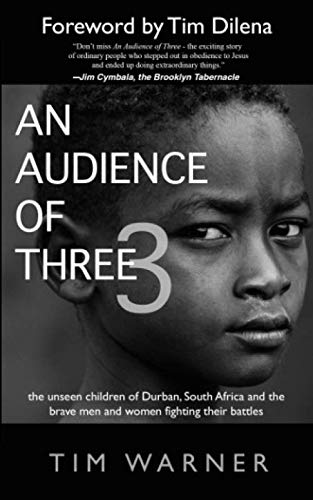
An Audience of Three: the Key of Hope Story (Tim Warner, 2019). A call from God compelled Dan and Rachel Smithers to sell everything and move to Durban, South Africa, the HIV/AIDS capital of the world. From Durban, the couple would found the organization the Key of Hope. Tim Warner was my children’s pastor; this book is great.

Dirt Work: An Education in the Woods (Christine Byl, 2013). When Christine Byl became a trail maintenance worker in a Montana national park fresh out of college, she expected it to be a job to pay the bills until she found the Big Girl Job. Two trail maintenance jobs, a marriage to a coworker, and a move to the Alaska wilderness later, and she was proven wrong. This is the story of Christine’s evolution.

Artemis Fowl (Eoin Colfer, 2001; Artemis Fowl #1). Two years ago, Irish criminal mastermind Artemis Fowl I went missing in a business enterprise gone bad. With the family fortune reaching its end, his son Artemis Fowl II puts a crazy plan in motion: kidnap a fairy and use its gold to turn the Fowls’ misfortune around. Made into a loogie-in-the-face of a movie starring Ferdia Shaw, Lara McDonell, and Judi Dench.

I am the Cheese (Robert Cormier, 1977). Adam Farmer rides his bike from Massachusetts to Vermont to visit his hospitalized father. The further he gets into his ride, however, the more holes that appear in his memory, and the more danger he finds himself in. Made into a movie starring Robert MacNaughton and Cynthia Nixon.

What Truth Sounds Like: Robert F. Kennedy, James Baldwin, and Our Unfinished Conversation About Race in America (Michael Eric Dyson, 2018). In 1963, Attorney General Robert F. Kennedy met with James Baldwin and other black intellectuals as a conciliatory gesture, and the intellectual thrashing would cause a radical shift in Kennedy’s politics. From this seminal meeting, Dyson springs into discussion about black art, celebrity, life, and so on. Book #29 on my antiracism reading list.

Under the Dome (Stephen King, 2009). An invisible, impenetrable dome cuts the small town of Chester’s Mill, Maine, off from the rest of the world. Ex-military drifter Dale “Barbie” Barbara and local newshound Julia Shumway inadvertently find themselves the leader of a resistance movement when a local politician capitalizes on the chaos to become a dictator. Adapted into a meh CBS series starring Mike Vogel, Rachelle Lefevre and Dean Norris.

Brownsville (Neil Kleid, 2006). The story of “Murder, Inc.”, the crime syndicate that invented the idea of killing for hire, told through the eyes of Jewish gangster Albert “Allie Boy” Tannenbaum. It was alright, kind of boring.

Marching for Freedom: Walk Together, Children, and Don’t Grow Weary (Elizabeth Partridge, 2009). The story of the Civil Rights Movement, told through the eyes of people in the crowd. Pretty good.

The Great Stone Face (Gary D. Schmidt, 2002). Ernest’s tiny village is overlooked by the Great Stone Face, and local legend says that whoever resembles the face in the mountainside will be the noblest man in the countryside. The years will pass, and only when Ernest is an old man will the prophecy be fulfilled. Based off a story of the same name by Nathaniel Hawthorne.

The King of Attolia (Megan Whalen Turner, 2006; The Queen’s Thief #3). The one where Gen becomes king of Attolia. Still boring, but it’s not The Queen of Attolia, so we’ll call it an improvement.

Bored and Brilliant: How Time Spent Doing Nothing Changes Everything (Manoush Zomorodi, 2017). Work and new baby-induced burnout made podcast host Manoush Zomorodi unplug. Her mental health improved so much that she made a challenge and a spin-off book out of her experiment: the Bored and Brilliant Challenge and this book.

The Life and Crimes of Hoodie Rosen (Isaac Blum, 2022). Yehuda ‘Hoodie’ Rosen is an Orthodox Jew, one of many who’s moved into the small town of Tregaron; Anna-Marie Diaz-O’Leary is the girl he falls for, the daughter of the mayor trying to keep the incoming Jewish community from putting down roots. They fall for each other as anti-Semitic crimes drive a wedge between the Jewish and Gentile communities of Tregaron. Can their young love survive the hate?

Parasomnia (Cullen Bunn, 2021; Parasomnia Issue #1). A man searching for his missing son is knocked unconscious…and wakes up in another world. This series might be great. but I only read the first issue.

Crazy Love: Overwhelmed by a Relentless God (Francis Chan, 2008). Christianity runs deeper than showing up to church on Sunday, listening to Maverick City, and not cussing. Francis Chan makes a book out of that hypothesis. A pretty good one, too.

Artemis Fowl: The Arctic Incident (Eoin Colfer, 2002; Artemis Fowl #2). A ransom video sent by the Russian mob reveals to Artemis Fowl that his father is alive. Captain Holly Short comes to the surface to arrest Artemis on suspicion of selling human weapons to underground criminals, but is inadvertently roped into the rescue mission.

Notes from the Underground (Fyodor Dostoyevsky, 1864). For over 40 years, a man has hidden away from Russian society. What caused this man’s misanthropy? Read to find out (and then watch Taxi Driver, because it’s probably the closest we’ll get to a NftU movie).

Ransom (Lois Duncan, 1966). Five teens–BMOC Bruce and his younger brother Glenn, loner Dexter, rich girl Marianne, and military brat Jesse–are kidnapped and held for ransom. …that’s it.

Long Time Coming: Reckoning with Race in America (Michael Eric Dyson, 2020). Inspired by the execution of George Floyd, Michael Eric Dyson makes a book out of writing letters to him and six other black people gone too soon: Emmett Till, Elijah McClain, Breonna Taylor, Sandra Bland, Hadiya Pendleton, and Reverend Clementa Pinckney. Book #30 on my antiracism reading list.

Full Dark, No Stars (Stephen King, 2011). Four stories, all macabre. Three of them–“1922,” “Big Driver,” and “A Good Marriage”–have all been adapted into movies. Pretty good collection.

Becoming Better Grownups: Rediscovering What Matters and Remembering How to Fly (Brad Montague, 2020). Adulthood is something to be dreaded in today’s society, hence the existence of the verb “adulting” and many people’s expectations of several decades of slog that concludes in death. Brad Montague, creator of the “Kid President” web series, pushes back against that narrative: to be a better adult, so says Montague, you must be childlike.

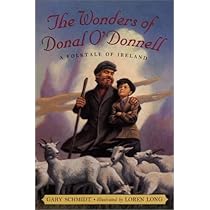
The Wonders of Donal O’Donnell (Gary Schmidt, 2002). Donal and Sorcha O’Donnell are still reeling from the sudden death of their son when three men show up on their farmhouse’s doorstep during a downpour. The men–Donal O’Leary, Donal O’Neary and Donal O’Sheary–will tell stories that will break open the couple’s frozen hearts.

Things Not Seen (Andrew Clements, 2002: Things #1). 15-year-old Bobby Phillips wakes up invisible one winter morning. As he’s still processing his new state, he meets Alicia, a girl blinded in a freak accident. It’s a race against time for the two of them to find what turned Bobby invisible as the authorities close in on the Phillips family.

Kindred: A Graphic Novel Adaptation (Damian Duffy and John Dennings, adapting Octavia Butler’s Kindred, 2017). With no warning, Dana, a black woman from the 1970s, is transported back into the pre-Civil War South, and rescues a young white boy. As she continues to bounce between past and present, she comes to a realization: the young man whose life she keeps saving is her own ancestor. Hailed as a cornerstone in African-American literature, science fiction, and Afrofuturism, a TV adaptation of Kindred aired for one season on FX.

The Perks of Being a Wallflower (Stephen Chbosky, 1999). Charlie starts high school grieving his best friend’s suicide. It’s pure luck that Patrick, the weird kid in his woodshop class and his cute stepsister Sam take Charlie under their wing and bring him back to life. Made into a movie starring Logan Lerman as Charlie, Emma Watson as Sam and the Reverse-Flash/Ezra Miller as Patrick.

Artemis Fowl: The Eternity Code (Eoin Colfer, 2003; Artemis Fowl #3). A deal gone wrong leaves Artemis Fowl’s beloved Butler on the brink of death and forces Artemis to call on Holly Short once again. It’s up to the two of them to save Butler and retrieve a game-changing piece of Fairy technology from an unscrupulous businessman.

Loaded: A Disarming History of the Second Amendment (Roxanne Dunbar-Ortiz, 2018). An alleged history of the racist origins of American gun culture. I say “alleged” because this book feels extremely unfocused and feels like a retelling of Dunbar-Ortiz’s previous book An Indigenous People’s History of the United States with a slight bent towards guns.

I Know What You Did Last Summer (Lois Duncan, 1973). A year ago, four friends hit and killed a kid with their car, but were never caught, despite calling the police and saying what they’d done. But taunting notes and a shooting make the teens realize: someone knows what they did, and wants them to pay. Yes, this was made into a movie starring the likes of Sarah Michelle Gellar and Jennifer Love Hewitt; no, the movie was nothing like the book.

Biased: Uncovering the Hidden Prejudice That Shapes What We See, Think and Do (Jennifer L. Eberhardt, Ph.D., 2019). Bias, the thing that motivates so many bad things in the world, feels inescapable. It’s not, so thinks Jennifer Eberhardt, a psychology professor at Stanford. Book #31 on my antiracism reading list.

11/22/63 (Stephen King, 2011). The day English teacher Jake Epping discovers there’s a wormhole in the walk-in fridge of his favorite restaurant is the same day he’s enlisted for an extraordinary task: saving the life of John Fitzgerald Kennedy. Jake dives through the wormhole and into the 1950s, and learns how hard the past will fight to not be changed. Adapted into a Hulu miniseries starring James Franco, Chris Cooper, Sarah Gadon and Daniel Webber.

After College: Navigating Transitions, Relationships and Faith (Erica Young Reitz, 2016). How do you navigate the post-college years and not lose faith in God/yourself/humanity? Erica Young Reitz attempts to answer.

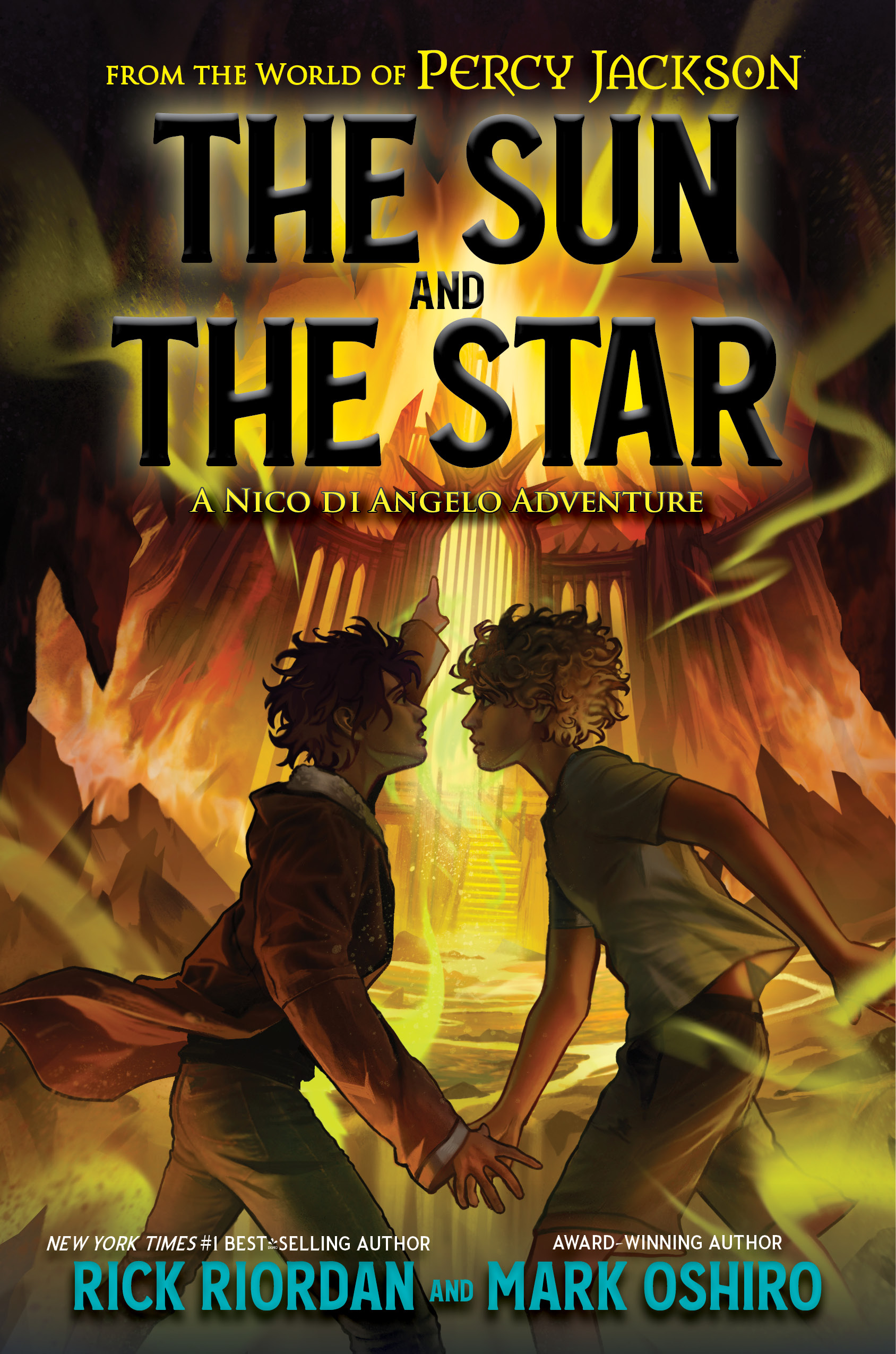
The Sun and the Star: A Nico di Angelo Adventure (Rick Riordan and Mark Oshiro, 2023; The Camp Half-Blood Chronicles #17). For the first time in his life, Nico di Angelo is happy with his boyfriend Will Solace. But prophetic dreams beckon Nico and Will on a quest into the worst place under the world: Tartarus, the deepest, most dangerous part of the Greek underworld.

Lizzie Bright and the Buckminster Boy (Gary D. Schmidt, 2004). Turner Buckminster doesn’t feel at home in Phippsburg, Maine, his new home, until he meets Lizzie Bright. That’s a problem, because Lizzie is part of an African-American community on land that Phippsburg’s leader wants, and Turner’s father, as the new pastor, is expected to sign on with forcing Lizzie and her community out. Someone and something has to give: Turner and his friendship with Lizzie, or Reverend Buckminster and the pull between his family and the community.

A Conspiracy of Kings (Megan Whalen Turner, 2010; The Queen’s Thief #4). Sophos, once a traveling companion of Eugenides, king of Attolia, is kidnapped and sold into slavery. He escapes in time to learn his uncle the king is dead, and he is the new king of Sounis. The point where I jumped off the Queen’s Thief train and concluded this series wasn’t for me.

Get Good with Money: Ten Simple Steps to Becoming Financially Whole (Tiffany “the Budgetnista” Aliche, 2021). After losing her job to the 2008 recession, losing her home to foreclosure, and losing much of her savings to a scammer, the last career path Tiffany Aliche expected to go down was financial advice. And yet, 13 years later, “the Budgetnista” is here to give you ten steps to financial wholeness.

Blacula: Return of the King (Rodney Barnes, 2023). When corpses with their throats torn out start showing up in the neighborhoods once supposedly terrorized by “Blacula,” a blogger named Tina ventures into the neighborhoods to cover the violence. She teams up with a young man named Kross to kill Blacula once and for all. Unbeknownst to both of them, Blacula has a mission of his own: kill Count Dracula, the creature responsible for his hellish existence.

Artemis Fowl: The Opal Deception (Eoin Colfer, 2005; Artemis Fowl #4). For a year, pixie madwoman Opal Koboi has been in a self-induced coma, plotting revenge against the four people who foiled her evil plans: Captain Holly Short, Mulch Diggums, Artemis Fowl and his Butler. After their last shenanigans with fairies, Artemis Fowl and Butler submitted to mind wipes. If they’re going to survive Opal’s schemes, Holly and Mulch will need to figure out a way to bring back Artemis and Butler’s wiped-away memories.

Summer of Fear (Lois Duncan, 1976). When she learns of her aunt and uncle’s deaths in a car accident, Rachel Bryant welcomes her cousin Julia with open arms. She regrets it, because within days, Julia steals her friends, her boyfriend, her bedroom, and seemingly Rachel’s position in her family. When Rachel finds several strange objects among Julia’s things, she starts to wonder if Julia’s influence is entirely of this world.

Why I’m No Longer Talking to White People About Race (Reni Eddo-Lodge, 2017). In 2014, Reni Eddo-Lodge wrote a blog with a rather forward title: “Why I’m No Longer Talking to White People About Race.” In this book-length expansion on her post, Eddo-Lodge talks about black British history, feminism, and the intersection of race and class. A provocative title for book #32 on my antiracism reading list.

A Path Through Suffering (Elisabeth Elliot, 1990). When she was only 30 years old, Elisabeth Elliot’s husband Jim died at the hands of the Huaorani, the indigenous people of Ecuador that he ministered to. For the rest of her life, Elliot would use her suffering to minister to others, hence this book.

The Big Crunch (Pete Hautman, 2011). A teen romance that didn’t want to make me facepalm. Seriously, this book is adorable. Read it.

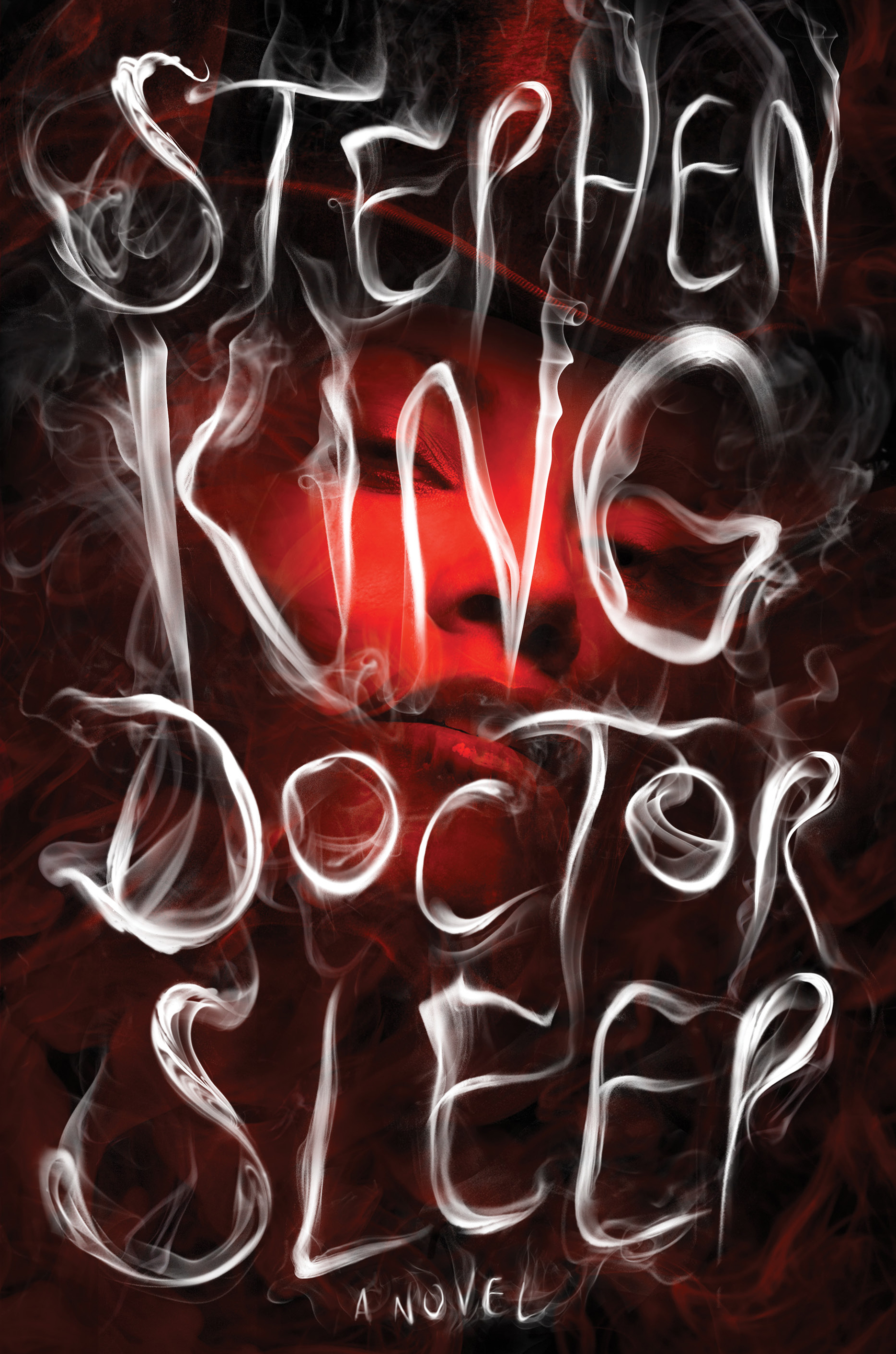
Doctor Sleep (Stephen King, 2013; The Shining #2). Decades after a building full of evil destroyed his father from the inside out, Dan Torrance has put his “shining” psychic abilities to good use working in a hospice and helping the elderly patients die peacefully. Psychic communications with a teenage girl with the shining make Dan aware of a threat more dangerous than what took his father, and that only by working with the girl can the two of them survive. Made into a movie starring Ewan McGregor, Rebecca Ferguson and Kyliegh Curran.

First Boy (Gary D. Schmidt, 2005). Cooper Jewett is left to run his grandfather’s farm by himself. Vandalism, a legion of mysterious black sedans and a visit from a smarmy politician puts Cooper in the midst of a political scandal.

Designing Your Life: How to Build a Well-Lived, Joyful Life (Bill Burnett and Dave Evans, 2016). Former Apple designer Bill Burnett and EA cofounder Dave Evans collaborated to make a class for seniors at Stanford University, “Designing Your Life.” Then they made a book out of it.

Does Jesus Really Love Me?: A Gay Christian’s Pilgrimage to in Search of God in America (Jeff Chu, 2013). Jeff Chu experienced an identity crisis trying to put his unwavering faith in God on the same page with his being gay. He knew churches and churchgoers across the United States and the world were having similar problems, so he trekked across the US to talk to Christians of all kinds about homosexuality. Then he wrote a book about it.

Artemis Fowl: The Lost Colony (Eoin Colfer, 2006; Artemis Fowl #5). Artemis Fowl is back in fairy business, but for good reasons this time. Thousands of years ago, an entire chunk of fairy society–the demons–pulled up their stakes and transported the island they lived on outside of time. Now the time spell is decaying, and it’s up to Artemis and a new ally to save the demons before they break the fairy masquerade once and for all.

Divided by Faith: Evangelical Religion and the Problem of Race in America (Michael O. Emerson and Christian Smith, 2000). Historically, American evangelicalism has been complicit in many systemic wrongs, rarely endorsing them but not condemning them either. Sociologists Michael O. Emerson and Christian Smith conducted nearly 2,000 interviews to get to the bottom of the American evangelical church’s race politics. Book #33 on my antiracism reading list.

Killing Mr. Griffin (Lois Duncan, 1978). Mr. Griffin is the most unpopular teacher at Del Norte High School thanks to his harsh grading. One of his students talks his friends into kidnapping Mr. Griffin to scare the perfectionist grading out of him, but the prank inadvertently turns into a murder and a cover-up. Made into a movie starring Amy Jo Johnson and Mario Lopez.

Silence (Shūsaku Endō, 1966). In the 17th century, the Japanese government has turned on Christianity, and Japanese Christians and missionaries alike are threatened with torture and death into renouncing their Christian faith. Two Portuguese priests journey to Japan and are forced to witness horrors that make them question God’s silence. Made into a critically acclaimed film directed by Martin Scorsese starring Andrew Garfield, Adam Driver and Liam Neeson.

Ask the Passengers (A.S. King, 2012). The only people Astrid Jones feels like she can be real with are the passengers on planes flying over her small town. They’re the only people who know about her secret girlfriend and her questioning her sexual identity. When Astrid’s relationship is exposed, can the passengers help Astrid survive the ensuing turmoil?

Mr. Mercedes (Stephen King, 2014; Bill Hodges Trilogy #1). A masked maniac drives a stolen car through a crowd, killing 8 and injuring 15. A year later, Bill Hodges, the lead investigator in the Mercedes Killer case, has retired, but gets called back into action by a taunting letter from the killer. Made into a Peacock series starring Brendan Gleeson, Harry Treadaway, Jharrel Jerome and Justine Lupe.

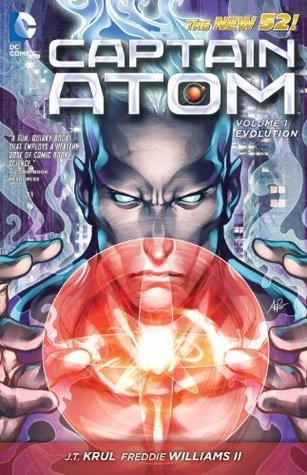
Captain Atom, volume 1: Evolution (J.T. Krul, 2011). An experiment turned Nathaniel Adams, USAF, into Captain Atom, a nuclear-powered hero that has the public and the government alike quaking in their boots. When a high level of radioactivity brings Atom to a ghost town in rural Washington, Atom has to take down a personal threat and show the world he’s one of the good guys.

In God’s Hands (Lawrence Kushner and Gary D. Schmidt, 2005). Two men zone out during services at the local synagogue: Jacob, a rich man focused on getting money, and David, a poor father with a lot of mouths to feed. Jacob, feeling convicted by God, bakes some bread and leaves it at the synagogue, kicking off a chain reaction. Based off of a Jewish folktale.

Quiet: The Power of Introverts in a World That Can’t Stop Talking (Susan Cain, 2012). 1/3 people are introverted, but the world is heavily skewed towards extroverts. Susan Cain gives us a glimpse of what we’re missing by overlooking introversion.

Woman Hollering Creek and Other Stories (Sandra Cisneros, 1991). A fantastic collection of 22 stories about Latinx culture, femininity, machismo, childhood, nostalgia and religion. A contender for my favorite book of 2023.

Artemis Fowl: The Time Paradox (Eoin Colfer, 2008; Artemis Fowl #6). Artemis Fowl thought saving demons from their collapsing home outside of time and losing three years in the process was the last time he’d have to use time magic. But when a magic-resistant deadly illness jumps species from fairy to Artemis’ mother, Artemis and Captain Holly Short have no choice but to go back in time for the cure: spinal fluid from an extinct animal. Extinct because a younger, more ruthless Artemis sold it to poachers.

The Twisted Window (Lois Duncan, 1987). Within days of Tracy Lloyd meeting Brad Johnson, he’s recruited her. He’s in town, trying to rescue his half-sister from the father who kidnapped her. But things aren’t as they seem and Brad’s not telling Tracy the whole story…

The Virgin Suicides (Jeffrey Eugenides, 1993). Decades after the Lisbon sisters–Cecilia, Lux, Therese, Beth and Mary–committed suicide one after the another, a group of neighborhood boys who watched them deteriorate come together to figure out what made the Lisbon girls snap. Made into a movie by Sofia Coppola starring Josh Hartnett, Kirsten Dunst, Scott Glenn and Danny DeVito.

Unwanted: How Sexual Brokenness Reveals Our Way to Healing (Jay Stringer, 2018). Based off of interviews with nearly 4,000 patients, psychologist Jay Stringer dives deep into the causes of sex addiction and how to overcome it.

Democracy in Black: How Race Still Enslaves the American Soul (Eddie S. Glaude, Jr., 2016). The “value gap” of white supremacy has poisoned our country and our democracy, conjectures Eddie S. Glaude, Jr., professor of religion and African-American studies at Princeton University. A change is required. Book #34 on my antiracism reading list.

Revival (Stephen King, 2014). Jamie Morton was a kid when Charles Jacobs, the new minister with a fixation on electricity, cursed God for the death of his wife and child and left the pulpit. Decades later, on the other side of a so-so musical career destroyed by drug addiction, Jamie encounters Jacobs again and discovers his fixation with electricity has taken a decidedly sinister bent in the intervening years. In my humble opinion, King’s scariest book since Pet Sematary.

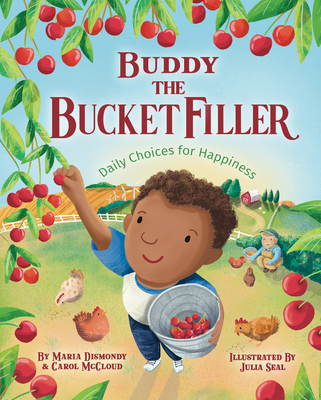
Buddy the Bucket Filler: Daily Choices for Happiness (Maria Dismondy and Carol McCloud, 2023). A summer spent on his Great Uncle Frank’s farm is a golden opportunity for young Buddy to practice “bucket filling,” deliberate kind words and actions. Way outside my wheelhouse, but my mom got an ARC of this book and passed it on to me. Nice job, Carol McCloud.

The Wednesday Wars (Gary D. Schmidt, 2007). Holling Hoodhood is sure his English teacher hates him, but with his architect father seeing a potential client in every family in town, there’s not much Holling can do. But that’s the tip of the iceberg. Escaped class pets, starring in a play, getting hit by a bus and going on his first date will be only a few things Holling experiences in this book that introduced me to Gary Schmidt.

Confessions of a Ex-Doofus Itchy Footed Mutha (Melvin Van Peebles, 2009). Doofus’ itchy feet aim for Mexico, but trusting the wrong person lands him in New York instead. Those same itchy feet make Doofus leave the love of his life, and it will take a hell of a lot to get Doofus back to his woman. Melvin Van Peebles, a legendary blaxploitation director, adapted his own graphic novel into a film of the same name.

Boxers (Gene Luen Yang, 2013; Boxers & Saints #1). With a sword gifted from a mysterious master and a ritual passed down from the gods, Little Bao forms the Society of the Righteous and Harmonious Fist, an order dedicated to expelling foreign influences from China. Part 1 of the Boxers & Saints duology.

Saints (Gene Luen Yang, 2013; Boxers & Saints #2). All her life, Four-Girl has been her family’s whipping girl, until the local acupuncturist introduces her to Christianity. Four-Girl takes a new name, Vibiana, but her new identity will put her on the road to a meeting with the Society of the Righteous and Harmonious Fist… Part 2 of the Boxers & Saints duology.

Atomic Habits (James Clear, 2018). Why are bad habits so easy to make and good habits so maintain? Why is it so easy to drink your wallet empty and kill your hangover with greasy fast food than to start the day with a gym session and a healthy breakfast? James Clear tackles this question in Atomic Habits.

Boundaries (Drs. Henry Cloud and James Townsend, 1992, updated edition released 2017). Have healthy boundaries: the book. Everyone should read this book. Seriously.

Artemis Fowl: The Atlantis Complex (Eoin Colfer, 2010; Artemis Fowl #7). What would be a meeting to get fairy approval on a potentially planet-saving invention instead reveals a big honkin’ problem: Artemis Fowl has come down with the Atlantis Complex, a neurotic mental disorder. Bad timing, too: an old enemy of the LEP stages a jailbreak, and no Artemis to foil him. Can Artemis’ friends save him and catch the crook?

The Modern Frankenstein (Paul Cornell and Emma Vieceli, 2021). Medical student Elizabeth Cleve is shocked when her overseer, Dr. James Frankenstein, heals her mother’s dementia. Frankenstein’s brilliance pulls Elizabeth into a web of unethical experiments, romance…and murder.

The Boyfriend Bracket (Kate Evangelista, 2018). With her overprotective boyfriend away at college, Stella Patterson can finally start dating in her senior year of high school. And she knows how: The Boyfriend Bracket, a series of dates that pits 8 potential boyfriends against each other. A childhood friend will upend the whole process, though.

The Family Romanov: Murder, Rebellion & the Fall of Imperial Russia (Candace Fleming, 2014). In 1918, Bolsheviks executed the Romanovs, the last royal family of Russia, by firing squad. Who were the family of seven that died by Bolshevik bullets that day, and what did they do to cause such ire from the people they ruled over? Read to find out.

Begin Again: James Baldwin’s America and Its Urgent Lessons for Our Own (Eddie S. Glaude, Jr., 2020). Eddie Glaude examines the life and writing of James Baldwin and the ways that Baldwin is still relevant today. Book #35 on my antiracism reading list.

Dinky Hocker Shoots Smack! (M.E. Kerr, 1972). Giving his cat away due to his dad developing an allergy makes Tucker Woolf meet Susan “Dinky” Hocker, an odd girl with a weight problem. Hijinks ensue.

Finders Keepers (Stephen King, 2015; Bill Hodges Trilogy #2). Peter Saubers finds an old trunk full of money and old notebooks in the woods behind his home. The money, which Pete delivers anonymously in installments, solves his parents’ financial woes. The notebooks, however, bring Pete a new problem: Morris Bellamy, a psychotic ex-con who stole them from an award-winning author in a fatal robbery and will move heaven and earth to get them back.

Trouble (Gary D. Schmidt, 2008). Racial tensions reach a boiling point in Blythbury-by-the-Sea, Massachusetts, when a Cambodian immigrant hits and kills local sports star Franklin Smith. Franklin’s younger brother Henry heads for Mt. Katahdin, the mountain he and Franklin planned to climb together. He’ll encounter forgiveness, redemption and a new worldview on the way.

My Friend Dahmer (Derf Backderf, 2012). Future cartoonist Derf Backderf hung with another future famous person as a teenager: Jeffrey Dahmer. Made into a movie starring Alex Wolff as Derf Backderf and Ross Lynch as Jeffrey Dahmer.

Between the World and Me (Ta-Nehisi Coates, 2015). A letter from father to son detailing the kind of world the son will live in as a black man. You might cry; I nearly did.

When No One is Watching (Alyssa Cole, 2020). Sydney Green’s Brooklyn is quickly gentrifying, and that’s the least of her problems. When a string of suspicious goings-on coincide with Sydney’s neighborhood getting whiter, she and her neighbor Theo smell fish. They race to get to the bottom of it…before they disappear too.

Artemis Fowl: The Last Guardian (Eoin Colfer, 2012; Artemis Fowl #8). Artemis Fowl’s archnemesis Opal Koboi springs her most dastardly plan: starting the apocalypse. It’s a battle of wits and magic as Artemis tries to accomplish his loftiest goal yet: saving the human race.

Untamed (Glennon Doyle, 2020). Glennon Doyle was surviving, not thriving, through an infidelity-motivated divorce when she met former pro soccer player Abby Wambach and felt something previously dead in her awaken. From her subsequent reevaluation of her life upon realizing she was lesbian comes Untamed. This is a bad summary for a good book; give it a read.

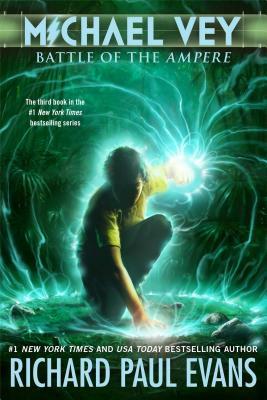
Michael Vey: Battle of the Ampere (Richard Paul Evans, 2013; Michael Vey #3). …It’s a headache to try and recap the first two books, much less in three sentences. I really like this series, the third book not being an exception. Check it out.

Conversations in Black: On Power, Politics and Leadership (Ed Gordon, 2020). Award-winning journalist and example of Black excellence Ed Gordon hopped in Zoom calls with other examples of Black excellence like Stacey Abrams, Michael Eric Dyson, Charlamagne tha God, and Alicia Garza to talk about the state of black America. Book #36 on my antiracism reading list.

Gentlehands (M.E. Kerr, 1978). Buddy Boyle gets into contact with his estranged grandfather when he starts dating wealthy Skye Pennington. It’s because of Skye’s connections that he learns a Jewish journalist is investigating Grandpa Trenker, suspecting he’s a Nazi war criminal nicknamed “Gentlehands” who fled Germany before he could be convicted. There’s no way the kindly old man who welcomes Buddy and Skye into his home could have done such atrocities…right?

The Bazaar of Bad Dreams: Stories (Stephen King, 2015). An anthology of stories written by America’s cousin who takes stories around the campfire way too seriously. For me, a highlight was “Drunken Fireworks,” the story that definitively proves Stephen King can make you bust out laughing as well as bust out screaming.

My Seneca Village (Marilyn Nelson, 2015). Poems from the fictional residents of Seneca Village, a multiracial community that stood on what is now Central Park in New York City.

Okay for Now (Gary D. Schmidt, 2011). One of my favorite books ever. Still great on the third read. That is all.

No More Christian Nice Guy (Paul Coughlin, 2005). Jesus wanted action, not passivity, darn it! Stop thinking that being a doormat is God’s plan for your life and be the man God called you to be. A little problematic, but Paul Coughlin had his heart in the right place.

The Gift: 12 Lessons to Save Your Life (Edith Eger, 2020). The 12 principles Hungarian-born therapist Edith Eger used to recover from her time as a prisoner in Auschwitz. Also, Eger wrote this book when she was 93 YEARS OLD.

Michael Vey: Hunt for Jade Dragon (Richard Paul Evans, 2014; Michael Vey #4). Michael and his friends book it to Taiwan, to rescue a Chinese child prodigy who has cracked the code to producing more electric children, before the Elgen can get to her. The first ever audiobook I listened to.

Erasure (Percival Everett, 2001). Thelonius “Monk” Ellison has watched five beautifully-composed novels flop at the same time other black authors won critical acclaim by writing stereotypical “ghetto” schlock. But when his sister’s murder preempts his mother’s declining mental faculties, Monk sees no choice but to write one of said schlocky “ghetto” novels under a pseudonym for the money. Cord Jefferson directed a film adaptation, American Fiction, released this year starring Jeffrey Wright as Monk.

White Tears/Brown Scars: How White Feminism Betrays Women of Color (Ruby Hamad, 2020). When white women cry, black and brown people die. Book #100 of 2023. Book #37 of my antiracism reading list.

The Lie Tree (Frances Hardinge, 2015). Faith Sunderly’s father, natural scientist Erasmus Sunderly, dies mysteriously while battling allegations of “discovering” hoax fossils. Among his papers, Faith finds his biggest discovery: a mysterious tree fed by lies, a tree with fruit that can show anyone who eats it the truth. With her family’s money running out and her father’s reputation in ruins, Faith has no choice but to feed the tree to get to the bottom of her father’s death.

Night Kites (M.E. Kerr, 1986). Erick Rudd struggles with two big revelations: that his best friend’s girl is more interested in him than his buddy Jack, and that the bug his older brother Pete caught overseas is the type that he won’t get better from.

End of Watch (Stephen King, 2016; Bill Hodges Trilogy #3). The blow to the head that put Brady Hartsfield in a coma also knocked loose psychic abilities. Using these powers, Brady frees himself from his coma, and he wants revenge on Bill Hodges.

On Boxing (Joyce Carol Oates, 1987). Essays on boxing.

What Came from the Stars (Gary D. Schmidt, 2012). Sixth grader Tommy Pepper opens his lunchbox and finds a beautiful necklace that lets him speak an alien language and make art that should be impossible. The necklace is the last remnant of the Valorim, an alien race on the verge of extinction. And their enemies really, really want that necklace.

DMZ, volume 3: Public Works (Brian Wood, 2007). A terribly uninteresting graphic novel. Maybe I would have liked it better if I’d read it from the beginning, but I doubt it. A very loose miniseries adaptation aired on Max.

New Kid (Jerry Craft, 2019; New Kid #1). Jordan Banks is the new kid at prestigious Riverdale Academy Day School. Jordan feels pulled between the two opposing forces of his Washington Heights neighborhood and his elite school, not helped by his school being full of microaggressions and his dad’s not-so-secret unhappiness about his son starting to spread his wings. This book’s a history maker, being the first ever graphic novel to win the Newbery Medal.

Charlie the Choo-Choo (Beryl Evans, aka Stephen King, 2016). A children’s book from the Dark Tower universe, made real. The whole time, I was expecting the talking train to eat children or be possessed by Satan, but no, it’s a conventional children’s story.

Michael Vey: Storm of Lightning (Richard Paul Evans, 2015; Michael Vey #5). The resistance has been compromised, and Elgen has bombed the Electroclan’s home base, where their families were, off the map. Michael doesn’t know what he’ll do as he sifts through the rubble. But he knows one thing: Hatch will pay.

Sabrina & Corina: Stories (Kali Fajardo-Anstine, 2019). A collection of stories, all from the POV of Latina and indigenous women from Colorado. A bit of a weird niche, but Kali Fajardo-Anstine is a Latina woman with indigenous ancestry from Colorado, so…

Infinitum (Tim Fielder, 2021). An African warlord is cursed with immortality. We follow him through the centuries, as he watches humanity rise and fall, and becomes the savior of humanity.

Ask a Manager: How to Navigate Clueless Colleagues, Lunch-Stealing Bosses, and the Rest of Your Life at Work (Alison Green, 2018). From lunch thieves to raises to coworkers casting spells, Alison Green, creator of the Ask a Manager website, has been asked it all. In this book expansion of her website’s concept, Alison Green answers some of the commonly asked questions.

Dear White Christians: For Those Still Longing for Racial Reconciliation (Jennifer Harvey, 2014; second edition released in 2020) A terribly boring case for the church giving out reparations. Book #38 on my antiracism reading list.

Hoops (Walter Dean Myers, 1981). Lonnie Jackson gets the opportunity of a lifetime when he joins a citywide basketball tournament representing Harlem. His basketball coach could’ve gone pro, but poor decisions wrecked his career before it could start. Can Cal’s experience and Lonnie’s gifts guide them through some powerful people really wanting Lonnie and his team to not make it?

Long Way Down (Jason Reynolds, 2017). Will Holloman’s older brother Shawn is dead, and The Rules say that Will should get even, not sad. But on the elevator ride down to hunt the guy who made his brother past tense, time slows to a crawl and the ghosts of Will’s loved ones flood the elevator. Easily one of my favorite books of this year.

The God of Small Things (Arundhati Roy, 1997). Observe an Indian family fall apart over the span of three decades. Well-written, but if you’re in a good mood, don’t read this book.

Martin de Porres: The Rose in the Desert (Gary D. Schmidt, 2012). The life story of Martin de Porres, the first black saint to come out of the Americas.

The Poet X (Elizabeth Acevedo, 2018). Xiomara Batista’s life is a mess, with a freakishly religious mother, a neglectful father, a closeted brother, and a lot of unwanted male attention. With a teacher’s encouragement, she turns her frustrations into slam poetry, and the Poet X is born. Won every award that a YA book can win, and earned those awards.

Class Act (Jerry Craft, 2020; New Kid #2). A new school year brings new struggles for Jordan Banks’ best friend Drew Ellis. The equally-fun sequel to the fun New Kid.

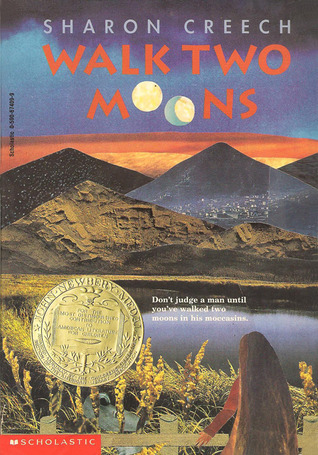
Walk Two Moons (Sharon Creech, 1994). Salamanca “Sal” Hiddle travels with her grandparents to see her mother, who left Sal and her husband and moved to Idaho a year earlier. On the way, she tells the story of her friend, Phoebe, whose mother also left her family, and she starts to realize a few things.

Chapters: My Growth as a Writer (Lois Duncan, 1982). The autobiography of Lois Duncan, author of acclaimed YA books like I Know What You Did Last Summer and Hotel for Dogs, in which she tells us how she got her start, how her life influenced her writing and vice versa. More engaging than I expected.

Michael Vey: Fall of Hades (Richard Paul Evans, 2016; Michael Vey #6). The Elgen have made the island nation of Tuvalu their kingdom, and plan to use it as their staging ground for world domination. With no choice, Michael and the Electroclan head straight into enemy territory to put a stop to the Elgen’s conquest. This book has an…explosive ending.

My Heart Underwater (Laurel Flores Fantauzzo, 2020). After her mother catches her kissing a female teacher, Corazón Tagubio is shipped overseas to the Philippines to meet the brother she’s only seen on a computer screen. A change of culture is what she needs.

American Gods, volume 1: Shadows (Neil Gaiman, 2018; adapted from Gaiman’s American Gods, 2001). Shadow Moon ends a three-year stint only to learn his wife died cheating on him with his best friend. A strange man, Mr. Wednesday, recruits Shadow as a driver for his mysterious agenda. Part 1 of a 3-volume graphic novel adaptation of the American Gods novel.

White Awake: An Honest Look at What It Means to Be White (Daniel Hill, 2017). An offhand comment from a South Asian friend put Pastor Daniel Hill of Chicago’s River City Community Church in a tailspin about his identity as a white man. Out of that tailspin, he’s here to lay out a biblical case for antiracism and encourage other white Christians to fight through the discomfort and join him in the fight against white supremacy. Book #39 on my antiracism reading list.

The Defining Decade: Why Your Twenties Matter–and How to Make the Most of Them Now (Meg Jay, Ph.D., 2012). Your twenties are precious. Here are a few ways to not waste them.

Six Scary Stories (Elodie Harper, Manuela Saragosa, Paul Bassett Davies, Michael Button, Stuart Johnstone, and Neil Hudson, edited by Stephen King, 2016). When Stephen King released The Bazaar of Bad Dreams (see above) in the UK, he ran a sweepstakes, trying to find the best short scary story in the land of the Queen and colonization. One won, but five other felt too good not to acknowledge, so he made an anthology. Reader beware, you’re in for a scare…and I might be in for a cease-and-desist from R.L. Stine’s legal team.

Lincoln in the Bardo: a Novel (George Saunders, 2017). A year into the Civil War, Abraham Lincoln’s son Willie dies of typhoid. Unbeknownst to his grieving parents, Willie’s spirit lingers in the Bardo, Buddhism’s form of Purgatory, with dozens of other spirits who haven’t moved on yet. Unlike any other book I’ve ever read; that’s a positive.

And that’s all he read! Come back in a year or follow me @peachykeenebooks on Instagram to see me post book reviews in real time. Until next post!

Work

Now, more than ever, something is clear: people aren’t happy with their jobs

Granted, that’s been true for as long as the modern workforce has existed. From books like Upton Sinclair’s The Jungle and most of Charles Dickens’ bibliography, to shows like The Office to movies like Office Space and Falling Down to comics like Dilbert, even if you didn’t know for a fact that anywhere between 50% and 85% of people are unhappy with their job, you could accurately guess not a lot of people like what they do for a career.

I started writing this post in August of 2023, the end of a summer where unhappiness in all kinds of careers hit a breaking point. The summer of 2023 has been dubbed the “summer of strikes” by some news outlets and “hot strike summer” by some influencers due to the sheer number of industries halted by strikes. The highest profile strikes have been in Hollywood, where one after the other, the Writers’ Guild of America (WGA) and the Screen Actors Guild (SAG-AFTRA) both went on strike. UPS narrowly avoided having its workers go on strike and negotiated higher pay, air conditioning in UPS delivery trucks, the end of forced overtime and more equal pay across the board, according to NPR. Since I started writing this post, a major strike started in my backyard when the UAW, a union that represents workers from major automotive companies Ford Motor Company, General Motors and Stellantis, declared a strike on September 15. But that’s only talking about the strikes that have gotten the most press coverage. I dug deeper and found articles reporting that doctors, food service workers, sanitation workers, nurses, train workers and teachers are either actively striking or threatening to strike. This isn’t an exclusively American uprising either: strikes or strike threats are happening in the likes of Nigeria, the UK, France, Italy, Belgium, and Spain.

In the midst of this, until mid-August I was looking for work.

I should put “looking” in quotation marks. I’ve made references and entire posts centered around my working in a middle school. After that wrapped up in June, I didn’t put a lot of effort into finding the next job. When a week had passed and I hadn’t put out any applications, I told myself I was taking a break, recuperating from the emotional rollercoaster that was working with middle-schoolers. When a month had gone by and I’d only put out a handful of applications, I had to confront my own apprehension.

The fact is, I was scared to go looking for another job.

It took more days of inaction on the job hunting front for me to figure out why. The answer: Burger King.

I worked at Burger King for 1 month and 1 day. That was how long I could stay there before my misery on the job made me choose: either bail out for another job ASAP, or bail when I got fired for Batista-bombing a customer in a miserable rage. I chose the former (but not before coming dangerously close to the latter). 32 days, approximately 256 hours in that kitchen, but I think those experiences will stick with me for life.

Not to be dramatic or anything.

All seriousness aside, after running into a mentor on one of my days off and breaking down crying when they asked me how work was going, I found a coffee shop job that had requested an interview around the time I started at Burger King, interviewed, got the job, and left Burger King as soon as I could. But the experience left me with a new set of fears and apprehensions when it came to looking for work. Every time I fill out a job application or even look at job boards, a nagging voice in the back of the head starts debating itself, wondering if this job will be worse than Burger King.

It’s all about dignity.

I hated working at Burger King because of how disrespected I felt there. My manager threw me into the fray with no training–no run-through on working the register, no instruction for drive-thru, nothing–and then he and my coworkers treated me like I was stupid when I naturally made mistakes and had questions. Customers yelled at me for messing up orders I didn’t make. I was working for a purpose: to pay for a bunch of weddings I’d been invited to and to pay for one more semester of college. The breaking point for me, what made me nearly quit on the spot, was when I checked my bank statements and saw the measly amount of money I’d earned through my misery. One check that the house was empty, a screaming fit, and one crying breakdown in front of a mentor later, and I was on the job hunt again.

While there haven’t been such emotional reactions documented during the strikes, that underlying sense of indignity motivates these strikes. Actors no longer want it to be so common to make pennies in royalties that some Hollywood bars give you free drinks if you show a three-digit royalty check. Writers, animators, and visual effects workers want the people in power to acknowledge that nothing happens on set without them, to show that acknowledgment with living wages, and assurance that their hard work and experience won’t be shunted aside and replaced with AI. Similarly, our society doesn’t run without cars and trucks, and auto workers know that. They want the kind of pay that should come with such a foundational career, and they want it from go, not something they work up to. They want stability even as car companies begin to shift their focus onto electric vehicles, and they want job security as the prospect of cheaper labor via shipping jobs overseas dangles in front of CEOs and executive boards like a carrot in front of a horse’s mouth.

I’ll conclude with a direct appeal to any supervisors, managers, CEOs, anyone in an authority position at their workplace reading this: dignify your workers. Pizza parties were never enough. Stop stagnating wages; if your employees are doing good jobs, say so with good pay. Listen to criticism of yourself and your workplace. Build your workers up instead of tearing them down. Be an advocate for them instead of a roadblock.

That’s how you get people who want to work.

That’s how you stop strikes before they even start.

Something New

Hey guys.

It’s been a busy two weeks. Too busy for me to sit down and type out a blog post. However, I don’t want to go a month without putting up any new posts. So, I’m going to take a page from my blogging muse Dr. NerdLove’s book. Let’s have an open thread.

The last two weeks have been extra-difficult, and I’m bouncing back from a serious mood downturn. With that in mind, let me ask you, audience: what do you do for self-care?

I’ll use the Doc’s rules: no hate, no spam, no trolling. Comment section is open. Next post will be up on March 25th.

It Happened to Me

“It shouldn’t have to happen to you for you to care about it.”

It’s a mantra I’ve heard more and more as politics seem to drift further and further away from passing policy and more about hurting the “other” by every legal means. I’ve heard it said about poverty, Social Security, racism, homophobia, gun violence–the list goes on. It’s a mantra I’ve said. But, in the same way you can’t truly understand some kinds of pain until you’ve experienced it firsthand, you don’t fully understand the phrase until something that hasn’t happened to you, has.

Two weeks ago, that did.

On February 13, the thing we as Americans have resigned ourselves to living with happened yet again: a man, maybe because of a mental health crisis, maybe because he was indoctrinated by some extremist movement, maybe because he wanted to feel powerful by taking life, came to a place that’s supposed to be safe armed, and shot and killed multiple people. The man? Not important. The location? Michigan State University. What was scary? A bunch of my friends are current students there. In addition, of the eight people hit by the gunmen, one of the three deceased and all five injured had their identities kept anonymous. Meaning there was a blank spot, a gravestone

Therefore, I had to do what I’d only heard of in articles and PSAs: text my friends at Michigan State and pray I got a response from them. It was a paralyzing couple of minutes between me sending the messages and getting responses. I kept thinking of an article I’d read about parents of the children of Sandy Hook, written by a mother of a surviving child. She described standing outside the school on the day of the violence, of seeing parent after parent run into the school and then hearing their anguished screams as they identified their child’s body. Would that be me?

Thankfully, it wasn’t. All of my MSU friends quickly responded. As it turns out, most of them weren’t on campus at the time of the shooting. But for those few minutes, I got a taste of what millions of Americans experience on the regular.

It happened to me. I didn’t not care before I sent those texts, but I care in a way I couldn’t before February 13, 2023.

So, my conclusion is simple.

Congress, this has happened to you, too. On January 6, 2021, you were forced to run to safety and hide and hope that the dangerous people with guns that stormed into the place where you were supposed to be safe. You’ve experienced the terror that kids and parents nationwide have lived with for decades. You have no excuse.

Pass gun control legislation. End this madness.

End of story.

It shouldn’t have to happen to you for you to care about it.

“What Is a Woman?”

“Can you provide a definition of the word ‘woman’?”

The question was asked by Senator Marsha Blackburn (R-Tennessee) to then-Supreme Court nominee Ketanji Brown Jackson. It was a trap question, asked at a time where rising levels of hostility towards LGBTQ+ people was everywhere in the news and meant to, as the kids say, “dunk” on Jackson’s progressive stance towards LGBTQ+ rights and issues.

When the clip hit the news, I rolled my eyes at yet more political theater from the modern Republican Party and promptly forgot about it once Ketanji Brown Jackson was confirmed as a Supreme Court Justice. But a few weeks ago, the exchange came back to my mind when I was asked a question myself.

It was lunchtime at work, and as I grabbed my lunch box from the fridge, my coworker asked me if I thought he was feminine. Now, context: this coworker is openly gay. I didn’t want to pry, but I got the feeling he was asking me if he fell into certain stereotypes about gay men.

To prevent stepping on toes, I asked him, “[Coworker,] what do you mean by ‘feminine’?”

He wasn’t sure what I meant, so I explained.

There are a lot of different ways that men are masculine. In this exchange with my coworker, I used the example of the late great James Gandolfini, who despite being overweight, balding, and sounded like he came down with a nasal infection in college and never got better, exuded masculine energy, both as himself and as Tony Soprano.

It’s called a rhinoplasty, T. Might drain that congestion you’ve had since kindergarten.

You’ve probably heard the term “toxic masculinity” by now. If you haven’t, it’s defined as:

a cultural concept of manliness that glorifies stoicism, strength, virility, and dominance, and that is socially maladaptive or harmful to mental health.

Dictionary.com

I’m not going to deep-dive into the topic of toxic masculinity now (though I can in the future), but the ultimate point I made to my coworker was: despite these “man rules” that so many people try to treat as absolute, so many men who are unquestionably manly break this mold and never have their masculinity questioned.

Stoicism is supposed to make you a man, yet Walter Cronkite famously had to stop himself from weeping on-air when announcing the death of President Kennedy; nobody says Walter Cronkite’s not a man.

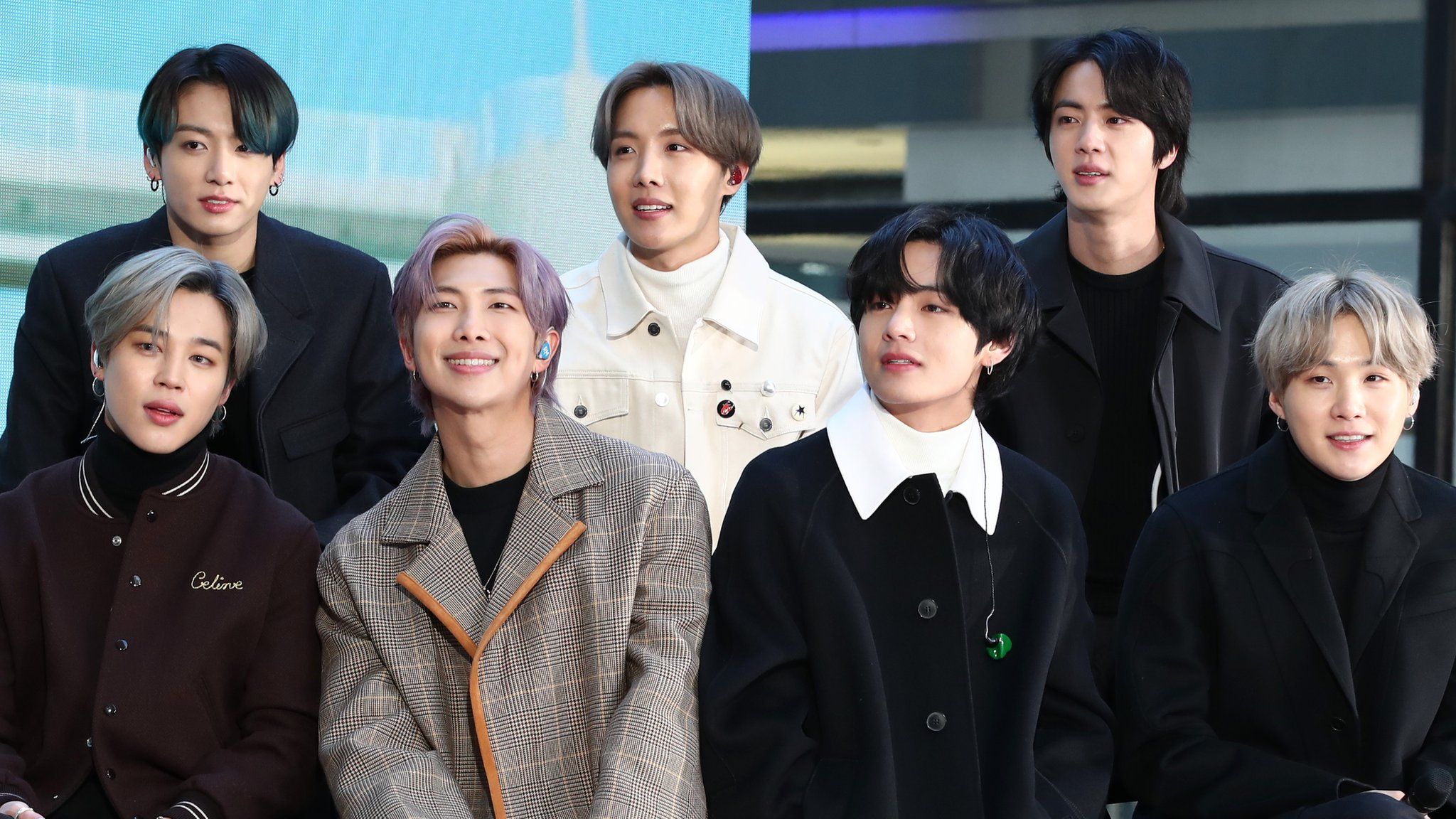
If strength is what makes a man, explain the popularity of K-Pop bands like BTS, where none of the members are beefcakes. Can you really look at their mega-success, see the hundreds of thousands of female fans swooning over them at their concerts, and say they’re not manly because they’re not benching 1,000?

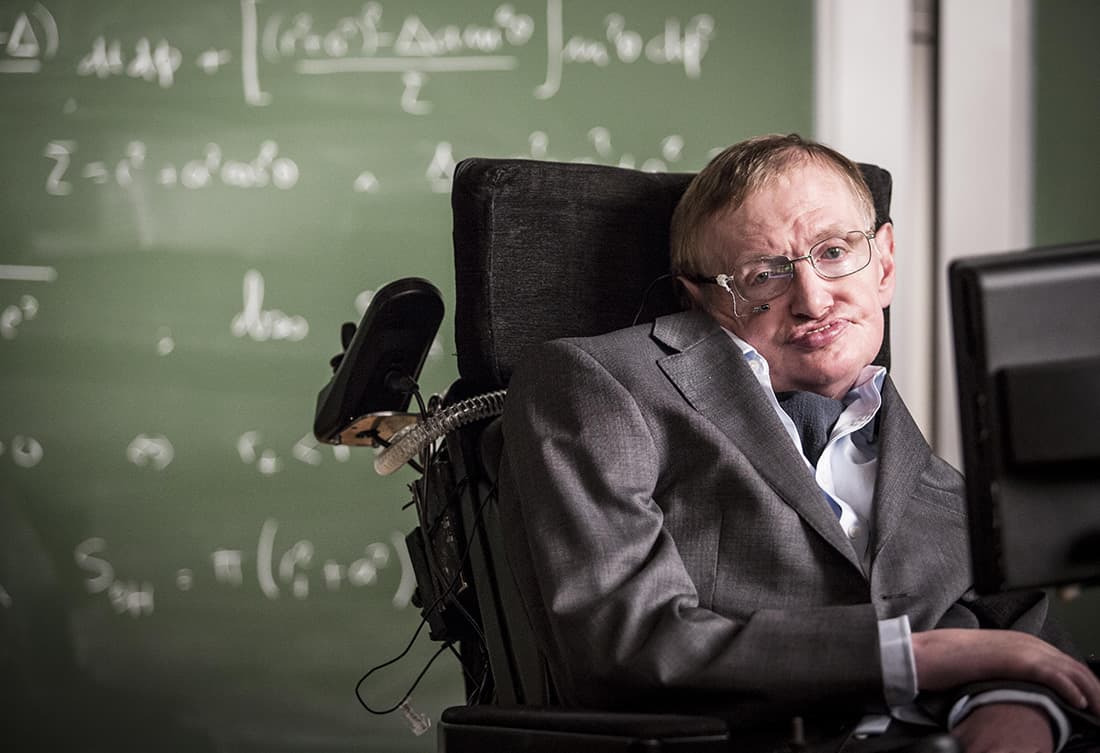
Virility is defined as “the quality of having strength, energy, and a strong sex drive.” Stephen Hawking reached all kinds of academic heights, making breakthroughs in theoretical physics, was a professor at Cambridge, and wrote several bestselling books. And he did all of this while a muscular disease confined him to a wheelchair and slowly atrophied his body, to the point that at the time of death in 2018, the only properly functioning muscle in his body was one of his cheeks. Does the fact that Hawking wasn’t a strapping specimen diminish his accomplishments, make him less of a man?

YOU KNOW THE ANSWER TO THAT QUESTION ALREADY. ALSO, YOU’RE READING THIS IN THE VOICE OF MY SYNTHESIZER.

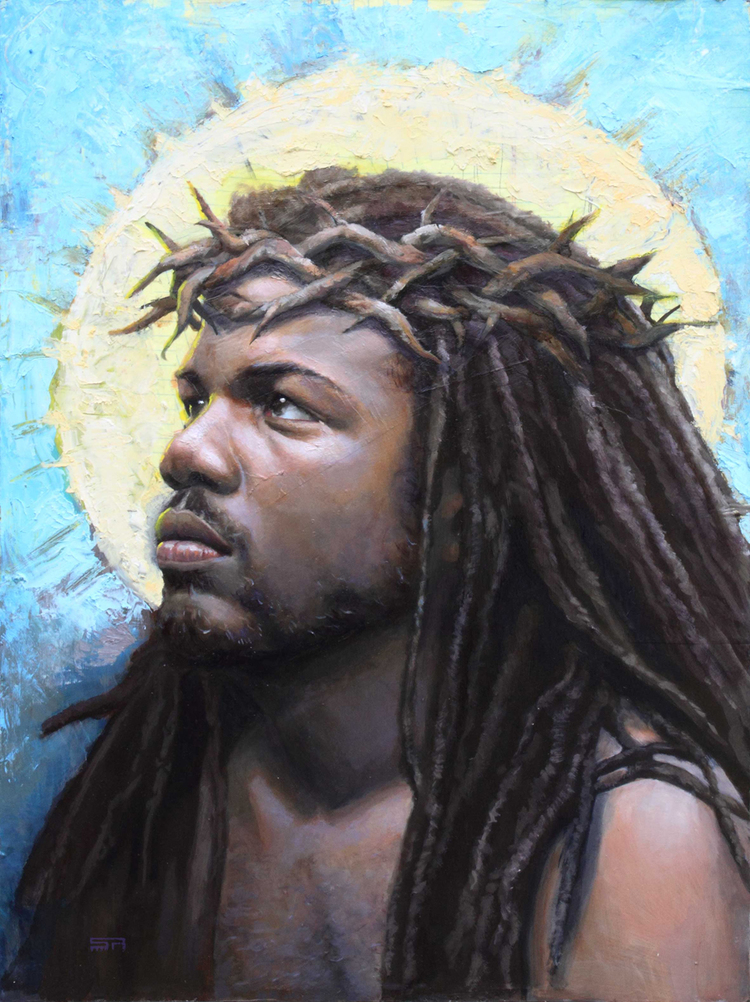
Dominance is supposed to be manly. Yet when Roman soldiers came for Jesus, He not only submitted to the horrible punishment awaiting him, but healed a soldier one of His disciples attacked. Are you going to tell me Jesus wasn’t a man?

“And if you are, what voltage do you want the lightning bolt to be?”

After laying out all of this, I returned to my question: if there are all these different ways to be masculine, then there were presumably as many different ways to be feminine. So, I needed my coworker to have a specific definition of feminine. I could see the cogs turning as my coworker processed that, and he nodded and accepted the question as moot.

So, to conclude: to my men out there, you are masculine. You’re a man if you’re straight. You’re a man if you’re LGBTQ+. You’re a man if you’re a pack of muscle. You’re a man if you’re a string bean. You’re a man if you’re rich. You’re a man if you’re poor. You’re a man even if other people call you feminine. Heck, you might be even more of a man then, because in a world full of posturing alpha-bros, a man who chooses to show vulnerability, to be in tune with their emotions, to be passionate and open, is a treasure.

To my ladies: you are feminine. You’re feminine if you’re a mother. You’re feminine if you don’t have/want kids. You’re feminine if you work. You’re feminine if you stay at home. You’re feminine if you’re straight. You’re feminine if you’re LGBTQ+. You. Are. Feminine.

To Senator Blackburn (on the off-chance she finds this): a woman is whatever she wants to be. Now, less transphobia and more acknowledging that Taiwan deserves independence, please and thank you.

A Mini-Update

Hey, everyone! Happy New Year! I’m writing a mini-update, because I have really important news and definitely not because I’m short on post ideas. So, important news! Ready? You sure? Definitely? 100%?

OK. Here goes.

Posts will go up on Saturday instead of Friday.

BYEEEEEEEEEEEEEEEEE!

100+ More Books. Still Only 3 Sentences.

Hey, remember last year when I gave concise summaries about all the books I read in 2021? If you don’t, here you go.

I’m here to do that again. No beating around the bush, here we go.

The Books I Read in 2022

Teen Frankenstein (Chandler Baker, 2016; High School Horror Story #1). Tor Frankenstein wants to be a Nobel Prize-winning scientist, but for now, she’s an overqualified high school student in small-town Texas. When she hits and kills a teenage boy with her car during a storm, she sees opportunity. After all, what bigger scientific achievement is there than raising the dead?

White Evangelical Racism: The Politics of Morality in America (Anthea Butler, 2021). As much as they deny it, white American Christians have been complicit in racism since America’s founding. Anthea Butler lays out how, from the days of the Founding Fathers to today. Book #16 on my antiracism reading list.

Salvation on Sand Mountain: Snake Handling and Redemption in Southern Appalachia (Dennis Covington, 1995). Glenn Summerford, head pastor of The Church of Jesus with Signs Following in rural Alabama, was charged with attempted murder for trying to kill his wife with poisonous snakes. Dennis Covington, a Southern-born journalist, traveled to Alabama to cover the story and the trial. Covington ended up being drawn into a bubble of religion unique to the American South: snake-handling.

The Girl Who Loved Tom Gordon (Stephen King, 1999). Trisha McFarland gets lost in the Maine woods while hiking with her mother and brother. Two things will keep her alive until she is found: her will to survive, and her Walkman, covering Tom Gordon, her favorite Red Sox player.

If These Wings Could Fly (Kyrie McCauley, 2020). Nothing makes sense in Leighton Barnes’s life: her father leaves her in constant fear of the gun on top of the fridge, her neighbors ignore the obvious signs of Mr. Barnes’ abuse, her house inexplicably repairs itself after her dad’s tantrums, and now her hometown is besieged by crows. As the number of crows grows, so does Leighton’s sense that something needs to change. In the running for one of my favorite books of this year.

The Tyrant’s Tomb (Rick Riordan, 2019; The Trials of Apollo #4). Death is a sobering reminder of the stakes for god-turned-mortal Apollo. A quest to stop Tarquin, the last king of Rome, becomes a race against time when Apollo is infected with a necromancy-powered infection.

Heatstroke: Nature in an Age of Global Warming (Anthony D. Barnosky, 2009). In 2006, a “pizzly,” a half-polar, half-grizzly bear, was discovered hundreds of miles south of the Arctic Circle. Ecologist Anthony D. Barnosky explains how this is the first sign of the havoc global warming will wreak. God, this book was creepy to read in 2022.

Rules of the Road (Joan Bauer, 1998; Rules of the Road Duology #1). Jenna Boller hides from her hectic home life using her job at Gladstone Shoes. Madeline, owner of the franchise, enlists her as a driver down to Texas for an important stockholders’ meeting. Jenna will learn about herself on the way.

Adulting: How to Become a Grown-Up in 468(ish) Easy Steps (Kelly Williams Brown, 2013). Are you a young adult with no clue how to do these “responsibility” and “living on your own” things? Kelly Williams Brown is here to help!

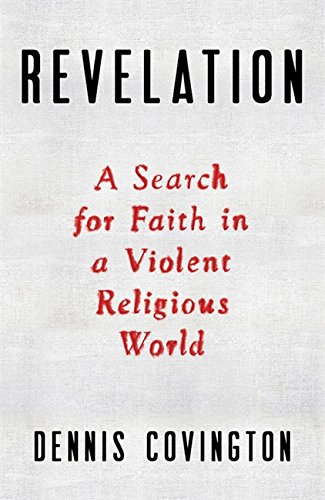
Revelation: A Search for Faith in a Violent Religious World (Dennis Covington, 2016). Dennis Covington went on a journey after hearing the story of Kayla Mueller’s abduction by ISIS. He wanted to know how people could cling to faith in places where faith motivates violence. In my humble opinion, he didn’t find his answer, and this whole book felt pointless.

When They Call You a Terrorist: A Black Lives Matter Memoir (Patrisse Khan-Cullors, 2018). Patrisse Khan-Cullors, along with Alicia Garza and Ayọ Tometi, founded the Black Lives Matter organization. But the organization’s story doesn’t start there. As her memoir, book #17 on my antiracism reading list, shows, it starts in a childhood rife with poverty, mass incarceration and racism.

The Outsiders (S.E. Hinton, 1967). Ponyboy and his friends, known as “Greasers,” have been at war with the “Socs,” their rich counterparts. for as long as anyone can remember. But when Ponyboy’s friend Johnny is forced to kill a Soc in self-defense, the long-term rivalry reaches a boil. Made into a movie in 1983 starring multiple future mega-stars like C. Thomas Howell, Rob Lowe, Ralph Macchio, Tom Cruise and Diane Lane.

Hearts in Atlantis (Stephen King, 1999). Five novellas detail the downfall of the Baby Boomer generation: “Low Men in Yellow Coats,” “Hearts in Atlantis,” “Blind Willie,” “Why We’re in Vietnam,” and “Heavenly Shades of Nights are Falling.” Boomer slander hits so much deeper coming from a Boomer’s mouth–er, typewriter. “Low Men in Yellow Coats” was adapted into a movie titled Hearts of Atlantis starring Anthony Hopkins and the late Anton Yelchin.

The Tower of Nero (Rick Riordan, 2020; The Trials of Apollo #5). Commodus and Caligula are dead, leaving the worst for last: Nero, the oldest and most dangerous emperor. Apollo takes the fight to him, but it doesn’t end there. He has to take on his worst enemy: the Python.

If: Trading Your If Only Regrets for God’s What If Possibilities (Mark Batterson, 2015). A lot of people are hung up on ‘if only,’ too scared to take the plunge. Mark Batterson encourages Christians to live ‘what if?’ lives.

Best Foot Forward (Joan Bauer, 2005; Rules of the Road Duology #2). The trip down to Texas didn’t stop all the problems in Gladstone Shoes. Now, with a scandal brewing, Jenna doesn’t know how her job will be saved. Maybe Tanner, the shoplifter working off charges, will be of help.

Frenchtown Summer (Robert Cormier, 1999). In 1938, Eugene is coming of age. His friends trek to where a woman was murdered, the river runs red and green with dyes from the comb factory, but none of that matters to Eugene. What matters is that this summer he will truly see his father.

Culture Making: Recovering Our Creative Calling (Andy Crouch, 2008). Christians have three patterns of interacting with culture: attacking it, impersonating it and consuming it. Pastor Andy Crouch proposes a new way: culture making.

A Peculiar Indifference: The Neglected Toll of Violence in Black America (Elliott Currie, 2020). “Black-on-black crime” is a go-to dismissal of black people criticizing American society. Elliott Currie, in turn, dismisses it as a racist myth, an abuse of real data simplified to fit a narrative. There are solutions to “black-on-black crime,” and in the 18th book on my antiracism reading list, Elliott Currie is here to lay it out.

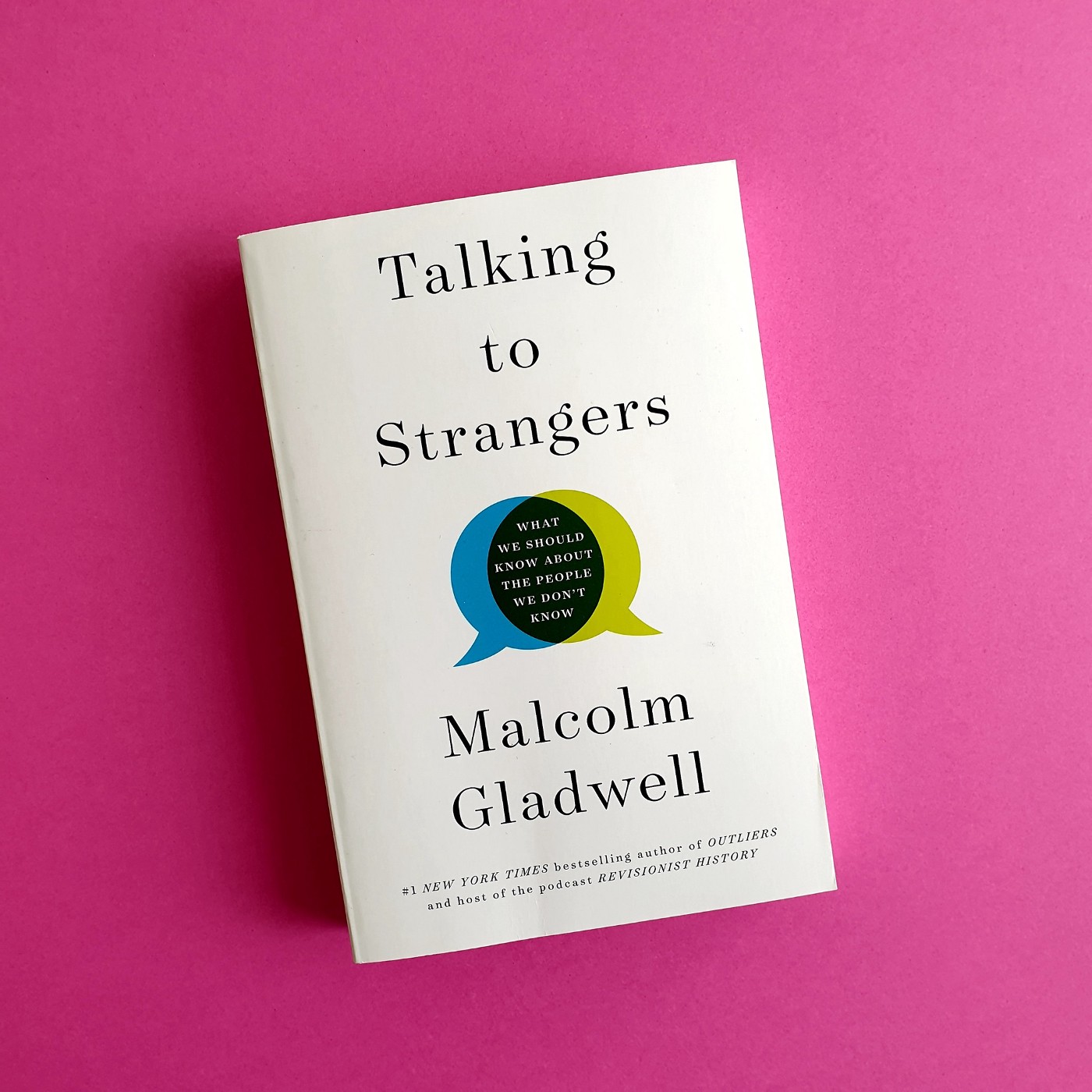
Talking to Strangers: What We Should Know About the People We Don’t Know (Malcolm Gladwell, 2019). From Sandra Bland’s suicide in custody beginning with a verbal spat with a police officer to Neville Chamberlain’s attempts at peace talks with Adolf Hitler going horribly wrong, a pattern emerges: it’s easy to misinterpret the intentions of strangers. Interesting theory, but needed more hard evidence.

That Was Then, This Is Now (S.E. Hinton, 1971). Mark and Bryon were the best of friends, and then they became stepbrothers after the death of Mark’s parents. But Mark is acting erratic and looking for trouble, and Bryon doesn’t know what to do. Made into a movie starring Emilio Estevez, Craig Sheffer and Morgan Freeman.

On Writing: A Memoir of the Craft (Stephen King, 2000). Part writing how-to, part-autobiography, all fun. A must-read for any writer. I like this book, if you can’t tell.

Daughter of the Deep (Rick Riordan, 2021). Ana Dakkar attends Harding-Pencroft Academy, an elite school that’s all about the water, pumping out the world’s best marine scientists, naval officers, navigators and underwater explorers. When an attack sinks the school into the ocean, Ana and her classmates learn they’re in a cold war with their rival school. The goal: acquire the most advanced weapon known to man.

Black Panther: A Nation Under Our Feet, volume 1 (Ta-Nehisi Coates, 2016). After attacks by both Dr. Doom and Thanos, the people of Wakanda form a terrorist group…called the People. T’Challa has his plate full, trying to stop the violence while wondering whether the People’s motive isn’t entirely wrong. Meanwhile, Shuri has adventures of her own as she lies in suspended animation.

Black Panther: A Nation Under Our Feet, volume 2 (Ta-Nehisi Coates, 2017). A lot of the same from volume 1 (crazy, innit?) but Luke Cage and Storm are in it.

White is a State of Mind (Melba Pattillo Beals, 1999). Melba Pattillo Beals was one of the first nine African-Americans to attend a desegregated school. All her sacrifices proved pointless when Arkansas Governor Orval Faubus closed down the Arkansas public school system. With nothing holding her down, Melba moved to California…and discovered herself.

Firekeeper’s Daughter (Angeline Boulley, 2021). Fractional Anishinaabe Daunis Fontaine is ready to go to college and get away from the community she’s never fully felt part of. But her best friend’s senseless murder plunges her into the middle of a criminal conspiracy. Set to be adapted into a Netflix miniseries, so be on the lookout for that.

White Fright: The Sexual Panic at the Heart of America’s Racist History (Jane Dailey, 2020). From Emmett Till’s supposed whistling at a white woman motivating his lynching to anti-miscegenation laws to Donald Trump demanding the death penalty for the Central Park Five, one thing is clear: brown babies terrify racists. In the 19th book on my antiracism reading list, Jane Dailey breaks down why in a history lesson that starts from the moment Pilgrim boats hit North American shores to now.

The Keeper: A Short Story Prequel to Forbidden (Ted Dekker & Tosca Lee, 2011). Two brothers live deep in the wilderness, until a man comes to them bearing amazing news. This “book” is 12 pages long, that’s all the summary you’ll get.

In Conclusion, Don’t Worry About It (Lauren Graham, 2018). Lauren Graham, star of Gilmore Girls and Parenthood, was asked to give the graduation speech at the high school she graduated from. She did. Then, she made a book out of it.

Rumble Fish (S.E. Hinton, 1975). Rusty-James idolizes his gangbanger of an older brother, the Motorcycle Boy. Unbeknownst to Rusty, though, the Motorcycle Boy has started reevaluating his life. Made into a movie starring Matt Dillon, Mickey Rourke, Nicolas Cage and Diane Lane.

Dreamcatcher (Stephen King, 2001). Four childhood friends on their annual hunting trip help a man lost in the woods. But when the man dies violently in the bathroom, the friends realize they’re witnessing the first wave of an alien invasion. Made into a god-awful movie starring Morgan Freeman, Damian Lewis and Timothy Olyphant.

A River Enchanted (Rebecca Ross, 2022; Elements of Cadence #1). Bastard Jack Tamerlaine left his home island of Cadence years ago to teach music on the mainland. But when children start to go missing, Jack’s childhood enemy calls him back to the island, knowing that music is the key to using the magic of Cadence. This was an enemies-to-lovers story where I didn’t really buy the enemies and only kinda bought the lovers; good fantasy elements, though.

Hugh Lofting (Gary D. Schmidt, 1992). The biography of Hugh Lofting, most famous for writing the Dr. Doolittle series. Gary Schmidt was one of my college professors, and I’m making a goal of reading as much of his bibliography as I can. Hugh Lofting is not his first book, but it’s his first book in print.

Abbott (Saladin Ahmed, 2018). In 1972, Elena Abbott makes her living exposing corruption and criminality through her small Detroit newspaper. When the police look the other way concerning a series of gruesome murders, Abbott decides to investigate and write an exposé. What she’ll discover is a supernatural conspiracy with her disappeared boyfriend at the center.

Love Wins: A Book About Heaven, Hell, and the Fate of Every Person Who Ever Lived (Rob Bell, 2011). What’s loving about Hell? How can we as Christians reconcile the idea of Hell with the idea of a loving God? In a book so controversial it effectively doubled as a resignation letter from the church he founded, Rob Bell grapples with that question.

The Meaning of Freedom: and Other Difficult Dialogues (Angela Y. Davis, 2012). Angela Davis, former Black Panther, political prisoner of the U.S. government, author and black icon, comes back with a series of speeches. Book #20 on the antiracism reading list.

Identity (Ted Dekker, 2012; Eyes Wide Open #1). Christy and Austin were thrown together through circumstance, and now that’s going to come to an end. Christy is trapped underground, and Austin gets himself trapped in the hospital when he discovers a dark secret. Part one of a four-“episode” series also collected into a book, Eyes Wide Open.

The Paris Apartment (Lucy Foley, 2022). Jess shows up to her half-brother Ben’s Paris apartment after stealing money from the crappy job she quit. But Ben’s apartment is empty, and someone in the apartment building is eager to keep Jess from finding out where he went. In the running for one of my favorite books of the year.

Less (Andrew Sean Greer, 2017; Arthur Less #1). An ex-boyfriend getting married is the latest disappointment in the disappointing life of struggling author Arthur Less. So he takes every overseas job offer he’s gotten over the years and travels the world. Won the Pulitzer Prize in 2018; a sequel, Less is Lost, released this year.

Tex (S.E. Hinton, 1979). Tex loves his horse, his best friend’s sister, and trouble. For his older brother, who’s trying to keep them afloat amidst their father’s abandonment, that’s a problem. Made into a movie starring Matt Dillon, Jim Metzler and Emilio Estévez.

Everything’s Eventual: 14 Dark Tales (Stephen King, 2002). Stephen King is here to scare your pants off with tales of psychic assassins and zombie drivers and fishing with the devil. (It’ll make sense when you read it.) One of King’s weaker outings, in my humble opinion, but still enjoyable.

Katherine Paterson (Gary D. Schmidt, 1994). The biography of Katherine Paterson, multiple-time Newbery Medal winner and author of books like Bridge to Terabithia and The Great Gilly Hopkins. Katherine Paterson was (and still is, knock on wood) alive to contribute to this biography. An improvement on Hugh Lofting.

Miracle’s Boys (Jacqueline Woodson, 2000). Tragedy follows the Bailey boys wherever they go: oldest Ty’ree is forced to watch after youngest Lafayette when their mother dies, and the both of them are dealing with middle child Charlie, fresh out of a juvenile sentence. I’m impartial to books about brothers, so I liked this one. Adapted into a miniseries by Nickelodeon.

Moonshine, volume 1 (Brian Azzarello, 2017). Up-and-coming Prohibition gangster Lou Pirlo is ordered to start a business deal with Appalachian moonshiners. But the full moon makes Lou realize he’s bitten off more than he can chew.

Jesus>Religion: Why He Is So Much Better Than Trying Harder, Doing More, and Being Good Enough (Jefferson Bethke, 2013). When he was a college student, Jefferson Bethke thundered onto the world stage with a video titled “Why I Hate Religion, But Love Jesus.” He takes to page to explain why he’s no longer religious, but how that’s made him fall deeper in love with Jesus.

Women, Race & Class (Angela Y. Davis, 1981). In her seminal work, Angela Y. Davis lays out how the intersection of class, gender and race has and still does affect society. I was not in the frame of mind to read this because it’s super depressing. Book #21 on my antiracism reading list.

Mirrors (Ted Dekker, 2012; Eyes Wide Open #2). In a matter of hours, Christy and Austin were institutionalized under fake names and diagnoses and left to rot in padded cells. With his sanity crumbling, Austin takes drastic measures to secure his freedom. Lower-key than its predecessor.

Water Walker–Episode 1 (Ted Dekker, 2014; The Outlaw Chronicles #2.1). Alice Ringwald is kidnapped from her foster home by a man who claims to be her father. FBI Agent Olivia Strauss, reeling from the death of her own daughter, takes a personal interest in Alice’s safe return. But unbeknownst to everyone, the childhood Alice can’t remember gave her power.

Whirligig (Paul Fleischman, 1998). After the humiliation of a lifetime, Brent Bishop tries to end it all and kills someone in the process. The victim’s mother has an unusual request as restitution, one that will send Brent on a cross-country trek. First to fulfill the request, then to find redemption.

Assume the Worst: The Graduation Speech You’ll Never Hear (Carl Hiaasen, 2018). Graduation speeches are supposed to be uplifting and inspiring, right? Not this one! Carl Hiaasen gives the graduation speech he’ll never be able to give, but everyone desperately needs to hear.

From a Buick 8 (Stephen King, 2002). For more than 20 years, a police precinct in rural Pennsylvania has kept a secret: a car with no engine, a steering wheel the size of a pizza pan, and a trunk that occasionally spews out horrifyingly eldritch creatures. When a recently deceased officer’s son starts interning at the precinct, he too will be drawn into the mystery of the Buick 8.

Are You in the House Alone? (Richard Peck, 1967). Gail Osburn’s nightmare starts with a disgusting note shoved in her locker. It’s her against the town when she realizes the son of the wealthiest family in town has made her the object of his obsession. Made into a TV movie.

The Sin Eater (Gary D. Schmidt, 1996). Two years after his mother’s tragic death, Cole and his father move in with Cole’s maternal grandparents. But while the change in environment is healing to Cole, his father sinks into a deep depression. This is Professor Schmidt’s debut novel; good first fictional outing.

The Land (Mildred D. Taylor, 2001; Logans #1). Paul-Edward Logan, a biracial slave boy raised along his white siblings, is too white for the blacks and too black for the whites. An impulsive decision forces him to flee the farm he’s grown up on. Striking out on his own, Paul-Edward will fight for his dream: to own land.

Feed (M.T. Anderson, 2002). Titus lives in a future run by the feed, a roided-out Internet accessed by microchip. On a spring break trip to the moon, a hacker shuts off Titus and his friends’ feeds. The silence Titus hears will change everything.

Moonshine, volume 2: Misery Train (Brian Azzarello, 2018). After running afoul of a clan of hillbilly werewolves, “Torpedo” Lou Pirlo is officially done with the criminal lifestyle. He boards a train with his lover, Delia, destination: far the f*ck away. But with lycanthropy running through his veins, running away isn’t an option…

Never Enough?: 3 Keys to Financial Commitment (Ron Blue, 2017). This is a book I need to read again, because I can’t remember much of it. I remember the advice was really good, though.

The Hacienda (Isabel Cañas, 2022). After the politically-motivated execution of her father, Beatriz has no choice but to marry Don Rodolfo Solórzano, a widowed political figure. But when strange happenings start to make Beatriz think Rodolfo’s deceased wife haunts the home, she has no one to turn to. Except a young priest with a lot of secrets to hide.

Unseen (Ted Dekker, 2013; Eyes Wide Open #3). A dead man lies at Austin’s feet, and Christy is tormented by her reflection. …that’s it.

Water Walker–Episode 2 (Ted Dekker, 2014: The Outlaw Chronicles #2.2). Five years after being kidnapped by her father, Alice Ringwald/Eden Lowenstein has fully embraced the beliefs of the commune her family’s a part of. But on her eighteenth birthday, a dream will change everything. Because Alice/Eden dreams of freedom from the commune’s strict rules.

Waking Up: How I Found My Faith by Losing It (Ted Dekker, 2015). Ted Dekker shares his journey away from fundamentalism and towards a faith built on love. He also encourages his readers to go on their own journey towards loving faith. The shortest book I’ve read this year.

Evicted: Poverty and Profit in the American City (Matthew Desmond, 2016). In this Pulitzer Prize-winning book, Princeton sociologist Matthew Desmond follows eight low-income tenants and the three landlords who house them in post-2008 stock market crash Milwaukee. Depressing, but fascinating. Book #22 on my antiracism reading list.

The Opposite of Loneliness: Essays and Stories (Marina Keegan, 2014). Marina Keegan was a Yale graduate at the top of her class, an accomplished writer and essayist who graduated with a job lined up at The New Yorker. Tragically, she was killed in a car accident five days after her graduation. In this swan song, her loved ones collect the best of her work in one of my favorite books of the year.

Faithful: Two Diehard Boston Red Sox Fans Chronicle the Historic 2004 Season (Stephen King & Stewart O’Nan, 2004). In 2004, the Boston Red Sox would break an 86-year choking streak by winning their first World Series since 1918. Authors and Sox fans Stephen King and Stewart O’Nan chronicle the whole season.

Father Figure (Richard Peck, 1978). After their mother’s death, Jim feels obligated to raise his younger brother, Byron. All kinds of feelings will come to the surface when their long-absent father comes to claim them.

United States Author Series: Robert Lawson (Gary D. Schmidt, 1997). The biography of Robert Lawson, a children’s author most famous for his Newbery Medal-winning book Rabbit Hill. It was a’ight.

Moonshine, volume 3: Rue Le Jour (Brian Azzarello, 2020). Delia turns to the supernatural to find a cure for Lou Pirlo’s lycanthropy. Which is a problem, because the shady characters she goes to for cures have plans of their own for Lou… Of the five volumes of Moonshine, I think this one is the best.

Recovering the Real Lost Gospel: Reclaiming the Gospel as Good News (Darrell L. Bock, 2010). A “getting back to Biblical basics” book. That’s all I can tell you. Not terribly memorable.

Seer (Ted Dekker, 2013; Eyes Wide Open #4). A man coming back from the dead has finally convinced Christy and Austin they are truly insane. But they will be saved by the most unexpected of heroes. With this finale, Ted Dekker ties the Eyes Wide Open series to his previous Circle and Paradise Chronicles series, and it’s smooth as heck.

Water Walker–Episode 3 (Ted Dekker, 2014; The Outlaw Chronicles #2.3). After an attempt at rebellion has violent consequences for one of her friends, Alice/Eden realizes with her whole heart: she wants out. Meanwhile, her mother prepares for the hardest thing: reining Eden back in. By hobbling her.

Singled Out: How Singles Are Stereotyped, Stigmatized, and Ignored, and Still Live Happily Ever After (Bella DePaulo, 2006). Happily single UCSB professor of psychology Bella DePaulo claps back at stereotypes of single people. The point still stands, but some of the examples she uses haven’t aged well. (Hello, real estate bubble burst!)

White Fragility: Why It’s So Hard for White People to Talk About Racism (Robin DiAngelo, 2018). A white person talks about white people’s reluctance to discuss racism. Book #23 on my antiracism reading list.

A Northern Light (Jennifer Donnelly, 2003). Mathilda “Mattie” Gokey has resigned herself to never living her dream of going to college and tries to be content working at an upstate New York hotel. But when a guest who gave her a stack of letters to burn washes up dead, Mattie starts to reevaluate.

The Colorado Kid (Stephen King, 2005). An intern at a struggling newspaper sits down with her mentors to hear of the one open story that haunts them. The Colorado Kid was a Colorado man found dead on an island off the coast of Maine, choked to death on a mouthful of steak. The man had no enemies, but was found thousands of miles away from his home state with only a Russian coin and a pack of cigarettes in his pocket.

Freakonomics: A Rogue Economist Explores the Hidden Side of Everything (Steven D. Levitt and Stephen J. Dubner, 2005). What’s more dangerous, a gun or a swimming pool? What do teachers and sumo wrestlers have in common? These are the type of questions economist Steven D. Levitt and journalist Stephen J. Dubner ask in Freakonomics.

No Reading Allowed: The WORST Read-Aloud Book Ever (Raj Haldar, 2020). Homophones: The Book. Super fun.

The Ghost Belonged to Me (Richard Peck, 1975; Blossom Culp #1). Alexander Arnsworth is sick of Blossom Culp, the oddball daughter of a local “psychic.” He naturally dismisses her when she says his family’s barn is haunted. Which makes it shocking when a ghost comes to Alexander, warning of a horrible accident that will happen if he doesn’t stop it.

The Geeks Shall Inherit the Earth: Popularity, Quirk Theory, and why Outsiders Thrive After High School (Alexandra Robbins, 2009). Journalist Alexandra Robbins follows seven people on the fringes of high school society. Using a combination of storytelling and psychology, she explains how the “outcasts” of yesterday’s teenage years often become the success stories of today.

William Bradford: Plymouth’s Faithful Pilgrim (Gary D. Schmidt, 1998). Many Pilgrims died in their early years in the future America. But the death toll would’ve been worse without the leadership of William Bradford. I appreciate this book because Prof. Schmidt doesn’t gloss over the ways the Pilgrims screwed over the Native Americans; A+ for being blunt about unsavory aspects of history.

Moonshine, volume 4: Angel’s Share (Brian Azzarello, 2020). With no cure for his lycanthropy and multiple people wanting his curse for their own ends, Lou Pirlo has given up. He hides out in a Cleveland shantytown, staying drunk around the clock in a feeble attempt to neuter the beast inside of him. Bad gets worse when Cleveland police call in the big guns to capture the savage serial killer tearing apart their town: none other than FBI Agent Eliot Ness.

Meister Eckhart’s Book of the Heart: Meditations for the Restless Soul (Jon M. Sweeney and Mark S. Burrows, 2017). A book of religious poetry, based off the writings of 15th-century Christian mystic Meister Eckhart. I read this book on and off since about a week before the US closed down because of COVID. Felt good to finish.

The Cost of Discipleship (Dietrich Bonhoeffer, 1937). The magnum opus of Dietrich Bonhoeffer, a German pastor and theologian executed for his part in an assassination attempt against Adolf Hitler. Bonhoeffer paid for following Christ with his life, and I respect it. One of the easiest 5-star reviews I’ve ever given.

Doing It (Melvin Burgess, 2003). An extremely gross book about three British teenage boys doing extremely stupid things in the name of getting their rocks off. One of the easiest 1-star reviews I’ve ever given.

Water Walker–Episode 4 (Ted Dekker, 2014). Eden’s mother tries to find the nerve to follow Zeke’s orders. Meanwhile, Eden dreams of freedom. Good conclusion, but I was definitely feeling Ted Dekker fatigue by the time I finished this.

Glittering Vices: A New Look at the Seven Deadly Sins and Their Remedies (Rebecca Konyndyk DeYoung, 2009). The concept of the seven deadly sins was made popular through the likes of Se7en and Fullmetal Alchemist. Philosophy professor Rebecca Konyndyk DeYoung examines their biblical origins and what they meant before pop culture got its hands on the idea.

Nice Racism: How Progressive White People Perpetuate Racial Harm (Robin DiAngelo, 2021). In the sequel to White Fragility, Dr. DiAngelo focuses in on the inadvertent racism of progressive white people. If you expect long-winded explanations of Robin DiAngelo’s writing, stop expecting it; what you see is what you get. Book #24 on my antiracism reading list.

Cell (Stephen King, 2006). Graphic novelist Clay Riddell is on the street when everyone using a cell phone loses their mind. He and a small band of survivors watch in real time as the infected evolve. And they realize this is no zombie apocalypse.

The Boy, the Mole, the Fox and the Horse (Charlie Mackesy, 2019). Four friends–a human boy, a cake-loving mole, a fox, and a horse–wander through a forest and ponder life in a book that’s as relevant to a 1-year-old as it is to a 100-year-old. Easily one of my favorite books of this year, and a book everyone should read.

Ghosts I Have Been (Richard Peck, 1977; Blossom Culp #2). When small-town outcast Blossom Culp told her classmates she’d inherited her mother’s supposed psychic powers, she was yanking their chain. Meaning she’s as surprised as everyone else when she actually does start having visions. Visions of what happened to some of the people on board the freshly sunk Titanic.

Mortal Engines (Phillip Roth, 2001; Mortal Engines Quartet #1). In the future, London is one of the biggest Traction Cities, cities on giant wheels who roll around the world gobbling up smaller towns for resources. Tom Natsworthy’s quiet life in London are upheaved when he and a would-be assassin are left behind. The two of them are forced to rely on one another to get back to London, and to stop the conspiracy unfolding beneath London’s streets.

Saint Ciaran: The Tale of a Saint of Ireland (Gary D. Schmidt, 2000). Ciaran’s mother swallowed a star while he was in her belly, as if to signal how special her child will be. And Ciaran will be special. His extraordinary talent with animals will be nothing compared to what he’ll be remembered for: bringing Christianity to Ireland.

Moonshine, volume 5: The Well (Brian Azzarello, 2021). Prohibition is ending, and time is running out for Lou Pirlo. With nothing left to lose, he decides to leave this world and take the Holt clan and the New York mob with him. A satisfying conclusion.

Tattoos on the Heart: The Power of Boundless Compassion (Father Gregory Boyle, 2009). Gregory Boyle runs Homeboy Industries, a gang-intervention program located in the most gang-run neighborhoods of Los Angeles. In the twenty years he’s run the program, he’s seen triumph and tragedy, and he’s here to share it all. One of my favorite books of this year.

Vainglory: The Forgotten Vice (Rebecca Konyndyk DeYoung, 2014). We all know the Seven Deadly Sins, but they were originally Eight Deadly Sins. And, in this quasi-sequel to Glittering Vices, Rebecca Konyndyk DeYoung names the eighth sin–vainglory–and explores how prevalent it is in the modern age.

Narrative of the Life of Frederick Douglass (Frederick Douglass, 1845). The life of freed slave Frederick Douglass, told narratively. Book #25 on my antiracism reading list.

Lisey’s Story (Stephen King, 2006). Only after two years of mourning has Lisey Landon started to clear out the study of her late husband, bestselling novelist Scott Landon. Digging through his papers and mementos will do more than deepen the ache in Lisey’s broken heart. It will open a cavalcade of memories, and send Lisey on a scavenger hunt from beyond the grave.

The Subtle Art of Not Giving a F*ck: A Counterintuitive Approach to Living a Good Life (Mark Manson, 2016). Stop caring what other people think, and your life will improve. That’s the crux of Mark Manson’s argument in this gleefully irreverent self-help book.

You & You & You (Per Nilsson, 1998 in its original Swedish, translated to English in 2005). A strange boy named Anon finding a lost wallet sets a chain of events in motion. The chain will end with the lifelong friendship of Anon, Zara, the wallet’s owner whose picture-perfect relationship is starting to fall apart, and Nils, a nihilistic young man who comes alive through a chance encounter with Zara. A fantastic book and one of my favorite books of this year, that was absolutely robbed by the 7-year gap between its publication and its English translation.

Remembering the Good Times (Richard Peck, 1985). Buck, Kate and Trav were the best of friends. Which makes Trav’s decision to take his own life that more devastating. Book #100 of this year.

Predator’s Gold (Philip Reeve, 2003; Mortal Engines Quartet #2). With London now an uninhabitable husk, Tom and Hester travel the world, eventually landing on the Traction City of Anchorage. Anchorage is no London: plague has devastated the population, there are rumors of the town being haunted, and the City is headed for the dead continent of North America in a desperate push for resources. The new locale will test Tom and Hester’s relationship.

Anson’s Way (Gary D. Schmidt, 1999). As the son of a top brass English general, Anson Granville Stapylton is happy to join the Staffordshire Fencibles, the occupying British force in Ireland. Then he watches as a farmer is gunned down over a horse. And he starts to wonder who’s the good guy and who’s the bad in the conflict between the British and the Irish.

Blaze (Stephen King, writing under his Richard Bachman alias, 2007). Clayton “Blaze” Blaisdell, Jr. was doomed to a bad life, handicapped by his abusive father at a young age and further abused at a private school for troubled boys. The mentally handicapped boy becomes a handicapped man, who kidnaps a baby heir to millions with the intent of ransoming the child. Tragically, his plans will go off the rails.

Tyrell (Coe Booth, 2006; Tyrell Duology #1). Tyrell Green’s father is in jail, his mother is unwilling to act like a parent, his brother is in danger of being put in foster care, and his home is a roach-infested motel room. The only good thing in his life is his girlfriend, and he doesn’t even feel good enough for her. With nothing left to lose, Tyrell throws together a plan to get his family back on his feet.

Everything Is Possible: Finding the Faith and Courage to Follow Your Dreams (Jen Bricker, 2016). Jen Bricker, an aerialist, author and public speaker who’s performed for the likes of Britney Spears, could have been a figure to pity rather than admire. She was born without legs and given up for adoption by her biological parents. But through the love and encouragement of her parents, she learned: everything is possible.

A Tale of Two Cities (Charles Dickens, 1859). One of the most overrated books ever written.

The Souls of Black Folk (W.E.B. DuBois, 1903). “How does it feel to be a problem?” This iconic question begins W.E.B. DuBois’ musings on being an African-American in early 1900s America. Book #26 on my antiracist reading list.

Becoming (Michelle Obama, 2018). Michelle Obama tells all: about her childhood growing up in Chicago, her struggles as a black woman in law, and most importantly, what happened when she met and married a fellow lawyer with a funny name… This book is surprisingly good relationship advice. Michelle talks a lot about the struggles of two busy people in a relationship, and even if you weren’t an Obama supporter, I think this book is worth reading purely for that.

Secrets of the Shopping Mall (Richard Peck, 1978). Barnie and Teresa hide out in a local mall from a gang. Little do they know they’re not the only people hiding away in the mall. I like Richard Peck, but this book was not it, chief.

Infernal Devices (Philip Roth, 2005; Mortal Engines Quartet #3). Wren Natsworthy has grown up listening to the epic tales of her parents, which makes her own life on the decommissioned Traction City of Anchorage that much more boring. One day, a pirate washes up on Anchorage’s shores offering Wren a life of adventure if she can get him something deep in the heart of Anchorage. Wren’s theft will drag her parents back into the adventuring lifestyle they left behind and will drag all three into the middle of a war.

Edging the Boundaries of Children’s Literature (Gary D. Schmidt and Carol J. Winters, 2001). A textbook about children’s literature. By his own admission in an email, Prof. Schmidt doesn’t think it’s very good. I disagree, but do think it’s a niche book.

Batman, volume 6: Graveyard Shift (Scott Snyder, James Tynion IV, Marguerite Bennett, and Gerry Duggan, 2015). An anthology of Batman stories. Pretty fun.

Moon Knight: Black, White and Blood #1 (Jonathan Hickman, Marc Guggenheim, and Murewa Ayodele, 2022). An anthology of Moon Knight stories. …eh.

Bronxwood (Coe Booth, 2011; Tyrell Duology #2). Tyrell’s father being released from jail further destabilizes his unstable life. With his brother in foster care, his dad trying to force him back under his roof, and his drug-dealing roommates trying to get him in on their lifestyle, Tyrell’s back is against a wall. A worthy sequel.

Jane Eyre (Charlotte Brontë, 1847). This classic tale follows orphan Jane Eyre from her childhood in a loveless foster home to her adulthood taking up with the wealthy Mr. Rochester. Their budding romance will be torn apart by the most bizarre of secrets. Eh, you can’t spoil a 175-year-old book: Rochester’s married, but keeps his wife locked in the attic.

After the First Death (Robert Cormier, 1979). Terrorists of unknown origin take a school bus bound for a summer camp hostage. No one will leave unscathed. Fantastically-written, but not to be read by the faint of heart.

Great Expectations (Charles Dickens, 1860). Poor orphan Pip dreams of being a high-class gentleman. He gets his chance through a rich patron, and discovers moving up the social ladder ain’t all it’s cracked up to be. Better than A Tale of Two Cities, but that’s an instance of the bar being in hell.

An Indigenous Peoples’ History of the United States (Roxanne Dunbar-Ortiz, 2014; Revisioning American History #3). The history of the United States, told from an indigenous perspective. …f*ck Andrew Jackson.

Duma Key (Stephen King, 2008). After a near-fatal accident that costs him an arm, Edgar Freemantle leaves his Minnesota construction business in favor of an isolated neighborhood in Duma Key, Florida. He starts drawing again, something he hasn’t done since he was a kid, and his art draws him into a nearly century-old mystery.

The Last Lecture (Randy Pausch, 2008). When nearly a dozen pancreatic tumors reduced Carnegie Mellon University computer science professor Randy Pausch’s life down to a few months, his priorities changed. After his death, his kids would have no father, and his students would lose a beloved professor. So, for the sake of his family and his students, he gave one last lecture and made it into one of the few books that has made me cry.

A Chance in the World: An Orphan Boy, a Mysterious Past, and How He Found a Place Called Home (Steve Pemberton, 2012). The story of Steve Pemberton’s childhood as a foster child in a nightmarishly abusive home, how he escaped, and how he eventually found his family.

A Darkling Plain (Philip Reeve, 2006; Mortal Engines Quartet #4). After Hester’s exit, Tom and Wren Natsworthy head back to the ruins of Tom’s native London. There, they discover a secret that could end Traction Cities once and for all, and at the right time. Because far away, a child carries the secret to a long-forgotten, war-ending weapon.

Glory in the Margins: Sunday Poems (Nikki Grimes, 2021). Some good religious poetry. …that’s it.

Straw Into Gold (Gary D. Schmidt, 2001). On his first day away from his countryside home, Tousle is the only person to speak against the king’s order to execute his prisoners. So the king orders Tousle and Innes, a blinded prisoner, to solve a riddle that has haunted the king for years in seven days’ time, or it’s their and the prisoners’ lives. They’ll find more than the answer to the riddle.

The Thief (Megan Whalen Turner, 1996; The Queen’s Thief #1). Gen claimed to the wrong person that he could steal anything from anyone, and sits in a jail cell as a result. But then the king springs him from prison, with orders to steal an artifact that could change the balance of power between the countries of Attolia and Sounis. A terribly boring first half, followed by a better second half.

Zeal Without Burnout: Seven Keys to a Lifelong Ministry of Sustainable Sacrifice (Christopher Ash, 2016). How to be a minister and stay sane: the book. I’m not a minister, but am in a similarly high-stress job, so still relevant.

Fun Home: A Family Tragicomic (Alison Bechdel, 2006). In this graphic memoir, Alison Bechdel recounts how finding out after her father’s death that he was gay cast her already-unhappy childhood in a whole new light. Adapted into a Tony Award-winning play.

And that’s all he read. If you want to see longer reviews of what I read in real time, follow my bookstagram @peachykeenebooks.

Happy new year to all, and hope to see you back here.

“We Will Be the Gods We Choose to Be”

God of War feels oddly relevant to my job.

I’ve been playing the heck out of 2018’s God of War, in anticipation of buying its freshly-released sequel, God of War: Ragnarök. To explain how a video game pertains to my work, I have to start from the beginning.

The story of the God of War series follows Kratos, a bloodthirsty Spartan general in service to the Olympian gods whose life is changed forever in the worst way. On the order of Ares, Greek god of war, Kratos leads his army in the destruction of a town under the protection of Athena, Greek goddess of wisdom. In the heat of battle, Kratos kills his wife and daughter, who were tricked into coming to a temple in the town by Ares. This act of violence curses Kratos: the ashes of his dead family graft themselves onto his skin, and he is plagued by nightmares of the horrible things he has done. When Ares gets on the bad side of Athena, she promises Kratos a clean slate if he kills Ares. Against all odds, Kratos succeeds, but Athena refuses to put an end to the nightmares. Kratos tries to commit suicide, only to be stopped and crowned the new God of War.

By the time of God of War II, the other gods have grown tired of Kratos’ loose cannon attitude and contempt for the other gods. After one too many acts of defiance, Zeus, king of the gods, strips Kratos of his godly powers and kills him. In the Underworld, Kratos is rescued by Gaia, queen of the Titans, the predecessors of the gods. She helps Kratos to get to the Sisters of Fate, who are capable of sending people through time and therefore undo Kratos’ death. Kratos uses the Sisters’ power to travel back to the moment of his death and steal the Blade of Olympus, Zeus’ ace in the hole, and travel back to the present. He travels to Mount Olympus to kill Zeus, but instead kills Athena when she stands in the way of the Blade. Before she dies, Athena reveals a secret: Zeus is Kratos’ father. By allying with the Titans to seek revenge on the gods, Kratos repeats a cycle that the Olympians and the Titans perpetrated: killing family in the interest of taking or retaining power.

God of War III follows Kratos in his god-killing rampage. In his thirst for revenge, Kratos is uncaring of the devastating consequences of killing a god, for killing a god affects their domain. Killing Poseidon, god of the seas, washes away hundreds of thousands of Greeks in a flood. The death of Helios the sun god plunges Greece into eternal darkness. When Hades is killed, the gates of the Underworld open, and the dead swarm back into Greece. By the time Kratos kills Zeus, he feels no satisfaction, no sense of having avenged his family. He can only walk to the edge of Mount Olympus and look on in horror at the wasteland Greek has become because of his actions. With no other options, Kratos stabs himself with the Blade of Olympus, releasing what godly power he has left in a last-ditch effort to undo the damage.

Which brings us to 2018’s God of War, and my point.

This installment shifts the focus from the Greek gods to the Norse gods. After surviving his attempted suicide, Kratos traveled from Greece to Midgard and began a new life, marrying a Norse woman and having a son, Atreus. As the game opens, Kratos’ second wife Faye has died and Kratos and Atreus go to fulfill her last wish: scattering her ashes from the highest peak in the Nine Realms. On the journey, Kratos, who has never revealed his past to Atreus, slowly reveals the events of the previous games to him. This comes to a head, when Kratos is forced to kill a god who’s gone mad. When the mother of the dead god threatens to reveal to Atreus the atrocities Kratos committed in his younger years, Kratos tells Atreus the truth he’s been holding back:

Kratos: Boy, listen close. I am from a land called Sparta. I made a deal with a god that cost me my soul. I killed many who were deserving…and many who were not. I killed my father.

Atreus: …Is this what it is to be a god? Is this how it always ends? Sons killing their fathers? Their mothers?

Kratos: No. We will be the gods we choose to be, not those who have been. Who I was is not who you will be. We must be better.

There’s a lot of bad behavior in my classrooms. I can’t name one exact reason for that–peer pressure, the effects of a dysfunctional school, untreated learning disorders–but in at least one case, I know it’s a case of the apple not falling far from the tree.

I have a student in my 8th grade classroom, “Mario.” By every metric, Mario is a handful: constantly talking, constantly disrespectful, running in and out of the classroom, and trying to instigate conflict whether he’s in class or not. One day before Thanksgiving break, I had the misfortune of meeting Mario’s mother during dismissal. Mario was horseplaying with some of his friends and ended up falling off the sidewalk and faceplanting in the road. And how did Mommie Dearest react to her son getting hurt? Telling him he deserved it. Cue boiling blood on my part.

At the same time, my coworkers have been open about the traumas they’re still working through. I’m not about to air their dark secrets out to the Internet, but suffice it to say, a lot of said traumas originate from the failures of their parents.

We started a quote board at work, and I wrote that Kratos quote on the board, my only contribution so far: “We will be the gods we choose to be, not those who have been. Who I was is not who you will be. We must be better.” I wrote that quote for every party involved: myself, my students, and my coworkers. As a reminder.

Our pasts don’t set our futures in stone. The people who raised us aren’t the people we have to become.

We can be better.