Sad Boi Decade

Music is always changing.

The so-called “top genre” has shifted multiple times in my lifetime. In the 1990s and into the early 2000s, rock dominated the music scene, first with grunge bands like Nirvana and Alice in Chains, then in post-grunge bands like Limp Bizkit, Nickelback and Breaking Benjamin. In the mid-2000s and going into the 2010s, pop music and R&B would overtake rock. Hip-hop would reach a peak of popularity in the late 2010s, before pop music would reclaim the top spot in the 2020s.

But among the genre wars, among new factors like the rise of Spotify and TikTok and their subsequent influences on popular music, something else happened.

Music got sadder.

OBSERVE.

Before we continue, let me give you my definition of “sad music.” “Sad music,” in my humble opinion, is music that fits any of the following criteria: 1. Music composed in minor key. 2. Music that deals with dark or bittersweet topics (death, mental illness, infidelity, etc.) 3. Music that utilizes musical techniques associated with sad music (ex. slow tempo, quiet or low vocals, lyrics centered around loss, longing for better times, etc.)

Now, sad music has always existed. And even in the time periods people look to when they say music used to be happier, sad songs were still popular. Peter Rugman, the TikToker duetted in the above TikTok video, singles out the time period of 2007 to 2016 as a happier, more upbeat time in pop music. Scanning through the Billboard Year-End Hot 100 of those years, here’s a list of sad songs that charted in those years:

  • “Hey There Delilah” by the Plain White T’s
  • “It’s Not Over” by Daughtry
  • “What I’ve Done” by Linkin Park
  • “Face Down” by the Red Jumpsuit Apparatus
  • “Apologize” by OneRepublic
  • “You Found Me” by The Fray
  • “Second Chance” by Shinedown
  • “Love the Way You Lie” by Eminem and Rihanna
  • “Not Afraid” by Eminem
  • “If I Die Young” by The Band Perry
  • “Rolling in the Deep” by Adele
  • “Someone Like You” by Adele
  • “Just a Kiss” by Lady A
  • “Somebody That I Used to Know” by Gotye and Kimbra
  • “Set Fire to the Rain” by Adele
  • “A Thousand Years” by Christina Perri
  • “Mirrors” by Justin Timberlake
  • “Wrecking Ball” by Miley Cyrus
  • “Let Her Go” by Passenger
  • “Stay with Me” by Sam Smith
  • “Say Something” by A Great Big World and Christina Aguilera
  • “Stay the Night” by Zedd and Hayley Williams
  • “See You Again” by Wiz Khalifa and Charlie Puth
  • “Take Me to Church” by Hozier
  • “I’m Not the Only One” by Sam Smith
  • “Hello” by Adele
  • “Wildest Dreams” by Taylor Swift
  • “Girl Crush” by Little Big Town
  • “One Last Time” by Ariana Grande
  • “7 Years” by Lukas Graham
  • “Lost Boy” by Ruth B

In addition to that, multiple artists that made a downbeat sound part of their brand rose to fame and/or saw continued success between 2007-2016: megastars like Adele, Sam Smith and Hozier; bands like Shinedown, Linkin Park and Lukas Graham; and one-hit wonders like Gotye, Passenger and the Red Jumpsuit Apparatus.

All of what I’ve so far presented is anecdotal evidence, but there is hard evidence for music becoming sadder…but that hard evidence flies in the face of the assertion that the music world having a depressive episode is a recent phenomenon. Lior Shamir, a computer science professor who formerly taught at Lawrence State University and currently teaches at Kansas State University, performed an experiment in 2019. Using an algorithm, he analyzed the lyrical content of songs that reached the Billboard Hot 100 between 1951 and 2016. The algorithm measured different emotions–joy, happiness, fear, sadness, anger and disgust–in song lyrics on a scale from 0 to 1. Shamir found that in the 7-decade span the algorithm analyzed, lyrics displaying positive emotions like joy and extraversion steadily declined, while lyrics centered around negative emotions like sadness, disgust and fear steadily increased…starting in the 1950s. BBC and Inside Science both reported on Shamir’s experiment. The following images are charts the BBC article included in their article showing the decrease of joyful lyrics and increase in sad lyrics:
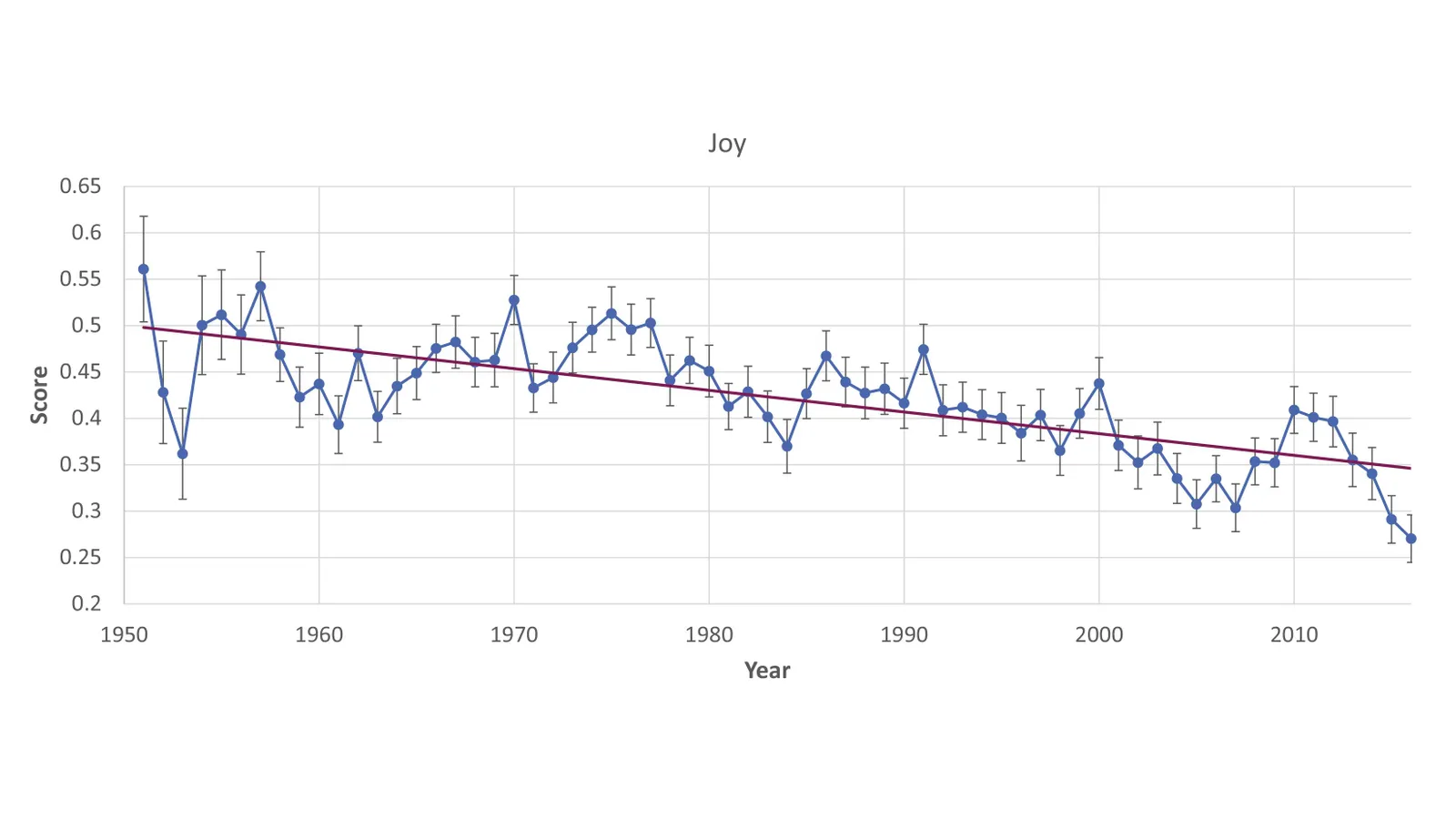
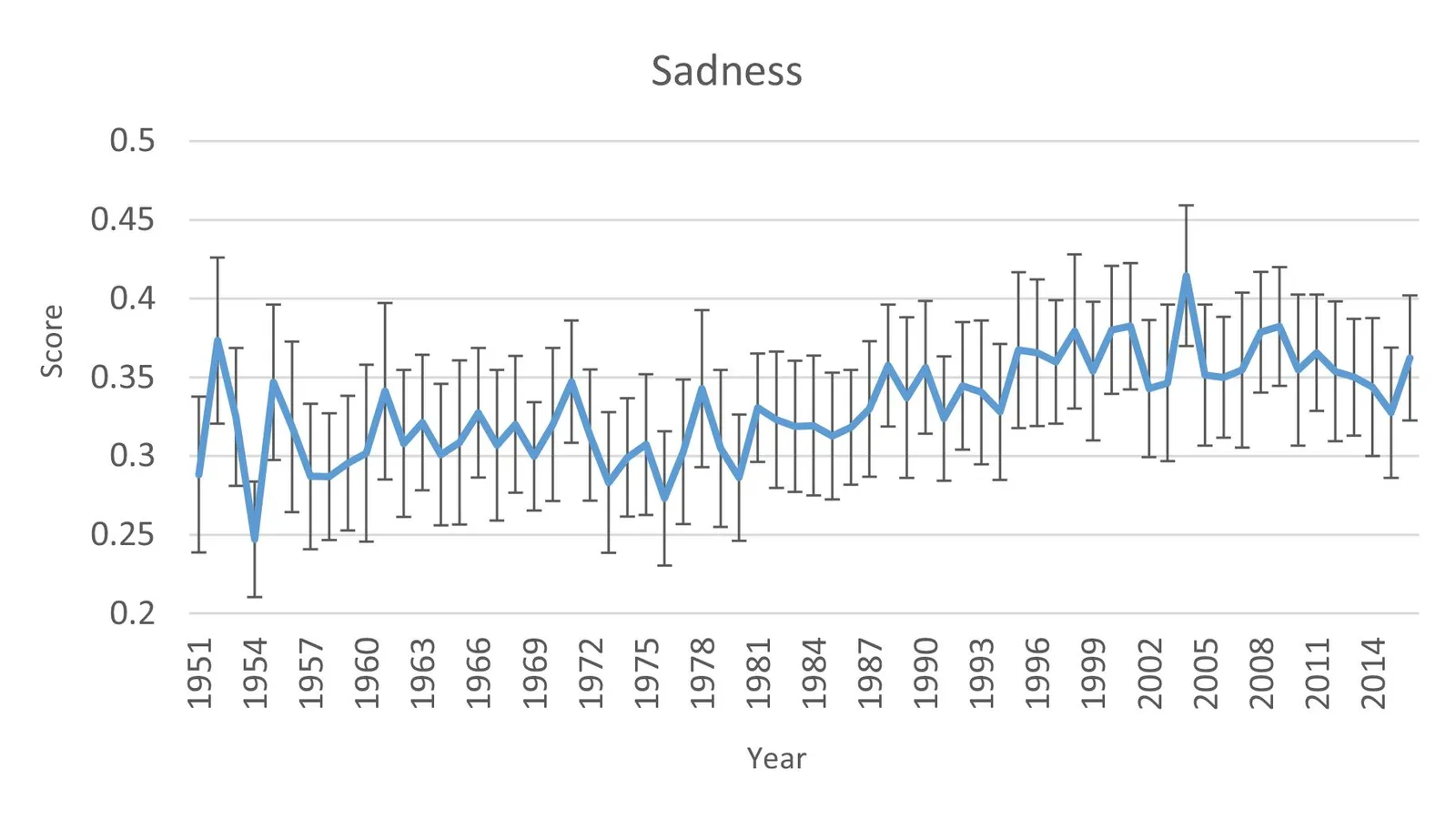
What does this mean? Contradicting Señor Rugman’s assertion, even in the period of 2007-2016, as well as other supposedly upbeat periods in music history like the early 1960s and most of the 1980s, music was getting steadily sadder, angrier and more cynical.

But whether the music industry’s feeling blue started 7 years ago or 7 decades ago, a question hangs over this whole observation: why is music getting sadder?

We can get our first answer by looking at when music started to get sadder. Shamir’s study looked at music from the 1950s up to the mid-2010s. To oversimplify 50 years of music, music in the 20th century’s first half was a vehicle of escapism. From the jazz of the Roaring ’20s to the bubblegum pop of the ’50s to the first few lighthearted outings of the Beatles in the early ’60s, music in the first five decades or so of the 1900s was made with the intention of nodding your head along and snapping your fingers, something to put on to forget the stresses of work and school. But in the early ’60s, everything went to hell. John F. Kennedy’s violent assassination in front of hundreds acted like a hammer, shattering the peace and idealism of post-WWII America. The civil rights movement, the Stonewall riots, and the early waves of feminism opened a lot of people’s eyes to the inequality and bigotry ubiquitous in American society. The assassination of civil rights leaders–Malcolm X, Martin Luther King, Jr., Medgar Evers, Robert Kennedy, Fred Hampton–squashed people’s hope for a more equal and progressive society. The Vietnam War, the Kent State massacre, Watergate, and suspicions that several civil rights leaders’ deaths were government-ordered (suspicions proved right in at least one case, albeit decades later) destroyed the good faith the likes of Franklin Roosevelt, Dwight Eisenhower, and John F. Kennedy in death had built for the US government. And those are only American examples. Abroad, the many dictatorships of the 20th century and the economic and societal devastation of the World Wars were (understatement of the century) real mood-killers worldwide.

All of this cynicism needed an outlet, and for a lot of people, musicians and listeners alike, that outlet was music. The protest song, an old form of music, gained new life, as folks like Bob Dylan, Phil Ochs and Johnny Cash would produce some of the genre’s greatest hits. Outlaw country, a form of progressive country highly critical of American society, took off in the late ’60s and going into the ’70s. Acts like John Lennon and Bruce Springsteen and bands like Rage Against the Machine made addressing social issues part of their brand. A whole sub-genre of rap, conscious hip-hop, speaks on societal problems. See: Kendrick Lamar and J. Cole.

The second part of the answer? A lot of “happy” music isn’t as happy as people make it out to be. Going back to the Peter Rugman video, he pins down 2007-2016 as a happier time in music. These were also the years where the US (and the world in general, but especially the States) experienced the Great Recession. Much like the late 1960s, everything went to hell in 2007 and 2008. The graduating classes of those years graduated into the worst economy possible. Single people, parents, retirees, all across the board plunged into financial instability or outright poverty even when they did everything right. And yet, at this time of worldwide depression, music got a pep in its step. There’s a name for the era of music Peter Rugman zeroes in on: “recession pop.”

Let’s return to my definition of “sad music” briefly. When most people think of a sad song, they think of something gloomy, something slow, maybe with violins or piano, maybe tackling something serious along the way, depression or divorce or death or some other personal crisis starting with “D.” Those are two parts of my three-part definition of sad music, but let’s consider the third: music that deals with dark or bittersweet topics. So-called recession pop does, but indirectly. Most sad music tackles sad things head-on, but recession pop does so through escapism. Your girlfriend left you, you’ve got a master’s degree but you’re working at Starbucks, you’re pretty sure your parents are wondering why they had you, and you’ll never own a house. Here’s the Black-Eyed Peas!

Most people, either by name or by concept, know about “lyrical dissonance,” when gloomy, depressing or otherwise not-happy lyrics are paired with cheery upbeat music. See: Sia’s “Chandelier,” a song about an alcoholic going on a binge; Justin Bieber’s “Love Yourself,” a cute little ditty where he gives his terrible ex both barrels in song form; and Michael Jackson’s “Smooth Criminal,” a song about Annie being attacked and likely murdered by her criminal ex-boyfriend. Recession pop traffics in mood dissonance, cheery-sounding music meant to distract listeners away from their real-life problems.

How do I conclude a post like this? I don’t know. Despite people’s personal feelings about this, there’s nothing inherently bad about a song being sad or a musician making a downbeat sound part of their brand. The only thing I can think to say is: I hope in the future, the world improves to the point we don’t need sad music, of the conventional type or the sneaky recession pop type, as an emotional crutch.

The Hurt I Want

Several things happened in the span of a day. And these things made me think, of all things, of a freshman year party and puking in trash cans.

Flashback to freshman year. My roommate Mitch and my friend Max had back-to-back birthdays, Mitch’s birthday on April 6 and April 8. My friend group decided to celebrate with two nights of hanging out at Max’s house while Mama and Papa Max were away. Included in the festivities was “Reese,” a guy on our floor. We ended up regretting it.

Now, disclaimer: people change, and Reese is proof of that. I kept running into Reese throughout my college years, and I could see him growing as a person when I did. However, on these two nights, he was absolutely obnoxious. Full disclosure: people were drinking at Max’s house, Reese more than anybody. In the order I remember them happening: Mitch ended up putting Reese in a rear naked choke when Reese grabbed Mitch’s vape and ran; he came on super-creepily to one of Max’s high school friends when they were both in Max’s hot tub; and on the drive back to campus on Saturday night, it was only when we were halfway back that Reese realized he’d left his wallet at Max’s house. So, when we got back to campus and Reese tossed me his bag and ran to an outdoor trash can to vomit, my patience was at a low.

But, as I approached Reese, watched as he leaned over the trash bin and I heard the sound of regurgitated food hitting trash, I felt the strangest thing: affection.

I walked over to Reese, waited for him to throw everything up, handed him his bag when he was done, and we went inside.

Come back to the present, specifically last Friday (January 13). In the span of one morning, I learned that one of my coworkers is in the middle of extracting themself from a domestic violence situation. I learned that one of my students’ homes is currently being investigated by CPS, and that this student experienced serious academic regression due to one of their siblings getting murdered. And I learned that one of my students has been experiencing panic attacks, triggered by memories of a parent who died when they were in elementary school.

And the kicker? I can’t actually do much about any of these situations.

As much as I’d like to track down my coworker’s partner and see how much they like getting hit, a. I don’t know how I’d do that and b. somebody would be going to jail, and it’s not Jerkface. And as much as I’d like to point at my two students and say, “You’re coming home with me!” the law and the rules laid out to me in training say I can’t.

It hurts to care.

We live in a caring-averse society. We live in a world where Twitter tears apart a woman innocently Tweeting about how much she loves her morning routine. Where a quarter of surveyed people have ghosted potential romantic partners, and three-quarters of surveyed people think ghosting is a good way to end a relationship. Where a major news outlet like Salon hails the late David Foster Wallace as a prophet when he said irony is ruining our culture. Where award-winning rock band The 1975 have a song called “Sincerity is Scary”, with an accompanying music video that has 25 million views. Why is this the case? Why is irony the new black?

Because, to paraphrase the words of a certain clawed Canadian, “Bad things happen when we care about people.”

The question isn’t if caring about someone will hurt, the question is when. Friends will drop you for no good reason. Family members will break promises. People you look up to will have their character destroyed by a scandal. Partners will dump you out of nowhere, reveal an affair, abuse you or use your vulnerabilities against you.

And the hard truth? You have to accept it.

One of the most life-changing videos I’ve ever watched I first saw back in high school. It was a speech by V, FKA Eve Ensler, a feminist playwright and creator of The Vagina Monologues, where she talked about the war between freedom and security. While she was speaking in the context of politics and society (hello, PATRIOT Act and the Iraq War), the same can be said about relationships. You’re allowed to be emotionally closed off to your friends, your partners, your family members, your mentors, so long as you understand that emotional “security” comes at a cost: connection. In the same way that someone who makes their home into Fort Knox and never leaves has security at the cost of the freedom of living in the world, someone who locks away their emotions and vulnerabilities and never opens up or tries to get close to anyone has emotional security, but no emotional freedom.

After my lonely teenage years, a tough start to college, and the forced solitude of the pandemic, I thought I’d learned this lesson as much as I needed to. Then, I started working with kids.

At some point in late November or early December, I learned several of my students thought I was boring. At the very start of December, I flamed out. A day that was awful from start to finish had me ready to quit. Two of my mentors verbalized some thoughts I didn’t know I’d been having: that I had almost no connections in my school. I kept my distance from my coworkers, preferring the company of whatever book I was reading. I barely knew any staff aside from my partner teacher, and barely knew anything about most of my students–heck, I didn’t even know a lot of my students’ names! Latrell, my mentor, spelled it out for me: I wasn’t going to make it to the end of the school year unless I was willing to open up.

Latrell was right. I made that a goal when I came back from Christmas break, which is how I found out about my coworker’s situation and the background info about my students.

I want this pain.

Human existence has to have misery. No coping mechanism–no amount of money, no mind-altering substance, no amount of solitude or company, no religion, no political movement, nothing–can change the fact that at some point between being put in our mothers’ arms for the first time and being set at the bottom of a gravesite, we will experience hardship. So, we have a choice. We can endure those hardships with the additional hardship of a lack of emotional connection, or we can get down in the mud, connect our hurt to those stuck in the mud with us, and we can be broken together.

Back to “Reese” for the conclusion. I took him back to his room, made sure he was in bed, and then went back to my room and hopped on the Xbox. As my Call of Duty match started, I thought over the night. I focused in on helping Reese. It was a pain in the butt, having to do damage control for the stupid things Reese had done throughout the night. And yet, thinking about those couple of seconds where I’d helped Reese get the alcohol out of his system, all the trouble seemed…worth it. It was the seed, planted so it could bloom five years later as I returned to work.

It hurts to care about other people. To see my coworker cry as they spill the beans about their personal life. To hear a student say their parents don’t care what they do, no matter how dangerous. To watch my student’s face fall as they confess they’ve been obsessively thinking about their deceased parent.

But that kind of hurt, the kind you get by standing by someone when they’re at their lowest?

That’s the hurt I want.

Hopeless

Instagram recently solved a nagging question for me.

When you go to the Instagram search bar, pictures from accounts you may want to follow pop up. One day a few weeks ago, I clicked on a picture. It was one of those block-quote memes. You know the type, where someone quotes someone famous or a tweet for whatever political cause is on their mind.

Something like this.

The meme, whatever it was, appealed to my own morals, so I clicked the profile. And I found myself in a cesspool. This person, whose bio said they’re a theologian with a focus on feminist theology, was chock-full of dreary garbage. A lot of junk about “the Establishment” this and “free thinker” that and “state-affiliated propaganda.” Think of the stereotypes of the smug conspiracy theorist calling people sheeple and telling them to wake up, and that’s this person’s page.

As I scrolled through this page, I had a thought: This person is hopeless.

Let’s talk about that.

There are a couple definitions of the word “hopeless.” There’s hopeless as in incurable, i.e. “It’s hopeless to put her through chemo. The tumor’s too advanced.” There’s hopeless as in unable to improve, i.e. “Ted Mosby is a hopeless romantic.” There’s hopeless as in a situation that seems unwinnable, i.e. “The score was 38-68 with 10 seconds left on the clock. It looked hopeless for the Hornets.” There’s hopeless as in unable to be done, i.e. “The house is too damaged. Trying to flip it is hopeless.” I’m not talking about any of those definitions.

I’m talking about hopeless as in without hope.

So, what is hope?

Like its antonym, hope has several definitions. There’s hope as in wanting something to happen or for something to be true: “I hope the coffee shop isn’t too busy.” There’s hope as in expecting with confidence: “Your mother’s doing good, I hope.” There’s hope as in something or someone with a high rate of success: “Get Baker on offense. He’s our only hope.” There’s hope as in desiring a goal: “I’m hoping 2023 is a good year.” I’m not referring to any of these definitions. All of these definitions are based on uncertainty. I can hope my favorite coffee shop is slow and then walk in to find it wall to wall. Someone hoping for my mother’s well-being won’t cast a hedge of protection around her. A team using their star player doesn’t guarantee a win. And as the last two years have proven, all the well-wishes for a new year in the world has no effect on the outcome of the year.

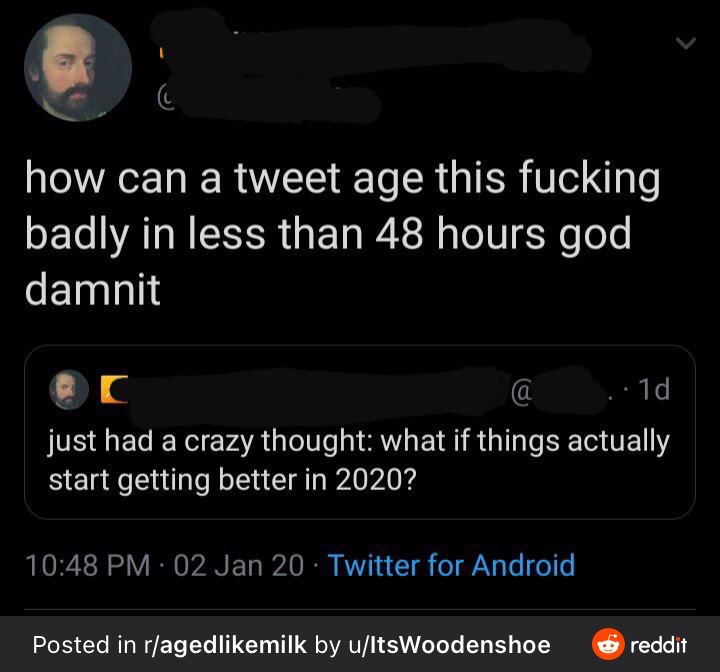
Can you spell “aged like milk”?

John Piper wrote a whole article on the type of hope I’m talking about. To quote from it directly:

…biblical hope is a confident expectation and desire for something good in the future. Biblical hope not only desires something good for the future — it expects it to happen. And it not only expects it to happen — it is confident that it will happen.

John Piper, “What is Hope?”

When I said that this person posting their memes about the Establishment and Obama being a war criminal was hopeless, that’s what I meant. Conspiracy theories–because let’s be real, that’s what this person is trafficking in–are inherently hopeless. Conspiracy theories give godlike power to human communities and institutions, be they the Jewish community, the rich, world governments, or the medical industry. Conspiracy theorists dress up their hopelessness with strands of truth, using the real instances of politicians’ lack of morality or the government rallying around the wealthy to convince people that X, Y and Z was a false flag operation or that George Soros is making the population dumber with chemtrails.

I feel like I’m getting off topic. Hopelessness.

There are a lot of hopeless Christians out there today, traditional and progressive. Under the traditional umbrella, you have the Christian doomsayers, the people who scream “Rapture!” at the drop of a hat. There’s also the sheer mess that is the religious right. January 6th is back on a lot of people’s minds with the congressional hearings starting this week, and I distinctly remember feeling deeply unsettled on January 6th as the news broke. The fact that anyone would attack the Capitol, let alone thousands of people, because they didn’t like the results of an election is scary enough, but it was what was in the crowd that disturbed me. Rioters carried crosses and Bibles, flew flags that said “Jesus 2020” and “Jesus is My Savior, Trump is My President” and some who broke into the Senate Chamber paused the vandalism to shoot God a thankful prayer.

Many an adjective has been hurled at the January 6 rioters: “violent,” “seditious,” “treasonous.” All of these adjectives make sense, but I’d throw one more adjective on the pile: “hopeless.” The people who stormed the Capitol had various reasons, but the supposed Jesus followers who picked up a gun or an axe handle did so because they had no Biblical hope. Even though they claim to believe in a holy book that says our Heavenly Father will rectify all wrongs and make a new heaven and a new earth, they may profess belief in this hope, but in their hearts they don’t believe it. They’ve been conditioned to believe that God can only work through certain people. (*cough*REPUBLICANS AND CONSERVATIVES!*cough*) And so when the enemy, those demon-possessed leftist Democrats, looks like they may have a shot at taking back the Oval Office, they’re not protesting, they’re firing the first shot of a holy war.

Hopelessness is also a problem in more progressive denominations, as Ms. Feminist Theologian Conspiracy Theorist above proved. (BTW, don’t hate on feminist theology because of this article. Feminist theology is a fascinating field, even if one person who studies it has a wack Instagram.) Although, I think progressive Christians can sometimes blunder into hopelessness rather than actively cultivating like the religious right does. Many progressive Christians are former fundamentalists, who fled the stuffy churches of their past and saw a more liberal denomination as a happy medium between the dead theologies they fled and atheism. But because there’s so many residual bad memories associated with religion, I think progressive Christians can focus too much on what they aren’t–the pack of judgmental hypocrites that Christians can prove themselves to be–rather than what they are: salt and light and God’s hands and feet until He returns.

And speaking of that, I need to make a disclaimer.

Up to this point, you may think my message is “Let go and let God.” NO. NO, IT IS NOT. Having encountered that line of thinking, I can say it’s nearly as noxious as those who say “God is a Republican” or Christian conspiracy theorists. I’m a firm believer that we as Christians are called to be people of action, to display radical love and make people see Jesus in us. I’m a part of the Assemblies of God, a Protestant denomination, so sainthood isn’t something I’m down with, but if sainthood was an aspect of Protestantism, I would want our saints to be Christians who took action. People like Martin Luther King, who paid for his divine calling to fight for black rights and labor laws with his life. People like Dietrich Bonhoeffer, a German theologian who refused to bend God’s Word to support the Third Reich and went to the gallows for being part of an assassination attempt against Adolf Hitler. People like Nelson Mandela, who sat in a jail cell for years for protesting South Africa’s apartheid laws and followed his Heavenly Father’s call to not only forgive his oppressors, but use his newly given power as President to lead South Africa into a nationwide reconciliation.

In fact, these people are prime examples of the power of Biblical hope. Many people think Martin Luther King knew, possibly through divine methods, possibly through being informed prior, that death was waiting for him in Memphis, Tennessee, based on certain things he said in his final speech, “I’ve Been to the Mountaintop.” If that is the case, the hope King had was so strong that he went to the metaphorical gallows with his head up, using his final hours to let others drink from his deep well of hope.

I’ve been going on and on about Biblical hope, so it feels appropriate to conclude by letting the Book itself have a say about hope:

I have told you these things, so that in me you may have peace. In this world you will have trouble. But take heart! I have overcome the world.

John 16:33, NIV

Nostalgia, Ultra

Genuine question: are you required to have peaked in high school to write for a teen drama?

I don’t have HBO, so everything I’ve heard about the show Euphoria I’ve heard secondhand. But after a celebrated first season, several articles came out criticizing the amount of sex and drug use in the second season. And this controversy isn’t new: Skins, a British teen drama named after a slang word for rolling papers, made all kinds of waves when it premiered for the same reasons as Euphoria: lots of sex, lots of drug use, and no attempt at discretion. The controversy reached its climax when MTV attempted an American remake, only to can it after one season due to accusations of child pornography.

But here’s the strange thing: I watched a few episodes of Skins. And I really liked it.

Why?

The reason I ask if peaking in high school is a prerequisite to writing for the Skinses and the Euphorias is because there’s a nostalgic quality to these types of shows. The gratuity of the sex and the drugs in these kinds of shows makes it feel like the writers are using these characters and plots to smile back on their younger days.

And again, what I watched of Skins, I liked. Which makes no sense. I have no reason to get nostalgic feelings from Skins. I’m not British. I was a teenager a generation later than the characters on Skins (2013-2017 to the 2007-2013 that Skins aired). I didn’t have a tight-knit group of friends in high school like the Skins Gang. The adults in my life weren’t criminally incompetent. And I definitely didn’t have the rampant partying, drug use and sex that made Skins so controversial.

But I think I figured out why. And do you know how I figured it out?

TikTok!

I can’t find the exact video (and judging from some technical errors a few posts ago, I couldn’t post it even if I could) but I was scrolling TikTok and I found the unthinkable: a video about nostalgia for the year 2020.

Yes, 2020. The year that the continent of Australia catching on fire and former President Trump firing the possible first shot of World War III was overshadowed by a global pandemic we still haven’t recovered from and more senseless murders of black people by police making global racial tensions explode. The year where the most nail-biting election in US history spun off into accusations of stolen elections and radicalized citizens breaking into the US Capitol and assaulting police officers. The year so awful, that Time magazine’s cover image for their December 2020 issue drew an X over 2020, something that it’s only previously done to condemn pitstains of humanity like Adolf Hitler, Saddam Hussein, and high-ranking members of al-Qaeda. That 2020.

Someone on TikTok was nostalgic for it.

And so were a bunch of people in the user’s comment section.

And this made me realize: the human brain is really, really dumb.

And I do mean the brain. What I’m about to talk about affects every human being on Earth, smart, dumb, black, white, rich, poor, religious, secular, and any other category you can come up with. Humans are obsessed with familiarity. There’s scientific proof for this: in the Scientific American article “Brain Seeks Patterns Where None Exist,” the author talks about illusory pattern perception, the tendency for people to see patterns in situations where there aren’t any. Researchers at the University of Texas at Austin put students through six different tests, including simulations of the stock market and asking subjects if they saw images in television static. Every student saw an image that wasn’t there or a pattern in the stock market that didn’t exist.

Our brains are so geared towards familiarity that it can cause problems.

The main reason addiction is hard to break is because of extinction bursts. Extinction bursts are a physiological reaction to a change in habits. Familiarity makes channels in the brain, and the brain really wants to stick to those channels. When you’re on the verge of changing your neuron paths, the brain will fire off one final blast of feel-good chemicals, trying to make you stick to your established neuron paths. This is why someone trying to quit smoking suddenly smokes a whole pack after a month of sobriety.

Stockholm syndrome is another way our brain’s preoccupation with familiarity can turn toxic. Stockholm syndrome is a psychological condition where the victim in a captor/victim dynamic develops a psychological dependency on their captor. This can be a hostage developing affection for their kidnapper, the abused in an abusive relationship staying in the relationship despite knowing the danger to their person, or abused children staying under their parents’ control even in adulthood, when they’re within their means to leave their parents behind and never return.

Our brain is so geared for familiarity that we grasp for familiarity, even when what was familiar was dangerous. Throughout the Pentateuch, the first five books of the Bible, the Israelite tribe repeatedly waxed nostalgic about their days as slaves to the Egyptians. I could dig around for Biblical references, but VeggieTales distilled all those instances down in a hilarious manner, so here’s that:

The Israelites longed for the days of Egypt. Those days included hard labor, living in a ghetto, and the wonton slaughter of their children. But given the choice between returning to their chains and the unknown of fighting for the Promised Land, many Israelites fell back on the familiar instead of God’s promise.

Domestic violence survivors can also suffer from dangerous nostalgia. After escaping their abusive situations, some survivors reminisce about the good times in their relationships, to the point they may be tempted to return to their abuser. These relationships may have included physical, verbal, or sexual abuse, gaslighting, or even attempted murder, but in the unfamiliar landscape of singleness and safety, the survivor’s psyche aches for familiarity, even though what was familiar was a life of walking on eggshells and dreading the next downturn in the relationship.

Now, you may be wondering what point I’m driving towards. I went from talking about teen dramas to talking about slavery and domestic abuse.

My point: nostalgia is always a lie.

Let me explain.

Before 2020, the worst year of my life was 2013. I went into the year being homeschooled when I desperately wanted to end middle school with my friends at my old school. I was a sullen, depressed emotional wreck. My parents heard about a church camp, and passed the word on to my youth group, and the week I spent at camp was unquestionably the best week of the year. Too bad such an emotional high led to such an emotional crash days after camp was over. I went into high school the same depressed, sullen emotional wreck I started the year as, and ended the year…you guessed it, sullen and depressed, with a bonus heap of disappointment that high school wasn’t nearly the adventure shows and movies had made it out to be.

And yet, when I found the “Top Hits of 2013” playlist on Spotify, I followed it. Liked the vibe, even. I nodded along and flashed back to the good times of 2013, a year I hated 360 days of.

Merriam-Webster defines nostalgia as “a wistful or excessively sentimental yearning for return to or of some past period or irrecoverable condition.” By its very definition, nostalgia is an idealization, a version of the past where anything negative is sanded off. The fact of the matter is, any time period sucks, and you don’t have to dig deep to find that out. Ask any civil rights activist or participant in Stonewall how fun the ’60s were. Ask any LGBTQ+ person how fun the ’80s were, assuming they didn’t die of an AIDS diagnosis the government did nothing to help with. Today, some people deem 2016 the last good year, but good luck telling that to anyone from 2016.

My point is: nostalgia is a coping mechanism. Humans are naturally resistant to change, and turn to what’s familiar when change comes a-knockin’. Heck, more research found that watching nostalgic shows or listening to familiar music helped people’s mental health during the COVID-19 pandemic. So, nostalgia isn’t automatically a bad thing. The danger comes when we get too lost in the rose-colored sauce. We can get myopic about the darker aspects of the past. In fact, entire political movements have sprung up with the goal of bringing the past to the present.

So, to conclude and to take words from a certain split-personalitied mummy-looking suit-wearing protagonist of an aight Disney+ series, embrace the chaos. To be comforted by the familiar is natural, to cling to the familiar and shy away from anything new is unhealthy, possibly dangerous. So run to the unknown. Remember: the past is nothing but the future that’s already happened.

I should trademark that. Until next time, dear reader.

…but seriously, do you have to peak in high school to write for teen dramas?

A E S T H E T I C

Aesthetic [es-thet-ik]: a particular individual’s set of ideas about style and taste, along with its expression. (dictionary.com)

I’ve been thinking about aesthetics a lot these first few months of the new year.

I started the new year by creating a bookstagram page (follow me! FOLLOW MEEEEEEEE!), a fun thing I was doing on my Instagram story blooming into a page of its own. Since getting called out on my less-than-stellar book photos

*BARF*

I’ve been making an effort to improve my photo-taking game. My aesthetic, if you will.

I’ve also been binging this fantastic YouTube channel called SunnyV2, where the narrator goes through the history of social media stars who’ve fallen from grace. The most recent episode I watched was about Dan Bilzerian, a poker player and businessman whose aesthetic of a self-made millionaire has been steadily whittled away by accusations of cooking his books, the revelation that his wealth came from his father’s chicanery on Wall Street, and that what money he has made was used to pay for the women on his arm and rent the mansion he claimed to have bought.

I’ve seen a trend on TikTok where people show the aesthetics of their Instagram profiles. (The two examples I could find were from friends’ pages, so in the interest of not doxxing their TikToks, you’ll have to take my word for it.) And speaking of TikTok, I started following @becauseimmissy_, who makes parody videos of the aesthetics of different types of social media posts.

Because I’m obsessed with going down rabbit holes, I read up on “dark academia,” an aesthetic originating from Tumblr focused around higher education, classical art and literature, and Gothic architecture. (Think Donna Tartt’s The Secret History or shows like The Queen’s Gambit and Sherlock for examples of the vibe.)

Lastly, I’ve been thinking about aesthetics because my personal life is on pause.

Yep. This is another ‘Noah has a problem, so you’re getting a blog post out of it’ post. (Is there another kind? [There’s ‘The Lost Stories of Spain,’ ‘TIWTTA,’ and possibly more book content. The answer is yes.])

Life is at a standstill, dear reader. I’m a recent grad on the recent grad grind for a job. (Which is probably exacerbated by me being a recent English grad on the recent grad grind for a job. Stupid STEM-to-career pipeline.)

During times in your life like this, it’s easy for your mind to wander in the wrong directions:

Envy: everyone else has a job! She went to Costa Rica–how? With what money?

Resentment: isn’t there a labor shortage? As in, companies need people? So hire me, you feet-dragging jerks!

Regret: I should have gone into education. I should have gone to community college. I should have done another internship. I should have gone to that career fair.

Catastrophizing: if I don’t find a job soon, then I’ll be screwed when I need to start paying back loans. I’ll get behind on those, and then my credit will be garbage. I won’t be able to get a credit card or buy a house or rent an apartment or buy a car. And then my parents will get sick of me and throw me out, and I’ll freeze to death living out of a cardboard box!

(If you couldn’t tell, catastrophizing is something I struggle with.)

I don’t talk much about my writing life, but one way of reaching your goals is to have many accountability partners. I’ve been drafting a novel, with varying levels of seriousness about finishing and trying to publish it, since summer 2017. This past New Year’s, I drew a line in the sand: by my birthday, September 7 of 2022, the story would be finished. Publishing is a different matter, but I want to ring in my 23rd birthday by having a completed manuscript. The last two weeks or so have been a lot of imposter syndrome and not a whole lot of writing. It’s also been a lot of fantasizing, thinking of what I would want out of writing for a living.

The mobility that lifestyle affords. Being able to meet other authors, writers of my generation and writers I grew up reading. Getting to tour schools and meet kids who have enjoyed my work. Getting to speak at conferences. Being recognized when I walk into bookstores, or even better, happening on someone reading a book of mine and hearing them gush about it and then being able to make their day by telling them they’re talking to the author.

Now did you notice anything missing from my writer fantasies? Go back and read that last paragraph. Read it once. Read it twice. One more time.

Writing.

That’s what I’ve started using to jar myself out of my slump. When I’m focused on the aesthetic of being a writer rather than doing what makes me a writer by trade, writing regularly, my writing life shrivels and dies.

So many problems show up because people want to look like something rather than embodying that thing. Let’s go back to Dan Bilzerian.

Even after his scandals, Dan is still successful. A peek at his Instagram reveals the man is sitting on a comfy 32.7 million followers. But his image has been compromised. Why? Because the public now knows Dan’s concern lies with looking like a self-made millionaire playboy rather than being a self-made millionaire playboy.

What about dark academia? The trend has received criticism for glorifying the unhealthy aspects of academic life like caffeine dependency and poor sleep habits and demographical elitism in excluding academic work from nonwhite countries or media with diverse leads from the “canon” of dark academia. In other words, dark academia is more concerned with looking intellectual than being intellectual.

People have known for a long time that social media is about making your life look a certain way rather than presenting it as it is. You don’t need to look at celebrities like Dan Bilzerian to see examples of that. Think about the kinds of accounts Missy Chanpaibool parodies. How many times have you watched a couple post mushy tributes to each other, only to delete them all when the toxicity behind the happy façade reaches critical mass? Multi-level marketing schemes make their dollars off of making people look like self-made businesspeople, even if the nature of the scheme means only about 1% of investors will make money from it. Scandal after scandal has happened because a public figure or an institution has acted one way in public and another in private.

And speaking of institutions, governments pursue aesthetics all the time, often at the expense of the people they govern. Financial crises like the Great Depression and the 2008 recession happened after the US government let the banks (in the case of 2008) and the rich (in the case of the Great Depression) off their leashes, letting them foolishly overspend with margins or derivatives. The economy slowly rotted from the inside out while the US had the aesthetic of a strong economy. To get more recent, COVID-19 ravages the US because in the first months of the pandemic, the previous administration was more focused on looking like coronavirus was under control, by keeping the economy open, refusing to supply COVID tests to keep statistics low, etc. We’ve spent the last two years feeling the consequences of those decisions.

(Does anyone else suddenly feel like re-watching Avatar: The Last Airbender? Specifically the Ba Sing Se episodes? …I’m the only one? OK.)

Conclusion?

A few posts ago, I stole a quote from my friend Haley: “The grass isn’t greener on the other side, it’s green where you water it.” Aesthetics are like fake grass, put down to make something look better than it is and impossible to one-up. So don’t bother. Aspire for a better life while being happy with the life you have now, dear reader.

And if you know anyone who’s hiring, pass my name along, willya?

I’m Really, Really Single

I should have known logging every book I read this year would cause problems.

Hi, everyone. It’s been…oh geez, 10 months since I posted. Lot’s happened since then. I experienced a semester that felt like a year, got the COVID vaccine, had a friendship that I tried to spin into a relationship that resulted in both going down in flames, walked in my graduating class’s commencement, and moved into a rental house. But the first noteworthy thing that happened this year was my old admission counselor’s Instagram story. She posted the first book she had read in 2021. I liked the idea so much I decided to join her. Until now, no problem. It’s made for a lot more engagement on my Instagram page: people viewing my stories, DMing me about the books I’ve read and so on.

But of course, it’s never that easy.

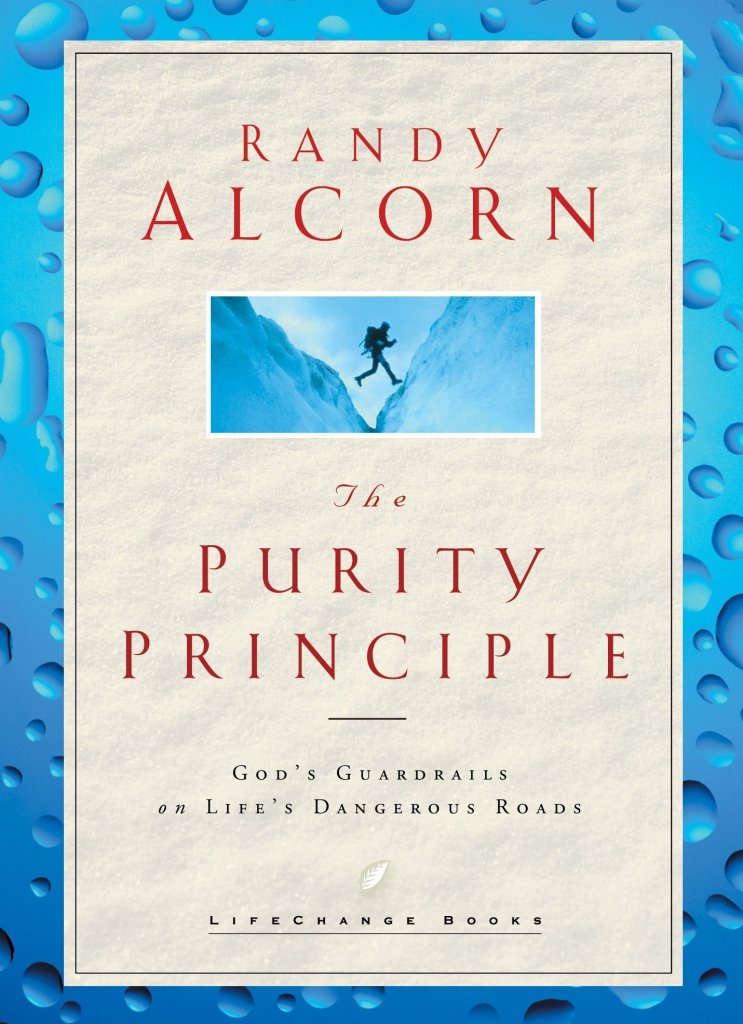
As I’ve worked my way through my reading lists, I saw an obstacle splayed across the metaphorical train tracks. I’m simultaneously working through my paper-and-ink personal library, my e-books, and whatever I can grab from the Grand Rapids library. One day, I finished my current read and went to replace it with the next book from my bookshelf. I saw the next read was Randy Alcorn’s The Purity Principle, a book about–shocker!–sexual purity.

There’s a Breaking Bad joke on the tip of my tongue…

Then I went to Apple Books, where I keep my reading lists, and saw the next book on my reading list was Kutter Callaway’s Breaking the Marriage Idol, a book discussing the pedestal marriage has been put on in the American church.

Jesus was single. All I’m saying.

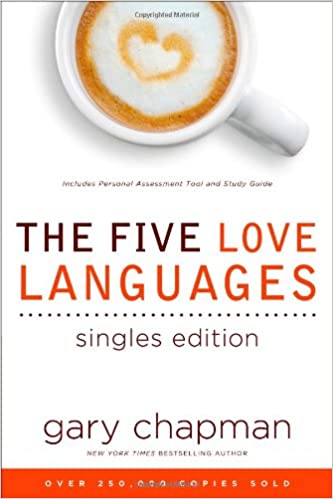
The book after that was Gary Chapman’s The Five Love Languages: Singles Edition.

…do I even need to say anything?

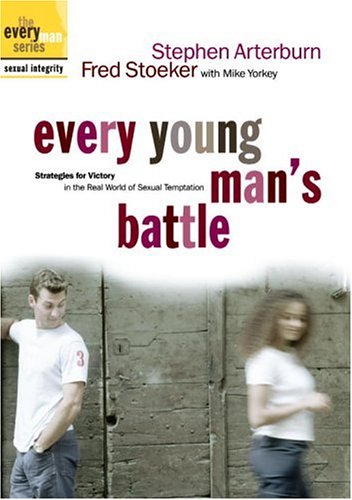
Going back to my bookshelf, I saw down the line Every Man’s Battle and its younger brother Every Young Man’s Battle. Three guesses what they’re about.

Your one hint: it’s not Call of Duty.

Initially, I shrugged it off, thinking, “I haven’t blogged in a minute anyway. I’ll pump out a blog that’s like ‘I’m fine being single, y’all! This is a weird way the cards fell.’ and continue on with chewing through my books.”

Now go back about six paragraphs and four pictures and look for a particular sentence. The one that includes the statement “had a friendship that I tried to spin into a relationship that resulted in both going down in flames.”

So what I’m about to write is a lot of things: life update, grieving personal failures, picking my own brain, critique of the church and society–the list goes on.

The One Where I Ain’t No Doxxer

Now this isn’t the first time I’ve talked about an attempt at a relationship that went the way of the Hindenburg. But this time it’s different. I messed up a good thing. Things are done between “Tracy” and I. Friendship, relationship: FUBAR’d. And it’s unquestionably my fault. But that’s water under the bridge. I can’t undo the stupid things I did to break the trust between “Tracy” and I, and I’ve dedicated enough emotional bandwidth to beating myself up over how it went sour. I’m only bringing it up to highlight that singleness can hurt, yo.

The One Where I Can’t Quite Put My Finger On It

What’s so difficult about being single? The easy answer is human psychology: we want what we can’t have. The soul-rending that comes with rejections, feeling invisible to whoever is your type, being single in a friend group consisting mostly of couples, having all your attempts to start relationships fall on their face, or (in my case) all of the above serve to make the prospect of a relationship like some forbidden fruit you’re desperate to consume. But that’s not the end of it.

Some of it is the human condition. Think back to Genesis. Adam was in community with God in the Garden of Eden, and yet God said, “It is not good for the man to be alone. I will make a helper suitable for him.” (Genesis 2:18, NIV) To end Adam’s loneliness, Eve, the woman, was created. Consider that: community with other people is so important to the human soul that even God cannot check that box. Priests, monks, hermits, nuns–people that dedicate themselves completely to God–still do so in community. One reason singleness hurts as much as it does is because humans weren’t meant to be alone. But that can’t be it, either. After all, most single people, myself included, have friends and family. It’s not like we live in solitary confinement because we’re not seeing anyone.

Maybe it’s a societal thing. Lisa Arnold and Christina Campbell, cofounders of onely.org, wrote an article for The Atlantic laying out ways married people are privileged over single people in modern society. Most of it comes from monetary benefits: it’s easier for couples to buy houses than single people, married people receive more in tax returns than single people, etc. I can come up with non-financial examples: the use of “virgin” and “basement-dweller” as insults, the portrayal of single adults in movies and TV as less mature than their coupled counterparts (see: Barney and Ted in How I Met Your Mother, Josie in Never Been Kissed, and/or any movie with a Manic Pixie Dream Girl) and phrases like “spinster” and “Christmas cake” to describe older single people. That may sound minor, but if you recall, privilege often shows itself as you not having problems that other people do. That’s not the whole picture, either. After all, growing a thick skin can make Xbox trolls and Seth Rogen characters bounce right off.

Maybe it’s a problem with the church. I did read Breaking the Marriage Idol, a book that critiques the church for placing marriage on a pedestal, often at the expense of single members of the church, critiques that were downplayed but also present in The Five Love Languages: Singles Edition. One needs only Google “single people and the church” and receive results with titles like “The Church is failing single people,” “7 reasons why it’s hard to be single in the church,” and “Why Singles Often Give Up on the Church” to realize single people often don’t feel at home in the place that’s supposed to be a weekly reunion for family in Christ. But that’s still only a piece of the pie.

I think it’s a little of all these things, as well as other factors I can’t quite put a name to or find a name on Google that make singleness so hard. Psychology Today introduced me to the idea of “ambiguous loss,” the kind of grief one experiences over a metaphorical loss like ‘losing’ a loved one to dementia or mental illness.

Maybe the reason singleness is so hard is because single people grieve, but they can’t vocalize what they grieve.

The One Where We Can’t Acknowledge a Middle Ground

Post-“Tracy” was far from the first time I got to thinking about being single. In my junior year, frustrations with my love life inspired two documents that together make a 55-page word vomit. In clicking around Google searches as I was writing these documents, I started to notice two distinct camps of thought.

First and more prominent are the doomsayers. These are the people who fit the worst stereotypes of single people. They’re bitter about their romantic unluckiness and ooze jealousy of people in relationships. Some cling to their bitterness so tightly they self-sabotage, screwing up chances at relationships with their relentless negativity and then screaming abuse at whoever ran to avoid getting their head bitten off. For others, that bitterness translates into desperation, resulting in embarrassing DMs on dating apps or critical relationship failure when they spew years of resentment onto someone who was hoping to have a pleasant night with a potential boy- or girlfriend. For others, their resentment translates into fatalism, a shrug and a resigned “what’s the point?” that often dictates their whole life, not only their quest to find Mr. or Mrs. Right. Incels, an Internet movement designated as a hate group by the Anti-Defamation League, are one example of doomsayers. So is the Forever Alone community on Reddit. BuzzFeed asked readers to share the worst messages they’ve received on dating sites, and most of the examples they received reek of desperation borne from bitterness.

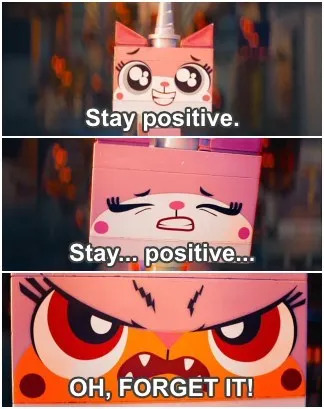
Second and arguably worse are the sugarcoaters. These people are desperate in the opposite way of the doomsayers: if the doomsayers let their bitterness run their lives, the sugarcoaters brush off legitimate grievances and focus on the perks. The perks are typically things like “I have my bed to myself! I’m in control of what I watch on Netflix! I can travel all I want!” (That last one tells me the majority of sugarcoaters have more financial stability than I do.) And while I can understand where they’re coming from, it feels like they’re bottling up their resentment, saying what they’re saying to assure themselves rather than whoever they’re talking to. Whenever I read an article about the perks of being single, I imagine it being written by Unikitty from The LEGO Movie.

And clearly, this is who I want as a life model.

Clicking between incel forums full of people who are convinced women are conspiring to make sure they die alone and blog posts written by people I wouldn’t meet in real life without moving sharp objects out of sight, I feel like screaming. After all, while I certainly would like to be in a relationship, I’ve been single my whole life. Meaning that everything good in my life–every achievement I’ve made, going to Calvin, studying abroad, all the friends I’ve made, my faith life–has happened without that special someone by my side. And yet, I feel like we can’t acknowledge that there’s gray in the black and white of singleness. It’s not all bad, nor is it all good.

So why is it hard for culture at large to acknowledge that?

The One Where the Church Has Some Explaining to Do

I’ve lived in the Christian bubble all my life. I have a pastor for a dad and spent my first three educational years homeschooled with Christian curriculum. One of the earliest pictures of me is baby me sitting with other ’99 babies from my home church. I chose to attend a private Christian university, am listening to Travis Greene as I type this paragraph, and am working on a Bible-in-a-year plan. Much like singleness, I can’t critique the Christian bubble without acknowledging most of the good things in my life happened within its confines.

But critique it I will.

“Believe me, church, this hurts me as much as it hurts you.”

The church has dropped the ball when it comes to singleness. But it’s dropped it in the same way a parent who plays favorites has. If you asked a parent who obviously favors one child over another if they were trying to emotionally scar the un-favorite child, they’d probably answer no. They might say they love their children equally or even try to justify the neglect of the second-fiddle kid as tough love. But damage their kids they will.

Similarly, the Christian bubble didn’t mean to send negative messages about singleness to those who occupy it. Purity culture, the evangelical movement centered around staying sexually pure before marriage which was especially powerful in the 1990s, intended to fight back against a sex-saturated culture. It didn’t mean to teach women that they were responsible for men’s sin as well as their own, that their worth lay wholly in their virginity, and that loss of their virginity before marriage, be it through consensual sex or sexual abuse, tainted them. It didn’t mean to instill young women with an overwhelming sense of shame. And it certainly didn’t mean to be motive for a mass shooting that left 8 people, most of them Asian women, dead. Ring by spring culture, the trend at Christian colleges of couples being engaged by spring of senior year, didn’t mean to inspire feelings of anxiety in single students or jealousy of their engaged counterparts. Yet, both of these feelings are rampant in single students at Christian colleges and universities, according to Stacy Keogh George’s research at Baylor University. Churches didn’t mean to make single people feel like second-class citizens, but according to Breaking the Marriage Idol and many of those articles I found, that’s exactly what’s happened.

The One Where We Ask, “So What Now?”

With a typical blog post, I conclude by neatly tying all the disparate threads of thought. I then schedule the post to publish and hope all the little jokes and wordplay are as clever as I thought they were when I wrote them.

I can’t really do that here, mainly because I feel like I’m only scratching the surface of the topic of singleness. So instead, here are…solutions? takeaways? opinions? somethings.

  1. It’s OK to be single. Tom Cruise lied to you in Jerry Maguire. You don’t need a special someone to be complete. You aren’t broken or defective if you can’t start a relationship. People in relationships aren’t better than you. It’s not some kind of curse from God if your relationship prospects are looking bleak. It’s. OK. To. Be. Single.
  2. Church, you need to convey it’s OK to be single. Like I said earlier, the church hasn’t meant to send negative messages about singleness. But it has, sometimes with horrible outcomes. So, the church needs to start teaching a holy way to be single. I don’t imagine that this transition will be difficult: after all, two of the most important figures in the Gospel were single.
  3. Single people need support spaces, not a dating pool. This is speaking to the religious and secular worlds alike. Too often, spaces specifically for single people is either formed or treated like a “get them married” club. Now granted, some people enter these spaces with that goal. Some, not all. Others want support, someone who can clap them on the shoulder and say, “I’ve been/am where you are, buddy. I’m here for ya.” And for the latter, it can be a special kind of discouraging to have a friend or a relative or a group leader shove a stranger at them and say, “You two are perfect for one another!” To paraphrase Captain America: “Secure my emotional health, then find me a date.”
  4. Stop romanticizing platonic friendships. Men and women can be friends. Similarly, men don’t need to be attracted to other men to want deep, emotionally intimate relationships with other men. In a perfect world, Cap and Bucky resonate due to realism, not idealism. (Two Captain America examples one after the another. Interesting…)
  5. Don’t settle. If you’ve been single, and especially if you’re feeling like the cosmos are dropping relationships into everyone’s laps except yours, it can be tempting to throw yourself at the first person who shows interest. Besides that falling under that desperation I mentioned earlier, a wise man once told me the fail state of a relationship isn’t “single,” it’s “misery.” Ask anyone who’s been in a toxic or abusive relationship. The worst kind of alone is when you feel alone in union. As a wise woman quoting a wise rapper once said, “The grass isn’t greener on the other side, it’s greener where you water it.” (Thank my friend Haley for that nugget of wisdom; follow her on Instagram @ha.le.s–she’s cool.)

Not since The Lost Stories of Spain have I itched to write a sequel to a blog post; I haven’t come anything close to putting down every thought I have on singleness. But that’s for another day.

To my single people: you’re OK. You’re OK if you get into a relationship tomorrow. You’re OK if you don’t have a relationship ever. You’re OK if you screw the pooch with your “Tracy.” You’re OK if you are a “Tracy” and had someone who seemed cool…not be. You’re OK if you’re recovering from an abusive or toxic relationship.

We are OK.

Finding the Sacred in #BlackLivesMatter

Author’s note: I started drafting this post in early August. I researched, wrote, cut, added right back. Then life got busy with school starting back and my own lack of interest, and this post almost went in the deleted bin.

Then Jacob Blake got shot, and I realized I had been lulled into passivity. So here I go.

If you’ve never met Ken Heffner, you’re missing out.

It’s not creepy to look up people you know on Google Images, right? …right?

In my sophomore year at Calvin, I worked with Ken in a position called a Cultural Discerner. Cultural Discerners worked in the dorms to foster conversations about how we as Christians engaged with pop culture. It was through my time as a Cultural Discerner that I was introduced to the concept today’s post is about, finding the sacred in the profane.

We’ll get back to that. Instead, let’s talk about the present. Specifically, three incidents that have started the biggest movement of the century.

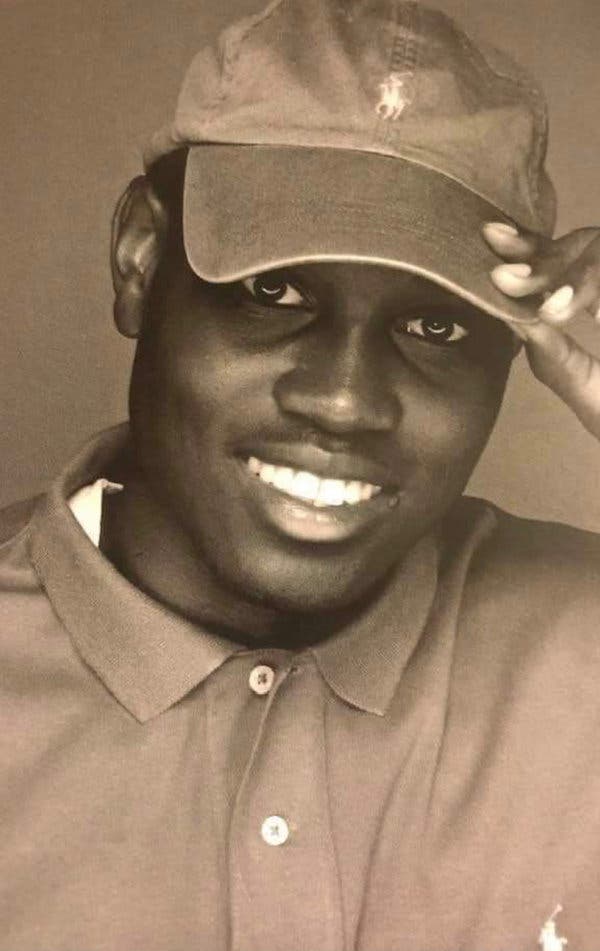
On February 25 in Brunswick, Georgia, 25-year-old Ahmaud Arbery was accosted by a white father and son and one of their neighbors while he was out on a run. Arbery was pursued by the three men in two vehicles, cut off by the neighbor, and fatally shot by the son. Despite the neighbor catching the whole thing on video and none of them being law enforcement (therefore having no authority to use lethal force), it took almost three months for the three men to be arrested and charged.

#SayHisName

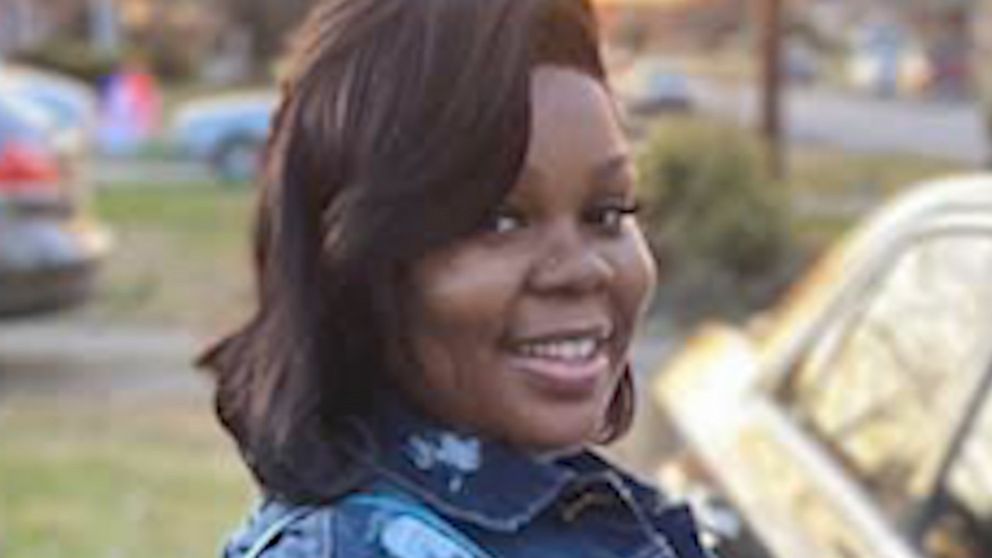
At midnight on March 13, 2020, three members of the Louisville, Kentucky, police department executed a no-knock search warrant on the apartment of 26-year-old medical technician Breonna Taylor and her boyfriend, Kenneth Walker. The warrant was for two men allegedly involved in drug dealing, neither of whom lived in Taylor and Walker’s apartment. The police broke into the apartment using a battering ram, waking the couple from sleep. Walker, a licensed gun carrier, retrieved his gun and fired a shot at the intruders and received almost two dozen rounds of return fire, which killed Taylor. Walker was initially charged with assault and attempted murder of an officer, but the charges were dropped. As of the publishing of this post (September 14), one officer has been fired, but none have been arrested or charged.

#arrestthecopswhokilledbreonnataylor

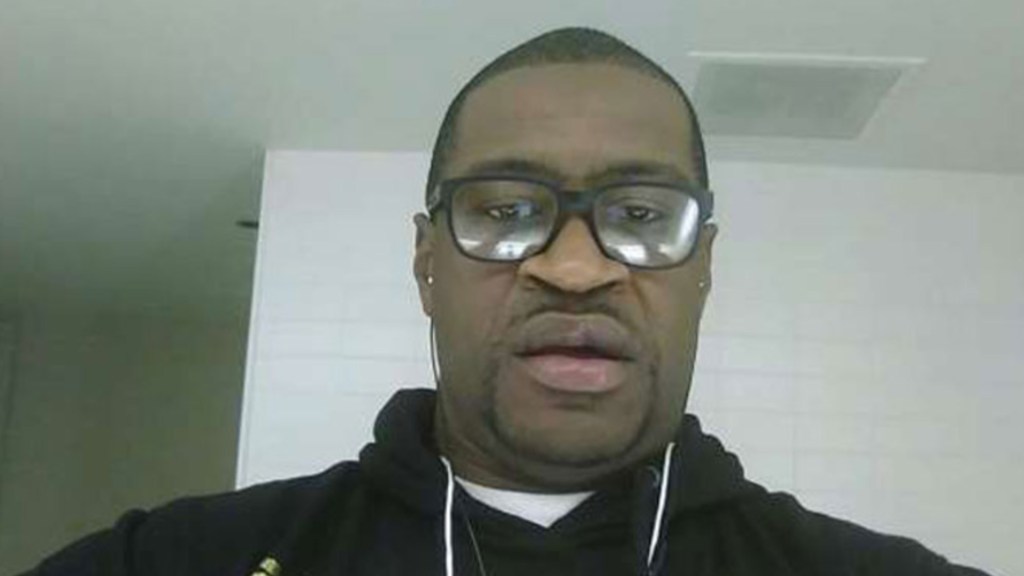
On May 25, George Floyd allegedly paid for a pack of cigarettes with a counterfeit $20 bill. The police were called on Floyd when he refused to return his purchase. After he was cuffed, Floyd was first sat in the back of a police cruiser, then pulled from the car by Officer Derek Chauvin. Four officers restrained Floyd while he was on the ground, one by sitting on Floyd’s chest, and Officer Chauvin by putting a knee on Floyd’s neck. Floyd was in this restraint for 8 minutes and 46 seconds, during which he said multiple times he couldn’t breathe (both because of his air being cut off and his recent recovery from COVID-19), cried for his mother, and finally lost consciousness and stopped breathing. Floyd was pronounced dead an hour later. All four of the officers who restrained Floyd were arrested, Chauvin’s trial for second-degree murder is currently pending, and the other three officers have been charged with aiding and abetting second-degree murder.

#justiceforgeorgefloyd

Everyone (and I do mean everyone–including the founders of Ben & Jerry’s, one of the head honchos of Reddit, Mitt Romney, witches and Batman) had something to say. The protests against police brutality and for systemic reform went international, making the Black Lives Matter cause one of the biggest in history.

Christian communities had a…shall we say, mixed reaction to the protests. On the one hand, Christian sects that had been neutral on the matter of racial equality were finally pushed off the fence; see: the notoriously-conservative Southern Baptist Conference’s change of heart and the United Church of Christ’s affirmation of the Black Lives Matter cause. On the other hand, the protests made bigoted Christians dig their heels in further. But keep in mind, there’s a good reason for the indecision on the topic of Black Lives Matter.

Christianity, especially in America, has a long history of being on the wrong side of racial issues. If we’re strictly talking American Christianity, we could talk about the use of Scripture to justify slavery; the many white supremacist organizations, past and present, who twist theology into evidence for racial purity and calls for violence; that the primary force that stood against Martin Luther King, Jr. and the civil rights movement were white Christians; or the continued support by white evangelicals for President Trump through his many racially-charged and discriminatory statements and policies. If we wanted to go international, we could talk about the long history of antisemitism in European Christianity, coming to a climax with the Third Reich cherry-picking Martin Luther’s writings to make a Christian justification for Nazism.

The end result? What to the rest of the world seems like a black and white issue is subsequently muddled by the church’s history of being complicit or actively engaged in racism.

Flipping the perspective, Christians have their own issues with BLM, as has been expressed both in discussions and to me personally. It’s an issue with a few key parts of Black Lives Matter’s mission statements:

We are guided by the fact that all Black lives matter, regardless of actual or perceived sexual identity, gender identity, gender expression, economic status, ability, disability, religious beliefs or disbeliefs, immigration status, or location.

We make space for transgender brothers and sisters to participate and lead.

We are self-reflexive and do the work required to dismantle cisgender privilege and uplift Black trans folk, especially Black trans women who continue to be disproportionately impacted by trans-antagonistic violence.

We disrupt the Western-prescribed nuclear family structure requirement by supporting each other as extended families and “villages” that collectively care for one another, especially our children, to the degree that mothers, parents, and children are comfortable.

We foster a queer‐affirming network. When we gather, we do so with the intention of freeing ourselves from the tight grip of heteronormative thinking, or rather, the belief that all in the world are heterosexual (unless s/he or they disclose otherwise).

–From the “What We Believe” page on the official Black Lives Matter website, all emphases mine

Now, it is here I have to narrow down my audience. I’m not talking to people who focus on the violence that’s broken out at BLM protests. I’m not talking to conservative Christians who prioritize the “conservative” over the “Christian”. I’m not talking to reactionary Christians. I’m not talking to Christians who reject anything liberal or left-leaning on impulse or are anti-“woke” or who reject BLM for its part in “cultural Marxism,” whatever that even means. I’m talking to Christians on the fence, Christians who believe marginalized people are being crushed under the boot of white supremacy but are still reluctant to embrace the Black Lives Matter cause.

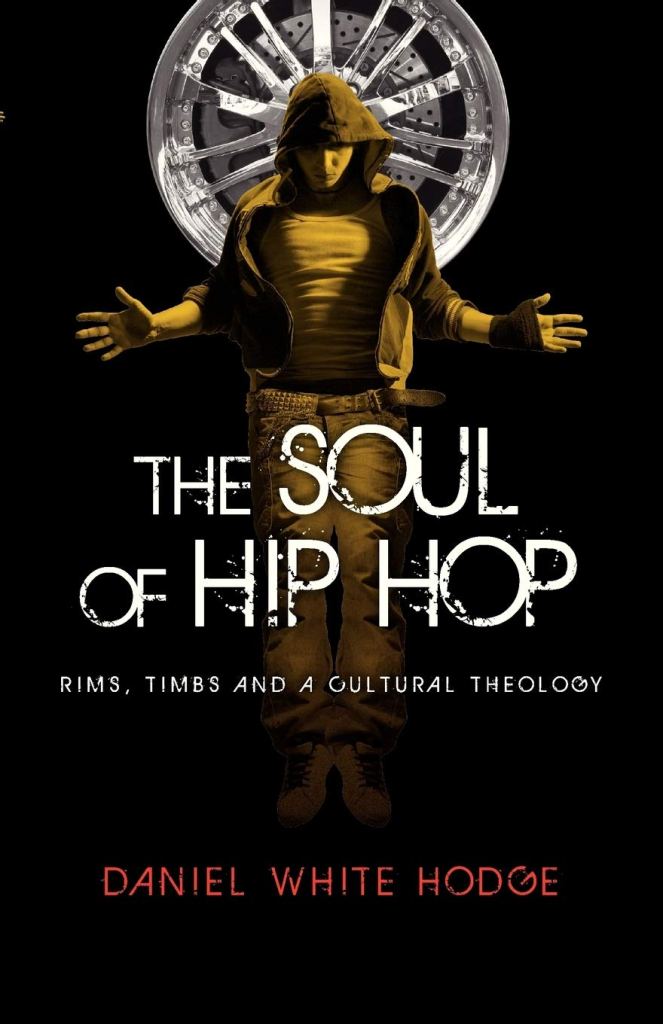
During my time working with Ken Heffner, we read The Soul of Hip-Hop by black theologian Daniel White Hodge.

Give it a read. It’s good.

Throughout the book, Hodge examines rap music, in particular artists like Tupac, KRS-One and NWA, as well as protest music. From his analysis, Hodge pulls a theology of justice from the lyrics: lyrics that look to heaven and cries out to God that He would deliver the justice institutions refuse to. Along with his theological weaving, Hodge criticizes the church’s knee-jerk rebuffs of hip-hop and attempts to co-opt the sound of black music to provide a “Christian” (read: white) alternative for young people.

Above all, Hodge begs his readers to find the sacred in the profane. To refrain from the church’s recoiling at the drug references and tales of sex and violence and look deeper, to the stories of losing friends to gang violence, of being racially profiled by police, of fatherlessness due to mass incarceration, and of groaning under the weight of systemic racism. The music cries out to God for justice because earthly forces of justice have often been the primary tool of their oppression.

If you are reluctant to take up the Black Lives Matter cause, I encourage you to find the sacred in the profane. Look to the roots of Black Lives Matter, a movement created in response to the death of Trayvon Martin.

On February 26, 2012, one man, a man with no legal authority to use lethal force, took the law into his hands and sentenced Trayvon Martin to death for the heinous crimes of wearing a hoodie and buying a bag of candy. It was a story black people everywhere had heard a million times before, but this time it was different: the killer wasn’t a police officer. There was no brass shield for George Zimmerman to hide behind, so maybe, finally, someone would answer for spilling an innocent young black man’s blood. The judge’s reading of “not guilty” gave a message loud and clear: Black Lives Don’t Matter. It wasn’t the brass shield on the breast of your shirt that gave you the permission to be judge, jury and executioner for people of color, but the color of your skin.

We as Christians need to recognize that the Black Lives Matter movement exists largely because of a stinging failure on the church’s part. The days of Martin Luther King organizing marches from a sanctuary are gone. For decades after King’s death, black Christians have been crying and begging at the church’s door for help, any kind of help, only to be turned away with responses of “All lives matter!” “Oh, we don’t talk about that here.” “Racism is a heart issue. That’s between them and God.” After decades of the church whistling and twiddling its thumbs, the church has unintentionally broadcast a tragic message: if people of color want justice, don’t go to church.

But we can do better. We can tell our black brothers and sisters that Jesus weeps for the deaths of his sons and daughters and so do we. We can march. We can advocate. We can educate ourselves. We can start hard conversations, bringing God into what was previously a secular discussion. We can make real change in God’s name.

I encourage you, reader: look for the Christian motivations in Black Lives Matter’s secular language.

Find the sacred in the profane.


Thank you all for reading. I hope you were moved by today’s post. I want to keep making contributions to the conversations we as a nation are currently having. With that in mind, I formally introduce Today I Want to Talk About… (TIWTTA)

This is a new series on the blog, where I break down hot-button topics, sociological concepts, and anything else relevant that comes to mind. With this series, I want to do my research and give a good resource that cuts through all the hysteria and presents information without an agenda. At the end of each post, I’ll present resources for further reading.

The first TIWTTA‘s subject: privilege. Stay tuned!

Collapsing at the Finish Line

I’ve had several false starts to writing this post. Hopefully, this is the real start. Today’s blog involves cross-country and the year 2016. It’ll make sense in a few paragraphs.

On May 20, I finished my junior year at Calvin University. In the days leading up to my last final, I already knew how I’d finish. Whether I was finishing a paper or taking an actual test, I would turn it in by slamming a fist down on the Enter button and then cementing my need for a new laptop by slamming my head down on the keyboard. When the day came, I finished my final paper for my math class, turned it in, and went downstairs to play Call of Duty.

Anticlimactic, innit?

It’s been a tough year for us Calvin kids. Even before coronavirus came sweeping in like a swarm of locusts, the Calvin community dealt with the deaths of three students and one professor, as well as a rape on campus. Not to mention the class of 2020 getting the tease of a lifetime by the school year ending weeks before graduation. I wrote a reflection on my sophomore year around this same time last year, but last year was different. Last year was difficult for me. This year was difficult for everybody (and still is).

I’ve been thinking about why I feel the way I do. I was expecting to feel some huge weight lifted off my shoulders, and yet what’s my reaction to the ending of a school year? Turning in my last assignment and proceeding to get destroyed by drop-shotters. Even now, as I write this blog post, the feeling I have in the moments I feel anything could be called “ambivalent.”

Here’s the connection to 2016. You guys remember 2016, the supposed “worst year ever”? In particular, you remember the last election? By the first month, I was sick of the candidates. By the time of election day, I didn’t care who won, because there was going to be riots no matter who would be sworn in, and judging by the article I linked, I’m not alone with that sentiment. TV Tropes has a term for my feelings about the Clinton-Trump race: Darkness-Induced Audience Apathy.

Maybe Darkness-Induced Audience Apathy is how a lot of us are feeling.

What we are accomplishing right now–whether that be finishing a school year, doing the best for kids, or merely getting out of bed to fight another day–may seem like measly blows against the faceless hulking enemy that is the COVID-19 global pandemic.

Which is where my cross-country season comes in.

AKA the one part of my sophomore year I’ll talk about without a gun to my head.

One race was like every other race. I kept pace, ran three mile-long laps, and for the final stretch, put on a burst of speed, and crossed the finish line.

My legs then gave out, and I took one or two more steps before collapsing.

My mom, coach, and a few onlookers came to check on me. I got out of the way of incoming runners and recovered. To this day, I couldn’t tell you why.

But here’s my takeaway: collapsing at the finish line doesn’t change the fact that you crossed the finish line. An ungraceful finish is still a finish.

Another cross-country story: different race. I was nearing the end, approaching the bend where once I turned it I would break into a sprint. A competitor, a guy from another school, came behind me so we were neck and neck. “Let’s go,” he said, and he kept saying that as we turned the bend. “Let’s go. Let’s go! Let’s go! Let’s go! Let’s go!” We both broke into sprints and booked it for the finish line, the guy chanting the whole time. We crossed the finish line still neck and neck and congratulated one another.

Let this blog post be encouragement like Let’s Go Man. Press on, dear reader, and cross the finish line however you can. A happy Memorial Day to everyone and a congratulations to any graduates reading.

I Still Believe

Hello, everyone! I have more free time than I’ll probably ever have again, so here I am, hopefully back on the blogging grind.

The news cycle is kind of obsessed with one thing and one thing only.

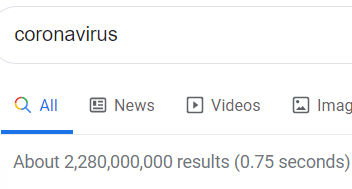
“Jesus” has about a billion results on Google. Coronavirus is bigger than Jesus. Eat your heart out, John Lennon!

Because the world has tunnel vision right now, you’re probably not paying attention to movies (outside of what to binge, in which case I recommend A Quiet Place) so if you haven’t heard of I Still Believe, I don’t blame you.

The film tells the true story of Christian singer Jeremy Camp at the start of his career. Camp, if you don’t know, lost his first wife Melissa to cancer. The film’s title comes from the song of the same name, penned by Camp after her death.

I haven’t seen the movie, but I liked the trailer. It did what a trailer’s supposed to do. As I was watching the trailer, two scenes hit me in the feels. The first shows KJ Apa’s Jeremy hurling a Bible at a wall, and the second has him smashing his guitar.

I’m bringing this up because that level of frustration is where I’ve been for a few weeks now.

OK, you know what? The beer bug is a huge topic, and I’m trying to make this post kinda structured, but it’s not working, so I’m gonna say what I wanna say, and if I lose you, I’m sorry.

First thing: can we admit this is hard? I’ve scrolled past tons of social media posts telling me the spiritual significance of coronavirus’ timing or that my grandparents stormed Normandy, so I can survive a few weeks with Netflix and my thoughts, and I deleted Twitter off my phone because of all the Michael Sandel wannabes and their hot takes about how the coronavirus proves the shortcomings of capitalism. (Not saying I disagree with them. One word: OVEREXPOSURE.)

But among all the politics and the social media sermons and the memes and the bucket lists of things that will be done once quarantine lifts, one opinion that’s been overshadowed? THIS. IS. DIFFICULT. In every way.

For me, I’ve been looking for someone to be mad at. The problem is, that list is constantly growing. I could be mad at:

Once I concluded that trying to find someone to blame for the pandemic was a pointless endeavor, my next question to God was: “Why?” Why all this pointless suffering? Why are people dying, and more importantly, why is this virus so dangerous that gathering to bury them is a health risk? Why are the hard-working citizens of the workforce being left to fend for themselves while the fat cats are swimming in money? Why are high school and college seniors all across the globe having the biggest accomplishment of their lives yanked out from under their noses? Why are governments around the world seeming to compete for who can have the least competent response, and why is my country of residence winning? Why are all the prayers not doing anything?

And I’ve gotten no answer.

I’m fairly certain God invented the frustrating silence.

Which brings us back to that throw-a-Bible, smash-a-guitar feeling. More specifically, that pull-your-hair-out slap in the face of a realization that causes it: that sometimes, what we pray for isn’t God’s will.

Which leads into the even harder realization: if what we’re praying for isn’t God’s will, then God is going to make something good out of this.

And in fact, he is. One other thing lost in the whirlwind of social media negativity? Good news during this tumultuous time.

So, to counterbalance my ‘who to blame’ list, a ‘good things that have happened, coronavirus-related or otherwise’ list:

I’m not writing this in a vacuum. My knowing that God is going to make something good out of this doesn’t mean I’m not sad about the state of the world and that my life is on pause until further notice. No number of blog posts will make cabin fever not real. I can’t see an end in sight.

But you know what?

Even when I don’t see, I still believe.

1 Year Later…

It seems a hallmark of good sitcoms is that they conclude with characters moving out.

Both Friends and The Fresh Prince of Bel-Air had their finales end with the main characters standing at the door of an empty apartment/mansion, silently reminiscing on the good times they (and we) have had, before turning the lights off for the last time.

The weekend I left for Spain felt like the finale to my personal sitcom.

Friday night, I checked and double-checked my luggage. I had sent an introductory email to my host mom and was waiting on a response. Most of my goodbyes had been said at a bon voyage party the weekend before, or during the week I had been on campus. There was only one thing to do now:

HAHA. Puns.

Out. I need to get out.

I walked over to see my friend Katie. We talked for a few minutes, and then I hugged her goodbye and left. I finally showered and sat down on my bed.

First time out of the country. First time on a plane. Speaking Spanish for 4 months. All with a group of mostly strangers. What a time.

I let the uncertainty flow. 4 months was a long time. Was my money going to last that long? What even was the plan? I still wasn’t 100% certain of when I was going to start school, and the only thing I knew about my host parents was their names. What about group dynamics? There were a few outliers, but the majority of the group was your default Calvin student: tall, Dutch West Michiganders. Experience had taught me that local kids tended to clique up, and that was in their own backyard. How bad could it potentially get thousands of miles from Michigan?

1 year later, I can answer all of those questions: I did have enough money. If you want proof foreign language textbooks are a scam, buying the textbooks for my 301 Spanish class was a bigger hole in my finances than almost anything related to Spain. The first week of traveling through Spain was exhaustive, but I would do it again, albeit after I’ve worked through the jet lag. There did end up being some loose “cliques”, but it wasn’t an exclusive thing. Less Mean Girls and more Scooby gang splitting up: some people hung out with other people more than they did others, but we were all one big happy family at the end of the day.

Anniversaries (or three weeks after them, in this case) are a time to reflect on the event you are celebrating. People celebrate how much they’ve grown between one birthday and another. Couples celebrate years of love on their wedding anniversary. People in recovery use sobriety anniversaries to celebrate the deep hole they pulled themselves out of.

So, what have I taken away from Spain?

Some things can never be replicated, and that’s not something you can mourn too long. I’ve talked about this before, so I’ll quote from that:

On the other hand, I know I’m living in a snapshot, that just as the Detroit and the Calvin [University] I will return to will not be the Detroit or the Calvin I left, the Spain I could return to will not be the Spain I left. My friends, Calvin or otherwise, will scatter.  My host parents are in their golden years; it’s a very real possibility that one or both of them will be dead if I ever return.

The idea of “you can’t go home again” is a particularly hard pill to swallow. As desperately as I want to sit with friends in Guinness or smash some 100 Montaditos, those exact circumstances with those exact people can never be replicated.

And maybe that’s not a bad thing.

Little reunions–collaborating with Spain people for Spanish people, Prof. Pyper holding a mini-reunion in April, chance encounters around campus–get the memories flowing like they just happened. It’s part of the reason why I’m still writing The Lost Stories of Spain: to have written accounts of great memories.

It’s bittersweet that I can never truly travel back to the Spain I left. But as a wise Infinity Stone-wielding android once told us:

Changing opinions. There are many differences between emigrating to another country and studying abroad. Immigrants travel hoping their residence will be permanent; abroad students know from the get-go their time overseas has an expiration date. Studying abroad is a luxury; with many immigrants, leaving their home country is a matter of life and death.

I do think studying abroad makes you look at immigration in a new way.

You are about as vulnerable as you can be when you are abroad. You are often alone, or with a small group of people, surrounded by thousands of people whose intentions are hidden behind a language barrier, and often carrying valuables on you. There are fewer times the importance of hospitality is realized than when you’re abroad.

Now again, this is not a fair comparison. A college student from one first-world country to another so he can live with a host family and go to university does not face the same ordeals as, say, someone fleeing from a civil war or gangs with just the clothes on their backs. But I am more sympathetic to the plight of immigrants. I can understand the vulnerability of putting your well-being in the hands of complete strangers, the fright of being surrounded by people who don’t look like you or speak the language you do. And, even moreso than I would have a year ago, I condemn America’s treatment of immigrants and the anti-immigrant rhetoric so commonplace now. The amount of callousness needed to pass off someone as vulnerable as a human can become a drug dealer or a rapist is alien to me.

*kicks soapbox away*.

And lastly…

You will never be the same after traveling…and that’s good! There’s a webcomic that shows the powerful effect travel can have on someone:

I’m not crying, you are!

And you don’t need to be a Klansman to be positively affected by traveling. There’s a reason pilgrimages are such a big part of many religions. Travelling, by definition, means a disturbance of your normal. And to quote myself when people ask me about coming to Calvin: “If I wanted the same old same old, I would have stayed home.”

So here’s to a great experience abroad, and hopefully more down the line.