Hopeless

Instagram recently solved a nagging question for me.

When you go to the Instagram search bar, pictures from accounts you may want to follow pop up. One day a few weeks ago, I clicked on a picture. It was one of those block-quote memes. You know the type, where someone quotes someone famous or a tweet for whatever political cause is on their mind.

Something like this.

The meme, whatever it was, appealed to my own morals, so I clicked the profile. And I found myself in a cesspool. This person, whose bio said they’re a theologian with a focus on feminist theology, was chock-full of dreary garbage. A lot of junk about “the Establishment” this and “free thinker” that and “state-affiliated propaganda.” Think of the stereotypes of the smug conspiracy theorist calling people sheeple and telling them to wake up, and that’s this person’s page.

As I scrolled through this page, I had a thought: This person is hopeless.

Let’s talk about that.

There are a couple definitions of the word “hopeless.” There’s hopeless as in incurable, i.e. “It’s hopeless to put her through chemo. The tumor’s too advanced.” There’s hopeless as in unable to improve, i.e. “Ted Mosby is a hopeless romantic.” There’s hopeless as in a situation that seems unwinnable, i.e. “The score was 38-68 with 10 seconds left on the clock. It looked hopeless for the Hornets.” There’s hopeless as in unable to be done, i.e. “The house is too damaged. Trying to flip it is hopeless.” I’m not talking about any of those definitions.

I’m talking about hopeless as in without hope.

So, what is hope?

Like its antonym, hope has several definitions. There’s hope as in wanting something to happen or for something to be true: “I hope the coffee shop isn’t too busy.” There’s hope as in expecting with confidence: “Your mother’s doing good, I hope.” There’s hope as in something or someone with a high rate of success: “Get Baker on offense. He’s our only hope.” There’s hope as in desiring a goal: “I’m hoping 2023 is a good year.” I’m not referring to any of these definitions. All of these definitions are based on uncertainty. I can hope my favorite coffee shop is slow and then walk in to find it wall to wall. Someone hoping for my mother’s well-being won’t cast a hedge of protection around her. A team using their star player doesn’t guarantee a win. And as the last two years have proven, all the well-wishes for a new year in the world has no effect on the outcome of the year.
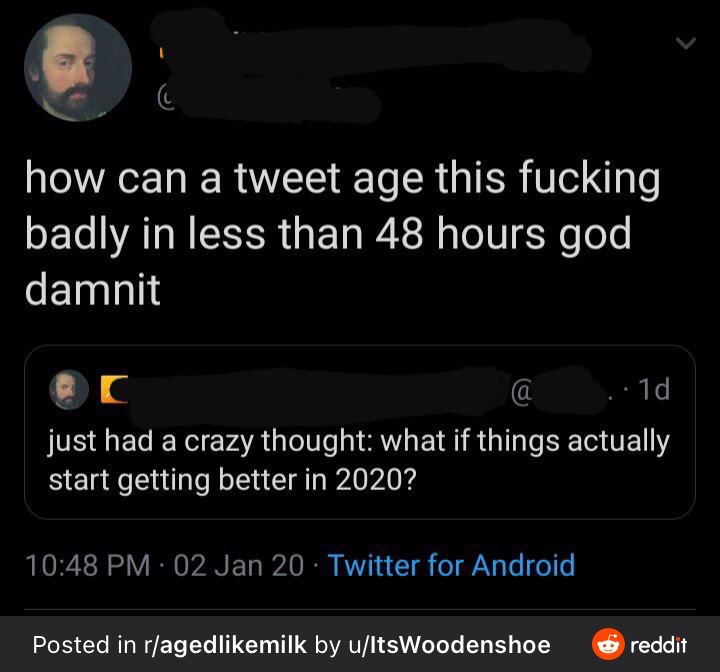
Can you spell “aged like milk”?

John Piper wrote a whole article on the type of hope I’m talking about. To quote from it directly:

…biblical hope is a confident expectation and desire for something good in the future. Biblical hope not only desires something good for the future — it expects it to happen. And it not only expects it to happen — it is confident that it will happen.

John Piper, “What is Hope?”

When I said that this person posting their memes about the Establishment and Obama being a war criminal was hopeless, that’s what I meant. Conspiracy theories–because let’s be real, that’s what this person is trafficking in–are inherently hopeless. Conspiracy theories give godlike power to human communities and institutions, be they the Jewish community, the rich, world governments, or the medical industry. Conspiracy theorists dress up their hopelessness with strands of truth, using the real instances of politicians’ lack of morality or the government rallying around the wealthy to convince people that X, Y and Z was a false flag operation or that George Soros is making the population dumber with chemtrails.

I feel like I’m getting off topic. Hopelessness.

There are a lot of hopeless Christians out there today, traditional and progressive. Under the traditional umbrella, you have the Christian doomsayers, the people who scream “Rapture!” at the drop of a hat. There’s also the sheer mess that is the religious right. January 6th is back on a lot of people’s minds with the congressional hearings starting this week, and I distinctly remember feeling deeply unsettled on January 6th as the news broke. The fact that anyone would attack the Capitol, let alone thousands of people, because they didn’t like the results of an election is scary enough, but it was what was in the crowd that disturbed me. Rioters carried crosses and Bibles, flew flags that said “Jesus 2020” and “Jesus is My Savior, Trump is My President” and some who broke into the Senate Chamber paused the vandalism to shoot God a thankful prayer.

Many an adjective has been hurled at the January 6 rioters: “violent,” “seditious,” “treasonous.” All of these adjectives make sense, but I’d throw one more adjective on the pile: “hopeless.” The people who stormed the Capitol had various reasons, but the supposed Jesus followers who picked up a gun or an axe handle did so because they had no Biblical hope. Even though they claim to believe in a holy book that says our Heavenly Father will rectify all wrongs and make a new heaven and a new earth, they may profess belief in this hope, but in their hearts they don’t believe it. They’ve been conditioned to believe that God can only work through certain people. (*cough*REPUBLICANS AND CONSERVATIVES!*cough*) And so when the enemy, those demon-possessed leftist Democrats, looks like they may have a shot at taking back the Oval Office, they’re not protesting, they’re firing the first shot of a holy war.

Hopelessness is also a problem in more progressive denominations, as Ms. Feminist Theologian Conspiracy Theorist above proved. (BTW, don’t hate on feminist theology because of this article. Feminist theology is a fascinating field, even if one person who studies it has a wack Instagram.) Although, I think progressive Christians can sometimes blunder into hopelessness rather than actively cultivating like the religious right does. Many progressive Christians are former fundamentalists, who fled the stuffy churches of their past and saw a more liberal denomination as a happy medium between the dead theologies they fled and atheism. But because there’s so many residual bad memories associated with religion, I think progressive Christians can focus too much on what they aren’t–the pack of judgmental hypocrites that Christians can prove themselves to be–rather than what they are: salt and light and God’s hands and feet until He returns.

And speaking of that, I need to make a disclaimer.

Up to this point, you may think my message is “Let go and let God.” NO. NO, IT IS NOT. Having encountered that line of thinking, I can say it’s nearly as noxious as those who say “God is a Republican” or Christian conspiracy theorists. I’m a firm believer that we as Christians are called to be people of action, to display radical love and make people see Jesus in us. I’m a part of the Assemblies of God, a Protestant denomination, so sainthood isn’t something I’m down with, but if sainthood was an aspect of Protestantism, I would want our saints to be Christians who took action. People like Martin Luther King, who paid for his divine calling to fight for black rights and labor laws with his life. People like Dietrich Bonhoeffer, a German theologian who refused to bend God’s Word to support the Third Reich and went to the gallows for being part of an assassination attempt against Adolf Hitler. People like Nelson Mandela, who sat in a jail cell for years for protesting South Africa’s apartheid laws and followed his Heavenly Father’s call to not only forgive his oppressors, but use his newly given power as President to lead South Africa into a nationwide reconciliation.

In fact, these people are prime examples of the power of Biblical hope. Many people think Martin Luther King knew, possibly through divine methods, possibly through being informed prior, that death was waiting for him in Memphis, Tennessee, based on certain things he said in his final speech, “I’ve Been to the Mountaintop.” If that is the case, the hope King had was so strong that he went to the metaphorical gallows with his head up, using his final hours to let others drink from his deep well of hope.

I’ve been going on and on about Biblical hope, so it feels appropriate to conclude by letting the Book itself have a say about hope:

I have told you these things, so that in me you may have peace. In this world you will have trouble. But take heart! I have overcome the world.

John 16:33, NIV
I’m Really, Really Single

I should have known logging every book I read this year would cause problems.

Hi, everyone. It’s been…oh geez, 10 months since I posted. Lot’s happened since then. I experienced a semester that felt like a year, got the COVID vaccine, had a friendship that I tried to spin into a relationship that resulted in both going down in flames, walked in my graduating class’s commencement, and moved into a rental house. But the first noteworthy thing that happened this year was my old admission counselor’s Instagram story. She posted the first book she had read in 2021. I liked the idea so much I decided to join her. Until now, no problem. It’s made for a lot more engagement on my Instagram page: people viewing my stories, DMing me about the books I’ve read and so on.

But of course, it’s never that easy.

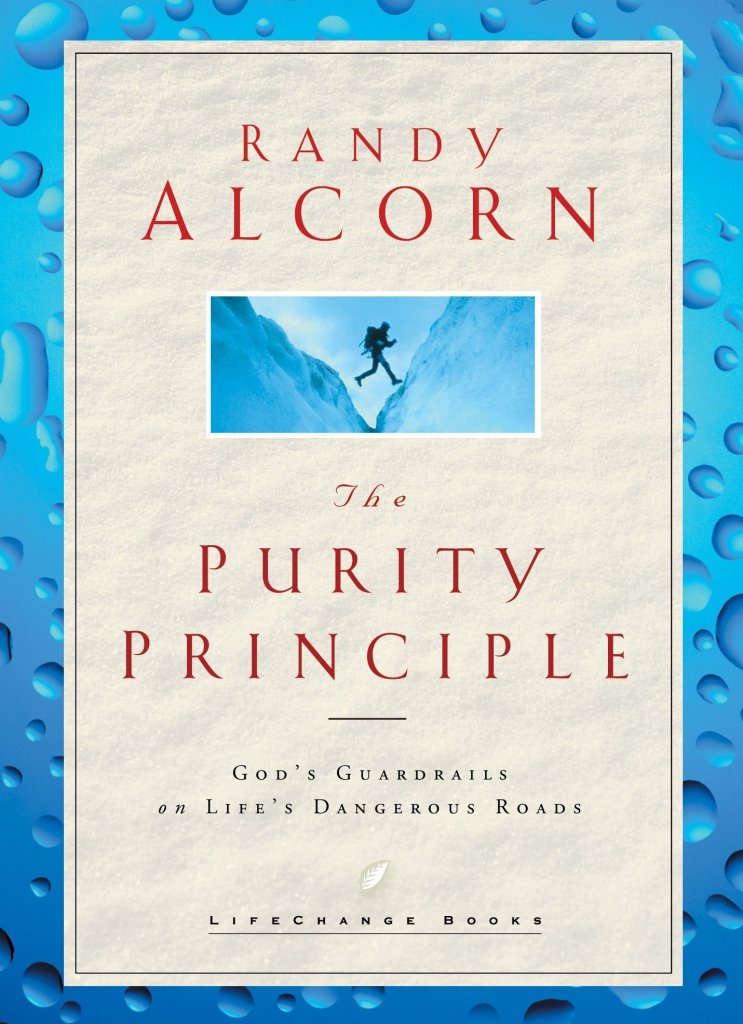
As I’ve worked my way through my reading lists, I saw an obstacle splayed across the metaphorical train tracks. I’m simultaneously working through my paper-and-ink personal library, my e-books, and whatever I can grab from the Grand Rapids library. One day, I finished my current read and went to replace it with the next book from my bookshelf. I saw the next read was Randy Alcorn’s The Purity Principle, a book about–shocker!–sexual purity.

There’s a Breaking Bad joke on the tip of my tongue…

Then I went to Apple Books, where I keep my reading lists, and saw the next book on my reading list was Kutter Callaway’s Breaking the Marriage Idol, a book discussing the pedestal marriage has been put on in the American church.

Jesus was single. All I’m saying.

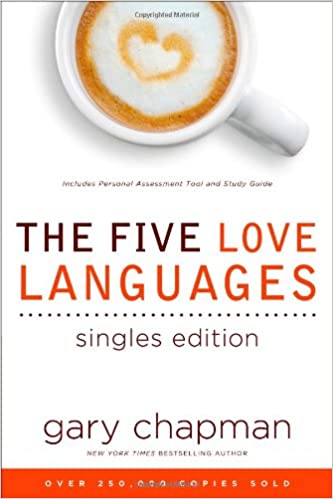
The book after that was Gary Chapman’s The Five Love Languages: Singles Edition.

…do I even need to say anything?

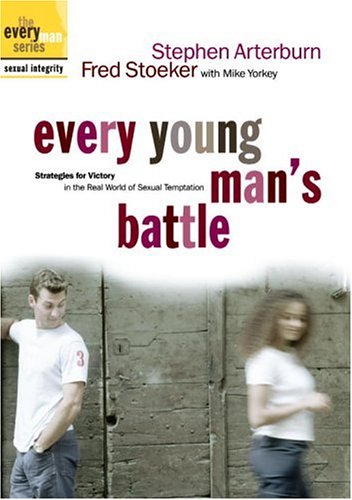
Going back to my bookshelf, I saw down the line Every Man’s Battle and its younger brother Every Young Man’s Battle. Three guesses what they’re about.

Your one hint: it’s not Call of Duty.

Initially, I shrugged it off, thinking, “I haven’t blogged in a minute anyway. I’ll pump out a blog that’s like ‘I’m fine being single, y’all! This is a weird way the cards fell.’ and continue on with chewing through my books.”

Now go back about six paragraphs and four pictures and look for a particular sentence. The one that includes the statement “had a friendship that I tried to spin into a relationship that resulted in both going down in flames.”

So what I’m about to write is a lot of things: life update, grieving personal failures, picking my own brain, critique of the church and society–the list goes on.

The One Where I Ain’t No Doxxer

Now this isn’t the first time I’ve talked about an attempt at a relationship that went the way of the Hindenburg. But this time it’s different. I messed up a good thing. Things are done between “Tracy” and I. Friendship, relationship: FUBAR’d. And it’s unquestionably my fault. But that’s water under the bridge. I can’t undo the stupid things I did to break the trust between “Tracy” and I, and I’ve dedicated enough emotional bandwidth to beating myself up over how it went sour. I’m only bringing it up to highlight that singleness can hurt, yo.

The One Where I Can’t Quite Put My Finger On It

What’s so difficult about being single? The easy answer is human psychology: we want what we can’t have. The soul-rending that comes with rejections, feeling invisible to whoever is your type, being single in a friend group consisting mostly of couples, having all your attempts to start relationships fall on their face, or (in my case) all of the above serve to make the prospect of a relationship like some forbidden fruit you’re desperate to consume. But that’s not the end of it.

Some of it is the human condition. Think back to Genesis. Adam was in community with God in the Garden of Eden, and yet God said, “It is not good for the man to be alone. I will make a helper suitable for him.” (Genesis 2:18, NIV) To end Adam’s loneliness, Eve, the woman, was created. Consider that: community with other people is so important to the human soul that even God cannot check that box. Priests, monks, hermits, nuns–people that dedicate themselves completely to God–still do so in community. One reason singleness hurts as much as it does is because humans weren’t meant to be alone. But that can’t be it, either. After all, most single people, myself included, have friends and family. It’s not like we live in solitary confinement because we’re not seeing anyone.

Maybe it’s a societal thing. Lisa Arnold and Christina Campbell, cofounders of onely.org, wrote an article for The Atlantic laying out ways married people are privileged over single people in modern society. Most of it comes from monetary benefits: it’s easier for couples to buy houses than single people, married people receive more in tax returns than single people, etc. I can come up with non-financial examples: the use of “virgin” and “basement-dweller” as insults, the portrayal of single adults in movies and TV as less mature than their coupled counterparts (see: Barney and Ted in How I Met Your Mother, Josie in Never Been Kissed, and/or any movie with a Manic Pixie Dream Girl) and phrases like “spinster” and “Christmas cake” to describe older single people. That may sound minor, but if you recall, privilege often shows itself as you not having problems that other people do. That’s not the whole picture, either. After all, growing a thick skin can make Xbox trolls and Seth Rogen characters bounce right off.

Maybe it’s a problem with the church. I did read Breaking the Marriage Idol, a book that critiques the church for placing marriage on a pedestal, often at the expense of single members of the church, critiques that were downplayed but also present in The Five Love Languages: Singles Edition. One needs only Google “single people and the church” and receive results with titles like “The Church is failing single people,” “7 reasons why it’s hard to be single in the church,” and “Why Singles Often Give Up on the Church” to realize single people often don’t feel at home in the place that’s supposed to be a weekly reunion for family in Christ. But that’s still only a piece of the pie.

I think it’s a little of all these things, as well as other factors I can’t quite put a name to or find a name on Google that make singleness so hard. Psychology Today introduced me to the idea of “ambiguous loss,” the kind of grief one experiences over a metaphorical loss like ‘losing’ a loved one to dementia or mental illness.

Maybe the reason singleness is so hard is because single people grieve, but they can’t vocalize what they grieve.

The One Where We Can’t Acknowledge a Middle Ground

Post-“Tracy” was far from the first time I got to thinking about being single. In my junior year, frustrations with my love life inspired two documents that together make a 55-page word vomit. In clicking around Google searches as I was writing these documents, I started to notice two distinct camps of thought.

First and more prominent are the doomsayers. These are the people who fit the worst stereotypes of single people. They’re bitter about their romantic unluckiness and ooze jealousy of people in relationships. Some cling to their bitterness so tightly they self-sabotage, screwing up chances at relationships with their relentless negativity and then screaming abuse at whoever ran to avoid getting their head bitten off. For others, that bitterness translates into desperation, resulting in embarrassing DMs on dating apps or critical relationship failure when they spew years of resentment onto someone who was hoping to have a pleasant night with a potential boy- or girlfriend. For others, their resentment translates into fatalism, a shrug and a resigned “what’s the point?” that often dictates their whole life, not only their quest to find Mr. or Mrs. Right. Incels, an Internet movement designated as a hate group by the Anti-Defamation League, are one example of doomsayers. So is the Forever Alone community on Reddit. BuzzFeed asked readers to share the worst messages they’ve received on dating sites, and most of the examples they received reek of desperation borne from bitterness.

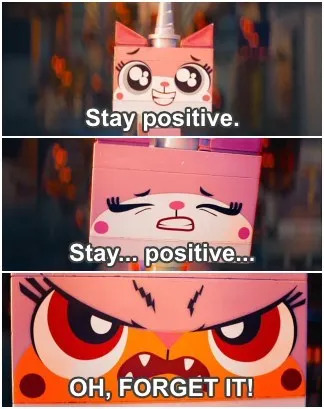
Second and arguably worse are the sugarcoaters. These people are desperate in the opposite way of the doomsayers: if the doomsayers let their bitterness run their lives, the sugarcoaters brush off legitimate grievances and focus on the perks. The perks are typically things like “I have my bed to myself! I’m in control of what I watch on Netflix! I can travel all I want!” (That last one tells me the majority of sugarcoaters have more financial stability than I do.) And while I can understand where they’re coming from, it feels like they’re bottling up their resentment, saying what they’re saying to assure themselves rather than whoever they’re talking to. Whenever I read an article about the perks of being single, I imagine it being written by Unikitty from The LEGO Movie.

And clearly, this is who I want as a life model.

Clicking between incel forums full of people who are convinced women are conspiring to make sure they die alone and blog posts written by people I wouldn’t meet in real life without moving sharp objects out of sight, I feel like screaming. After all, while I certainly would like to be in a relationship, I’ve been single my whole life. Meaning that everything good in my life–every achievement I’ve made, going to Calvin, studying abroad, all the friends I’ve made, my faith life–has happened without that special someone by my side. And yet, I feel like we can’t acknowledge that there’s gray in the black and white of singleness. It’s not all bad, nor is it all good.

So why is it hard for culture at large to acknowledge that?

The One Where the Church Has Some Explaining to Do

I’ve lived in the Christian bubble all my life. I have a pastor for a dad and spent my first three educational years homeschooled with Christian curriculum. One of the earliest pictures of me is baby me sitting with other ’99 babies from my home church. I chose to attend a private Christian university, am listening to Travis Greene as I type this paragraph, and am working on a Bible-in-a-year plan. Much like singleness, I can’t critique the Christian bubble without acknowledging most of the good things in my life happened within its confines.

But critique it I will.

“Believe me, church, this hurts me as much as it hurts you.”

The church has dropped the ball when it comes to singleness. But it’s dropped it in the same way a parent who plays favorites has. If you asked a parent who obviously favors one child over another if they were trying to emotionally scar the un-favorite child, they’d probably answer no. They might say they love their children equally or even try to justify the neglect of the second-fiddle kid as tough love. But damage their kids they will.

Similarly, the Christian bubble didn’t mean to send negative messages about singleness to those who occupy it. Purity culture, the evangelical movement centered around staying sexually pure before marriage which was especially powerful in the 1990s, intended to fight back against a sex-saturated culture. It didn’t mean to teach women that they were responsible for men’s sin as well as their own, that their worth lay wholly in their virginity, and that loss of their virginity before marriage, be it through consensual sex or sexual abuse, tainted them. It didn’t mean to instill young women with an overwhelming sense of shame. And it certainly didn’t mean to be motive for a mass shooting that left 8 people, most of them Asian women, dead. Ring by spring culture, the trend at Christian colleges of couples being engaged by spring of senior year, didn’t mean to inspire feelings of anxiety in single students or jealousy of their engaged counterparts. Yet, both of these feelings are rampant in single students at Christian colleges and universities, according to Stacy Keogh George’s research at Baylor University. Churches didn’t mean to make single people feel like second-class citizens, but according to Breaking the Marriage Idol and many of those articles I found, that’s exactly what’s happened.

The One Where We Ask, “So What Now?”

With a typical blog post, I conclude by neatly tying all the disparate threads of thought. I then schedule the post to publish and hope all the little jokes and wordplay are as clever as I thought they were when I wrote them.

I can’t really do that here, mainly because I feel like I’m only scratching the surface of the topic of singleness. So instead, here are…solutions? takeaways? opinions? somethings.

  1. It’s OK to be single. Tom Cruise lied to you in Jerry Maguire. You don’t need a special someone to be complete. You aren’t broken or defective if you can’t start a relationship. People in relationships aren’t better than you. It’s not some kind of curse from God if your relationship prospects are looking bleak. It’s. OK. To. Be. Single.
  2. Church, you need to convey it’s OK to be single. Like I said earlier, the church hasn’t meant to send negative messages about singleness. But it has, sometimes with horrible outcomes. So, the church needs to start teaching a holy way to be single. I don’t imagine that this transition will be difficult: after all, two of the most important figures in the Gospel were single.
  3. Single people need support spaces, not a dating pool. This is speaking to the religious and secular worlds alike. Too often, spaces specifically for single people is either formed or treated like a “get them married” club. Now granted, some people enter these spaces with that goal. Some, not all. Others want support, someone who can clap them on the shoulder and say, “I’ve been/am where you are, buddy. I’m here for ya.” And for the latter, it can be a special kind of discouraging to have a friend or a relative or a group leader shove a stranger at them and say, “You two are perfect for one another!” To paraphrase Captain America: “Secure my emotional health, then find me a date.”
  4. Stop romanticizing platonic friendships. Men and women can be friends. Similarly, men don’t need to be attracted to other men to want deep, emotionally intimate relationships with other men. In a perfect world, Cap and Bucky resonate due to realism, not idealism. (Two Captain America examples one after the another. Interesting…)
  5. Don’t settle. If you’ve been single, and especially if you’re feeling like the cosmos are dropping relationships into everyone’s laps except yours, it can be tempting to throw yourself at the first person who shows interest. Besides that falling under that desperation I mentioned earlier, a wise man once told me the fail state of a relationship isn’t “single,” it’s “misery.” Ask anyone who’s been in a toxic or abusive relationship. The worst kind of alone is when you feel alone in union. As a wise woman quoting a wise rapper once said, “The grass isn’t greener on the other side, it’s greener where you water it.” (Thank my friend Haley for that nugget of wisdom; follow her on Instagram @ha.le.s–she’s cool.)

Not since The Lost Stories of Spain have I itched to write a sequel to a blog post; I haven’t come anything close to putting down every thought I have on singleness. But that’s for another day.

To my single people: you’re OK. You’re OK if you get into a relationship tomorrow. You’re OK if you don’t have a relationship ever. You’re OK if you screw the pooch with your “Tracy.” You’re OK if you are a “Tracy” and had someone who seemed cool…not be. You’re OK if you’re recovering from an abusive or toxic relationship.

We are OK.

Finding the Sacred in #BlackLivesMatter

Author’s note: I started drafting this post in early August. I researched, wrote, cut, added right back. Then life got busy with school starting back and my own lack of interest, and this post almost went in the deleted bin.

Then Jacob Blake got shot, and I realized I had been lulled into passivity. So here I go.

If you’ve never met Ken Heffner, you’re missing out.

It’s not creepy to look up people you know on Google Images, right? …right?

In my sophomore year at Calvin, I worked with Ken in a position called a Cultural Discerner. Cultural Discerners worked in the dorms to foster conversations about how we as Christians engaged with pop culture. It was through my time as a Cultural Discerner that I was introduced to the concept today’s post is about, finding the sacred in the profane.

We’ll get back to that. Instead, let’s talk about the present. Specifically, three incidents that have started the biggest movement of the century.

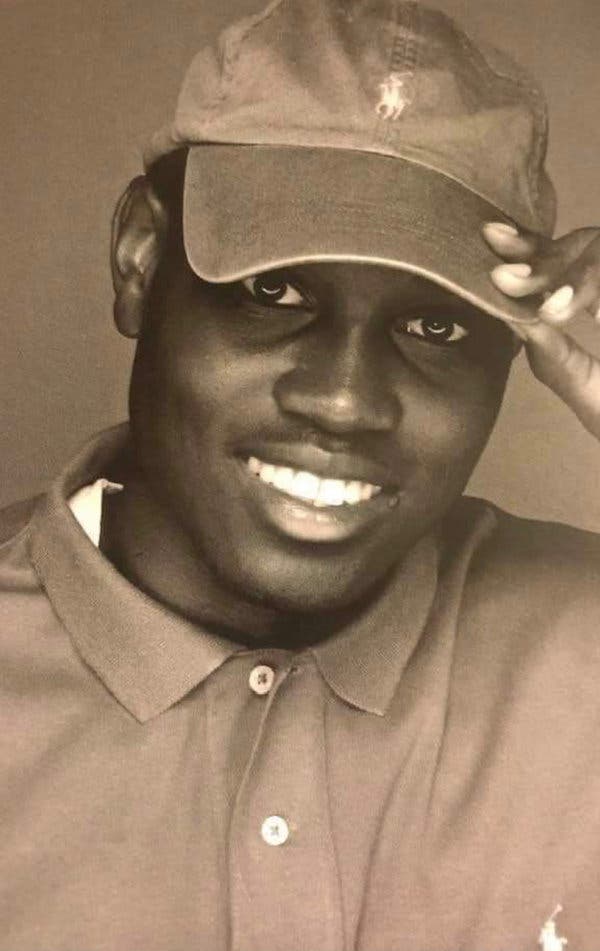
On February 25 in Brunswick, Georgia, 25-year-old Ahmaud Arbery was accosted by a white father and son and one of their neighbors while he was out on a run. Arbery was pursued by the three men in two vehicles, cut off by the neighbor, and fatally shot by the son. Despite the neighbor catching the whole thing on video and none of them being law enforcement (therefore having no authority to use lethal force), it took almost three months for the three men to be arrested and charged.

#SayHisName

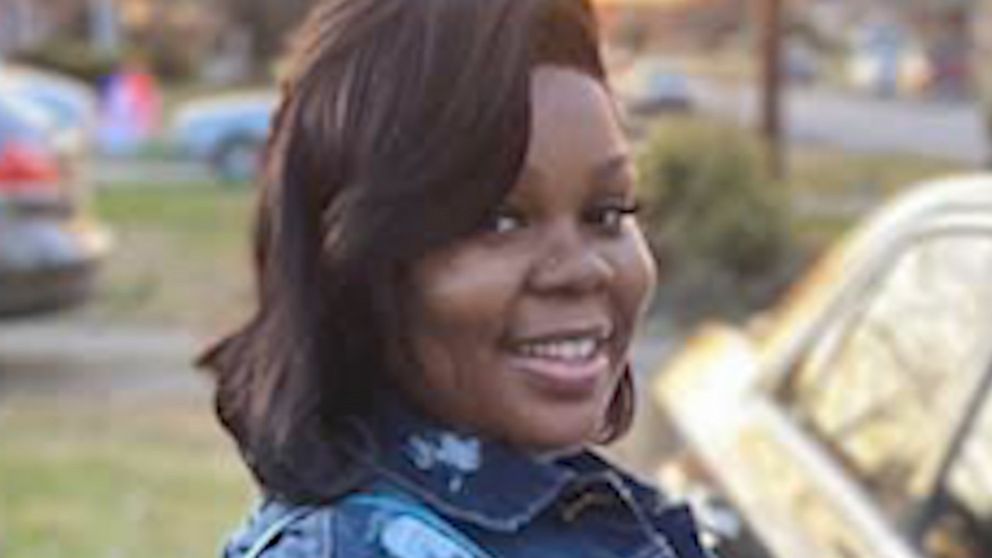
At midnight on March 13, 2020, three members of the Louisville, Kentucky, police department executed a no-knock search warrant on the apartment of 26-year-old medical technician Breonna Taylor and her boyfriend, Kenneth Walker. The warrant was for two men allegedly involved in drug dealing, neither of whom lived in Taylor and Walker’s apartment. The police broke into the apartment using a battering ram, waking the couple from sleep. Walker, a licensed gun carrier, retrieved his gun and fired a shot at the intruders and received almost two dozen rounds of return fire, which killed Taylor. Walker was initially charged with assault and attempted murder of an officer, but the charges were dropped. As of the publishing of this post (September 14), one officer has been fired, but none have been arrested or charged.

#arrestthecopswhokilledbreonnataylor

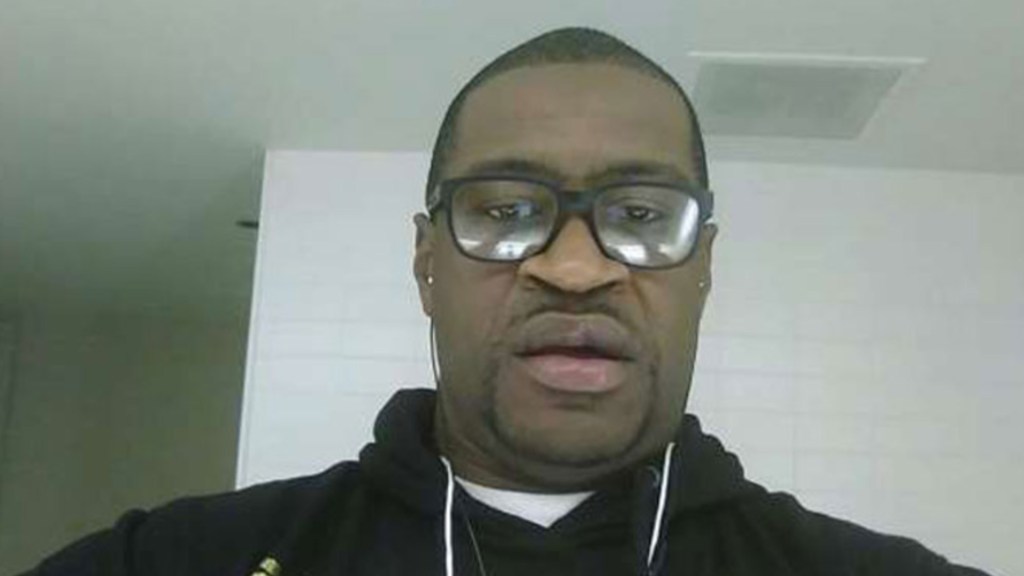
On May 25, George Floyd allegedly paid for a pack of cigarettes with a counterfeit $20 bill. The police were called on Floyd when he refused to return his purchase. After he was cuffed, Floyd was first sat in the back of a police cruiser, then pulled from the car by Officer Derek Chauvin. Four officers restrained Floyd while he was on the ground, one by sitting on Floyd’s chest, and Officer Chauvin by putting a knee on Floyd’s neck. Floyd was in this restraint for 8 minutes and 46 seconds, during which he said multiple times he couldn’t breathe (both because of his air being cut off and his recent recovery from COVID-19), cried for his mother, and finally lost consciousness and stopped breathing. Floyd was pronounced dead an hour later. All four of the officers who restrained Floyd were arrested, Chauvin’s trial for second-degree murder is currently pending, and the other three officers have been charged with aiding and abetting second-degree murder.

#justiceforgeorgefloyd

Everyone (and I do mean everyone–including the founders of Ben & Jerry’s, one of the head honchos of Reddit, Mitt Romney, witches and Batman) had something to say. The protests against police brutality and for systemic reform went international, making the Black Lives Matter cause one of the biggest in history.

Christian communities had a…shall we say, mixed reaction to the protests. On the one hand, Christian sects that had been neutral on the matter of racial equality were finally pushed off the fence; see: the notoriously-conservative Southern Baptist Conference’s change of heart and the United Church of Christ’s affirmation of the Black Lives Matter cause. On the other hand, the protests made bigoted Christians dig their heels in further. But keep in mind, there’s a good reason for the indecision on the topic of Black Lives Matter.

Christianity, especially in America, has a long history of being on the wrong side of racial issues. If we’re strictly talking American Christianity, we could talk about the use of Scripture to justify slavery; the many white supremacist organizations, past and present, who twist theology into evidence for racial purity and calls for violence; that the primary force that stood against Martin Luther King, Jr. and the civil rights movement were white Christians; or the continued support by white evangelicals for President Trump through his many racially-charged and discriminatory statements and policies. If we wanted to go international, we could talk about the long history of antisemitism in European Christianity, coming to a climax with the Third Reich cherry-picking Martin Luther’s writings to make a Christian justification for Nazism.

The end result? What to the rest of the world seems like a black and white issue is subsequently muddled by the church’s history of being complicit or actively engaged in racism.

Flipping the perspective, Christians have their own issues with BLM, as has been expressed both in discussions and to me personally. It’s an issue with a few key parts of Black Lives Matter’s mission statements:

We are guided by the fact that all Black lives matter, regardless of actual or perceived sexual identity, gender identity, gender expression, economic status, ability, disability, religious beliefs or disbeliefs, immigration status, or location.

We make space for transgender brothers and sisters to participate and lead.

We are self-reflexive and do the work required to dismantle cisgender privilege and uplift Black trans folk, especially Black trans women who continue to be disproportionately impacted by trans-antagonistic violence.

We disrupt the Western-prescribed nuclear family structure requirement by supporting each other as extended families and “villages” that collectively care for one another, especially our children, to the degree that mothers, parents, and children are comfortable.

We foster a queer‐affirming network. When we gather, we do so with the intention of freeing ourselves from the tight grip of heteronormative thinking, or rather, the belief that all in the world are heterosexual (unless s/he or they disclose otherwise).

–From the “What We Believe” page on the official Black Lives Matter website, all emphases mine

Now, it is here I have to narrow down my audience. I’m not talking to people who focus on the violence that’s broken out at BLM protests. I’m not talking to conservative Christians who prioritize the “conservative” over the “Christian”. I’m not talking to reactionary Christians. I’m not talking to Christians who reject anything liberal or left-leaning on impulse or are anti-“woke” or who reject BLM for its part in “cultural Marxism,” whatever that even means. I’m talking to Christians on the fence, Christians who believe marginalized people are being crushed under the boot of white supremacy but are still reluctant to embrace the Black Lives Matter cause.

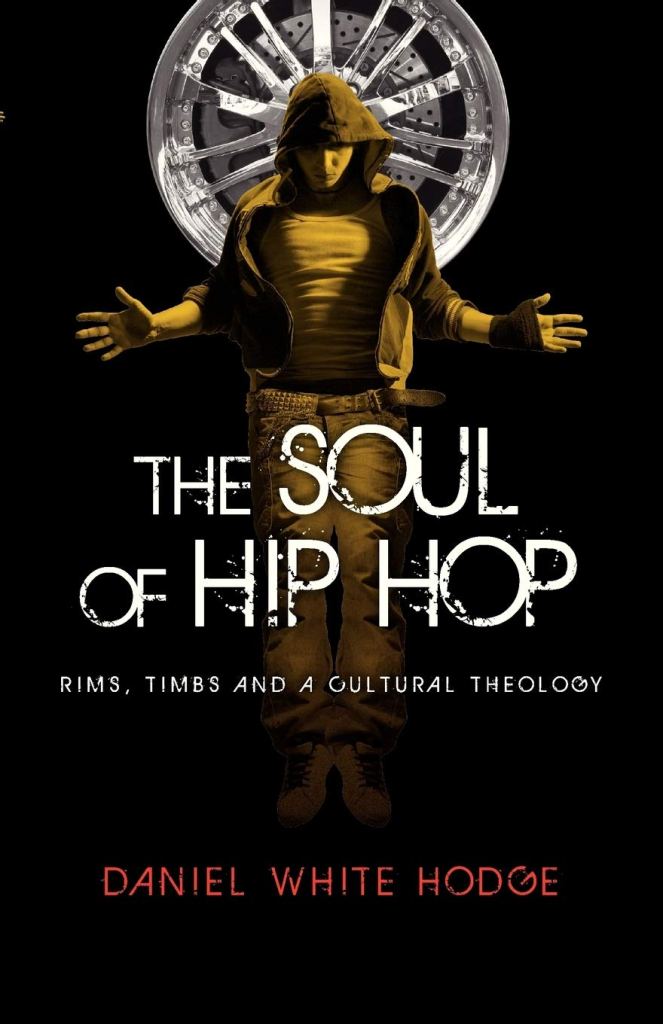
During my time working with Ken Heffner, we read The Soul of Hip-Hop by black theologian Daniel White Hodge.

Give it a read. It’s good.

Throughout the book, Hodge examines rap music, in particular artists like Tupac, KRS-One and NWA, as well as protest music. From his analysis, Hodge pulls a theology of justice from the lyrics: lyrics that look to heaven and cries out to God that He would deliver the justice institutions refuse to. Along with his theological weaving, Hodge criticizes the church’s knee-jerk rebuffs of hip-hop and attempts to co-opt the sound of black music to provide a “Christian” (read: white) alternative for young people.

Above all, Hodge begs his readers to find the sacred in the profane. To refrain from the church’s recoiling at the drug references and tales of sex and violence and look deeper, to the stories of losing friends to gang violence, of being racially profiled by police, of fatherlessness due to mass incarceration, and of groaning under the weight of systemic racism. The music cries out to God for justice because earthly forces of justice have often been the primary tool of their oppression.

If you are reluctant to take up the Black Lives Matter cause, I encourage you to find the sacred in the profane. Look to the roots of Black Lives Matter, a movement created in response to the death of Trayvon Martin.

On February 26, 2012, one man, a man with no legal authority to use lethal force, took the law into his hands and sentenced Trayvon Martin to death for the heinous crimes of wearing a hoodie and buying a bag of candy. It was a story black people everywhere had heard a million times before, but this time it was different: the killer wasn’t a police officer. There was no brass shield for George Zimmerman to hide behind, so maybe, finally, someone would answer for spilling an innocent young black man’s blood. The judge’s reading of “not guilty” gave a message loud and clear: Black Lives Don’t Matter. It wasn’t the brass shield on the breast of your shirt that gave you the permission to be judge, jury and executioner for people of color, but the color of your skin.

We as Christians need to recognize that the Black Lives Matter movement exists largely because of a stinging failure on the church’s part. The days of Martin Luther King organizing marches from a sanctuary are gone. For decades after King’s death, black Christians have been crying and begging at the church’s door for help, any kind of help, only to be turned away with responses of “All lives matter!” “Oh, we don’t talk about that here.” “Racism is a heart issue. That’s between them and God.” After decades of the church whistling and twiddling its thumbs, the church has unintentionally broadcast a tragic message: if people of color want justice, don’t go to church.

But we can do better. We can tell our black brothers and sisters that Jesus weeps for the deaths of his sons and daughters and so do we. We can march. We can advocate. We can educate ourselves. We can start hard conversations, bringing God into what was previously a secular discussion. We can make real change in God’s name.

I encourage you, reader: look for the Christian motivations in Black Lives Matter’s secular language.

Find the sacred in the profane.


Thank you all for reading. I hope you were moved by today’s post. I want to keep making contributions to the conversations we as a nation are currently having. With that in mind, I formally introduce Today I Want to Talk About… (TIWTTA)

This is a new series on the blog, where I break down hot-button topics, sociological concepts, and anything else relevant that comes to mind. With this series, I want to do my research and give a good resource that cuts through all the hysteria and presents information without an agenda. At the end of each post, I’ll present resources for further reading.

The first TIWTTA‘s subject: privilege. Stay tuned!

I Still Believe

Hello, everyone! I have more free time than I’ll probably ever have again, so here I am, hopefully back on the blogging grind.

The news cycle is kind of obsessed with one thing and one thing only.

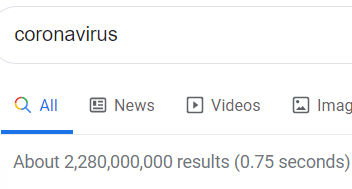
“Jesus” has about a billion results on Google. Coronavirus is bigger than Jesus. Eat your heart out, John Lennon!

Because the world has tunnel vision right now, you’re probably not paying attention to movies (outside of what to binge, in which case I recommend A Quiet Place) so if you haven’t heard of I Still Believe, I don’t blame you.

The film tells the true story of Christian singer Jeremy Camp at the start of his career. Camp, if you don’t know, lost his first wife Melissa to cancer. The film’s title comes from the song of the same name, penned by Camp after her death.

I haven’t seen the movie, but I liked the trailer. It did what a trailer’s supposed to do. As I was watching the trailer, two scenes hit me in the feels. The first shows KJ Apa’s Jeremy hurling a Bible at a wall, and the second has him smashing his guitar.

I’m bringing this up because that level of frustration is where I’ve been for a few weeks now.

OK, you know what? The beer bug is a huge topic, and I’m trying to make this post kinda structured, but it’s not working, so I’m gonna say what I wanna say, and if I lose you, I’m sorry.

First thing: can we admit this is hard? I’ve scrolled past tons of social media posts telling me the spiritual significance of coronavirus’ timing or that my grandparents stormed Normandy, so I can survive a few weeks with Netflix and my thoughts, and I deleted Twitter off my phone because of all the Michael Sandel wannabes and their hot takes about how the coronavirus proves the shortcomings of capitalism. (Not saying I disagree with them. One word: OVEREXPOSURE.)

But among all the politics and the social media sermons and the memes and the bucket lists of things that will be done once quarantine lifts, one opinion that’s been overshadowed? THIS. IS. DIFFICULT. In every way.

For me, I’ve been looking for someone to be mad at. The problem is, that list is constantly growing. I could be mad at:

Once I concluded that trying to find someone to blame for the pandemic was a pointless endeavor, my next question to God was: “Why?” Why all this pointless suffering? Why are people dying, and more importantly, why is this virus so dangerous that gathering to bury them is a health risk? Why are the hard-working citizens of the workforce being left to fend for themselves while the fat cats are swimming in money? Why are high school and college seniors all across the globe having the biggest accomplishment of their lives yanked out from under their noses? Why are governments around the world seeming to compete for who can have the least competent response, and why is my country of residence winning? Why are all the prayers not doing anything?

And I’ve gotten no answer.

I’m fairly certain God invented the frustrating silence.

Which brings us back to that throw-a-Bible, smash-a-guitar feeling. More specifically, that pull-your-hair-out slap in the face of a realization that causes it: that sometimes, what we pray for isn’t God’s will.

Which leads into the even harder realization: if what we’re praying for isn’t God’s will, then God is going to make something good out of this.

And in fact, he is. One other thing lost in the whirlwind of social media negativity? Good news during this tumultuous time.

So, to counterbalance my ‘who to blame’ list, a ‘good things that have happened, coronavirus-related or otherwise’ list:

I’m not writing this in a vacuum. My knowing that God is going to make something good out of this doesn’t mean I’m not sad about the state of the world and that my life is on pause until further notice. No number of blog posts will make cabin fever not real. I can’t see an end in sight.

But you know what?

Even when I don’t see, I still believe.