
Books. I read them. SUMMARIES!
The Books I Read in 2024
Robert McCloskey (Gary D. Schmidt, 1990). The biography of Robert McCloskey, a children’s author most famous for writing the award-winning Make Way for Ducklings.
Calling a Wolf a Wolf (Kaveh Akbar, 2017). A collection of poetry about religion, addiction, sexuality and ethnic identity. I’m not a poetry person at all, so when I say this collection is good, believe me.
School Trip (Jerry Craft, 2023; New Kid #3). Jordan Banks and his friends are excited for a school trip in Paris. But some mischievous upperclassmen switching around the paperwork for what teacher goes on which trip prefaces personal tensions between the kids coming to a boil. Will jumping countries jump-start beef?
Dear Highlights: What Adults Can Learn from 75 Years of Letters and Conversations with Kids (Christine French Cully, 2021). A compilation of letters kids have written to the “Dear Highlights” column in Highlights magazine. Warmed the cockles of my heart.
Michael Vey: The Final Spark (Richard Paul Evans, 2017; Michael Vey #7). Michael Vey is dead. The rest of the Electroclan are heartbroken, but the Elgen are still standing, so they can’t truly grieve until Dr. Hatch and the Elgen have been put down.
The Great Gatsby (F. Scott Fitzgerald, 1925). One of the most famous novels of the 20th century chronicles the downfall of Jay Gatsby, a self-made millionaire whose obsession with a woman he loved brings him to ruin. Adapted to film multiple times, most recently in 2013, starring Leonardo DiCaprio as Gatsby, Tobey Maguire, and Carey Mulligan.
American Gods, volume 2: My Ainsel (Neil Gaiman, 2019, adapted from Gaiman’s American Gods, 2001). With their enemies hot on their tail, Mr. Wednesday drops Shadow off in the sticks of Wisconsin, telling him their enemies won’t track him into the middle of nowhere. But even in hiding, the weird comes knocking.
White Lies: Nine Ways to Expose and Resist the Racial Systems That Divide Us (Daniel Hill, 2020). Antiracist pastor Daniel Hill walks through the nine ways that racial discrimination sows divisiveness and hate.
What You’re Really Meant to Do: A Road Map for Reaching Your Unique Potential (Robert Steven Kaplan, 2013). Allegedly a book about finding your way forward in life. In reality, the most forgettable book I’ve read this year. I couldn’t tell you any of Kaplan’s advice with a gun to my head.
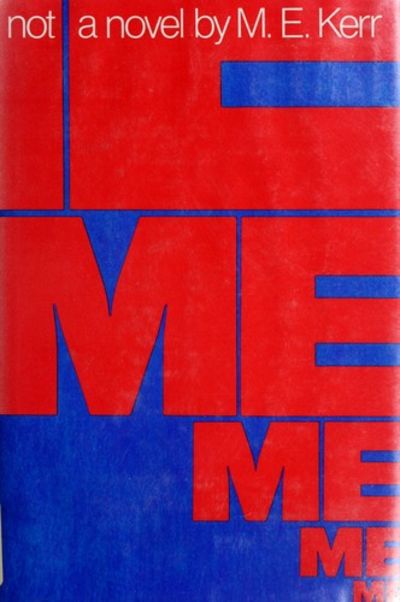
Me Me Me Me: Not a Novel (M.E. Kerr, 1983). The autobiography (or memoir–I don’t know the difference) of M.E. Kerr, the award-winning author with more pen names than the Wu-Tang Clan.
Gwendy’s Button Box (Stephen King and Richard Chizmar, 2017; The Button Box #1). Young Gwendy Peterson meets a strange man on a run, who gives her a box with eight buttons and two levers and then disappears. Gwendy experiments with the box and discovers the power the box contains. And how dangerous it is.
When the Ground is Hard (Malla Nunn, 2019). Last school year, Adele Joubert and her best friend Delia were part of the popular crowd at Keziah Christian Academy. This year, Delia ditches her and excommunicates her from the popular kids, and to make matters worse, Adele’s new roommate is school pariah Lottie Diamond. Though the circumstances aren’t ideal, a beautiful friendship will bloom, thanks to a copy of Jane Eyre, of all things.
The Lightning Thief (Rick Riordan, 2005; Percy Jackson and the Olympians #1). Bizarre events have happened to Percy Jackson all his life. One stormy summer night, when a monster from the Greek myths comes roaring out of the darkness and kidnaps his mother, he learns why: he’s a demigod, a son of the Greek sea god Poseidon. War is brewing between Poseidon and Zeus, and unless Percy finds a stolen treasure, he’ll be on the front lines.
Pilgrim’s Progress (Gary D. Schmidt, 2008; adapting John Bunyan’s Pilgrim’s Progress, 1678). Christian’s life in the City of Destruction feels meaningless: he wears a burden he can’t put down no matter how hard he tries and his family thinks he’s losing his mind. An Evangelist comes to him and invites him to travel to the Heavenly Gates, where he can lose his burden. Christian concurs, and heads for heaven in one of the most famous Christian works of all time.
Feed (M.T. Anderson, 2002). In the future, everyone who’s anyone has a Feed, a beefed-up version of the Internet accessed by brain microchip. For Titus and his friends, their Feeds getting hacked while on spring break at the moon is the first in a chain of disastrous dominoes falling. Fun fact: this was my fourth time reading Feed, and it won’t be my last.
Gwendy’s Magic Feather (Richard Chizmar, 2019; The Button Box #2). Twenty-five years after a mysterious man gave her a magic box of immeasurable power, Gwendy Peterson is now a Maine state representative, award-winning documentarian and author. But as the House breaks for the holidays, the box returns, and Gwendy learns that girls are going missing in her home town of Castle Rock. Gwendy knows the box could help find the girls, but can she utilize the power of the box without being overcome by temptation?
Is That Really You, God?: Hearing the Voice of God (Loren Cunningham, 1984). The autobiography of Loren Cunningham, the founder of Youth with a Mission (YWAM). Spiritual.
Michael Vey: The Parasite (Richard Paul Evans, 2022; Michael Vey #8). 3 years after defeating the Elgen and Dr. Hatch, the Electroclan reunite for the first time after going their separate ways. But Jack doesn’t show up, and Abigail and Tara are abducted right under their friends’ noses. That’s how the Electroclan finds out about the Chasqui, a splinter cell of the Elgen who plans to take over the South American drug trade unless the Electroclan stops them.
Boy Writers: Reclaiming Their Voices (Ralph Fletcher, 2006). Fletcher’s book Guy Write but written for an adult audience. I prefer Guy Write. Not bad though.
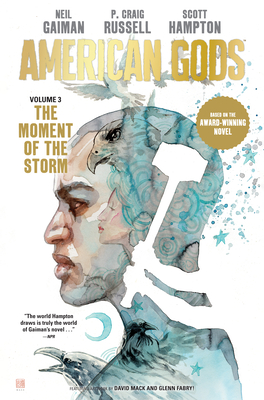
American Gods, volume 3: The Moment of the Storm (Neil Gaiman, 2020; adapted from Gaiman’s American Gods, 2001). Mr. Wednesday is dead as a doornail, so Shadow sees no reason to stick around for this war between old and new gods. It’s not so easy however. Shadow will fight in this war whether he wants to or not.
Rez Ball (Byron Graves, 2023). When Tre Brun tries out for varsity basketball, he has big shoes to fill: his older brother Jaxon was the best b-ball player the Red Lake Reservation ever saw until a car accident cut Jaxon’s life and his basketball career short. He makes it, but the struggle doesn’t stop there. Can Jaxon take the team to championship, or will his problems off the court ruin his game on the court?
The Talk (Selina Alko, Tracey Baptiste, Derrick Barnes, Natacha Bustos, Cozbi A. Cabrera, Raúl Colón, Adam Gidwitz, Nikki Grimes, Rudy Gutierrez, April Harrison, Wade Hudson, Gordon C. James, Minh Lê, E.B. Lewis, Grace Lin, Torrey Maldonado, Meg Medina, Christopher Myers, Daniel Nayeri, Zeke Peña, Peter H. Reynolds, Erin K. Robinson, Traci Sorell, Shadra Strickland, Don Tate, MaryBeth Timothy, Duncan Tonatiuh, Renée Watson, Valerie Wilson Wesley, and Sharon Dennis Wyeth, co-edited by Cheryl Willis Hudson and Wade Hudson, 2020). Thirty different authors tell stories of different “Talks” they’ve had to have with their kids.
Sleeping Beauties (Stephen King & Owen King, 2017). A pandemic has the world in a chokehold: any woman who falls asleep is wrapped up in a cocoon, and anyone who tries to wake them up or break them out probably won’t survive the attempt. The men of Dooling, West Virginia, have a possible solution: Eve Black, a woman(?) who can sleep and wake back up minus webbing. One question, though: what’s Eve’s endgame?
Who Stole My Church?: What to Do When the Church You Love Tries to Enter the Twenty-First Century (Gordon MacDonald, 2008). A church that is everywhere but nowhere threatens to split along generational lines. A fictionalized version of Gordon MacDonald, in the name of not having the church split down the middle, gathers an inner core of the congregation to talk through what’s eating the congregation. The results are surprising.
Make Your Bed: Little Things That Can Change Your Life…And Maybe the World (Admiral William H. McRaven [Ret.], 2017). Retired Navy admiral William H. McRaven shares ten life principles he learned during a long career in the Navy.
Motown and Didi (Walter Dean Myers, 1984). Motown lives in an abandoned building and improvs a living via odd jobs; Didi wants to go to college and get far away from Harlem, where her mother is ill and drugs are eating her brother alive. They’re the last two people you’d expect to fall for each other. Nothing’s impossible.
The Sea of Monsters (Rick Riordan, 2006; Percy Jackson and the Olympians #2). When Percy returns to Camp Half-Blood for the summer, things have gone pear-shaped: the camp’s protection magic has been compromised, and it’s a matter of weeks until the one safe spot for half-bloods becomes a monster vending machine. There’s an artifact that can heal the tree, but it’s in one of the most dangerous places in the mythical world: the Sea of Monsters, coincidentally the last place Percy’s BFF Grover last reported from. To save the camp and Grover, Percy has no choice but to sail the seas.
Giant Days: Not on the Test Edition Volume 1–Fall Semester (John Allison, 2017). The misadventures of a college friend group: Esther, a goth drama queen; Daisy, a homeschooled wallflower eager to spread her wings; and Susan, a chain smoker with a chip on her shoulder against her hometown. University makes for strange friendships.
Elf Dog and Owl Head (M.T. Anderson, 2023). Clay O’Brien has bad cabin fever, but with quarantine afoot, the only time he gets out of the house is exploring the nearby woods. In the woods one afternoon, Clay finds Elfinor, a magical dog from an underground kingdom. Misadventures ensue.
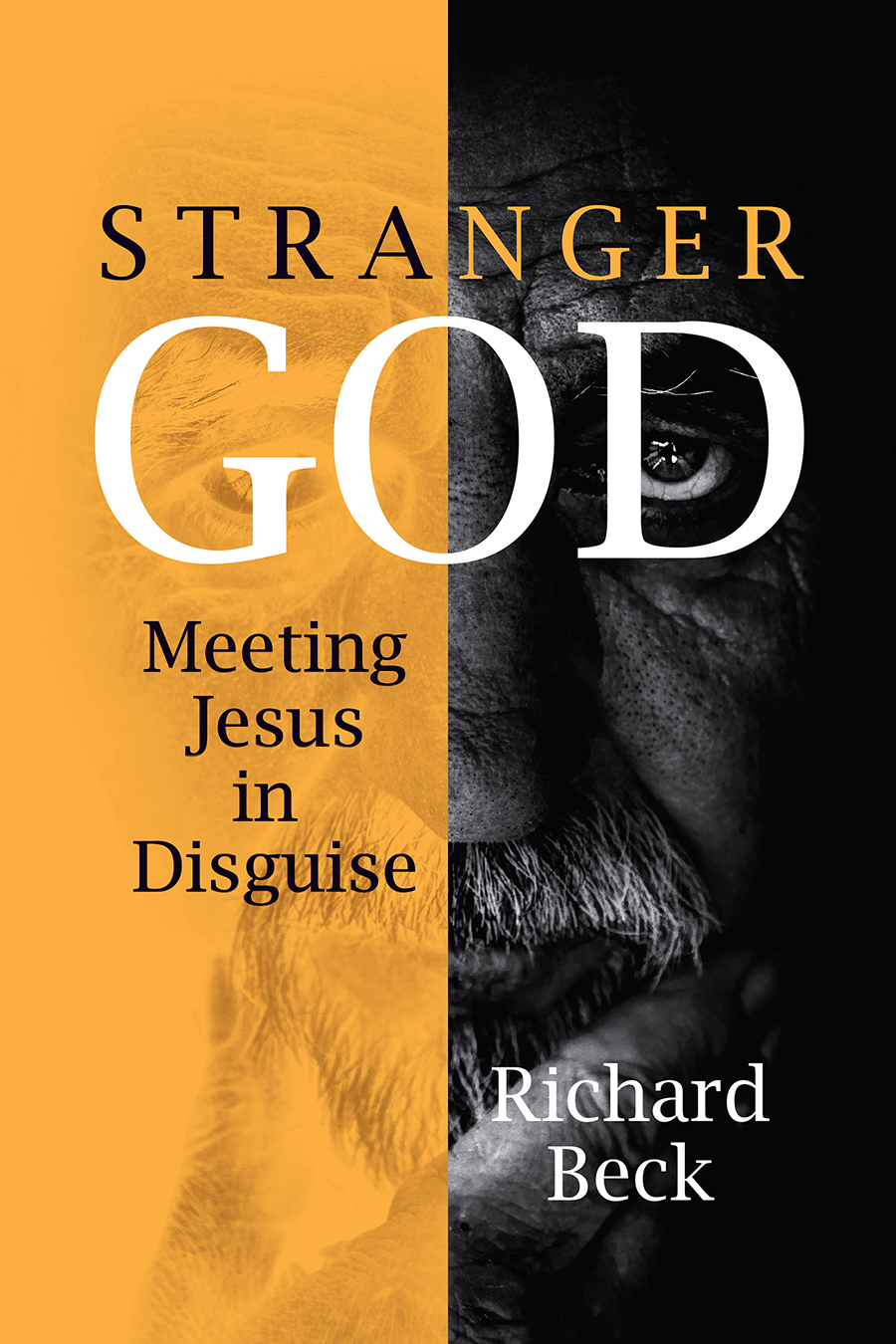
Stranger God: Meeting Jesus in Disguise (Richard Beck, 2017). Richard Beck inadvertently reinvigorated his flagging faith when he agreed to lead a Bible study in a men’s prison. From that experience, he muses on how God often shows Himself through strangers.
The Watsons Go to Birmingham–1963 (Christopher Paul Curtis, 1995). Kenny Watson’s older brother Byron has done one too many delinquent acts, so their parents decide to take a trip down to Alabama to see if their grandmother can set Byron straight. Unbeknownst to anyone, they’re driving down into history: Grandma lives in Birmingham, and the date is September 16, 1963…
Michael Vey: The Traitor (Richard Paul Evans, 2023; Michael Vey #9). The Electroclan arrives in South America to rescue Jack, Abigail and Tara. Once they find the Chasqui, they make the shocking discovery that they’ve brainwashed Jack into their ranks. The Electroclan has weathered some tough battles, but are they ready to fight an old friend?
Sharp Objects (Gillian Flynn, 2006). Chicago reporter Camille Preaker returns to her hometown of Wind Gap, Missouri, to cover the story of two young girls’ murders. Returning home drops Camille back into the grip of her hypochondriac control freak of a mother, introduces her to her troubled half-sister Amma, and agitates the issues she worked through with a psych ward stay. HBO adapted Sharp Objects into a Golden Globe-winning miniseries starring Amy Adams, Patricia Clarkson and Eliza Scanlen.
The Last Cuentista (Donna Barba Higuera, 2021). In 2061, Petra Peña and her family are four of the lucky few chosen to leave Earth before its inevitable destruction by a comet and restart the human race after a few centuries. 400 years later, Petra wakes up into a dystopian nightmare: in her time asleep, a Collective has taken charge and wiped away everyone’s memories of Earth…except Petra’s. Won the Newbery Medal in 2022.
Barraccoon: The Story of the Last “Black Cargo” (Zora Neale Hurston, 2018). A decade before writing her magnum opus Their Eyes Were Watching God, Zora Neale Hurston traveled to rural Alabama to interview Oluale Kossola/Cudjo Lewis, the last living African brought to America on a slave ship. Kossola’s/Lewis’ perspective was unique, seeing how he was an adult with a full life and family in modern-day Benin prior to his abduction. Even though Hurston conducted the interviews in 1927, Barraccoon didn’t get published until 2018 because…racism, probably.
The Outsider (Stephen King, 2018). An 11-year-old boy has been brutally murdered, and all the evidence, including multiple eyewitness statements and DNA, points to his former baseball coach, until incontrovertible evidence proves the coach was hundreds of miles away at the time of the murder. The killer couldn’t have been in two places…or could he? Made into an HBO miniseries starring Ben Mendelsohn, Cynthia Erivo and Jason Bateman.
Fallen Angels (Walter Dean Myers, 1983). Richie Perry enlisted in Vietnam for lack of better options. He had no clue what he was getting into.
Speak (Tunde Oyeneyin, 2022). The autobiography of makeup artist, Peloton instructor and public speaker Tunde Oyeneyin and how she became…a makeup artist, Peloton instructor and public speaker.
The Titan’s Curse (Rick Riordan, 2007; Percy Jackson and the Olympians #3). A mission to bring two powerful demigods to Camp Half-Blood goes horribly wrong, resulting in Annabeth and the goddess Artemis getting captured by Kronos’ forces. Percy wants to mount a rescue mission, but there’s a complication before he can leave. The Oracle predicts that five will leave to rescue Annabeth and Artemis…but only three will return to Camp Half-Blood alive.
Punching the Air (Ibi Zoboi and Dr. Yusef Salaam of the Exonerated Five, 2020). Amal Shahid is 16 years old and in prison for a crime he didn’t commit. Everyone on Amal’s side is now on the outside, and the only thing he has keeping him alive is his art. Will it be enough?

Giant Days, Not on the Test Edition, volume 2–Winter Semester (John Allison, 2018). The continued misadventures of Esther, Daisy, Susan, McGraw and Ed Gemmell.
Symphony for the City of the Dead (M.T. Anderson, 2015). From September of 1941 through the winter of 1944, Nazi forces sieged Leningrad with the hope of taking over Russia completely. Amongst Nazi forces, secret police, and Leningrad citizens turning to cannibalism out of desperation, acclaimed composer Dmitri Shostakovich finished his long-gestating Leningrad Symphony and had it smuggled out of Russia and into the West. He’d change the course of WWII by doing so.
Strong and Weak: Embracing a Life of Love, Risk and True Flourishing (Andy Crouch, 2016). The best leaders–heck, the best people–are people who can be strong and weak, people who are unafraid of vulnerability. Andy Crouch lays out a way to walk this path.
Bad Blood: A Crime Novel (Arne Dahl, 1998; translated into English from its original Swedish in 2014; Intercrime #2). A Swedish literary critic is found tortured to death in Newark International Airport, and worse yet, the way he died matches the M.O. of a serial killer who supposedly died years ago. There’s an American serial killer in Sweden, and the police need to move before he can pick up where he left off. Yeah, this book was buns.
American Assassin (Vince Flynn, 2010; Mitch Rapp #1). Mitch Rapp had it all: an Ivy League athlete months away from marrying his high school sweetheart. Then his fiancé died in a terrorist attack, and Rapp’s being became all about making the world of terrorists regret it. Made into a movie starring Dylan O’Brien as Mitch Rapp, Michael Keaton and Taylor Kitsch.
Waking Up White: And Finding Myself in the Story of Race (Debby Irving, 2014). The autobiography of Debbie Irving, an antiracist activist, and her journey of coming to terms with her white privilege.
Flight or Fright (Ambrose Bierce, Tom Bissell, Ray Bradbury, Roald Dahl, James Dickey, Sir Arthur Conan Doyle, Cody Goodfellow, Joe Hill, Stephen King, E. Michael Lewis, Richard Matheson, David J. Schow, Dan Simmons, Peter Tremayne, E.C. Tubb, John Varley, and Bev Vincent; edited by Stephen King and Bev Vincent, 2018). Flying is scary, isn’t it? Here are some short stories about how scary flying can really be.
Scorpions (Walter Dean Myers, 1988). Jamal Hicks’ older brother Randy led the Scorpions street gang when he was on the outside. Now that he’s behind bars, and that a bully won’t leave him alone at school, Jamal decides to follow in his brother’s footsteps.
The Art of Gathering (Priya Parker, 2018). How to gather smarter. …do you need a more thorough explanation?
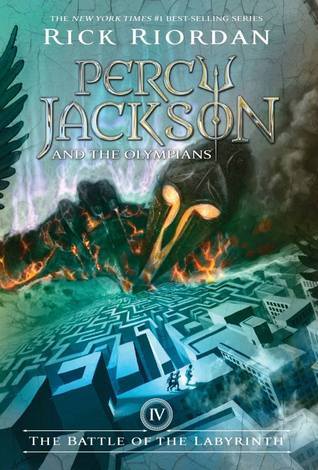
The Battle of the Labyrinth (Rick Riordan, 2008; Percy Jackson and the Olympians #4). Camp Half-Blood is in more danger than it’s ever been; Daedalus’ Labyrinth has opened an entrance inside of the campgrounds, making a way for Kronos’ forces to circumvent the camp’s defenses. The only way to keep Labyrinth entrances out of Camp Half-Blood is to find the maze’s creator Daedalus, who legend says disappeared into the Labyrinth millennia ago. With no other choice, Percy, Annabeth, Grover and Tyson delve into the Labyrinth to face all the dangers within.
Orbiting Jupiter (Gary D. Schmidt, 2015). When Jack Hurd’s parents become foster parents to Joseph Brook, Jack only knows three things: Joseph’s fresh out of prison, he went there for assaulting a teacher, and he’s a 14-year-old with an infant daughter. But as Joseph becomes a member of the Hurd family, Jack finds himself looped into Joseph’s push to be reunited with Jupiter.
A Sitting in St. James (Rita Williams-Garcia, 2021). Madame Sylvie Guilbert of Le Petit Cottage’s decision to have a portrait painted is met with apathy from her family and slaves, but it kicks off a series of events that leads to the plantation’s downfall.
Giant Days: Not on the Test Edition–Spring Semester (John Allison, 2018). One more round of misadventures with Esther, Daisy, Susan, McGraw and Ed Gemmell.
Everyday Apocalypse (David Dark, 2002). When people hear the word ‘apocalypse’, they think of zombies, nuclear war, or climate change making the Earth into a giant frying pan. But in Biblical contexts, ‘apocalypse’ meant change and revelation. Taking the Biblical definition, David Dark examines examples of apocalypse in pop culture.
Divided We Fall: America’s Secession Threat and How We Restore Our Nation (David French, 2020). Different political factions in California and Texas have threatened to secede from the United States. David French lays out why this is a really bad idea, and how to walk back from the political polarization that motivates secession talk.
Switch: How to Change Things When Change is Hard (Chip and Dan Heath, 2010). Change is easy to kick off, but difficult to maintain. How do you make change stick? Chip and Dan Heath have a few ideas.
Lost in Thought: The Hidden Pleasures of an Intellectual Life (Zena Hitz, 2020). These days, everything is judged by how useful it is. Zena Hitz, an Ivy League academic, walked away from a cushy job to rediscover the joy of “useless” learning, and she encourages you to do the same.
The Song of Achilles (Madeline Miller, 2011). Achilles is the son of a famed king and a sea goddess, a natural athlete and warrior; Patroclus is the awkward prince of a shrinking kingdom, exiled to escape consequences for murder. They’re the last people you’d expect to make an unbreakable bond, much less become lovers. But their bond is strong…so strong that it’ll spell their doom.
Force and Freedom: Black Abolitionists and the Politics of Violence (Kellie Carter Jackson, 2019). The history of how the abolitionist movement began on a foundation of nonviolence and steadily moved into accepting violence for a higher cause. I didn’t find it terribly interesting, but read it for yourself and come to your own conclusions.
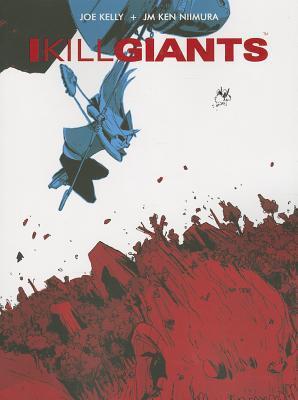
I Kill Giants (Joe Kelly, 2009). Barbara Thorson kills giants, and she’ll tell anyone who listens. Everyone thinks she’s crazy and uses her “giant-killing” to escape her hectic home life…but is she? Made into a movie in 2017 starring Madison Wolfe and Zoe Saldana.
Elevation (Stephen King, 2018). Scott Carey is losing weight, but his outward appearance remains unchanged, and wearing heavy clothes or loading himself down with items don’t change the dropping number on the scale. But strange events bring out strange things in people, and in Scott’s case, his affliction drives him to befriend the lesbian couple the rest of the town has shunned. Their friendship will last the rest of Scott’s life.
Picking Up the Pieces: Leadership After Empire (Elan Babchuck and Kathleen McShane, 2024). The pyramid style of leadership–a few at the top, many at the bottom–is everywhere, and that’s not a good thing. Rabbi Elan Babchuck and Methodist minister Kathleen McShane look to the ultimate example of a leader who broke away from the pyramid style of leadership: Moses.
Torch (Lyn Miller-Lachmann, 2022). In 1969, Pavol Bartoš publicly burns himself to death in protest of the Soviet Union’s occupation of Czechoslovakia. His death puts scrutiny on his closest friends Štěpán and Tomáš and his girlfriend Lída. Will Pavol’s death be a torch that lights their way to a brighter future, or will it burn their lives to cinders?
The Last Olympian (Rick Riordan, 2009; Percy Jackson and the Olympians #5). For four years, Percy Jackson has known that when he turns 16, he’s destined to either save or destroy Olympus. Now, with his 16th birthday days away, Kronos Lord of Time makes his move to tear down Olympus. Can Percy save Olympus from Kronos without destroying it himself?
Option B: Facing Adversity, Building Resilience and Finding Joy (Sheryl Sandberg and Adam Grant, 2017). In 2015, Facebook COO Sheryl Sandberg’s husband David died suddenly of a massive heart attack. With the help of her friend, famed psychologist Adam Grant, Sandberg documented her and her children’s process of grieving their sudden loss and how they built resilience through their tragedy.
So Tall Within: Sojourner Truth’s Journey to Freedom (Gary D. Schmidt, 2018). The story of Sojourner Truth, from her beginning as a slave to her life of activism and traveling across America to preach about the evils of slavery.
Homecoming (Cynthia Voigt, 1981; Tillerman Cycle #1). Liza Tillerman drives her children–eldest Dicey, middle child James, and littles Maybeth and Sammy–to a local mall and leaves. When nighttime comes and she doesn’t return, the kids realize they’ve been abandoned. With no other choices, they gather what supplies they have and embark on a journey to find a new home.
Martyr! (Kaveh Akbar, 2024). Cyrus Shams, a recovering addict, has looked to poetry as his higher power since he jumped on the wagon. More than anything, Cyrus wants his life and his death to mean something, so he gets a new focus on martyrs. His obsession with martyrs will take him on a journey where he has no clue what waits for him at the end.
Odd and the Frost Giants (Neil Gaiman, 2008). Odd, the pariah of his Scandinavian village, rescues a bear from a trap and realizes the bear and its eagle and fox companions are no ordinary wild animals: they’re Odin, Thor and Loki in disguise, exiled from Asgard by an invading Frost Giant. And that’s how Odd ends up on a journey to restore three gods to their former glory.
Liberal Arts and the Christian Life (Henry Allen, John H. Augustine, Edith Blumhofer, Dorothy F. Chappell, Kenneth R. Chase, Sharon Coolidge, Jeffry C. Davis, Jeffrey P. Greenman, Stephen B. Ivester, Alan Jacobs, Marjorie Lamp Mead, Mark Lewis, Duane Litfin, Roger Lundin, Wayne Martindale, Philip G. Ryken, Read Mercer Schuchardt, Jill Pelâez Baumgaertner, Lisa Richmond, Tamara Townsend, E. John Walford, Peter Walters, Michael Wilder, James Wilhoit, and Jay Wood, edited by Jeffry C. Davis and Phillip G. Ryken, 2012). Musings on how Christian liberal arts are still relevant in this day and age.
Silence and Beauty (Makoto Fujimura, 2016). Japanese-American artist Makoto Fujimura reflects on the legacy of Shusaku Endo’s Silence and how its themes pertain to Japan’s history and its religious landscape.
Die, volume 1: Fantasy Heartbreaker (Kieron Gillen, 2019). In 1991, six friends disappear while trying out a new role-playing game and reappear two years later with one of them missing and one of them missing an arm. 25 years later, a strange object arriving in the mail reunites the five. Their missing friend is alive in the world they disappeared into, and they have to save him before it’s too late.
Incidents in the Life of a Slave Girl (Harriet Ann Jacobs, written under the pseudonym Linda Brent, 1861). The autobiography of Harriet Ann Jacobs, who hid in a crawlspace for 7 years to escape her sexually obsessed master, among other drastic measures she took to obtain her freedom.
The Institute (Stephen King, 2019). Luke Ellis, a child prodigy with weak telekinetic powers, is kidnapped and taken to a black site simply known as the Institute. Here, children like Luke are experimented on to strengthen their telepathic and telekinetic powers and then used for nefarious purposes until there’s nothing left. If Luke doesn’t want himself and his new friends to end up as shells of their former selves, Luke needs to find a way to escape the seemingly inescapable Institute.
Gone Wolf (Amber McBride, 2023). In 2111, Inmate Eleven has spent her entire life in a tiny cell with only her pet wolf for company. In 2022, Imogene struggles with the anxiety that naturally comes from being immunocompromised in a pandemic, and her brothers, sources of emotional support, have gone away. If Inmate Eleven and Imogene want their lives to change, they’ll need to go wolf.
The Chalice of the Gods (Rick Riordan, 2023; Percy Jackson and the Olympians #6). Percy Jackson wants to go off to New Rome University with Annabeth, but for that to happen, he needs three recommendation letters from three different gods. Isn’t it lucky that Zeus’ cupbearer Ganymede has had his chalice stolen?
Congratulations, by the Way: Some Thoughts on Kindness (George Saunders, 2013). The book version of George Saunders’ commencement speech to Syracuse University’s class of 2013. Pretty good.
Star Wars: From a Certain Point of View (Ben Acker, Renee Ahdieh, Tom Angleberger, Ben Blacker, Jeffrey Brown, Pierce Brown, Meg Cabot, Rae Carson, Adam Christopher, Zoraida Cordova, Delilah S. Dawson, Kelly Sue DeConnick, Paul Dini, Ian Doescher, Ashley Eckstein, Matt Fraction, Alexander Freed, Jason Fry, Kieron Gillen, Christie Golden, Claudia Gray, Pablo Hidalgo, E.K. Johnston, Paul S. Kemp, Mur Lafferty, Daniel M. Lavery, Ken Liu, Griffin McElroy, John Jackson Miller, Nnedi Okorafor, Daniel Jose Older, Beth Revis, Madeleine Roux, Greg Rucka, Gary D. Schmidt, Cavan Scott, Charles Soule, Sabaa Tahir, Elizabeth Wein, Glen Weldon, Chuck Wendig, Wil Wheaton, and Gary Whitta, 2017; Star Wars: From a Certain Point of View #1). 40 stories, all set in the time frame of Rogue One and A New Hope, written to celebrate the 40th anniversary of A New Hope.
Ink Blood Sister Scribe (Emma Törzs, 2023). Half-sisters Joanna and Esther Kalotay are both up to their elbows in magic: Joanna has lived alone in their childhood home with its magical library since a rogue book claimed their father’s lives, and Esther has been globetrotting to avoid nefarious forces. But when those nefarious forces find her when she’s hidden away in Antarctica, the two sisters must reunite after a decade apart if they want to survive. Despite releasing only last year, already has a TV series adaptation greenlit.
Dicey’s Song (Cynthia Voigt, 1982; Tillerman Cycle #2). The journey is done: Dicey Tillerman and her siblings have a home with their grandmother. Now what?

Evil and the Justice of God (N.T. Wright, 2006). Back-to-back atrocities–Columbine, 9/11, the Iraq War, the 7/7 bombings, Hurricane Katrina–shattered many people’s false sense of security and slammed a question down in their laps: evil is real; what do we do about it? N.T. Wright attempts to answer that question.
Soil and Sacrament: A Spiritual Memoir of Food and Faith (Fred Bahnson, 2013). Fred Bahnson followed a divine calling to start an agrarian ministry, but he could feel himself getting lost in his work, working the land at the expense of his wife, his kids and his God. In the name of realignment, he traveled to four other agrarian faith-based communities in a journey that turned him back to God and touched on all kinds of issues.
Burn (Ted Dekker and Erin Healy, 2009). Janeal Mikkado wants out of the Romani kumpania she’s grown up in, so when a man comes to her saying he can give her a new life as long as she helps him get money her father owes him back, she agrees. The man, internationally wanted drug lord Salazar Sanso, double-crosses Janeal, kills her father, and burns everything Janeal knows to the ground. Janeal goes into hiding under a new identity, but there’s no hiding from your past–especially when something else emerged from the ashes of the kumpania.
A Lesson Before Dying (Ernest J. Gaines, 1993). Grant Wiggins, a teacher in a Cajun community who desperately wants out of his current situation, is enlisted to be a friend to Jefferson, godson of a family friend who’s on death row for being an inadvertent accomplice to a fatal liquor store robbery. Grant may be the educator, but he and Jefferson will both learn something before Jefferson’s appointment with Ol’ Sparky. The book won the National Book Critics Circle Award for Fiction in 1993 and HBO adapted it into an Emmy-winning miniseries in 1999, starring Don Cheadle as Grant Wiggins and Mekhi Phifer as Jefferson.
Die, volume 2: Split the Party (Kieron Gillen, 2020). For the six members of the party to return home, all six have to want to leave, and Sol, who has gained godlike power in his time trapped in the world of Die, doesn’t want to. With that mountain-sized obstruction in his path, the group has only one other option: survive in this world they fought tooth and nail to escape.
The Little Fishes (Erik Christian Haugaard, 1967). The story of three street urchins–Guido, Anna and Mario–struggling to survive WWII-era Italy. Won the first ever Boston Globe-Horn Book Award for Fiction.
Sun of Blood and Ruin (Mariely Lares, 2024). A mestizo vigilante tries to topple Spanish colonization of Mexico. This book was not good.
Giving Up Whiteness: One Man’s Journey (Jeff James, 2020). After the Emanuel AME church shooting, Jeff James texted an African-American friend asking what he could do, and she challenged him to give up whiteness. He said, “Bet,” and in the interest of not pulling a Rachel Dolezal, began an intellectual and spiritual journey in the name of shirking his whiteness. This sounds very ‘white liberal right after Obama’s election’ from the premise, but trust me it’s not.
If It Bleeds (Stephen King, 2020). Four brand-new novellas, one of them a continuation of Holly Gibney’s story after the events of The Outsider. Netflix adapted “Mr. Harrigan’s Phone” into a movie of the same name starring Jaeden Martell and Donald Sutherland, may he rest in peace. This year, Mike Flanagan directed an adaptation of “The Life of Chuck,” starring Tom Hiddleston in the title role.
Persepolis: The Story of a Childhood (Marjane Satrapi, 2003; Persepolis #1). Marjane Satrapi’s memoir of growing up in Iran before, during and after the Islamic Revolution, of going from a cronyist corrupt government to a fanatically fundamentalist corrupt government, and ultimately fleeing to Europe.

Totally Middle School: Tales of Friends, Family and Fitting In (Karen Cushman, Anna Dobbin, Mary Downing Hahn, Margarita Engle, Hena Khan, Lois Lowry, Gregory Maguire, Linda Sue Park, Jordan Paterson, Katherine Paterson, Gary D. Schmidt, Joyce Sidman, and David Wiesner, 2018). Eleven stories from acclaimed and beloved authors (and a couple of middle school-aged helpers) about that period of life a lot of us want to forget: middle school. I’d began working in a middle school the week before reading this, so it felt incredibly timely.
I Will Teach You to Be Rich: No Guilt. No Excuses. No BS. Just a 6-Week Program That Works (Ramit Sethi, 2009; 2nd edition released 2019). How to get your money in order. I gave it a reread to make sure I didn’t miss anything.
A Solitary Blue (Cynthia Voigt, 1983; Tillerman Cycle #3). Jeff Greene feels pulled between his uptight father the Professor and his freewheeling mother Melody, who left him and returned to South Carolina when he was 7. Then he befriends a certain family…
Warrior Girl Unearthed (Angeline Boulley, 2023; Firekeeper’s Daughter #2). Perry Firekeeper-Birch takes (is forced into, more like) a paid internship to pay for her auntie’s wrecked car, but the work compels her. She discovers there’s an active market for indigenous remains, and one of the biggest peddlers lives a stone’s throw away. When the tribe’s polite requests to give back their ancestors’ bones doesn’t yield, Perry decides on the next best solution: stealing them back.
The Ishbane Conspiracy (Randy, Karina and Angela Alcorn, 2001). A preachy dated clunky culture war-y attempt to rewrite The Screwtape Letters for the MTV generation. It didn’t work. Read The Screwtape Letters instead.
Making Peace with the Land (Fred Bahnson and Norman Wirzba, 2012). Two Christian agrarians ponder how Christians can better care for God’s world as humanity begins to reap the consequences of trampling all over the environment.
The Ruthless Elimination of Hurry: How to Stay Emotionally Healthy and Spiritually Alive in the Chaos of the Modern World (John Mark Comer, 2019). After years of church growth also led to years of burnout, John Mark Comer walked away from leading a congregation and began a new spiritual journey, one where God called him (and us) away from the hurrying, million-miles-an-hour always-multitasking world of today and to the slower path Jesus took.
Showdown (Ted Dekker, 2006; Paradise #1). A black-clad man strides into the tiny town of Paradise, Colorado, and introduces himself as traveling pastor Marsuvees Black. Rather than bring people closer to God, Black’s miracles and knowledge of the Word brings out the worst in the people of Paradise. It’s up to Johnny Drake, a young boy unmoved by Black’s enthrall, and a mysterious faction hidden in the mountains of Colorado to break Black’s spell on Paradise before it turns into Hell.
Obsessed (Ted Dekker, 2005). Stephen Friedman, a Russian Jewish immigrant to the United States, has his runaway success as a realtor interrupted by the news that Rachel Spritzer, a recently deceased Jewish socialite, was his long-lost mother and that she left him an inheritance. The problem is the inheritance is hidden in Spritzer’s house, which has a new owner: Roth Braun, a German serial killer who also wants Stephen’s inheritance. Two obsessed men: who will find the treasure first?
One Hundred Years of Solitude (Gabriel García Márquez, 1967). The century-long story of the rise and fall of the village of Macondo and the founding family the Buendías. It’s one of, if not the, best known magical realism novels. Masterfully written, really, really hard to follow.

Die, volume 3: The Great Game (Kieron Gillen, 2020). They’re still trapped in the game. The game isn’t what it seems.
The Ayeee to Z Adulting Guide: How to Navigate Adulthood Like a Boss! (E.Z. Grace, 2024). How to not fall into a sensory overload coma once you turn 18. Very obviously meant for high school seniors and pre-20-year-olds. BUT, E.Z. Grace sent me an ARC, and some of the advice is good no matter what age you are.
The Iliad: A Graphic Novel (Gareth Hinds, 2019, adapting Homer’s The Iliad, exact publication date unknown). The tale of the Trojan War, and the battle and downfall of two heroes, Hector of the Trojans and Achilles of the Myrmidons.
After Whiteness (Willie James Jennings, 2020). A rumination on racism in the upper academies and especially in theological education from the perspective of an African-American who’s risen through the ranks.
Later (Stephen King, 2021). Jamie Conklin can see dead people, which makes him super-helpful to his mother’s cop girlfriend. With Jamie’s power, she helps locate and defuse the last bomb of Thumper, a serial bomber who killed himself to avoid capture. But now Jamie has a problem: most ghosts fade off after a few days, but Thumper’s ghost isn’t…
A Wizard of Earthsea (Ursula K. LeGuin, 1968; Earthsea Cycle #1). Ged is the most talented wizard the land of Earthsea has ever seen. But when he was young and overconfident, he released something evil into the world, something that haunts him wherever he goes. Ged has magical skill by the pound, but if he wants to achieve greatness, he must banish this evil back to the hellscape it came from.
The Power (Naomi Alderman, 2017). The global balance of power rapidly flips as women worldwide develop skeins, an organ that lets them generate electricity from their bodies. We the audience learn all the reasons a matriarchal world wouldn’t necessarily be a better one. Prime Video adapted The Power into a miniseries starring Toni Collette, Auli’i Cravalho and Toheeb Jimoh.
Pay Attention, Carter Jones (Gary D. Schmidt, 2019). On the first day of sixth grade, Carter Jones answers a knock at the front door and finds the unexpected: a British butler, entrusted to the Jones family by their recently-deceased grandfather. Mr. Bowles-Fitzpatrick brings order to the Jones household, order that the family hasn’t had since their father decided not to return from his stationing overseas in Germany. With a new role model, Carter can finally confront the secrets that have been haunting him.
Macbeth: A Parallel Text (2004; a modern translation of Macbeth, 1623). The best Shakespeare tragedy, with a modern translation side by side.
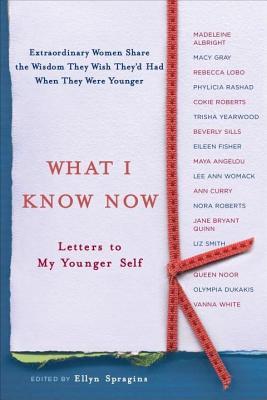
What I Know Now: Letters to My Younger Self (Madeleine Albright, Maya Angelou, Rachel Ashwell, Barbara Boxer, Susie Buffett, Roz Chast, Breena Clarke, Ann Curry, Carolyn Deaver, Olympia Dukakis, Eileen Fisher, Macy Gray, Noor Al-Hussein, Jane Kaczmarek, Kitty Kelley, Gerry Laybourne, Rebecca Lobo, Camryn Manheim, Mary Matalin, Heather Mills McCartney, Trish McEvoy, Shannon Miller, Shelley Morrison, Marilyn Carlson Nelson, Ingrid Newkirk, Jane Bryant Quinn, Phylicia Rashad, Ann Reinking, Cokie Roberts, Nora Roberts, Joyce Roché, Lisa Scottoline, Beverly Sills, Liz Smith, Picabo Street, Joyce Tenneson, Wendy Walker, Vanna White, Naomi Wolf, Lee Ann Womack, and Trisha Yearwood, collected by Ellyn Spragins, 2006). Ellyn Spragins asked 40 famous women to write letters to their younger self. Then she made it into a book.
Building Blocks (Cynthia Voigt, 1984). Brann Connell’s poor relationship with his father changes forever when he falls asleep among his father’s childhood blocks and wakes up to meet his father…at ten years old.
The Serpent King (Jeff Zentner, 2016). In my favorite book of all time, three friends–disgraced pastor’s son Dill, up-and-coming fashion influencer Lydia, and fantasy nerd Travis–ride out their senior year as they prepare for their inevitable separation. They have no idea of the challenges they’ll have to face.
To Be Made Well: An Invitation to Wholeness, Healing, and Hope (Amy Julia Becker, 2022). From her own experiences with an eating disorder and stress-induced illnesses, as well as the story of Jesus healing the woman with the issue of blood, Amy Julia Becker ruminates on community in the kingdom of God, and the healing role it can play.
Fahrenheit 451 (Ray Bradbury, 1953). Ray Bradbury’s dystopian classic depicts a world where anti-intellectualism has taken over, and the role of firemen has changed from extinguishing fires to igniting them to burn books. Fireman Guy Montag has his fervor for burning books shaken by his neighbor Clarisse, who awakens his long-gestating curiosity, and a woman who burns herself alive rather than have the firemen destroy her books. Has received two film adaptations, the more recent one by HBO, starring Michael B. Jordan as Guy Montag, Michael Shannon and Sofia Boutella.
Saint (Ted Dekker, 2006; The Paradise Trilogy #2). Carl Strople is one of the deadliest people on the planet, his mind systematically scrubbed clean of any memory of his earlier life and his body carefully crafted into a human weapon. But his latest hit pokes a hole in his mind wipe and puts him on the run, trying to escape his employer and find out who Carl “Saint” Strople really is.
So that was all my reads of 2024! If you want longer form reviews, follow me on Instagram @peachykeenebooks. Happy 2025 and happy reading!



 The Keene Chronicles