
We’ve done this three times now. You know the deal: Books. I read ’em. Summaries. I’m writing ’em. Let’s get to it.
The Books I Read in 2023
The Da Vinci Code (Dan Brown, 2003; Robert Langdon #2). The murder of a high-profile museum curator drops Harvard symbologist Robert Langdon in the middle of a centuries-old conspiracy. Decent plot that’s about 200 pages too long. Made into a movie starring Tom Hanks, Audrey Tautou and Ian McKellen.
The Chocolate War (Robert Cormier, 1974; Chocolate War #1). Trinity High School has something hidden in its halls: the Vigils, a secret society of menaces to society. When the school’s annual chocolate sale comes up, the Vigils convince freshman Jerry Renault to not sell chocolates for ten days and get a shock when Jerry defies them and keeps not selling after he was supposed to. Considered one of the most influential YA books ever written; made into a movie starring John Glover and Doug Hutchison.
All the Light We Cannot See (Anthony Doerr, 2014). A young blind girl is inadvertently drafted into the French Resistance after the Nazis take her father; a disillusioned Wehrmacht soldier sees mysterious radio transmissions as his way out from under the Fuhrer’s boot; a Nazi jewel hunter with only months left to live takes desperate measures to kill the cancer killing him. A supposedly cursed diamond will tie these three threads together in the book that won the Pulitzer Prize in 2014. Made into a Netflix miniseries starring Mark Ruffalo and Hugh Laurie.
Tears We Cannot Stop: A Sermon to White America (Michael Eric Dyson, 2017). Reverend Michael Eric Dyson, Ph.D., preaches, not to his congregation, but to white America. I wish it didn’t have to be written, but it’s really good. Book #28 on my antiracism reading list.
Just After Sunset: Stories (Stephen King, 2008). An anthology of stories from America’s uncle that watched way too many horror movies growing up. For me, the highlight was “N.”, a previously-unpublished novella.
Nation (Terry Pratchett, 2008). A boy-man named Mau is the only survivor when a tsunami washes away his tribe. But the wave also beaches a ship, and soon its only survivor, Daphne, meets Mau. The two, separated by language and culture, will go on to found a new nation.
Mara’s Stories: Glimmers in the Darkness (Gary D. Schmidt, 2001). Under the Nazi regime, elderly Jewish woman Mara has no name, no identity, no culture, no humanity. But under the cover of darkness, Mara keeps one of the oldest Jewish traditions alive: oral stories.
The Queen of Attolia (Megan Whalen Turner, 2000; The Queen’s Thief #2). A terribly boring sequel. Not worth the effort it takes to recap.
This Is Water: Some Thoughts, Delivered on a Significant Occasion, about Living a Compassionate Life (David Foster Wallace, 2009). David Foster Wallace was a workhorse of a writer who dabbled in all kinds of genres. In 2005, for the first and last time, he’d take a shot at a commencement address to the graduating class at Kenyon College. Title: “This is Water.”
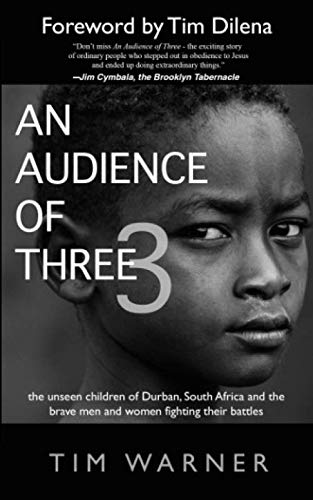
An Audience of Three: the Key of Hope Story (Tim Warner, 2019). A call from God compelled Dan and Rachel Smithers to sell everything and move to Durban, South Africa, the HIV/AIDS capital of the world. From Durban, the couple would found the organization the Key of Hope. Tim Warner was my children’s pastor; this book is great.
Dirt Work: An Education in the Woods (Christine Byl, 2013). When Christine Byl became a trail maintenance worker in a Montana national park fresh out of college, she expected it to be a job to pay the bills until she found the Big Girl Job. Two trail maintenance jobs, a marriage to a coworker, and a move to the Alaska wilderness later, and she was proven wrong. This is the story of Christine’s evolution.
Artemis Fowl (Eoin Colfer, 2001; Artemis Fowl #1). Two years ago, Irish criminal mastermind Artemis Fowl I went missing in a business enterprise gone bad. With the family fortune reaching its end, his son Artemis Fowl II puts a crazy plan in motion: kidnap a fairy and use its gold to turn the Fowls’ misfortune around. Made into a loogie-in-the-face of a movie starring Ferdia Shaw, Lara McDonell, and Judi Dench.
I am the Cheese (Robert Cormier, 1977). Adam Farmer rides his bike from Massachusetts to Vermont to visit his hospitalized father. The further he gets into his ride, however, the more holes that appear in his memory, and the more danger he finds himself in. Made into a movie starring Robert MacNaughton and Cynthia Nixon.
What Truth Sounds Like: Robert F. Kennedy, James Baldwin, and Our Unfinished Conversation About Race in America (Michael Eric Dyson, 2018). In 1963, Attorney General Robert F. Kennedy met with James Baldwin and other black intellectuals as a conciliatory gesture, and the intellectual thrashing would cause a radical shift in Kennedy’s politics. From this seminal meeting, Dyson springs into discussion about black art, celebrity, life, and so on. Book #29 on my antiracism reading list.
Under the Dome (Stephen King, 2009). An invisible, impenetrable dome cuts the small town of Chester’s Mill, Maine, off from the rest of the world. Ex-military drifter Dale “Barbie” Barbara and local newshound Julia Shumway inadvertently find themselves the leader of a resistance movement when a local politician capitalizes on the chaos to become a dictator. Adapted into a meh CBS series starring Mike Vogel, Rachelle Lefevre and Dean Norris.
Brownsville (Neil Kleid, 2006). The story of “Murder, Inc.”, the crime syndicate that invented the idea of killing for hire, told through the eyes of Jewish gangster Albert “Allie Boy” Tannenbaum. It was alright, kind of boring.
Marching for Freedom: Walk Together, Children, and Don’t Grow Weary (Elizabeth Partridge, 2009). The story of the Civil Rights Movement, told through the eyes of people in the crowd. Pretty good.
The Great Stone Face (Gary D. Schmidt, 2002). Ernest’s tiny village is overlooked by the Great Stone Face, and local legend says that whoever resembles the face in the mountainside will be the noblest man in the countryside. The years will pass, and only when Ernest is an old man will the prophecy be fulfilled. Based off a story of the same name by Nathaniel Hawthorne.
The King of Attolia (Megan Whalen Turner, 2006; The Queen’s Thief #3). The one where Gen becomes king of Attolia. Still boring, but it’s not The Queen of Attolia, so we’ll call it an improvement.
Bored and Brilliant: How Time Spent Doing Nothing Changes Everything (Manoush Zomorodi, 2017). Work and new baby-induced burnout made podcast host Manoush Zomorodi unplug. Her mental health improved so much that she made a challenge and a spin-off book out of her experiment: the Bored and Brilliant Challenge and this book.

The Life and Crimes of Hoodie Rosen (Isaac Blum, 2022). Yehuda ‘Hoodie’ Rosen is an Orthodox Jew, one of many who’s moved into the small town of Tregaron; Anna-Marie Diaz-O’Leary is the girl he falls for, the daughter of the mayor trying to keep the incoming Jewish community from putting down roots. They fall for each other as anti-Semitic crimes drive a wedge between the Jewish and Gentile communities of Tregaron. Can their young love survive the hate?
Parasomnia (Cullen Bunn, 2021; Parasomnia Issue #1). A man searching for his missing son is knocked unconscious…and wakes up in another world. This series might be great. but I only read the first issue.
Crazy Love: Overwhelmed by a Relentless God (Francis Chan, 2008). Christianity runs deeper than showing up to church on Sunday, listening to Maverick City, and not cussing. Francis Chan makes a book out of that hypothesis. A pretty good one, too.
Artemis Fowl: The Arctic Incident (Eoin Colfer, 2002; Artemis Fowl #2). A ransom video sent by the Russian mob reveals to Artemis Fowl that his father is alive. Captain Holly Short comes to the surface to arrest Artemis on suspicion of selling human weapons to underground criminals, but is inadvertently roped into the rescue mission.
Notes from the Underground (Fyodor Dostoyevsky, 1864). For over 40 years, a man has hidden away from Russian society. What caused this man’s misanthropy? Read to find out (and then watch Taxi Driver, because it’s probably the closest we’ll get to a NftU movie).
Ransom (Lois Duncan, 1966). Five teens–BMOC Bruce and his younger brother Glenn, loner Dexter, rich girl Marianne, and military brat Jesse–are kidnapped and held for ransom. …that’s it.
Long Time Coming: Reckoning with Race in America (Michael Eric Dyson, 2020). Inspired by the execution of George Floyd, Michael Eric Dyson makes a book out of writing letters to him and six other black people gone too soon: Emmett Till, Elijah McClain, Breonna Taylor, Sandra Bland, Hadiya Pendleton, and Reverend Clementa Pinckney. Book #30 on my antiracism reading list.
Full Dark, No Stars (Stephen King, 2011). Four stories, all macabre. Three of them–“1922,” “Big Driver,” and “A Good Marriage”–have all been adapted into movies. Pretty good collection.
Becoming Better Grownups: Rediscovering What Matters and Remembering How to Fly (Brad Montague, 2020). Adulthood is something to be dreaded in today’s society, hence the existence of the verb “adulting” and many people’s expectations of several decades of slog that concludes in death. Brad Montague, creator of the “Kid President” web series, pushes back against that narrative: to be a better adult, so says Montague, you must be childlike.
The Wonders of Donal O’Donnell (Gary Schmidt, 2002). Donal and Sorcha O’Donnell are still reeling from the sudden death of their son when three men show up on their farmhouse’s doorstep during a downpour. The men–Donal O’Leary, Donal O’Neary and Donal O’Sheary–will tell stories that will break open the couple’s frozen hearts.
Things Not Seen (Andrew Clements, 2002: Things #1). 15-year-old Bobby Phillips wakes up invisible one winter morning. As he’s still processing his new state, he meets Alicia, a girl blinded in a freak accident. It’s a race against time for the two of them to find what turned Bobby invisible as the authorities close in on the Phillips family.
Kindred: A Graphic Novel Adaptation (Damian Duffy and John Dennings, adapting Octavia Butler’s Kindred, 2017). With no warning, Dana, a black woman from the 1970s, is transported back into the pre-Civil War South, and rescues a young white boy. As she continues to bounce between past and present, she comes to a realization: the young man whose life she keeps saving is her own ancestor. Hailed as a cornerstone in African-American literature, science fiction, and Afrofuturism, a TV adaptation of Kindred aired for one season on FX.
The Perks of Being a Wallflower (Stephen Chbosky, 1999). Charlie starts high school grieving his best friend’s suicide. It’s pure luck that Patrick, the weird kid in his woodshop class and his cute stepsister Sam take Charlie under their wing and bring him back to life. Made into a movie starring Logan Lerman as Charlie, Emma Watson as Sam and the Reverse-Flash/Ezra Miller as Patrick.
Artemis Fowl: The Eternity Code (Eoin Colfer, 2003; Artemis Fowl #3). A deal gone wrong leaves Artemis Fowl’s beloved Butler on the brink of death and forces Artemis to call on Holly Short once again. It’s up to the two of them to save Butler and retrieve a game-changing piece of Fairy technology from an unscrupulous businessman.
Loaded: A Disarming History of the Second Amendment (Roxanne Dunbar-Ortiz, 2018). An alleged history of the racist origins of American gun culture. I say “alleged” because this book feels extremely unfocused and feels like a retelling of Dunbar-Ortiz’s previous book An Indigenous People’s History of the United States with a slight bent towards guns.
I Know What You Did Last Summer (Lois Duncan, 1973). A year ago, four friends hit and killed a kid with their car, but were never caught, despite calling the police and saying what they’d done. But taunting notes and a shooting make the teens realize: someone knows what they did, and wants them to pay. Yes, this was made into a movie starring the likes of Sarah Michelle Gellar and Jennifer Love Hewitt; no, the movie was nothing like the book.
Biased: Uncovering the Hidden Prejudice That Shapes What We See, Think and Do (Jennifer L. Eberhardt, Ph.D., 2019). Bias, the thing that motivates so many bad things in the world, feels inescapable. It’s not, so thinks Jennifer Eberhardt, a psychology professor at Stanford. Book #31 on my antiracism reading list.
11/22/63 (Stephen King, 2011). The day English teacher Jake Epping discovers there’s a wormhole in the walk-in fridge of his favorite restaurant is the same day he’s enlisted for an extraordinary task: saving the life of John Fitzgerald Kennedy. Jake dives through the wormhole and into the 1950s, and learns how hard the past will fight to not be changed. Adapted into a Hulu miniseries starring James Franco, Chris Cooper, Sarah Gadon and Daniel Webber.
After College: Navigating Transitions, Relationships and Faith (Erica Young Reitz, 2016). How do you navigate the post-college years and not lose faith in God/yourself/humanity? Erica Young Reitz attempts to answer.
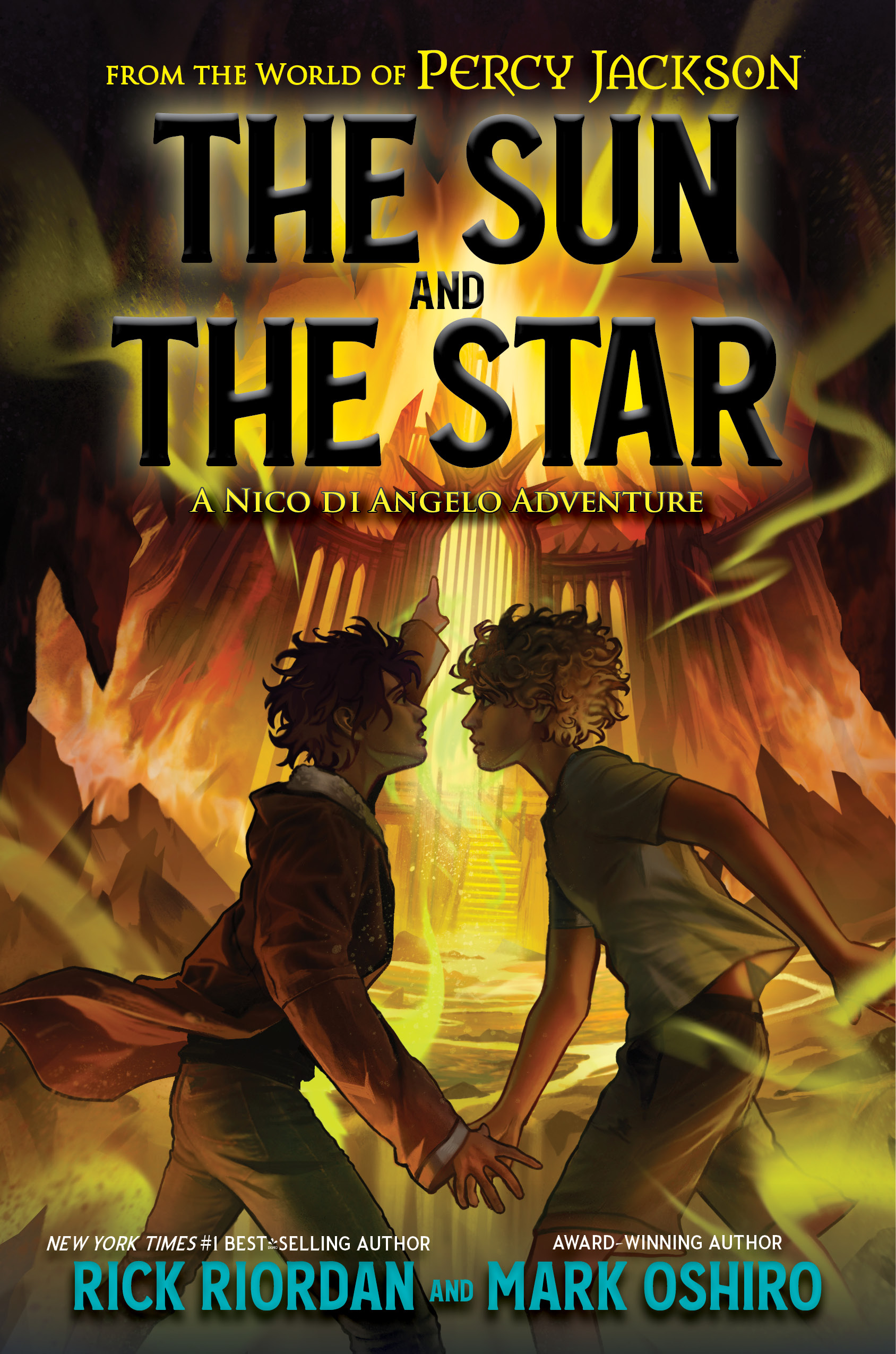
The Sun and the Star: A Nico di Angelo Adventure (Rick Riordan and Mark Oshiro, 2023; The Camp Half-Blood Chronicles #17). For the first time in his life, Nico di Angelo is happy with his boyfriend Will Solace. But prophetic dreams beckon Nico and Will on a quest into the worst place under the world: Tartarus, the deepest, most dangerous part of the Greek underworld.
Lizzie Bright and the Buckminster Boy (Gary D. Schmidt, 2004). Turner Buckminster doesn’t feel at home in Phippsburg, Maine, his new home, until he meets Lizzie Bright. That’s a problem, because Lizzie is part of an African-American community on land that Phippsburg’s leader wants, and Turner’s father, as the new pastor, is expected to sign on with forcing Lizzie and her community out. Someone and something has to give: Turner and his friendship with Lizzie, or Reverend Buckminster and the pull between his family and the community.
A Conspiracy of Kings (Megan Whalen Turner, 2010; The Queen’s Thief #4). Sophos, once a traveling companion of Eugenides, king of Attolia, is kidnapped and sold into slavery. He escapes in time to learn his uncle the king is dead, and he is the new king of Sounis. The point where I jumped off the Queen’s Thief train and concluded this series wasn’t for me.
Get Good with Money: Ten Simple Steps to Becoming Financially Whole (Tiffany “the Budgetnista” Aliche, 2021). After losing her job to the 2008 recession, losing her home to foreclosure, and losing much of her savings to a scammer, the last career path Tiffany Aliche expected to go down was financial advice. And yet, 13 years later, “the Budgetnista” is here to give you ten steps to financial wholeness.
Blacula: Return of the King (Rodney Barnes, 2023). When corpses with their throats torn out start showing up in the neighborhoods once supposedly terrorized by “Blacula,” a blogger named Tina ventures into the neighborhoods to cover the violence. She teams up with a young man named Kross to kill Blacula once and for all. Unbeknownst to both of them, Blacula has a mission of his own: kill Count Dracula, the creature responsible for his hellish existence.
Artemis Fowl: The Opal Deception (Eoin Colfer, 2005; Artemis Fowl #4). For a year, pixie madwoman Opal Koboi has been in a self-induced coma, plotting revenge against the four people who foiled her evil plans: Captain Holly Short, Mulch Diggums, Artemis Fowl and his Butler. After their last shenanigans with fairies, Artemis Fowl and Butler submitted to mind wipes. If they’re going to survive Opal’s schemes, Holly and Mulch will need to figure out a way to bring back Artemis and Butler’s wiped-away memories.
Summer of Fear (Lois Duncan, 1976). When she learns of her aunt and uncle’s deaths in a car accident, Rachel Bryant welcomes her cousin Julia with open arms. She regrets it, because within days, Julia steals her friends, her boyfriend, her bedroom, and seemingly Rachel’s position in her family. When Rachel finds several strange objects among Julia’s things, she starts to wonder if Julia’s influence is entirely of this world.
Why I’m No Longer Talking to White People About Race (Reni Eddo-Lodge, 2017). In 2014, Reni Eddo-Lodge wrote a blog with a rather forward title: “Why I’m No Longer Talking to White People About Race.” In this book-length expansion on her post, Eddo-Lodge talks about black British history, feminism, and the intersection of race and class. A provocative title for book #32 on my antiracism reading list.
A Path Through Suffering (Elisabeth Elliot, 1990). When she was only 30 years old, Elisabeth Elliot’s husband Jim died at the hands of the Huaorani, the indigenous people of Ecuador that he ministered to. For the rest of her life, Elliot would use her suffering to minister to others, hence this book.
The Big Crunch (Pete Hautman, 2011). A teen romance that didn’t want to make me facepalm. Seriously, this book is adorable. Read it.
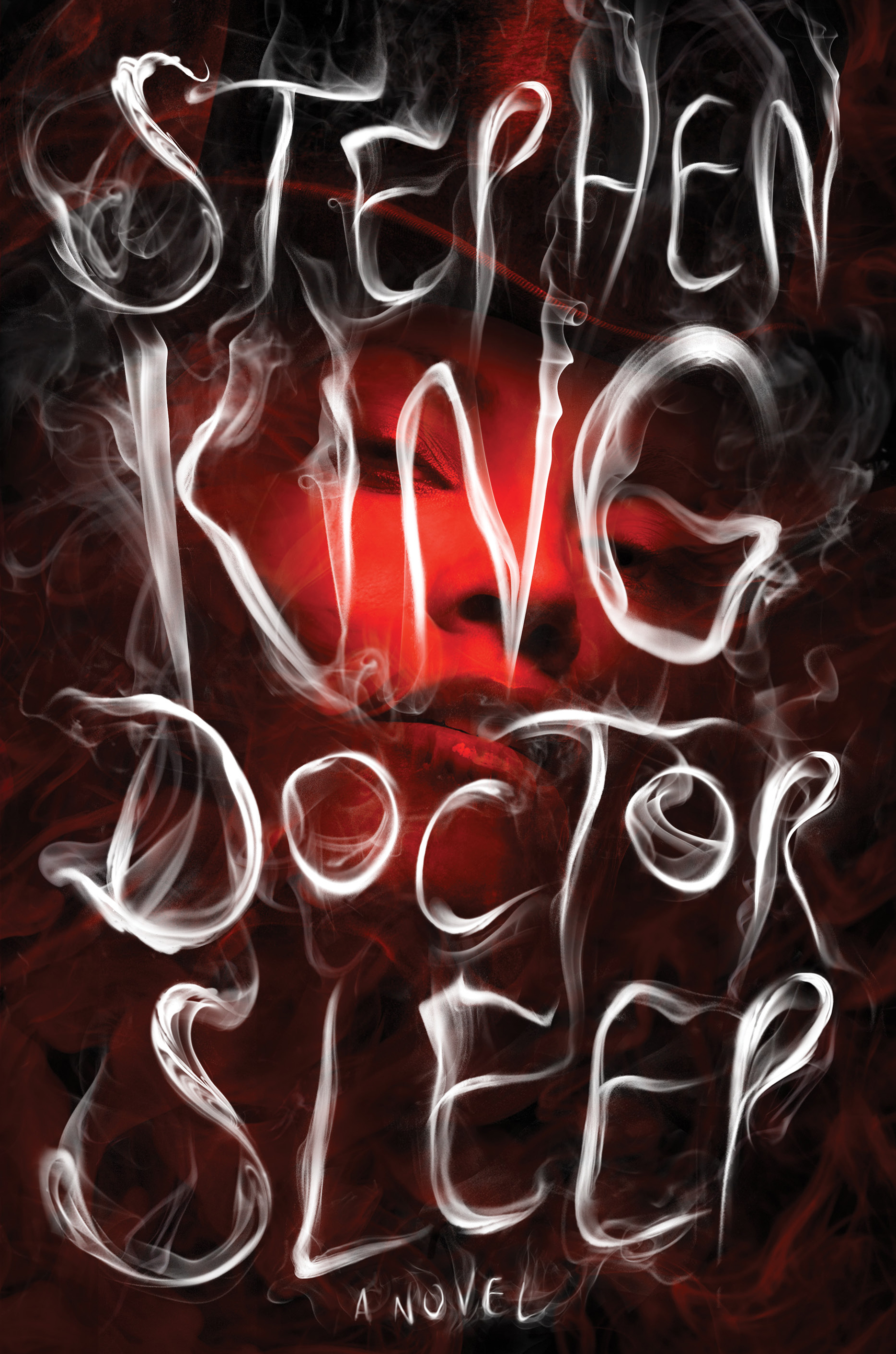
Doctor Sleep (Stephen King, 2013; The Shining #2). Decades after a building full of evil destroyed his father from the inside out, Dan Torrance has put his “shining” psychic abilities to good use working in a hospice and helping the elderly patients die peacefully. Psychic communications with a teenage girl with the shining make Dan aware of a threat more dangerous than what took his father, and that only by working with the girl can the two of them survive. Made into a movie starring Ewan McGregor, Rebecca Ferguson and Kyliegh Curran.
First Boy (Gary D. Schmidt, 2005). Cooper Jewett is left to run his grandfather’s farm by himself. Vandalism, a legion of mysterious black sedans and a visit from a smarmy politician puts Cooper in the midst of a political scandal.
Designing Your Life: How to Build a Well-Lived, Joyful Life (Bill Burnett and Dave Evans, 2016). Former Apple designer Bill Burnett and EA cofounder Dave Evans collaborated to make a class for seniors at Stanford University, “Designing Your Life.” Then they made a book out of it.
Does Jesus Really Love Me?: A Gay Christian’s Pilgrimage to in Search of God in America (Jeff Chu, 2013). Jeff Chu experienced an identity crisis trying to put his unwavering faith in God on the same page with his being gay. He knew churches and churchgoers across the United States and the world were having similar problems, so he trekked across the US to talk to Christians of all kinds about homosexuality. Then he wrote a book about it.
Artemis Fowl: The Lost Colony (Eoin Colfer, 2006; Artemis Fowl #5). Artemis Fowl is back in fairy business, but for good reasons this time. Thousands of years ago, an entire chunk of fairy society–the demons–pulled up their stakes and transported the island they lived on outside of time. Now the time spell is decaying, and it’s up to Artemis and a new ally to save the demons before they break the fairy masquerade once and for all.
Divided by Faith: Evangelical Religion and the Problem of Race in America (Michael O. Emerson and Christian Smith, 2000). Historically, American evangelicalism has been complicit in many systemic wrongs, rarely endorsing them but not condemning them either. Sociologists Michael O. Emerson and Christian Smith conducted nearly 2,000 interviews to get to the bottom of the American evangelical church’s race politics. Book #33 on my antiracism reading list.
Killing Mr. Griffin (Lois Duncan, 1978). Mr. Griffin is the most unpopular teacher at Del Norte High School thanks to his harsh grading. One of his students talks his friends into kidnapping Mr. Griffin to scare the perfectionist grading out of him, but the prank inadvertently turns into a murder and a cover-up. Made into a movie starring Amy Jo Johnson and Mario Lopez.
Silence (Shūsaku Endō, 1966). In the 17th century, the Japanese government has turned on Christianity, and Japanese Christians and missionaries alike are threatened with torture and death into renouncing their Christian faith. Two Portuguese priests journey to Japan and are forced to witness horrors that make them question God’s silence. Made into a critically acclaimed film directed by Martin Scorsese starring Andrew Garfield, Adam Driver and Liam Neeson.
Ask the Passengers (A.S. King, 2012). The only people Astrid Jones feels like she can be real with are the passengers on planes flying over her small town. They’re the only people who know about her secret girlfriend and her questioning her sexual identity. When Astrid’s relationship is exposed, can the passengers help Astrid survive the ensuing turmoil?
Mr. Mercedes (Stephen King, 2014; Bill Hodges Trilogy #1). A masked maniac drives a stolen car through a crowd, killing 8 and injuring 15. A year later, Bill Hodges, the lead investigator in the Mercedes Killer case, has retired, but gets called back into action by a taunting letter from the killer. Made into a Peacock series starring Brendan Gleeson, Harry Treadaway, Jharrel Jerome and Justine Lupe.
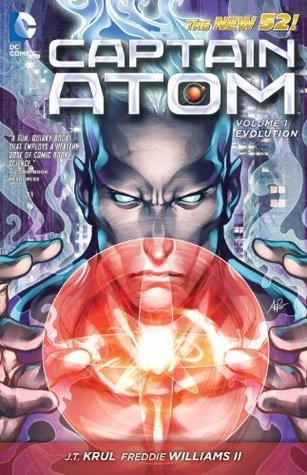
Captain Atom, volume 1: Evolution (J.T. Krul, 2011). An experiment turned Nathaniel Adams, USAF, into Captain Atom, a nuclear-powered hero that has the public and the government alike quaking in their boots. When a high level of radioactivity brings Atom to a ghost town in rural Washington, Atom has to take down a personal threat and show the world he’s one of the good guys.
In God’s Hands (Lawrence Kushner and Gary D. Schmidt, 2005). Two men zone out during services at the local synagogue: Jacob, a rich man focused on getting money, and David, a poor father with a lot of mouths to feed. Jacob, feeling convicted by God, bakes some bread and leaves it at the synagogue, kicking off a chain reaction. Based off of a Jewish folktale.
Quiet: The Power of Introverts in a World That Can’t Stop Talking (Susan Cain, 2012). 1/3 people are introverted, but the world is heavily skewed towards extroverts. Susan Cain gives us a glimpse of what we’re missing by overlooking introversion.
Woman Hollering Creek and Other Stories (Sandra Cisneros, 1991). A fantastic collection of 22 stories about Latinx culture, femininity, machismo, childhood, nostalgia and religion. A contender for my favorite book of 2023.
Artemis Fowl: The Time Paradox (Eoin Colfer, 2008; Artemis Fowl #6). Artemis Fowl thought saving demons from their collapsing home outside of time and losing three years in the process was the last time he’d have to use time magic. But when a magic-resistant deadly illness jumps species from fairy to Artemis’ mother, Artemis and Captain Holly Short have no choice but to go back in time for the cure: spinal fluid from an extinct animal. Extinct because a younger, more ruthless Artemis sold it to poachers.
The Twisted Window (Lois Duncan, 1987). Within days of Tracy Lloyd meeting Brad Johnson, he’s recruited her. He’s in town, trying to rescue his half-sister from the father who kidnapped her. But things aren’t as they seem and Brad’s not telling Tracy the whole story…
The Virgin Suicides (Jeffrey Eugenides, 1993). Decades after the Lisbon sisters–Cecilia, Lux, Therese, Beth and Mary–committed suicide one after the another, a group of neighborhood boys who watched them deteriorate come together to figure out what made the Lisbon girls snap. Made into a movie by Sofia Coppola starring Josh Hartnett, Kirsten Dunst, Scott Glenn and Danny DeVito.
Unwanted: How Sexual Brokenness Reveals Our Way to Healing (Jay Stringer, 2018). Based off of interviews with nearly 4,000 patients, psychologist Jay Stringer dives deep into the causes of sex addiction and how to overcome it.
Democracy in Black: How Race Still Enslaves the American Soul (Eddie S. Glaude, Jr., 2016). The “value gap” of white supremacy has poisoned our country and our democracy, conjectures Eddie S. Glaude, Jr., professor of religion and African-American studies at Princeton University. A change is required. Book #34 on my antiracism reading list.
Revival (Stephen King, 2014). Jamie Morton was a kid when Charles Jacobs, the new minister with a fixation on electricity, cursed God for the death of his wife and child and left the pulpit. Decades later, on the other side of a so-so musical career destroyed by drug addiction, Jamie encounters Jacobs again and discovers his fixation with electricity has taken a decidedly sinister bent in the intervening years. In my humble opinion, King’s scariest book since Pet Sematary.
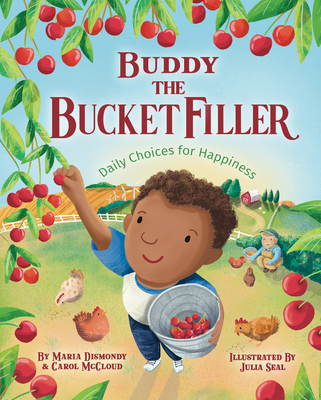
Buddy the Bucket Filler: Daily Choices for Happiness (Maria Dismondy and Carol McCloud, 2023). A summer spent on his Great Uncle Frank’s farm is a golden opportunity for young Buddy to practice “bucket filling,” deliberate kind words and actions. Way outside my wheelhouse, but my mom got an ARC of this book and passed it on to me. Nice job, Carol McCloud.
The Wednesday Wars (Gary D. Schmidt, 2007). Holling Hoodhood is sure his English teacher hates him, but with his architect father seeing a potential client in every family in town, there’s not much Holling can do. But that’s the tip of the iceberg. Escaped class pets, starring in a play, getting hit by a bus and going on his first date will be only a few things Holling experiences in this book that introduced me to Gary Schmidt.
Confessions of a Ex-Doofus Itchy Footed Mutha (Melvin Van Peebles, 2009). Doofus’ itchy feet aim for Mexico, but trusting the wrong person lands him in New York instead. Those same itchy feet make Doofus leave the love of his life, and it will take a hell of a lot to get Doofus back to his woman. Melvin Van Peebles, a legendary blaxploitation director, adapted his own graphic novel into a film of the same name.
Boxers (Gene Luen Yang, 2013; Boxers & Saints #1). With a sword gifted from a mysterious master and a ritual passed down from the gods, Little Bao forms the Society of the Righteous and Harmonious Fist, an order dedicated to expelling foreign influences from China. Part 1 of the Boxers & Saints duology.
Saints (Gene Luen Yang, 2013; Boxers & Saints #2). All her life, Four-Girl has been her family’s whipping girl, until the local acupuncturist introduces her to Christianity. Four-Girl takes a new name, Vibiana, but her new identity will put her on the road to a meeting with the Society of the Righteous and Harmonious Fist… Part 2 of the Boxers & Saints duology.
Atomic Habits (James Clear, 2018). Why are bad habits so easy to make and good habits so maintain? Why is it so easy to drink your wallet empty and kill your hangover with greasy fast food than to start the day with a gym session and a healthy breakfast? James Clear tackles this question in Atomic Habits.
Boundaries (Drs. Henry Cloud and James Townsend, 1992, updated edition released 2017). Have healthy boundaries: the book. Everyone should read this book. Seriously.
Artemis Fowl: The Atlantis Complex (Eoin Colfer, 2010; Artemis Fowl #7). What would be a meeting to get fairy approval on a potentially planet-saving invention instead reveals a big honkin’ problem: Artemis Fowl has come down with the Atlantis Complex, a neurotic mental disorder. Bad timing, too: an old enemy of the LEP stages a jailbreak, and no Artemis to foil him. Can Artemis’ friends save him and catch the crook?
The Modern Frankenstein (Paul Cornell and Emma Vieceli, 2021). Medical student Elizabeth Cleve is shocked when her overseer, Dr. James Frankenstein, heals her mother’s dementia. Frankenstein’s brilliance pulls Elizabeth into a web of unethical experiments, romance…and murder.
The Boyfriend Bracket (Kate Evangelista, 2018). With her overprotective boyfriend away at college, Stella Patterson can finally start dating in her senior year of high school. And she knows how: The Boyfriend Bracket, a series of dates that pits 8 potential boyfriends against each other. A childhood friend will upend the whole process, though.
The Family Romanov: Murder, Rebellion & the Fall of Imperial Russia (Candace Fleming, 2014). In 1918, Bolsheviks executed the Romanovs, the last royal family of Russia, by firing squad. Who were the family of seven that died by Bolshevik bullets that day, and what did they do to cause such ire from the people they ruled over? Read to find out.

Begin Again: James Baldwin’s America and Its Urgent Lessons for Our Own (Eddie S. Glaude, Jr., 2020). Eddie Glaude examines the life and writing of James Baldwin and the ways that Baldwin is still relevant today. Book #35 on my antiracism reading list.
Dinky Hocker Shoots Smack! (M.E. Kerr, 1972). Giving his cat away due to his dad developing an allergy makes Tucker Woolf meet Susan “Dinky” Hocker, an odd girl with a weight problem. Hijinks ensue.
Finders Keepers (Stephen King, 2015; Bill Hodges Trilogy #2). Peter Saubers finds an old trunk full of money and old notebooks in the woods behind his home. The money, which Pete delivers anonymously in installments, solves his parents’ financial woes. The notebooks, however, bring Pete a new problem: Morris Bellamy, a psychotic ex-con who stole them from an award-winning author in a fatal robbery and will move heaven and earth to get them back.
Trouble (Gary D. Schmidt, 2008). Racial tensions reach a boiling point in Blythbury-by-the-Sea, Massachusetts, when a Cambodian immigrant hits and kills local sports star Franklin Smith. Franklin’s younger brother Henry heads for Mt. Katahdin, the mountain he and Franklin planned to climb together. He’ll encounter forgiveness, redemption and a new worldview on the way.
My Friend Dahmer (Derf Backderf, 2012). Future cartoonist Derf Backderf hung with another future famous person as a teenager: Jeffrey Dahmer. Made into a movie starring Alex Wolff as Derf Backderf and Ross Lynch as Jeffrey Dahmer.
Between the World and Me (Ta-Nehisi Coates, 2015). A letter from father to son detailing the kind of world the son will live in as a black man. You might cry; I nearly did.
When No One is Watching (Alyssa Cole, 2020). Sydney Green’s Brooklyn is quickly gentrifying, and that’s the least of her problems. When a string of suspicious goings-on coincide with Sydney’s neighborhood getting whiter, she and her neighbor Theo smell fish. They race to get to the bottom of it…before they disappear too.
Artemis Fowl: The Last Guardian (Eoin Colfer, 2012; Artemis Fowl #8). Artemis Fowl’s archnemesis Opal Koboi springs her most dastardly plan: starting the apocalypse. It’s a battle of wits and magic as Artemis tries to accomplish his loftiest goal yet: saving the human race.
Untamed (Glennon Doyle, 2020). Glennon Doyle was surviving, not thriving, through an infidelity-motivated divorce when she met former pro soccer player Abby Wambach and felt something previously dead in her awaken. From her subsequent reevaluation of her life upon realizing she was lesbian comes Untamed. This is a bad summary for a good book; give it a read.
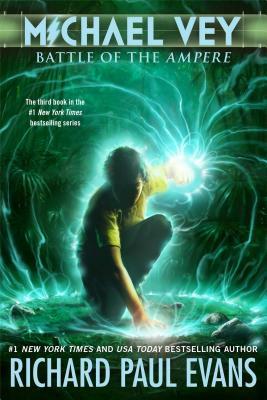
Michael Vey: Battle of the Ampere (Richard Paul Evans, 2013; Michael Vey #3). …It’s a headache to try and recap the first two books, much less in three sentences. I really like this series, the third book not being an exception. Check it out.
Conversations in Black: On Power, Politics and Leadership (Ed Gordon, 2020). Award-winning journalist and example of Black excellence Ed Gordon hopped in Zoom calls with other examples of Black excellence like Stacey Abrams, Michael Eric Dyson, Charlamagne tha God, and Alicia Garza to talk about the state of black America. Book #36 on my antiracism reading list.
Gentlehands (M.E. Kerr, 1978). Buddy Boyle gets into contact with his estranged grandfather when he starts dating wealthy Skye Pennington. It’s because of Skye’s connections that he learns a Jewish journalist is investigating Grandpa Trenker, suspecting he’s a Nazi war criminal nicknamed “Gentlehands” who fled Germany before he could be convicted. There’s no way the kindly old man who welcomes Buddy and Skye into his home could have done such atrocities…right?
The Bazaar of Bad Dreams: Stories (Stephen King, 2015). An anthology of stories written by America’s cousin who takes stories around the campfire way too seriously. For me, a highlight was “Drunken Fireworks,” the story that definitively proves Stephen King can make you bust out laughing as well as bust out screaming.
My Seneca Village (Marilyn Nelson, 2015). Poems from the fictional residents of Seneca Village, a multiracial community that stood on what is now Central Park in New York City.
Okay for Now (Gary D. Schmidt, 2011). One of my favorite books ever. Still great on the third read. That is all.
No More Christian Nice Guy (Paul Coughlin, 2005). Jesus wanted action, not passivity, darn it! Stop thinking that being a doormat is God’s plan for your life and be the man God called you to be. A little problematic, but Paul Coughlin had his heart in the right place.
The Gift: 12 Lessons to Save Your Life (Edith Eger, 2020). The 12 principles Hungarian-born therapist Edith Eger used to recover from her time as a prisoner in Auschwitz. Also, Eger wrote this book when she was 93 YEARS OLD.
Michael Vey: Hunt for Jade Dragon (Richard Paul Evans, 2014; Michael Vey #4). Michael and his friends book it to Taiwan, to rescue a Chinese child prodigy who has cracked the code to producing more electric children, before the Elgen can get to her. The first ever audiobook I listened to.
Erasure (Percival Everett, 2001). Thelonius “Monk” Ellison has watched five beautifully-composed novels flop at the same time other black authors won critical acclaim by writing stereotypical “ghetto” schlock. But when his sister’s murder preempts his mother’s declining mental faculties, Monk sees no choice but to write one of said schlocky “ghetto” novels under a pseudonym for the money. Cord Jefferson directed a film adaptation, American Fiction, released this year starring Jeffrey Wright as Monk.
White Tears/Brown Scars: How White Feminism Betrays Women of Color (Ruby Hamad, 2020). When white women cry, black and brown people die. Book #100 of 2023. Book #37 of my antiracism reading list.

The Lie Tree (Frances Hardinge, 2015). Faith Sunderly’s father, natural scientist Erasmus Sunderly, dies mysteriously while battling allegations of “discovering” hoax fossils. Among his papers, Faith finds his biggest discovery: a mysterious tree fed by lies, a tree with fruit that can show anyone who eats it the truth. With her family’s money running out and her father’s reputation in ruins, Faith has no choice but to feed the tree to get to the bottom of her father’s death.
Night Kites (M.E. Kerr, 1986). Erick Rudd struggles with two big revelations: that his best friend’s girl is more interested in him than his buddy Jack, and that the bug his older brother Pete caught overseas is the type that he won’t get better from.
End of Watch (Stephen King, 2016; Bill Hodges Trilogy #3). The blow to the head that put Brady Hartsfield in a coma also knocked loose psychic abilities. Using these powers, Brady frees himself from his coma, and he wants revenge on Bill Hodges.
On Boxing (Joyce Carol Oates, 1987). Essays on boxing.
What Came from the Stars (Gary D. Schmidt, 2012). Sixth grader Tommy Pepper opens his lunchbox and finds a beautiful necklace that lets him speak an alien language and make art that should be impossible. The necklace is the last remnant of the Valorim, an alien race on the verge of extinction. And their enemies really, really want that necklace.
DMZ, volume 3: Public Works (Brian Wood, 2007). A terribly uninteresting graphic novel. Maybe I would have liked it better if I’d read it from the beginning, but I doubt it. A very loose miniseries adaptation aired on Max.
New Kid (Jerry Craft, 2019; New Kid #1). Jordan Banks is the new kid at prestigious Riverdale Academy Day School. Jordan feels pulled between the two opposing forces of his Washington Heights neighborhood and his elite school, not helped by his school being full of microaggressions and his dad’s not-so-secret unhappiness about his son starting to spread his wings. This book’s a history maker, being the first ever graphic novel to win the Newbery Medal.
Charlie the Choo-Choo (Beryl Evans, aka Stephen King, 2016). A children’s book from the Dark Tower universe, made real. The whole time, I was expecting the talking train to eat children or be possessed by Satan, but no, it’s a conventional children’s story.
Michael Vey: Storm of Lightning (Richard Paul Evans, 2015; Michael Vey #5). The resistance has been compromised, and Elgen has bombed the Electroclan’s home base, where their families were, off the map. Michael doesn’t know what he’ll do as he sifts through the rubble. But he knows one thing: Hatch will pay.
Sabrina & Corina: Stories (Kali Fajardo-Anstine, 2019). A collection of stories, all from the POV of Latina and indigenous women from Colorado. A bit of a weird niche, but Kali Fajardo-Anstine is a Latina woman with indigenous ancestry from Colorado, so…

Infinitum (Tim Fielder, 2021). An African warlord is cursed with immortality. We follow him through the centuries, as he watches humanity rise and fall, and becomes the savior of humanity.
Ask a Manager: How to Navigate Clueless Colleagues, Lunch-Stealing Bosses, and the Rest of Your Life at Work (Alison Green, 2018). From lunch thieves to raises to coworkers casting spells, Alison Green, creator of the Ask a Manager website, has been asked it all. In this book expansion of her website’s concept, Alison Green answers some of the commonly asked questions.
Dear White Christians: For Those Still Longing for Racial Reconciliation (Jennifer Harvey, 2014; second edition released in 2020) A terribly boring case for the church giving out reparations. Book #38 on my antiracism reading list.
Hoops (Walter Dean Myers, 1981). Lonnie Jackson gets the opportunity of a lifetime when he joins a citywide basketball tournament representing Harlem. His basketball coach could’ve gone pro, but poor decisions wrecked his career before it could start. Can Cal’s experience and Lonnie’s gifts guide them through some powerful people really wanting Lonnie and his team to not make it?
Long Way Down (Jason Reynolds, 2017). Will Holloman’s older brother Shawn is dead, and The Rules say that Will should get even, not sad. But on the elevator ride down to hunt the guy who made his brother past tense, time slows to a crawl and the ghosts of Will’s loved ones flood the elevator. Easily one of my favorite books of this year.
The God of Small Things (Arundhati Roy, 1997). Observe an Indian family fall apart over the span of three decades. Well-written, but if you’re in a good mood, don’t read this book.
Martin de Porres: The Rose in the Desert (Gary D. Schmidt, 2012). The life story of Martin de Porres, the first black saint to come out of the Americas.
The Poet X (Elizabeth Acevedo, 2018). Xiomara Batista’s life is a mess, with a freakishly religious mother, a neglectful father, a closeted brother, and a lot of unwanted male attention. With a teacher’s encouragement, she turns her frustrations into slam poetry, and the Poet X is born. Won every award that a YA book can win, and earned those awards.
Class Act (Jerry Craft, 2020; New Kid #2). A new school year brings new struggles for Jordan Banks’ best friend Drew Ellis. The equally-fun sequel to the fun New Kid.
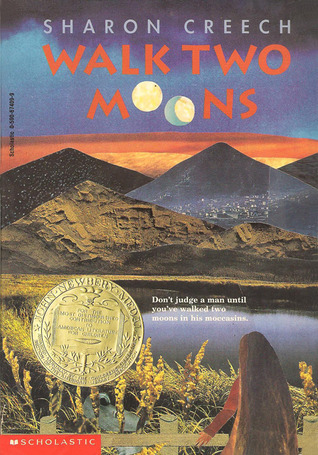
Walk Two Moons (Sharon Creech, 1994). Salamanca “Sal” Hiddle travels with her grandparents to see her mother, who left Sal and her husband and moved to Idaho a year earlier. On the way, she tells the story of her friend, Phoebe, whose mother also left her family, and she starts to realize a few things.
Chapters: My Growth as a Writer (Lois Duncan, 1982). The autobiography of Lois Duncan, author of acclaimed YA books like I Know What You Did Last Summer and Hotel for Dogs, in which she tells us how she got her start, how her life influenced her writing and vice versa. More engaging than I expected.
Michael Vey: Fall of Hades (Richard Paul Evans, 2016; Michael Vey #6). The Elgen have made the island nation of Tuvalu their kingdom, and plan to use it as their staging ground for world domination. With no choice, Michael and the Electroclan head straight into enemy territory to put a stop to the Elgen’s conquest. This book has an…explosive ending.
My Heart Underwater (Laurel Flores Fantauzzo, 2020). After her mother catches her kissing a female teacher, Corazón Tagubio is shipped overseas to the Philippines to meet the brother she’s only seen on a computer screen. A change of culture is what she needs.
American Gods, volume 1: Shadows (Neil Gaiman, 2018; adapted from Gaiman’s American Gods, 2001). Shadow Moon ends a three-year stint only to learn his wife died cheating on him with his best friend. A strange man, Mr. Wednesday, recruits Shadow as a driver for his mysterious agenda. Part 1 of a 3-volume graphic novel adaptation of the American Gods novel.
White Awake: An Honest Look at What It Means to Be White (Daniel Hill, 2017). An offhand comment from a South Asian friend put Pastor Daniel Hill of Chicago’s River City Community Church in a tailspin about his identity as a white man. Out of that tailspin, he’s here to lay out a biblical case for antiracism and encourage other white Christians to fight through the discomfort and join him in the fight against white supremacy. Book #39 on my antiracism reading list.
The Defining Decade: Why Your Twenties Matter–and How to Make the Most of Them Now (Meg Jay, Ph.D., 2012). Your twenties are precious. Here are a few ways to not waste them.
Six Scary Stories (Elodie Harper, Manuela Saragosa, Paul Bassett Davies, Michael Button, Stuart Johnstone, and Neil Hudson, edited by Stephen King, 2016). When Stephen King released The Bazaar of Bad Dreams (see above) in the UK, he ran a sweepstakes, trying to find the best short scary story in the land of the Queen and colonization. One won, but five other felt too good not to acknowledge, so he made an anthology. Reader beware, you’re in for a scare…and I might be in for a cease-and-desist from R.L. Stine’s legal team.
Lincoln in the Bardo: a Novel (George Saunders, 2017). A year into the Civil War, Abraham Lincoln’s son Willie dies of typhoid. Unbeknownst to his grieving parents, Willie’s spirit lingers in the Bardo, Buddhism’s form of Purgatory, with dozens of other spirits who haven’t moved on yet. Unlike any other book I’ve ever read; that’s a positive.
And that’s all he read! Come back in a year or follow me @peachykeenebooks on Instagram to see me post book reviews in real time. Until next post!
 The Keene Chronicles