
Hey, remember last year when I gave concise summaries about all the books I read in 2021? If you don’t, here you go.
I’m here to do that again. No beating around the bush, here we go.
The Books I Read in 2022
Teen Frankenstein (Chandler Baker, 2016; High School Horror Story #1). Tor Frankenstein wants to be a Nobel Prize-winning scientist, but for now, she’s an overqualified high school student in small-town Texas. When she hits and kills a teenage boy with her car during a storm, she sees opportunity. After all, what bigger scientific achievement is there than raising the dead?
White Evangelical Racism: The Politics of Morality in America (Anthea Butler, 2021). As much as they deny it, white American Christians have been complicit in racism since America’s founding. Anthea Butler lays out how, from the days of the Founding Fathers to today. Book #16 on my antiracism reading list.
Salvation on Sand Mountain: Snake Handling and Redemption in Southern Appalachia (Dennis Covington, 1995). Glenn Summerford, head pastor of The Church of Jesus with Signs Following in rural Alabama, was charged with attempted murder for trying to kill his wife with poisonous snakes. Dennis Covington, a Southern-born journalist, traveled to Alabama to cover the story and the trial. Covington ended up being drawn into a bubble of religion unique to the American South: snake-handling.
The Girl Who Loved Tom Gordon (Stephen King, 1999). Trisha McFarland gets lost in the Maine woods while hiking with her mother and brother. Two things will keep her alive until she is found: her will to survive, and her Walkman, covering Tom Gordon, her favorite Red Sox player.
If These Wings Could Fly (Kyrie McCauley, 2020). Nothing makes sense in Leighton Barnes’s life: her father leaves her in constant fear of the gun on top of the fridge, her neighbors ignore the obvious signs of Mr. Barnes’ abuse, her house inexplicably repairs itself after her dad’s tantrums, and now her hometown is besieged by crows. As the number of crows grows, so does Leighton’s sense that something needs to change. In the running for one of my favorite books of this year.
The Tyrant’s Tomb (Rick Riordan, 2019; The Trials of Apollo #4). Death is a sobering reminder of the stakes for god-turned-mortal Apollo. A quest to stop Tarquin, the last king of Rome, becomes a race against time when Apollo is infected with a necromancy-powered infection.
Heatstroke: Nature in an Age of Global Warming (Anthony D. Barnosky, 2009). In 2006, a “pizzly,” a half-polar, half-grizzly bear, was discovered hundreds of miles south of the Arctic Circle. Ecologist Anthony D. Barnosky explains how this is the first sign of the havoc global warming will wreak. God, this book was creepy to read in 2022.
Rules of the Road (Joan Bauer, 1998; Rules of the Road Duology #1). Jenna Boller hides from her hectic home life using her job at Gladstone Shoes. Madeline, owner of the franchise, enlists her as a driver down to Texas for an important stockholders’ meeting. Jenna will learn about herself on the way.
Adulting: How to Become a Grown-Up in 468(ish) Easy Steps (Kelly Williams Brown, 2013). Are you a young adult with no clue how to do these “responsibility” and “living on your own” things? Kelly Williams Brown is here to help!
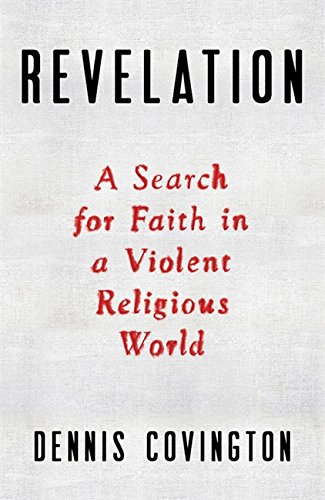
Revelation: A Search for Faith in a Violent Religious World (Dennis Covington, 2016). Dennis Covington went on a journey after hearing the story of Kayla Mueller’s abduction by ISIS. He wanted to know how people could cling to faith in places where faith motivates violence. In my humble opinion, he didn’t find his answer, and this whole book felt pointless.
When They Call You a Terrorist: A Black Lives Matter Memoir (Patrisse Khan-Cullors, 2018). Patrisse Khan-Cullors, along with Alicia Garza and Ayọ Tometi, founded the Black Lives Matter organization. But the organization’s story doesn’t start there. As her memoir, book #17 on my antiracism reading list, shows, it starts in a childhood rife with poverty, mass incarceration and racism.
The Outsiders (S.E. Hinton, 1967). Ponyboy and his friends, known as “Greasers,” have been at war with the “Socs,” their rich counterparts. for as long as anyone can remember. But when Ponyboy’s friend Johnny is forced to kill a Soc in self-defense, the long-term rivalry reaches a boil. Made into a movie in 1983 starring multiple future mega-stars like C. Thomas Howell, Rob Lowe, Ralph Macchio, Tom Cruise and Diane Lane.
Hearts in Atlantis (Stephen King, 1999). Five novellas detail the downfall of the Baby Boomer generation: “Low Men in Yellow Coats,” “Hearts in Atlantis,” “Blind Willie,” “Why We’re in Vietnam,” and “Heavenly Shades of Nights are Falling.” Boomer slander hits so much deeper coming from a Boomer’s mouth–er, typewriter. “Low Men in Yellow Coats” was adapted into a movie titled Hearts of Atlantis starring Anthony Hopkins and the late Anton Yelchin.
The Tower of Nero (Rick Riordan, 2020; The Trials of Apollo #5). Commodus and Caligula are dead, leaving the worst for last: Nero, the oldest and most dangerous emperor. Apollo takes the fight to him, but it doesn’t end there. He has to take on his worst enemy: the Python.
If: Trading Your If Only Regrets for God’s What If Possibilities (Mark Batterson, 2015). A lot of people are hung up on ‘if only,’ too scared to take the plunge. Mark Batterson encourages Christians to live ‘what if?’ lives.
Best Foot Forward (Joan Bauer, 2005; Rules of the Road Duology #2). The trip down to Texas didn’t stop all the problems in Gladstone Shoes. Now, with a scandal brewing, Jenna doesn’t know how her job will be saved. Maybe Tanner, the shoplifter working off charges, will be of help.
Frenchtown Summer (Robert Cormier, 1999). In 1938, Eugene is coming of age. His friends trek to where a woman was murdered, the river runs red and green with dyes from the comb factory, but none of that matters to Eugene. What matters is that this summer he will truly see his father.
Culture Making: Recovering Our Creative Calling (Andy Crouch, 2008). Christians have three patterns of interacting with culture: attacking it, impersonating it and consuming it. Pastor Andy Crouch proposes a new way: culture making.
A Peculiar Indifference: The Neglected Toll of Violence in Black America (Elliott Currie, 2020). “Black-on-black crime” is a go-to dismissal of black people criticizing American society. Elliott Currie, in turn, dismisses it as a racist myth, an abuse of real data simplified to fit a narrative. There are solutions to “black-on-black crime,” and in the 18th book on my antiracism reading list, Elliott Currie is here to lay it out.
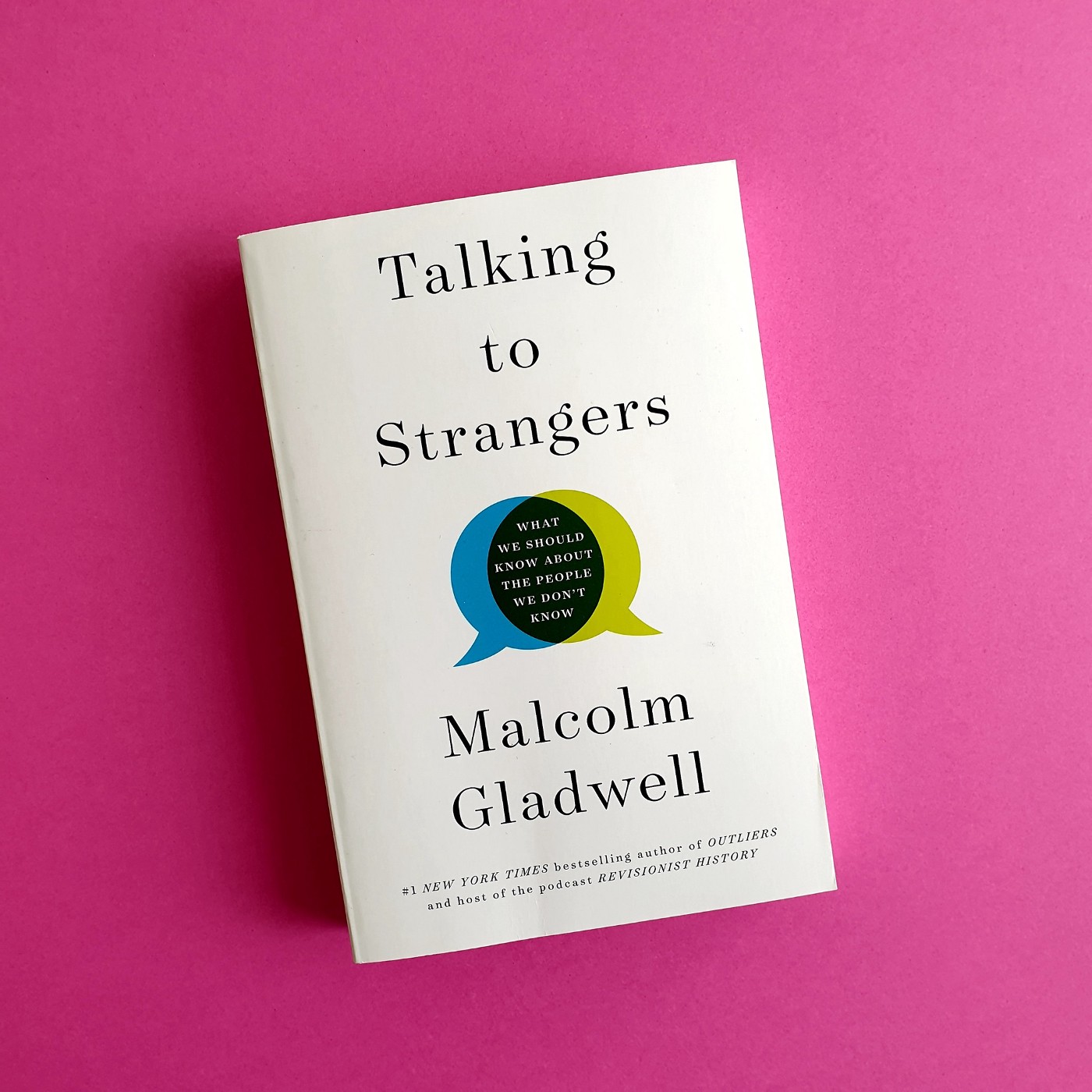
Talking to Strangers: What We Should Know About the People We Don’t Know (Malcolm Gladwell, 2019). From Sandra Bland’s suicide in custody beginning with a verbal spat with a police officer to Neville Chamberlain’s attempts at peace talks with Adolf Hitler going horribly wrong, a pattern emerges: it’s easy to misinterpret the intentions of strangers. Interesting theory, but needed more hard evidence.
That Was Then, This Is Now (S.E. Hinton, 1971). Mark and Bryon were the best of friends, and then they became stepbrothers after the death of Mark’s parents. But Mark is acting erratic and looking for trouble, and Bryon doesn’t know what to do. Made into a movie starring Emilio Estevez, Craig Sheffer and Morgan Freeman.
On Writing: A Memoir of the Craft (Stephen King, 2000). Part writing how-to, part-autobiography, all fun. A must-read for any writer. I like this book, if you can’t tell.
Daughter of the Deep (Rick Riordan, 2021). Ana Dakkar attends Harding-Pencroft Academy, an elite school that’s all about the water, pumping out the world’s best marine scientists, naval officers, navigators and underwater explorers. When an attack sinks the school into the ocean, Ana and her classmates learn they’re in a cold war with their rival school. The goal: acquire the most advanced weapon known to man.
Black Panther: A Nation Under Our Feet, volume 1 (Ta-Nehisi Coates, 2016). After attacks by both Dr. Doom and Thanos, the people of Wakanda form a terrorist group…called the People. T’Challa has his plate full, trying to stop the violence while wondering whether the People’s motive isn’t entirely wrong. Meanwhile, Shuri has adventures of her own as she lies in suspended animation.
Black Panther: A Nation Under Our Feet, volume 2 (Ta-Nehisi Coates, 2017). A lot of the same from volume 1 (crazy, innit?) but Luke Cage and Storm are in it.
White is a State of Mind (Melba Pattillo Beals, 1999). Melba Pattillo Beals was one of the first nine African-Americans to attend a desegregated school. All her sacrifices proved pointless when Arkansas Governor Orval Faubus closed down the Arkansas public school system. With nothing holding her down, Melba moved to California…and discovered herself.
Firekeeper’s Daughter (Angeline Boulley, 2021). Fractional Anishinaabe Daunis Fontaine is ready to go to college and get away from the community she’s never fully felt part of. But her best friend’s senseless murder plunges her into the middle of a criminal conspiracy. Set to be adapted into a Netflix miniseries, so be on the lookout for that.
White Fright: The Sexual Panic at the Heart of America’s Racist History (Jane Dailey, 2020). From Emmett Till’s supposed whistling at a white woman motivating his lynching to anti-miscegenation laws to Donald Trump demanding the death penalty for the Central Park Five, one thing is clear: brown babies terrify racists. In the 19th book on my antiracism reading list, Jane Dailey breaks down why in a history lesson that starts from the moment Pilgrim boats hit North American shores to now.
The Keeper: A Short Story Prequel to Forbidden (Ted Dekker & Tosca Lee, 2011). Two brothers live deep in the wilderness, until a man comes to them bearing amazing news. This “book” is 12 pages long, that’s all the summary you’ll get.
In Conclusion, Don’t Worry About It (Lauren Graham, 2018). Lauren Graham, star of Gilmore Girls and Parenthood, was asked to give the graduation speech at the high school she graduated from. She did. Then, she made a book out of it.

Rumble Fish (S.E. Hinton, 1975). Rusty-James idolizes his gangbanger of an older brother, the Motorcycle Boy. Unbeknownst to Rusty, though, the Motorcycle Boy has started reevaluating his life. Made into a movie starring Matt Dillon, Mickey Rourke, Nicolas Cage and Diane Lane.
Dreamcatcher (Stephen King, 2001). Four childhood friends on their annual hunting trip help a man lost in the woods. But when the man dies violently in the bathroom, the friends realize they’re witnessing the first wave of an alien invasion. Made into a god-awful movie starring Morgan Freeman, Damian Lewis and Timothy Olyphant.
A River Enchanted (Rebecca Ross, 2022; Elements of Cadence #1). Bastard Jack Tamerlaine left his home island of Cadence years ago to teach music on the mainland. But when children start to go missing, Jack’s childhood enemy calls him back to the island, knowing that music is the key to using the magic of Cadence. This was an enemies-to-lovers story where I didn’t really buy the enemies and only kinda bought the lovers; good fantasy elements, though.
Hugh Lofting (Gary D. Schmidt, 1992). The biography of Hugh Lofting, most famous for writing the Dr. Doolittle series. Gary Schmidt was one of my college professors, and I’m making a goal of reading as much of his bibliography as I can. Hugh Lofting is not his first book, but it’s his first book in print.
Abbott (Saladin Ahmed, 2018). In 1972, Elena Abbott makes her living exposing corruption and criminality through her small Detroit newspaper. When the police look the other way concerning a series of gruesome murders, Abbott decides to investigate and write an exposé. What she’ll discover is a supernatural conspiracy with her disappeared boyfriend at the center.
Love Wins: A Book About Heaven, Hell, and the Fate of Every Person Who Ever Lived (Rob Bell, 2011). What’s loving about Hell? How can we as Christians reconcile the idea of Hell with the idea of a loving God? In a book so controversial it effectively doubled as a resignation letter from the church he founded, Rob Bell grapples with that question.
The Meaning of Freedom: and Other Difficult Dialogues (Angela Y. Davis, 2012). Angela Davis, former Black Panther, political prisoner of the U.S. government, author and black icon, comes back with a series of speeches. Book #20 on the antiracism reading list.
Identity (Ted Dekker, 2012; Eyes Wide Open #1). Christy and Austin were thrown together through circumstance, and now that’s going to come to an end. Christy is trapped underground, and Austin gets himself trapped in the hospital when he discovers a dark secret. Part one of a four-“episode” series also collected into a book, Eyes Wide Open.
The Paris Apartment (Lucy Foley, 2022). Jess shows up to her half-brother Ben’s Paris apartment after stealing money from the crappy job she quit. But Ben’s apartment is empty, and someone in the apartment building is eager to keep Jess from finding out where he went. In the running for one of my favorite books of the year.
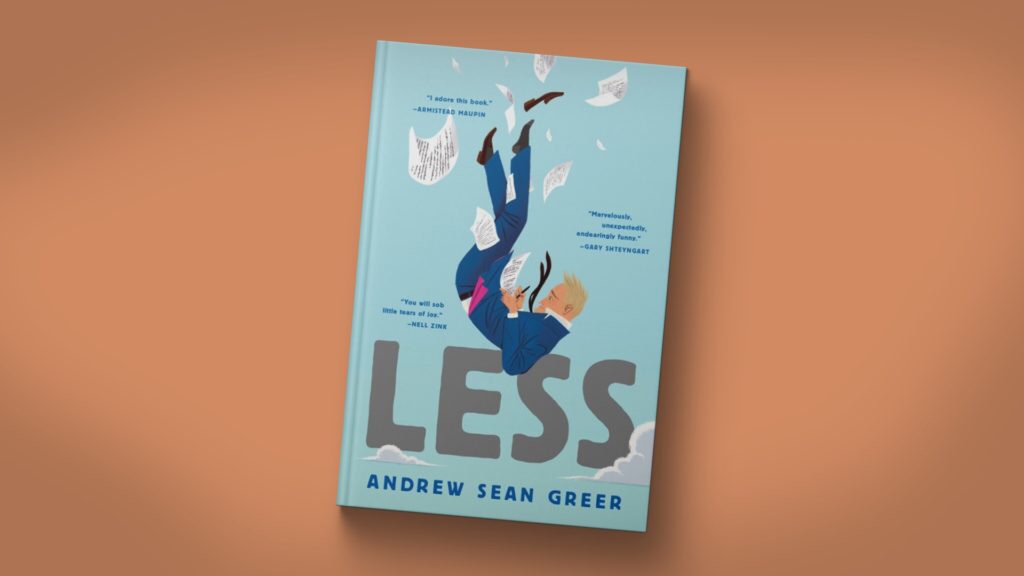
Less (Andrew Sean Greer, 2017; Arthur Less #1). An ex-boyfriend getting married is the latest disappointment in the disappointing life of struggling author Arthur Less. So he takes every overseas job offer he’s gotten over the years and travels the world. Won the Pulitzer Prize in 2018; a sequel, Less is Lost, released this year.
Tex (S.E. Hinton, 1979). Tex loves his horse, his best friend’s sister, and trouble. For his older brother, who’s trying to keep them afloat amidst their father’s abandonment, that’s a problem. Made into a movie starring Matt Dillon, Jim Metzler and Emilio Estévez.
Everything’s Eventual: 14 Dark Tales (Stephen King, 2002). Stephen King is here to scare your pants off with tales of psychic assassins and zombie drivers and fishing with the devil. (It’ll make sense when you read it.) One of King’s weaker outings, in my humble opinion, but still enjoyable.
Katherine Paterson (Gary D. Schmidt, 1994). The biography of Katherine Paterson, multiple-time Newbery Medal winner and author of books like Bridge to Terabithia and The Great Gilly Hopkins. Katherine Paterson was (and still is, knock on wood) alive to contribute to this biography. An improvement on Hugh Lofting.
Miracle’s Boys (Jacqueline Woodson, 2000). Tragedy follows the Bailey boys wherever they go: oldest Ty’ree is forced to watch after youngest Lafayette when their mother dies, and the both of them are dealing with middle child Charlie, fresh out of a juvenile sentence. I’m impartial to books about brothers, so I liked this one. Adapted into a miniseries by Nickelodeon.
Moonshine, volume 1 (Brian Azzarello, 2017). Up-and-coming Prohibition gangster Lou Pirlo is ordered to start a business deal with Appalachian moonshiners. But the full moon makes Lou realize he’s bitten off more than he can chew.
Jesus>Religion: Why He Is So Much Better Than Trying Harder, Doing More, and Being Good Enough (Jefferson Bethke, 2013). When he was a college student, Jefferson Bethke thundered onto the world stage with a video titled “Why I Hate Religion, But Love Jesus.” He takes to page to explain why he’s no longer religious, but how that’s made him fall deeper in love with Jesus.
Women, Race & Class (Angela Y. Davis, 1981). In her seminal work, Angela Y. Davis lays out how the intersection of class, gender and race has and still does affect society. I was not in the frame of mind to read this because it’s super depressing. Book #21 on my antiracism reading list.
Mirrors (Ted Dekker, 2012; Eyes Wide Open #2). In a matter of hours, Christy and Austin were institutionalized under fake names and diagnoses and left to rot in padded cells. With his sanity crumbling, Austin takes drastic measures to secure his freedom. Lower-key than its predecessor.
Water Walker–Episode 1 (Ted Dekker, 2014; The Outlaw Chronicles #2.1). Alice Ringwald is kidnapped from her foster home by a man who claims to be her father. FBI Agent Olivia Strauss, reeling from the death of her own daughter, takes a personal interest in Alice’s safe return. But unbeknownst to everyone, the childhood Alice can’t remember gave her power.
Whirligig (Paul Fleischman, 1998). After the humiliation of a lifetime, Brent Bishop tries to end it all and kills someone in the process. The victim’s mother has an unusual request as restitution, one that will send Brent on a cross-country trek. First to fulfill the request, then to find redemption.

Assume the Worst: The Graduation Speech You’ll Never Hear (Carl Hiaasen, 2018). Graduation speeches are supposed to be uplifting and inspiring, right? Not this one! Carl Hiaasen gives the graduation speech he’ll never be able to give, but everyone desperately needs to hear.
From a Buick 8 (Stephen King, 2002). For more than 20 years, a police precinct in rural Pennsylvania has kept a secret: a car with no engine, a steering wheel the size of a pizza pan, and a trunk that occasionally spews out horrifyingly eldritch creatures. When a recently deceased officer’s son starts interning at the precinct, he too will be drawn into the mystery of the Buick 8.
Are You in the House Alone? (Richard Peck, 1967). Gail Osburn’s nightmare starts with a disgusting note shoved in her locker. It’s her against the town when she realizes the son of the wealthiest family in town has made her the object of his obsession. Made into a TV movie.
The Sin Eater (Gary D. Schmidt, 1996). Two years after his mother’s tragic death, Cole and his father move in with Cole’s maternal grandparents. But while the change in environment is healing to Cole, his father sinks into a deep depression. This is Professor Schmidt’s debut novel; good first fictional outing.
The Land (Mildred D. Taylor, 2001; Logans #1). Paul-Edward Logan, a biracial slave boy raised along his white siblings, is too white for the blacks and too black for the whites. An impulsive decision forces him to flee the farm he’s grown up on. Striking out on his own, Paul-Edward will fight for his dream: to own land.
Feed (M.T. Anderson, 2002). Titus lives in a future run by the feed, a roided-out Internet accessed by microchip. On a spring break trip to the moon, a hacker shuts off Titus and his friends’ feeds. The silence Titus hears will change everything.
Moonshine, volume 2: Misery Train (Brian Azzarello, 2018). After running afoul of a clan of hillbilly werewolves, “Torpedo” Lou Pirlo is officially done with the criminal lifestyle. He boards a train with his lover, Delia, destination: far the f*ck away. But with lycanthropy running through his veins, running away isn’t an option…
Never Enough?: 3 Keys to Financial Commitment (Ron Blue, 2017). This is a book I need to read again, because I can’t remember much of it. I remember the advice was really good, though.
The Hacienda (Isabel Cañas, 2022). After the politically-motivated execution of her father, Beatriz has no choice but to marry Don Rodolfo Solórzano, a widowed political figure. But when strange happenings start to make Beatriz think Rodolfo’s deceased wife haunts the home, she has no one to turn to. Except a young priest with a lot of secrets to hide.
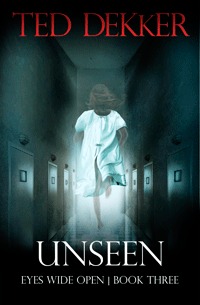
Unseen (Ted Dekker, 2013; Eyes Wide Open #3). A dead man lies at Austin’s feet, and Christy is tormented by her reflection. …that’s it.
Water Walker–Episode 2 (Ted Dekker, 2014: The Outlaw Chronicles #2.2). Five years after being kidnapped by her father, Alice Ringwald/Eden Lowenstein has fully embraced the beliefs of the commune her family’s a part of. But on her eighteenth birthday, a dream will change everything. Because Alice/Eden dreams of freedom from the commune’s strict rules.
Waking Up: How I Found My Faith by Losing It (Ted Dekker, 2015). Ted Dekker shares his journey away from fundamentalism and towards a faith built on love. He also encourages his readers to go on their own journey towards loving faith. The shortest book I’ve read this year.
Evicted: Poverty and Profit in the American City (Matthew Desmond, 2016). In this Pulitzer Prize-winning book, Princeton sociologist Matthew Desmond follows eight low-income tenants and the three landlords who house them in post-2008 stock market crash Milwaukee. Depressing, but fascinating. Book #22 on my antiracism reading list.
The Opposite of Loneliness: Essays and Stories (Marina Keegan, 2014). Marina Keegan was a Yale graduate at the top of her class, an accomplished writer and essayist who graduated with a job lined up at The New Yorker. Tragically, she was killed in a car accident five days after her graduation. In this swan song, her loved ones collect the best of her work in one of my favorite books of the year.
Faithful: Two Diehard Boston Red Sox Fans Chronicle the Historic 2004 Season (Stephen King & Stewart O’Nan, 2004). In 2004, the Boston Red Sox would break an 86-year choking streak by winning their first World Series since 1918. Authors and Sox fans Stephen King and Stewart O’Nan chronicle the whole season.
Father Figure (Richard Peck, 1978). After their mother’s death, Jim feels obligated to raise his younger brother, Byron. All kinds of feelings will come to the surface when their long-absent father comes to claim them.
United States Author Series: Robert Lawson (Gary D. Schmidt, 1997). The biography of Robert Lawson, a children’s author most famous for his Newbery Medal-winning book Rabbit Hill. It was a’ight.
Moonshine, volume 3: Rue Le Jour (Brian Azzarello, 2020). Delia turns to the supernatural to find a cure for Lou Pirlo’s lycanthropy. Which is a problem, because the shady characters she goes to for cures have plans of their own for Lou… Of the five volumes of Moonshine, I think this one is the best.
Recovering the Real Lost Gospel: Reclaiming the Gospel as Good News (Darrell L. Bock, 2010). A “getting back to Biblical basics” book. That’s all I can tell you. Not terribly memorable.
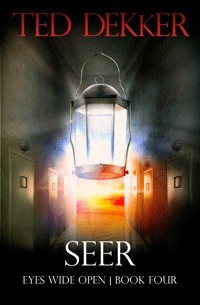
Seer (Ted Dekker, 2013; Eyes Wide Open #4). A man coming back from the dead has finally convinced Christy and Austin they are truly insane. But they will be saved by the most unexpected of heroes. With this finale, Ted Dekker ties the Eyes Wide Open series to his previous Circle and Paradise Chronicles series, and it’s smooth as heck.
Water Walker–Episode 3 (Ted Dekker, 2014; The Outlaw Chronicles #2.3). After an attempt at rebellion has violent consequences for one of her friends, Alice/Eden realizes with her whole heart: she wants out. Meanwhile, her mother prepares for the hardest thing: reining Eden back in. By hobbling her.
Singled Out: How Singles Are Stereotyped, Stigmatized, and Ignored, and Still Live Happily Ever After (Bella DePaulo, 2006). Happily single UCSB professor of psychology Bella DePaulo claps back at stereotypes of single people. The point still stands, but some of the examples she uses haven’t aged well. (Hello, real estate bubble burst!)
White Fragility: Why It’s So Hard for White People to Talk About Racism (Robin DiAngelo, 2018). A white person talks about white people’s reluctance to discuss racism. Book #23 on my antiracism reading list.
A Northern Light (Jennifer Donnelly, 2003). Mathilda “Mattie” Gokey has resigned herself to never living her dream of going to college and tries to be content working at an upstate New York hotel. But when a guest who gave her a stack of letters to burn washes up dead, Mattie starts to reevaluate.
The Colorado Kid (Stephen King, 2005). An intern at a struggling newspaper sits down with her mentors to hear of the one open story that haunts them. The Colorado Kid was a Colorado man found dead on an island off the coast of Maine, choked to death on a mouthful of steak. The man had no enemies, but was found thousands of miles away from his home state with only a Russian coin and a pack of cigarettes in his pocket.
Freakonomics: A Rogue Economist Explores the Hidden Side of Everything (Steven D. Levitt and Stephen J. Dubner, 2005). What’s more dangerous, a gun or a swimming pool? What do teachers and sumo wrestlers have in common? These are the type of questions economist Steven D. Levitt and journalist Stephen J. Dubner ask in Freakonomics.
No Reading Allowed: The WORST Read-Aloud Book Ever (Raj Haldar, 2020). Homophones: The Book. Super fun.
The Ghost Belonged to Me (Richard Peck, 1975; Blossom Culp #1). Alexander Arnsworth is sick of Blossom Culp, the oddball daughter of a local “psychic.” He naturally dismisses her when she says his family’s barn is haunted. Which makes it shocking when a ghost comes to Alexander, warning of a horrible accident that will happen if he doesn’t stop it.
The Geeks Shall Inherit the Earth: Popularity, Quirk Theory, and why Outsiders Thrive After High School (Alexandra Robbins, 2009). Journalist Alexandra Robbins follows seven people on the fringes of high school society. Using a combination of storytelling and psychology, she explains how the “outcasts” of yesterday’s teenage years often become the success stories of today.
William Bradford: Plymouth’s Faithful Pilgrim (Gary D. Schmidt, 1998). Many Pilgrims died in their early years in the future America. But the death toll would’ve been worse without the leadership of William Bradford. I appreciate this book because Prof. Schmidt doesn’t gloss over the ways the Pilgrims screwed over the Native Americans; A+ for being blunt about unsavory aspects of history.

Moonshine, volume 4: Angel’s Share (Brian Azzarello, 2020). With no cure for his lycanthropy and multiple people wanting his curse for their own ends, Lou Pirlo has given up. He hides out in a Cleveland shantytown, staying drunk around the clock in a feeble attempt to neuter the beast inside of him. Bad gets worse when Cleveland police call in the big guns to capture the savage serial killer tearing apart their town: none other than FBI Agent Eliot Ness.
Meister Eckhart’s Book of the Heart: Meditations for the Restless Soul (Jon M. Sweeney and Mark S. Burrows, 2017). A book of religious poetry, based off the writings of 15th-century Christian mystic Meister Eckhart. I read this book on and off since about a week before the US closed down because of COVID. Felt good to finish.
The Cost of Discipleship (Dietrich Bonhoeffer, 1937). The magnum opus of Dietrich Bonhoeffer, a German pastor and theologian executed for his part in an assassination attempt against Adolf Hitler. Bonhoeffer paid for following Christ with his life, and I respect it. One of the easiest 5-star reviews I’ve ever given.
Doing It (Melvin Burgess, 2003). An extremely gross book about three British teenage boys doing extremely stupid things in the name of getting their rocks off. One of the easiest 1-star reviews I’ve ever given.
Water Walker–Episode 4 (Ted Dekker, 2014). Eden’s mother tries to find the nerve to follow Zeke’s orders. Meanwhile, Eden dreams of freedom. Good conclusion, but I was definitely feeling Ted Dekker fatigue by the time I finished this.
Glittering Vices: A New Look at the Seven Deadly Sins and Their Remedies (Rebecca Konyndyk DeYoung, 2009). The concept of the seven deadly sins was made popular through the likes of Se7en and Fullmetal Alchemist. Philosophy professor Rebecca Konyndyk DeYoung examines their biblical origins and what they meant before pop culture got its hands on the idea.
Nice Racism: How Progressive White People Perpetuate Racial Harm (Robin DiAngelo, 2021). In the sequel to White Fragility, Dr. DiAngelo focuses in on the inadvertent racism of progressive white people. If you expect long-winded explanations of Robin DiAngelo’s writing, stop expecting it; what you see is what you get. Book #24 on my antiracism reading list.
Cell (Stephen King, 2006). Graphic novelist Clay Riddell is on the street when everyone using a cell phone loses their mind. He and a small band of survivors watch in real time as the infected evolve. And they realize this is no zombie apocalypse.
The Boy, the Mole, the Fox and the Horse (Charlie Mackesy, 2019). Four friends–a human boy, a cake-loving mole, a fox, and a horse–wander through a forest and ponder life in a book that’s as relevant to a 1-year-old as it is to a 100-year-old. Easily one of my favorite books of this year, and a book everyone should read.
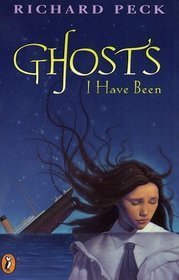
Ghosts I Have Been (Richard Peck, 1977; Blossom Culp #2). When small-town outcast Blossom Culp told her classmates she’d inherited her mother’s supposed psychic powers, she was yanking their chain. Meaning she’s as surprised as everyone else when she actually does start having visions. Visions of what happened to some of the people on board the freshly sunk Titanic.
Mortal Engines (Phillip Roth, 2001; Mortal Engines Quartet #1). In the future, London is one of the biggest Traction Cities, cities on giant wheels who roll around the world gobbling up smaller towns for resources. Tom Natsworthy’s quiet life in London are upheaved when he and a would-be assassin are left behind. The two of them are forced to rely on one another to get back to London, and to stop the conspiracy unfolding beneath London’s streets.
Saint Ciaran: The Tale of a Saint of Ireland (Gary D. Schmidt, 2000). Ciaran’s mother swallowed a star while he was in her belly, as if to signal how special her child will be. And Ciaran will be special. His extraordinary talent with animals will be nothing compared to what he’ll be remembered for: bringing Christianity to Ireland.
Moonshine, volume 5: The Well (Brian Azzarello, 2021). Prohibition is ending, and time is running out for Lou Pirlo. With nothing left to lose, he decides to leave this world and take the Holt clan and the New York mob with him. A satisfying conclusion.
Tattoos on the Heart: The Power of Boundless Compassion (Father Gregory Boyle, 2009). Gregory Boyle runs Homeboy Industries, a gang-intervention program located in the most gang-run neighborhoods of Los Angeles. In the twenty years he’s run the program, he’s seen triumph and tragedy, and he’s here to share it all. One of my favorite books of this year.
Vainglory: The Forgotten Vice (Rebecca Konyndyk DeYoung, 2014). We all know the Seven Deadly Sins, but they were originally Eight Deadly Sins. And, in this quasi-sequel to Glittering Vices, Rebecca Konyndyk DeYoung names the eighth sin–vainglory–and explores how prevalent it is in the modern age.
Narrative of the Life of Frederick Douglass (Frederick Douglass, 1845). The life of freed slave Frederick Douglass, told narratively. Book #25 on my antiracism reading list.
Lisey’s Story (Stephen King, 2006). Only after two years of mourning has Lisey Landon started to clear out the study of her late husband, bestselling novelist Scott Landon. Digging through his papers and mementos will do more than deepen the ache in Lisey’s broken heart. It will open a cavalcade of memories, and send Lisey on a scavenger hunt from beyond the grave.
The Subtle Art of Not Giving a F*ck: A Counterintuitive Approach to Living a Good Life (Mark Manson, 2016). Stop caring what other people think, and your life will improve. That’s the crux of Mark Manson’s argument in this gleefully irreverent self-help book.
You & You & You (Per Nilsson, 1998 in its original Swedish, translated to English in 2005). A strange boy named Anon finding a lost wallet sets a chain of events in motion. The chain will end with the lifelong friendship of Anon, Zara, the wallet’s owner whose picture-perfect relationship is starting to fall apart, and Nils, a nihilistic young man who comes alive through a chance encounter with Zara. A fantastic book and one of my favorite books of this year, that was absolutely robbed by the 7-year gap between its publication and its English translation.
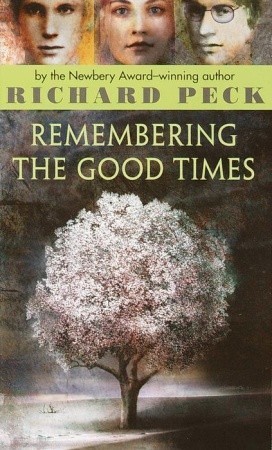
Remembering the Good Times (Richard Peck, 1985). Buck, Kate and Trav were the best of friends. Which makes Trav’s decision to take his own life that more devastating. Book #100 of this year.
Predator’s Gold (Philip Reeve, 2003; Mortal Engines Quartet #2). With London now an uninhabitable husk, Tom and Hester travel the world, eventually landing on the Traction City of Anchorage. Anchorage is no London: plague has devastated the population, there are rumors of the town being haunted, and the City is headed for the dead continent of North America in a desperate push for resources. The new locale will test Tom and Hester’s relationship.
Anson’s Way (Gary D. Schmidt, 1999). As the son of a top brass English general, Anson Granville Stapylton is happy to join the Staffordshire Fencibles, the occupying British force in Ireland. Then he watches as a farmer is gunned down over a horse. And he starts to wonder who’s the good guy and who’s the bad in the conflict between the British and the Irish.
Blaze (Stephen King, writing under his Richard Bachman alias, 2007). Clayton “Blaze” Blaisdell, Jr. was doomed to a bad life, handicapped by his abusive father at a young age and further abused at a private school for troubled boys. The mentally handicapped boy becomes a handicapped man, who kidnaps a baby heir to millions with the intent of ransoming the child. Tragically, his plans will go off the rails.
Tyrell (Coe Booth, 2006; Tyrell Duology #1). Tyrell Green’s father is in jail, his mother is unwilling to act like a parent, his brother is in danger of being put in foster care, and his home is a roach-infested motel room. The only good thing in his life is his girlfriend, and he doesn’t even feel good enough for her. With nothing left to lose, Tyrell throws together a plan to get his family back on his feet.
Everything Is Possible: Finding the Faith and Courage to Follow Your Dreams (Jen Bricker, 2016). Jen Bricker, an aerialist, author and public speaker who’s performed for the likes of Britney Spears, could have been a figure to pity rather than admire. She was born without legs and given up for adoption by her biological parents. But through the love and encouragement of her parents, she learned: everything is possible.
A Tale of Two Cities (Charles Dickens, 1859). One of the most overrated books ever written.
The Souls of Black Folk (W.E.B. DuBois, 1903). “How does it feel to be a problem?” This iconic question begins W.E.B. DuBois’ musings on being an African-American in early 1900s America. Book #26 on my antiracist reading list.
Becoming (Michelle Obama, 2018). Michelle Obama tells all: about her childhood growing up in Chicago, her struggles as a black woman in law, and most importantly, what happened when she met and married a fellow lawyer with a funny name… This book is surprisingly good relationship advice. Michelle talks a lot about the struggles of two busy people in a relationship, and even if you weren’t an Obama supporter, I think this book is worth reading purely for that.
Secrets of the Shopping Mall (Richard Peck, 1978). Barnie and Teresa hide out in a local mall from a gang. Little do they know they’re not the only people hiding away in the mall. I like Richard Peck, but this book was not it, chief.
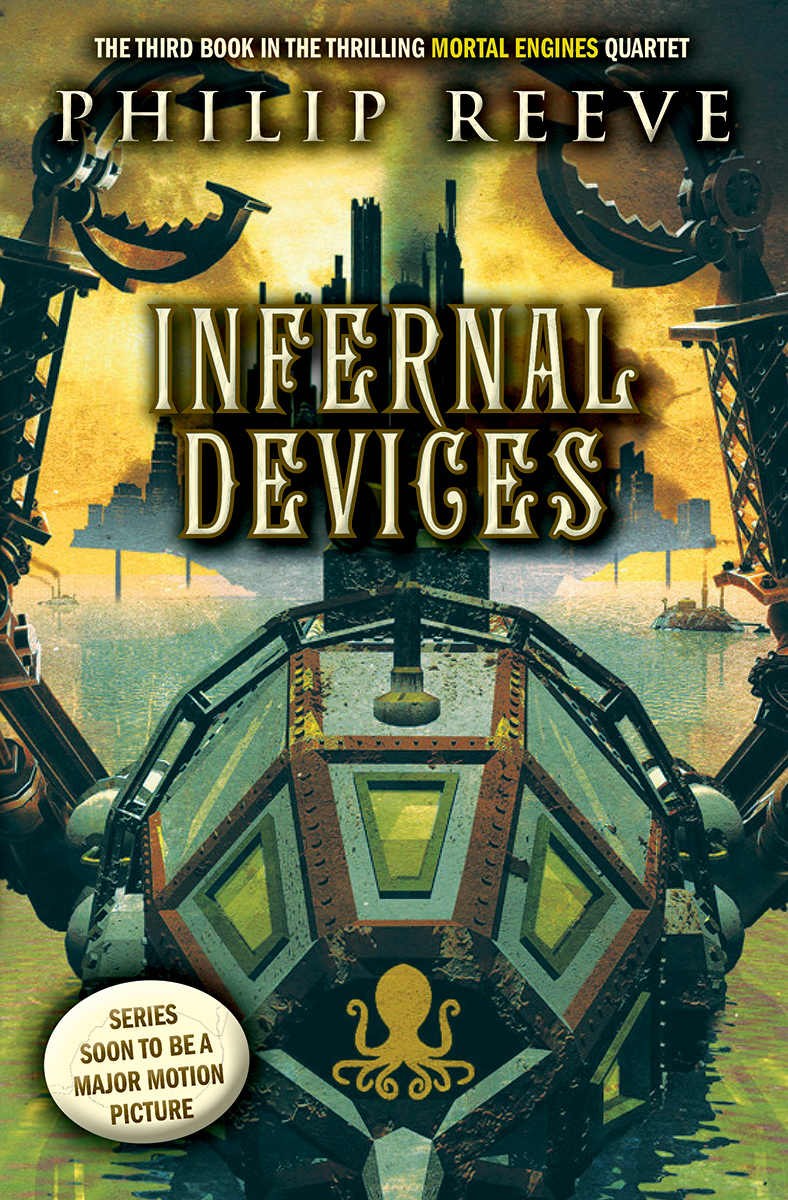
Infernal Devices (Philip Roth, 2005; Mortal Engines Quartet #3). Wren Natsworthy has grown up listening to the epic tales of her parents, which makes her own life on the decommissioned Traction City of Anchorage that much more boring. One day, a pirate washes up on Anchorage’s shores offering Wren a life of adventure if she can get him something deep in the heart of Anchorage. Wren’s theft will drag her parents back into the adventuring lifestyle they left behind and will drag all three into the middle of a war.
Edging the Boundaries of Children’s Literature (Gary D. Schmidt and Carol J. Winters, 2001). A textbook about children’s literature. By his own admission in an email, Prof. Schmidt doesn’t think it’s very good. I disagree, but do think it’s a niche book.
Batman, volume 6: Graveyard Shift (Scott Snyder, James Tynion IV, Marguerite Bennett, and Gerry Duggan, 2015). An anthology of Batman stories. Pretty fun.
Moon Knight: Black, White and Blood #1 (Jonathan Hickman, Marc Guggenheim, and Murewa Ayodele, 2022). An anthology of Moon Knight stories. …eh.
Bronxwood (Coe Booth, 2011; Tyrell Duology #2). Tyrell’s father being released from jail further destabilizes his unstable life. With his brother in foster care, his dad trying to force him back under his roof, and his drug-dealing roommates trying to get him in on their lifestyle, Tyrell’s back is against a wall. A worthy sequel.
Jane Eyre (Charlotte Brontë, 1847). This classic tale follows orphan Jane Eyre from her childhood in a loveless foster home to her adulthood taking up with the wealthy Mr. Rochester. Their budding romance will be torn apart by the most bizarre of secrets. Eh, you can’t spoil a 175-year-old book: Rochester’s married, but keeps his wife locked in the attic.
After the First Death (Robert Cormier, 1979). Terrorists of unknown origin take a school bus bound for a summer camp hostage. No one will leave unscathed. Fantastically-written, but not to be read by the faint of heart.
Great Expectations (Charles Dickens, 1860). Poor orphan Pip dreams of being a high-class gentleman. He gets his chance through a rich patron, and discovers moving up the social ladder ain’t all it’s cracked up to be. Better than A Tale of Two Cities, but that’s an instance of the bar being in hell.
An Indigenous Peoples’ History of the United States (Roxanne Dunbar-Ortiz, 2014; Revisioning American History #3). The history of the United States, told from an indigenous perspective. …f*ck Andrew Jackson.
Duma Key (Stephen King, 2008). After a near-fatal accident that costs him an arm, Edgar Freemantle leaves his Minnesota construction business in favor of an isolated neighborhood in Duma Key, Florida. He starts drawing again, something he hasn’t done since he was a kid, and his art draws him into a nearly century-old mystery.
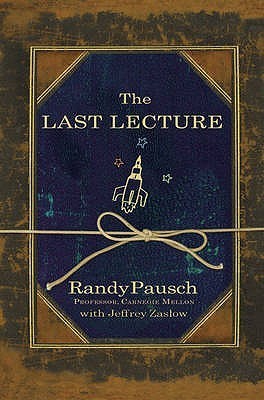
The Last Lecture (Randy Pausch, 2008). When nearly a dozen pancreatic tumors reduced Carnegie Mellon University computer science professor Randy Pausch’s life down to a few months, his priorities changed. After his death, his kids would have no father, and his students would lose a beloved professor. So, for the sake of his family and his students, he gave one last lecture and made it into one of the few books that has made me cry.
A Chance in the World: An Orphan Boy, a Mysterious Past, and How He Found a Place Called Home (Steve Pemberton, 2012). The story of Steve Pemberton’s childhood as a foster child in a nightmarishly abusive home, how he escaped, and how he eventually found his family.
A Darkling Plain (Philip Reeve, 2006; Mortal Engines Quartet #4). After Hester’s exit, Tom and Wren Natsworthy head back to the ruins of Tom’s native London. There, they discover a secret that could end Traction Cities once and for all, and at the right time. Because far away, a child carries the secret to a long-forgotten, war-ending weapon.
Glory in the Margins: Sunday Poems (Nikki Grimes, 2021). Some good religious poetry. …that’s it.
Straw Into Gold (Gary D. Schmidt, 2001). On his first day away from his countryside home, Tousle is the only person to speak against the king’s order to execute his prisoners. So the king orders Tousle and Innes, a blinded prisoner, to solve a riddle that has haunted the king for years in seven days’ time, or it’s their and the prisoners’ lives. They’ll find more than the answer to the riddle.
The Thief (Megan Whalen Turner, 1996; The Queen’s Thief #1). Gen claimed to the wrong person that he could steal anything from anyone, and sits in a jail cell as a result. But then the king springs him from prison, with orders to steal an artifact that could change the balance of power between the countries of Attolia and Sounis. A terribly boring first half, followed by a better second half.
Zeal Without Burnout: Seven Keys to a Lifelong Ministry of Sustainable Sacrifice (Christopher Ash, 2016). How to be a minister and stay sane: the book. I’m not a minister, but am in a similarly high-stress job, so still relevant.
Fun Home: A Family Tragicomic (Alison Bechdel, 2006). In this graphic memoir, Alison Bechdel recounts how finding out after her father’s death that he was gay cast her already-unhappy childhood in a whole new light. Adapted into a Tony Award-winning play.
And that’s all he read. If you want to see longer reviews of what I read in real time, follow my bookstagram @peachykeenebooks.
Happy new year to all, and hope to see you back here.
 The Keene Chronicles