
In 2021, a lot of things happened. But there was only one thing that happened more than a hundred times: I finished a book.
Yep. I read more than a hundred books.
Some people suggested I make a blog post out of this, and I like the idea. However, I’d like this to be a post you can finish in one day, so each book’s summary will be three sentences or less. So here we go.
The Books I Read in 2021
Children of Blood and Bone (Tomi Adeyemi, 2018; Legacies of Orisha #1). Set in a West African-inspired kingdom where different tribes have different powers, but are ruled by an unpowered king with an iron fist. After her village is attacked by the king’s forces, diviner Zélie, her brother Tzain and the king’s rebellious daughter go on the run, hoping to awaken a new generation of diviners. Think Avatar: The Last Airbender written by Afrofuturists.
The Color of Compromise: The Truth About the American Church’s Complicity in Racism (Jemar Tisby, 2019). A black historian combs through American history and maps out how the American church has been complicit in racist institutions. Book #1 of my antiracism reading list. Depressing, but very informative.
The Son of Neptune (Rick Riordan, 2011; The Heroes of Olympus #2). Percy Jackson can only remember his name and a mysterious beautiful girl. Maybe the camp he’s chased into can help him remember the rest of his life. Book #2 in the sequel series to Percy Jackson and the Olympians; I read book #1 in 2020.
The Tommyknockers (Stephen King, 1987). A woman unearths an alien spacecraft. Things go badly from there. The first Stephen King book of the year.
The Comic Book Heroes from the Silver Age to the Present (Gerard Jones and Will Jacobs, 1985). Terribly boring book of comic book history. If you want to learn about comic books, don’t read this.
Have Black Lives Ever Mattered? (Mumia Abu-Jamal, 2017) An incarcerated Black Panther writes about race. Book #2 of my antiracism reading list.
In the Country of Last Things (Paul Auster, 1987). Anna Blume looks for her brother in a city with no government, no laws, and a lot of people doing weird stuff because there’s no government and no law. It’s…not easy. Very creative in its depiction of total anarchy.
The Mark of Athena (Rick Riordan, 2012; The Heroes of Olympus #3). Greek and Roman demigods must work together to keep Gaia, mother of the gods, from waking. It’ll be easier when evil spirits aren’t possessing them and engaging in friendly fire. This was my second time reading this; the first time, I read it in one day.
Alienated America: Why Some Places Thrive While Other Places Collapse (Timothy Carney, 2019). How is it a New York businessman overwhelmingly won rural voting districts? Tim Carney has a possible answer: the breakdown of communities. Political, but not partisan.
Jesus and the Disinherited (Howard Thurman, 1949). White racists have yanked the healing power of Christianity from the hands of marginalized people, so said black theologian Howard Thurman in 1949. He also said how marginalized people can take back that healing power. Retroactively added to the antiracism reading list, so #3.
Caring for Words in a Culture of Lies (Marilyn Chandler McEntyre, 2009). An author, professor and linguist talks about how the beauty of language can be preserved in a world that wants to misuse words every way they can be misused. Originally presented as the 2004 Stone Lectures, a series of speeches that are tradition at Princeton Theological Seminary.
I Know Why the Caged Bird Sings (Maya Angelou, 1969). The first in a series of memoirs, Maya Angelou details her early life in the Deep South, up to the birth of her son. Book #4 on the antiracism reading list. RIP Maya Angelou.
Maya Angelou’s I Know Why the Caged Bird Sings: A Casebook (various authors, 1999). An anthology of academic essays discussing I Know Why the Caged Bird Sings. Inferior to Maya Angelou in every way. I wouldn’t have read it had I not been reading IKWTCBS for a class.
Thinner (Stephen King, writing under his Richard Bachman pen name, 1984). A lawyer is cursed to lose weight by a Gypsy after killing the Gypsy’s daughter in a hit-and-run. Way more intense than it sounds. Stephen King book #2 of the year, and the first Bachman Book of the year.
The Water Dancer (Ta-Nehisi Coates, 2019). Surviving an accident that kills his half-brother awakens a power in slave boy Hiram Walker. He’ll use it to run himself and others to freedom. Good story, beautiful prose, meh ending.
The Last Report on the Miracles at Little No Horse (Louise Erdrich, 2001; Love Medicine series #6). On an Ojibwe reservation in the middle of nowhere, 100-year-old Father Damien tries to have Pauline Puyat, an abrasive Ojibwe Catholic, canonized. Oh, and Father Damien is a woman who has been disguised as a man for over 80 years. Yeah, this book was weird.
Flash Burnout (L.K. Madigan, 2009). Blake’s first relationship is complicated by his friend’s transient mother coming back on the radar. One really stupid plot development late in the game knocked this from a 9/10 to a 5 or a 6. RIP L.K. Madigan.
The House of Hades (Rick Riordan, 2013; The Heroes of Olympus #4). As above, so below: Jason, Leo, Piper, Frank and Hazel race to open the Doors of Death to free Percy and Annabeth from Tartarus, while Percy and Annabeth fight their way through Tartarus to meet their friends at the Doors of Death. Like its predecessor, this is my second read, and it was read in one day the first time. (Middle school Christmases were absolutely lit.)
The Poet X (Elizabeth Acevedo, 2018). Xiomara Batista concentrates everything frustrating in her life–her strict mother, her semi-closeted brother, her Afro-Latina heritage, the Catholicism she’s not sure she believes, and the first boy who’s ever liked her for her–into slam poetry. Won about every award a young adult novel can win.
Motherhood So White: A Memoir of Race, Gender, and Parenting in America (Nefertiti Austin, 2019). Nefertiti Austin found out firsthand the challenges a single black woman faces adopting. Tied with Children of Blood and Bone for the Book Written by the Author with the Coolest Name Award. Book #5 on the antiracism reading list.
Daring Greatly: How the Courage to Be Vulnerable Transforms the Way We Live, Love, Parent, and Lead (Brené Brown, 2012). Shame sucks. No, sucks is too weak a word; shame inhibits us from being our best us. Adapted into the Netflix documentary The Call to Courage, so says Google.
To Drink from the Silver Cup: From Faith Through Exile and Beyond (Anna Redsand, 2016). A missionary kid chronicles her faith journey after being forced out of the Christian Reformed Church because of her lesbianism. That’s the paragraph.
The Eyes of the Dragon (Stephen King, published in limited capacity in 1984, republished in 1987). The kingdom of Delain experiences a succession crisis when King Roland dies under mysterious circumstances and all evidence points to Crown Prince Peter. Flagg, the king’s adviser, totally had nothing to do with it, guys. Stephen King book #3 of the year.
The Blood of Olympus (Rick Riordan, 2014; The Heroes of Olympus #5). Greek-Roman civil war is near; Gaia’s awakening is nearer. There are seven chances to stop both and seven to make them inevitable, and their names are Percy, Annabeth, Jason, Piper, Leo, Frank and Hazel. After finishing this, I decided a reread of Riordan’s other series were in order.
Soul Keeping: Caring for the Most Important Part of You (John Ortberg, 2014). The importance of soul care, as imparted to John Ortberg by the late Dallas Willard as he dies of cancer. If I had a nickel for every book I read this year where the premise was ‘dying man imparts life wisdom to the author,’ I’d have two nickels, which is not a lot, but it is weird that it happened twice.
Woman at Point Zero (Nawal El Saadawi, 1975 [Saadawi’s native Arabic], 1984 [English]). Nawal El Saadawi makes a novel out of the final interview of Firdaus, a prostitute on death row for murdering her pimp. Perhaps the most depressing book I have ever read. Not for the faint of heart, both because it’s unbelievably depressing and its brutally realistic depictions of rape and genital mutilation.
Educated (Tara Westover, 2018). Tara Westover was raised in the sticks of Idaho by survivalist Mormon parents counting down to the end of the world. How did a girl who’d never stepped in a school building and didn’t know the Holocaust happened end up getting her Ph.D. from Cambridge? You’ll have to read to find out.
The Freak Observer (Blythe Woolston, 2010). In less than a year, the genetic disease that made Loa Sollilja’s sister Asta biologically 8 but physically 1 killed her and her best friend was killed in a car accident. Whether or not Loa and her family will survive their tragedies seems as random as the concepts Loa learns in her physics class. This one was a’ight.
Cajas de Carton: Relatos de la vida peregrina de uno niño campesino (Francisco Jiménez, 1997). Panchito’s family crosses the border into California in the hopes of a better life. It ain’t easy. Translated as The Circuit: Stories from the Life of a Migrant Child.
Tuesdays with Morrie: An Old Man, a Young Man, and Life’s Greatest Lesson (Mitch Albom, 1997). Morrie Schwartz, Mitch Albom’s professor at Brandeis University, muses on life as he slowly succumbs to ALS. Really beautiful. My other ‘dying man imparts wisdom on author’ nickel.
The Fire Next Time (James Baldwin, 1963). The book that convinced me Ta-Nehisi Coates is James Baldwin reincarnated. Seriously, read James Baldwin and Ta-Nehisi Coates back-to-back; it’s creepy how similar the two are. Book #6 on the antiracism reading list.
Hello Lighthouse (Sophie Blackall, 2018). A lighthouse keeper lives his life. It’s a children’s book, it doesn’t need to be complex. Gifted to a friend as the first book in her classroom library.
Academ’s Fury (Jim Butcher, 2005; Codex Alera #2). Book 2 of a series I’d started a few years prior and never finished. Set in a world where everyone has powers except the main character. (No, not My Hero Academia; if anything, MHA stole from Codex Alera.)
The Dark Half (Stephen King, 1989). Thad Beaumont’s writing career has been long overshadowed by the trashy crime novels of his pen name George Stark, so he “kills” the guy. It’s not that easy, because it’s a Stephen King story, so of course it’s not. Stephen King book #4 of the year.
The Red Pyramid (Rick Riordan, 2010; The Kane Chronicles #1). An explosion at a museum plunges siblings Sadie and Carter Kane into the world of Egyptian mythology. In the same world as, but set separately from, Percy Jackson and The Heroes of Olympus. Netflix plans on making a film trilogy out of the book trilogy; Netflix, do better than your predecessors.
Where Things Come Back (John Corey Whaley, 2011). In a matter of weeks, Cullen Witter’s life goes topsy-turvy: his cousin dies, his brother disappears, and the town goes stir-crazy over the sighting of an extinct bird. Half a world away, Benton Sage is rapidly realizing missionary life isn’t for him. The two young men’s life will cross over in the strangest of ways.
Deadline (Randy Alcorn, 1999; Ollie Chandler Series #1). Trumpianity trash written 17 years before Trump was in the White House. There is a plot; I will not summarize it. There are two sequels; I will not read them.
Blindspot: Hidden Biases of Good People (Anthony Greenwald and Mahzarin Banaji, 2013). People have biases. They have a lot of biases, most of which they don’t realize they hold. Book #7 on the antiracism reading list.
Cursor’s Fury (Jim Butcher, 2006; Codex Alera #3). War is brewing on two fronts: through an invasion by the Canim, Alera’s caninoid neighbors, and through a coup attempt on the part of High Lord Kalare. Tavi, the only person in Alera with no furies, joins the Legion in an attempt to stop the former. I love the fantasy genre, but man, it’s hard to summarize in three sentences.
Breaking the Marriage Idol: Reconstructing Our Cultural and Spiritual Norms (Kutter Callaway, 2018). Marriage has been put on a pedestal in the modern church. It’s important, but many important Biblical figures were single, so… Kutter Callaway offers potential solutions; you’ll have to read to figure out, and I’m definitely saying that because they’re that good and not because I don’t remember them.

Seraphina (Rachel Hartman, 2012; Seraphina #1). In the kingdom of Goredd, uneasy peace exists between humans and dragons…until the Crown Prince is murdered in a draconian manner, on the 40th anniversary of the human-dragon peace treaty, no less. Seraphina, a half-human half-dragon girl, looks for the culprit. Maybe the people who inhabit the garden she’s made in her mind can help.
Four Past Midnight (Stephen King, 1990). King’s second novella collection, consisting of four stories: “The Langoliers” (adapted into the terrible miniseries of the same name), “Secret Window, Secret Garden” (adapted into the film Secret Window), “The Library Policeman” and “The Sun Dog.” Stephen King book #5 of the year and collection #1 of the year. Trigger warning for “The Library Policeman:” it’s easily the most intense thing King has ever written; you’ll see why.
The Throne of Fire (Rick Riordan, 2011; The Kane Chronicles #2). Sadie and Carter Kane have a new mission: prevent Apophis, the Lord of Chaos, from escaping his prison. They need Ra, the Sun God and the one being Apophis fears, but he hasn’t been seen in centuries. Oh, and did I mention they have a few days to do this and are being pursued by the House of Life, the supreme authority of Egyptian magic?
The Purity Principle: God’s Safeguards for Life’s Dangerous Trails (Randy Alcorn, 2003). The book that reminded me Randy Alcorn is a terrible fiction writer, not a terrible writer. Short, sweet and to the point. One of several books that inspired “I’m Really, Really Single.”
How Does It Feel to be a Problem?: Being Young and Arab in America (Moustafa Bayoumi, 2008). At the turn of the 20th century, WEB DuBois asked black America, “How does it feel to be a problem?” In 2008, Moustafa Bayoumi asked the same question to seven young Arab-Americans. Book #8 on the antiracism reading list.
Captain’s Fury (Jim Butcher, 2007; Codex Alera #4). Tavi, still in disguise, has risen in the ranks of the legion. However, a bloodthirsty Senator and the continued Kalare rebellion threaten to blow his cover. You guys really need to read these books; three sentences don’t do them justice.
The Five Love Languages: Singles Edition: The Secret that Will Revolutionize Your Relationships (Gary Chapman, 2004). The five love languages, geared towards single people. That’s the paragraph. Actually, that’s not the paragraph: Gary Chapman’s gotta chill with the colons.
Shadow Scale (Rachel Hartman, 2015; Seraphina #2). War between humans and dragons is brewing. Seraphina can stop it, but only if she can gather all the residents of her mind garden and stave off a threat from her past. Huge step down from the original.
Needful Things (Stephen King, 1991). The store shows up in Castle Rock with no notice: Needful Things. The owner, Leland Gaunt, hands the customer what their heart desires for a low, low price: a little prank. Stephen King book #6 and one of his most underrated.
Charm & Strange (Stephanie Kuehn, 2013). Andrew Winston “Win” Winters has been shipped off to a remote boarding school after a family tragedy, and he doesn’t talk about it with anyone. A curious new student and Win’s roommate unwittingly stumble over Win’s dark secrets at an all-night party. In terms of how I received this book, it was a slow burn: I was ambivalent upon initially finishing it, but concluded after a few weeks that it was a really solid mystery/thriller with a fantastic twist.
The Serpent’s Shadow (Rick Riordan, 2012; The Kane Chronicles #3). So the Kane siblings have found Ra; unfortunately, Ra’s senile, and Apophis is days away from rising. There is one way to imprison Apophis without Ra’s help, but it could kill them if it doesn’t work and there’s no do-overs. So, typical week for a Rick Riordan protagonist.
Modern Manhood: Conversations About the Complicated World of Being a Good Man Today (Cleo Stiller, 2019). The feminist movement, as well as scandals like #MeToo and Trump’s Access Hollywood tape, have put manhood in question. Is there a way men can be men without someone having to suffer for it? Cleo Stiller tries to answer that question.
The Crossover (Kwame Alexander, 2014; The Crossover Series #1). A novel in verse that follows basketball prodigy Josh Bell as he navigates basketball, middle school drama, his father’s failing health, and new developments in his twin brother’s life. This and The Poet X convinced me that novels in verse are hot fire. There are talks of an adaptation on Disney+; that plus the Percy Jackson series might make me break my embargo on Disney+.
A Black Women’s History of the United States (Daina Ramey Berry and Kali Nicole Gross, 2020; Revisioning History series #5). American history as told through the black female lens. This is Captain Obvious speaking. Book #9 on the antiracism reading list.
Princeps’ Fury (Jim Butcher, 2008; Codex Alera #5). While the different Aleran factions have been butting heads, an invasive species called the Vord has been steadily taking over the land of Canim. Tavi leads an Aleran-Canim fleet to Canish shores in the hopes of taking back Canim. There’s one more book in the series, so you can guess how well that goes.
Tales of Conjure and the Color Line (Charles Waddell Chesnutt, 1899). An anthology of ten “conjure tales,” voodoo-infused legends. I thought they were entertaining.
Batman: Whatever Happened to the Caped Crusader? (Neil Gaiman, 2009) In a bizarre, contradictory version of Gotham City, the crimefighting lifestyle has finally caught up to Bruce Wayne. Each funeral attendee who speaks tells a different way that the Batman died. Clearly, things aren’t as they seem.
Green River Killer: A True Detective Story (Jeff Jensen, 2011). A fictionalized account of Jeff Jensen’s father, who was the lead investigator in the Green River Killer case. The book that convinced me to pick true crime back up after leaving it behind in high school.
Gerald’s Game (Stephen King, 1992). Kinky sex gone horribly wrong leaves Jesse Burlingame handcuffed to a bed in the middle of nowhere. With no one to help her, Jesse is forced to confront her worst memories. Stephen King book #7, one of his most visceral novels, adapted into a Netflix film of the same name, and the first in the “abused woman trilogy,” a loose trilogy in which battered women are the protagonists.
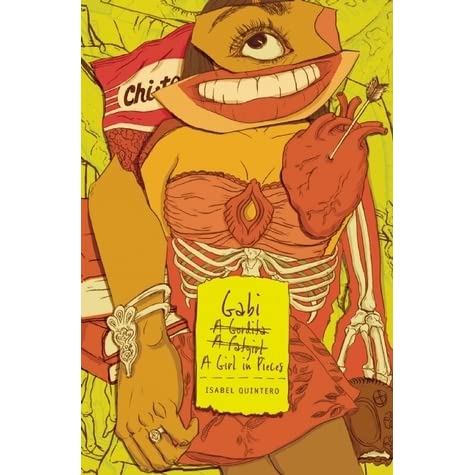
Gabi, a Girl in Pieces (Isabel Quintero, 2014). Senior year’s a crazy time for anyone, but it’s especially crazy for Gabi Hernandez: her best friend is pregnant, her other best friend has been thrown out after coming out, her strict mother is relentless, and her father’s drug addiction is out of control. It will all work out…won’t it? This reminded me a lot of The Poet X; I liked The Poet X.
The Sword of Summer (Rick Riordan, 2015; Magnus Chase and the Gods of Asgard #1). Magnus Chase has been homeless ever since wolves burst into his apartment and murdered his mother two years ago. Being roped into his mad uncle’s quest for a special sword will land Magnus square in the middle of the Norse pantheon. Set in the same universe as, and has loose ties to, Percy Jackson and the Olympians, The Kane Chronicles, and The Heroes of Olympus.
Simon vs. the Homo Sapiens Agenda (Becky Albertalli, 2015; Simonverse #1). Closeted teen Simon Spier has had a year-long online relationship with “Blue,” another guy in the closet. One of his classmates finds out and blackmails Simon into helping him get with Simon’s friend Abby. Becky Albertalli’s strength is her lovable characters, and they’re on full display.
Booked (Kwame Alexander, 2016; The Crossover Series #2). Standalone sequel to The Crossover that follows soccer prodigy Nick. Life off the field isn’t as nearly as easy: he’s a child of divorce, a duo of bullies are giving him hell, and he’s tongue-tied around his dream girl. But a boy’s gotta stand up for himself.
The Absolutely True Diary of a Part-Time Indian (Sherman Alexie, 2007). Junior is going to beat the odds: he’s a dirt-poor Spokane Indian who’s going to school off the rez. It won’t be easy: he sticks out like a sore thumb among his white classmates and is deemed a traitor by his neighbors, including his best friend. This book takes an honest look at problems in Native American society, like poverty, alcoholism, racism and generational trauma, and I appreciate that.
The Alcoholic (Jonathan Ames, 2008). An autobiographical novel in which Jonathan Ames chronicles the drunken life of a fictional Jonathan A. That’s the paragraph.
I’m Still Here: Black Dignity in a World Made for Whiteness (Austin Channing Brown, 2018). Austin Channing Brown’s parents gave her a unisex white-sounding name in the hope it would help her employment prospects. Upon learning this, it got her thinking: how do black people keep their dignity in a system that thrives on their subduing? Her answers are book #10 on my antiracism reading list.
First Lord’s Fury (Jim Butcher, 2009; Codex Alera #6). First Lord Gaius Sextus is dead, the Vord invasion of Alera is in high gear, and the newly crowned Gaius Octavius is in the middle of the ocean. Tavi’s gotta step up if he wants a kingdom to rule.
Orthodoxy (G.K. Chesterton, 1908). With his trademark irreverence, G.K. Chesterton explains why he believes in Christianity. G.K. Chesterton would get along well with Rob Bell, because they both take forever to get to the point and it’s easy to miss when they do. That being said, the last page of Orthodoxy is one of the most beautiful things I’ve ever read.
Dolores Claiborne (Stephen King, 1992). Housemaid Dolores Claiborne is arrested, suspected of murdering the elderly woman who employed her. Once she starts talking, however, she’s got a much crazier story for the police. Stephen King book #8 of the year, and the second book of the “abused woman trilogy.”
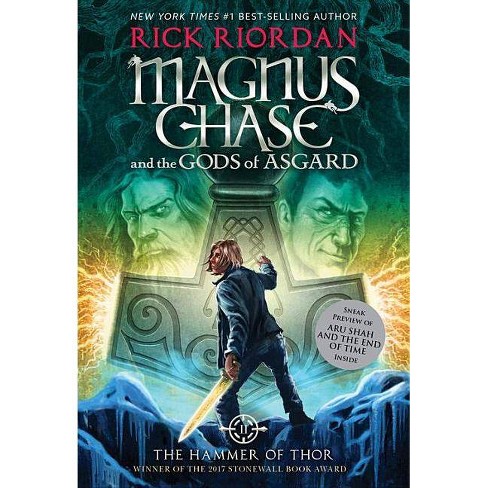
The Hammer of Thor (Rick Riordan, 2016; Magnus Chase and the Gods of Asgard #2). It’s bad enough that Thor’s hammer, the weapon that strikes fear in every monster on the World Tree, has been stolen. But the giants who have it will only give it back if Magnus’ friend Samirah will take a giant’s hand in marriage. It’s up to Magnus and Samirah’s genderfluid sibling Alex to reclaim Thor’s hammer before the ceremony.
The Upside of Unrequited (Becky Albertalli, 2017; Simonverse #2). Molly Peskin-Suso feels likes the last single woman on the planet: her twin sister’s in a new relationship, and the legalization of gay marriage means her moms can make official what’s existed for years. But things change fast. It’s a stretch to call this a sequel to Simon vs. the Homo Sapiens Agenda, it’s more of a spin-off.
Rebound (Kwame Alexander, 2018; The Crossover Series #3). Prequel to The Crossover that follows Josh Bell. One day he will be a world-renowned basketball player, for now he’s a confused 12-year-old who’s recently lost his father. A summer living with his grandparents will be the most important three months of his life.
Cuentos de Eva Luna (Isabel Allende, 1989). An anthology of stories told by Eva Luna, the protagonist of Allende’s novel of the same name. Completely in Spanish, so it took me a little longer than usual.
Batman Beyond: 10,000 Clowns (Adam Beechen, 2013). In a futuristic version of Gotham City, a teenager named Terry McGinnis has succeeded an elderly Bruce Wayne as Batman. Now Terry faces his greatest challenge: an army of Jokerz, acolytes of the Joker, and only one him. Based on the phenomenal ’90s cartoon.
Chokehold: Policing Black Men (Paul Butler, 2017) Paul Butler was once a prosecutor, bringing the hammer of justice down on fellow black men. Then he was wrongly convicted, and he was on the receiving end of the chokehold the justice system had used him to administer. Now, in book #11 on my antiracism reading list, he’s here to explain all the ways society and the justice system are stacked against black men.
Hurt 2.0: Inside the World of Today’s Teenagers (Chap Clark, 2011). In 2004, Chap Clark wrote Hurt, a book meant to help adults understand teenagers and to help teenagers understand themselves. Teenagers change. Here’s the updated version, which I found pretty spot-on, as a recent ex-teenager.
Nightmares & Dreamscapes (Stephen King, 1993). A trail mix of an anthology. Mixed in among the short stories are a screenplay, King’s take on Sherlock Holmes and the Cthulhu mythos, and an essay he wrote for The New Yorker. Stephen King book #9 and collection #2 of the year.
Wolverine: Old Man Logan (Mark Millar, 2009). In a dystopian version of the Marvel Universe, heroes are nearly extinct and the US has been divvied up among supervillains. An elderly Wolverine, who hasn’t popped his claws since the villains took over, agrees to escort a blind Hawkeye cross-country for a pretty penny. The film Logan took a lot of inspiration from this storyline.
Patron Saints of Nothing (Randy Ribay, 2019). Jay Reguero’s life is turned upside-down when his cousin Jun is killed in Rodrigo Duterte’s war on drugs. Over spring break, he travels to Philippines to reconnect with Jun’s side of the family and find answers. He’ll get answers alright, but not the ones he expected.
The Ship of the Dead (Rick Riordan, 2017; Magnus Chase and the Gods of Asgard #3). Loki has escaped his prison and is ready to ship Naglfar, the Ship of the Dead that’s sailing signals the start of Ragnarok. Magnus and co. race (on a bright yellow, silly-looking boat) to cancel the apocalypse. (Pacific Rim was a great movie.)

The Serpent King (Jeff Zentner, 2016). Dill is the son of a pastor incarcerated on child porn charges; Lydia is a popular fashion blogger eager to get out of backwoods Tennessee; and Travis is a geek who retreats into fantasy novels from his home life. In their senior year, the three of them will face tragedy and heartbreak. This is perhaps my favorite book of 2021.
Leah on the Offbeat (Becky Albertalli, 2018; Simonverse #3). Leah Burke, Simon Spier’s best friend, has secrets of her own. As senior year winds to a close, Leah finds the most unexpected person hiding secrets of their own. The weakest of the original Simonverse trio, so the fact that I still enjoyed it should tell you about Becky Albertalli’s talent as a writer.
Speak (Laurie Halse Anderson, 1999). Melinda Sordino starts high school with the worst reputation possible, as the girl who called the police on a house party the summer before freshman year. Melinda will barely talk to anyone, and she definitely won’t tell anyone why she called the police. Made into a movie starring a pre-Twilight Kristen Stewart.
All You Can Ever Know: A Memoir (Nicole Chung, 2018). After becoming pregnant with her first child, Korean-American adoptee Nicole Chung decided to seek out her birth parents. Book #9 on my antiracism reading list.
We Were Eight Years in Power: An American Tragedy (Ta-Nehisi Coates, 2017). Looking forward by looking back. Ta-Nehisi Coates updates eight essays written during the Obama Administration. He ruminates over the eight years a black man was the most powerful person on earth and how America elected its first White president.
Insomnia (Stephen King, 1994). After his wife dies of cancer, elderly Ralph Roberts comes down with insomnia. It’s natural for the sleep-deprived to hallucinate, but Ralph soon realizes the little men he’s seen around town are quite real and enlisting him to stop a tragedy. Stephen King book #10 and, at a hair over 900 pages, the first book of his that made me say, “Dude, get to the important stuff!”
Hellboy Universe: The Secret Histories (Mike Mignola, 2021). Four original stories from the Hellboy Universe in one anthology. I’ve never read a Hellboy comic proper, but I might, because dang, Mike Mignola is creative.
The House of the Seven Gables (Nathaniel Hawthorne, 1851). Decades ago, Colonel Pyncheon executed his poorer neighbor Matthew Maule on bunk witchcraft charges so he could build a house on Maule land, and cursed his family in doing so. Generations later, disparate Pyncheons return to the House of the Seven Gables with their own agendas. Kinda boring, but it gets to the meat of the story quick, so likely an improvement over The Scarlet Letter.
The Hidden Oracle (Rick Riordan, 2016; The Trials of Apollo #1). Zeus demotes Apollo the sun god to a mortal as punishment for one of his children inciting the Greco-Roman civil war. Apollo, mortal, vulnerable, and sired to a surly demigod, is eager to become a god again, but first he must face enemies who have had centuries to scheme.
The Hate U Give (Angie Thomas, 2017). Starr Carter lives in two worlds: her poor predominantly black neighborhood and her wealthy predominantly white private school. They come crashing together when her best friend is shot and killed by a police officer, and Starr has to make the hardest decisions of her life when she’s outed as the witness to Khalil’s murder. Made into an award-winning movie of the same name.

Love, Creekwood (Becky Albertalli, 2020; Simonverse #4). Becky Albertalli has admitted this is a book of fanservice, and it shows. In their first year of college, the Shady Creek gang figure out classes, roommate situations, and long-distance relationships. It’s fluff, but it’s fun fluff.
Feed (M.T. Anderson, 2002). Titus lives in a world connected by the feed, a version of the Internet beamed directly into the brain via microchip. In one night, he meets Violet, a girl who didn’t get a feed until elementary school, and Titus’ feed goes offline after he’s hacked. For the first time, Titus hears nothing…and things will get crazier from there.
Twelve Years a Slave (Solomon Northup, 1853). Solomon Northup, a free black man living in New York, was abducted and sold as a recaptured slave. This is the story of the twelve years it took him to return to freedom and his family. Adapted into the Oscar-winning film of the same name.
Rumours of Glory: A Memoir (Bruce Cockburn, 2014). Award-winning Canadian folk singer Bruce Cockburn recounts his life, from his beginnings to his music to his human rights activism to…actually, those are the two focuses. At a hair under three weeks, this was the book that took me the longest to read this year. Stupid adult responsibilities.
Eloquent Rage: A Black Feminist Discovers Her Superpower (Brittney Cooper, 2018). It’s an unfortunate stereotype that black women are angry…or is it? Brittney Cooper suggests that black women’s righteous anger at their oppression can be channeled into a helpful outlet: Eloquent Rage. Book #11 on my antiracism reading list.
Darius the Great Is Not Okay (Adib Khorram, 2018). Darius Kellner feels like he’s never fit in, not as a Fractional Persian in a predominantly white school, not as the overweight clinically depressed son of seemingly perfect parents, and definitely not in the Persian world his mother comes from. When the Kellners travel to Iran to visit Mrs. Kellner’s terminally ill father, Darius befriends a neighborhood boy. The first real friend he’s ever had has Darius feeling weird, like…he might be OK.
Rose Madder (Stephen King, 1995). After 14 years and a beating-induced miscarriage, Rosie Daniels flees from her abusive husband, Officer Norman Daniels, and starts a new life. Norman is right behind her, but Rosie finds the power to fight back from an unexpected source. Stephen King book #11 of the year and the conclusion of Stephen King’s “abused woman trilogy.”
A Twisted Faith: A Minister’s Obsession and the Murder That Destroyed a Church (Gregg Olsen, 2010). On Boxing Day 1997, a house on Bainbridge Island, Washington, went up in flames, killing Dawn Hacheney, a figure in the local church. The coroner’s finding that there was no smoke in her lungs, along with the affairs with four different church members Dawn’s husband Pastor Nick carried on, led to Nick’s conviction for murder in 2002. This book gave me The Rise and Fall of Mars Hill vibes; I enjoy The Rise and Fall of Mars Hill.
The Dark Prophecy (Rick Riordan, 2017; The Trials of Apollo #2). Apollo and his allies crash-land in Indianapolis. There, they stumble onto a huge secret…and into another one of the ancient Roman emperors trying to make Western civilization his new kingdom.
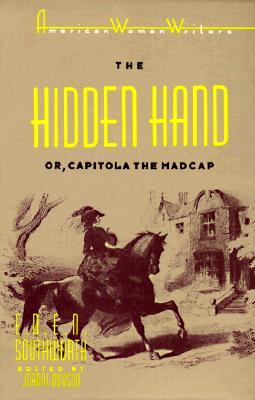
The Hidden Hand or: Capitola the Madcap (E.D.E.N. Southworth, 1859). …I’m not even going to try to summarize this one. It’s my 100th book of the year. Summary here.
Concrete Rose (Angie Thomas, 2021). 17 years before The Hate U Give, Maverick Carter’s life changes in an instant when an old fling reveals he’s the father of her baby. While trying to be a responsible father and a responsible student, he gets the worst possible news: his current girlfriend is pregnant too. As George Lucas has shown us, it’s easy for a prequel to sour the impact of a good story; thankfully, Angie Thomas wrote this, and Concrete Rose improves on The Hate U Give.
Every Young Man’s Battle (Stephen Arterburn and Fred Stoeker, 2002). Sexual temptation is real. That’s the paragraph.
Single, Gay, Christian: A Personal Journey of Faith and Sexual Identity (Gregory Coles, 2017). After years of trying to pray his feelings away, Gregory Coles concluded his attraction to other men wasn’t going away. So he took a vow of celibacy. And now he’s here to answer the question: how does one stay single, gay and Christian?
Thick and Other Essays (Tressie McMillan Cottom, 2019). Maybe it’s because I read Thick within a few weeks of Eloquent Rage, but they feel like the same book. What I have to say about Eloquent Rage is [basically] what I have to say about Thick.
The Jolly Roger Social Club: A True Story of a Killer in Paradise (Nick Foster, 2016). The tranquility of Bocas del Toro, Panama, was shattered by the arrest of William “Wild Bill Cortez” Dathan Holbert after he was linked to five murders. Part crime reporting and half sociology, Nick Foster spends as much time exploring the history of Panama and what about Bocas del Toro enabled Holbert’s crimes as he does Holbert.
Darius the Great Deserves Better (Adib Khorram, 2019). Since returning from Iran, Darius has come out as gay, found his first boyfriend, started an internship he loves, and joined the soccer team. But depression, family tensions, and an especially persistent bully still try to steal his joy. This sequel could have been hot trash, but it wasn’t.
The Regulators (Stephen King, writing under his Richard Bachman pen name, 1996). Gunfire erupts in a suburban Ohio neighborhood. As the landscape rapidly changes and the survivors try to avoid the shooters and strange cartoonish creatures, a young boy wages a one-man war against an unspeakable evil. Stephen King book #12 and Bachman Book #2.
The Field Guide to the North American Teenager (Ben Philippe, 2019). Haitian-French Canadian Norris Kaplan moves with his mother to Austin, Texas. The notebook he’s given on the first day initially serves as a field guide of sorts, but as he lays down roots, it’s almost like it’s a list of reasons to stay. Norris Kaplan is a massive douche, and his massive douchiness prevents TFGTTNAT from being the instant classic it could have been.
The Burning Maze (Rick Riordan, 2018; The Trials of Apollo #3). The stakes of Apollo’s quest step up when he learns of his third and final enemy: Caligula, the most insane and murderous emperor. Worse yet, Apollo and his allies must head into Caligula’s headquarters if they want to continue their quest. This might be the best book Rick Riordan’s written.
So that’s it. 109 books. A lot of them were great, others *cough*Deadline!*cough* were garbage. But props to you, reader, for making it to the end. As reward, ANNOUNCEMENT TIME!
This year, I’ve been half-hearting this book review shindig, posting my reviews to my Instagram story. Half-heart no more: I’m making it official. This is the first promotion for my Bookstagram. Follow me @peachykeenebooks.
And happy new year to all!
 The Keene Chronicles