
I should have known logging every book I read this year would cause problems.
Hi, everyone. It’s been…oh geez, 10 months since I posted. Lot’s happened since then. I experienced a semester that felt like a year, got the COVID vaccine, had a friendship that I tried to spin into a relationship that resulted in both going down in flames, walked in my graduating class’s commencement, and moved into a rental house. But the first noteworthy thing that happened this year was my old admission counselor’s Instagram story. She posted the first book she had read in 2021. I liked the idea so much I decided to join her. Until now, no problem. It’s made for a lot more engagement on my Instagram page: people viewing my stories, DMing me about the books I’ve read and so on.
But of course, it’s never that easy.
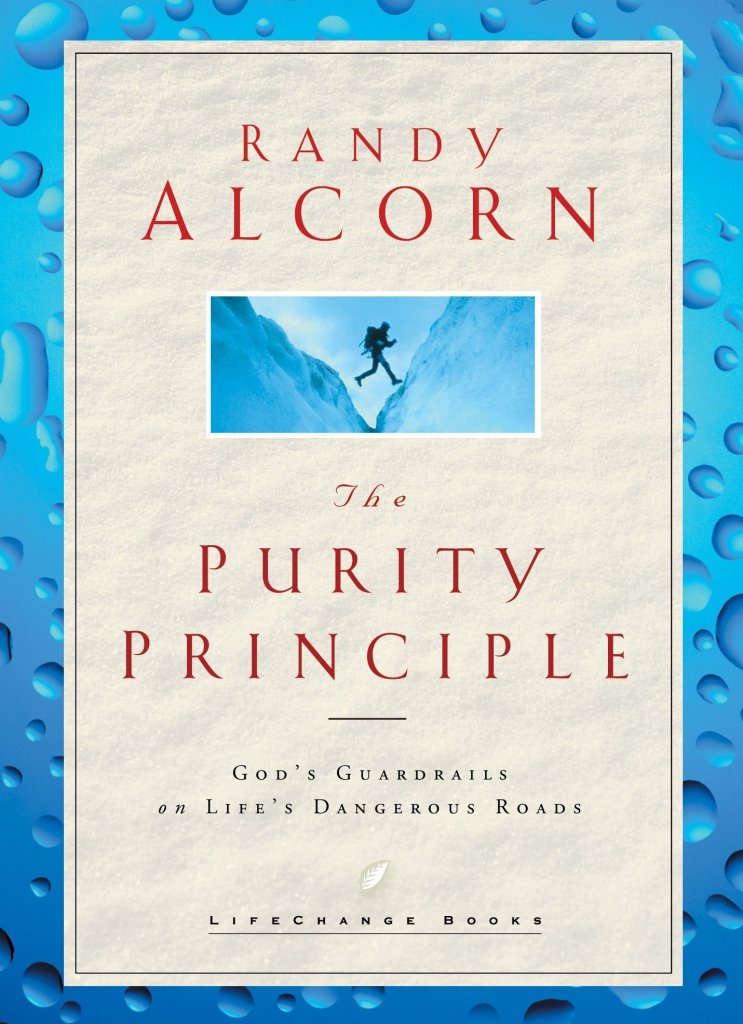
As I’ve worked my way through my reading lists, I saw an obstacle splayed across the metaphorical train tracks. I’m simultaneously working through my paper-and-ink personal library, my e-books, and whatever I can grab from the Grand Rapids library. One day, I finished my current read and went to replace it with the next book from my bookshelf. I saw the next read was Randy Alcorn’s The Purity Principle, a book about–shocker!–sexual purity.
Then I went to Apple Books, where I keep my reading lists, and saw the next book on my reading list was Kutter Callaway’s Breaking the Marriage Idol, a book discussing the pedestal marriage has been put on in the American church.

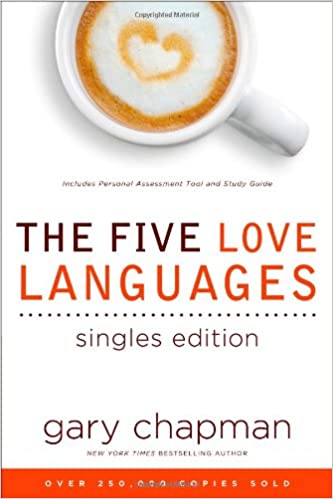
The book after that was Gary Chapman’s The Five Love Languages: Singles Edition.
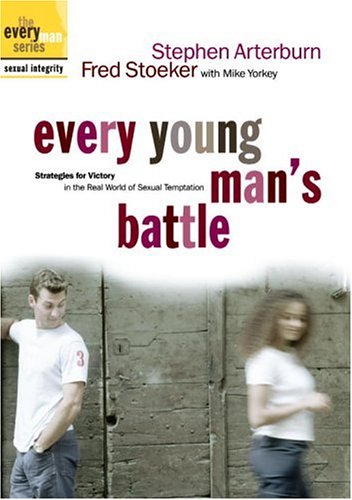
Going back to my bookshelf, I saw down the line Every Man’s Battle and its younger brother Every Young Man’s Battle. Three guesses what they’re about.
Initially, I shrugged it off, thinking, “I haven’t blogged in a minute anyway. I’ll pump out a blog that’s like ‘I’m fine being single, y’all! This is a weird way the cards fell.’ and continue on with chewing through my books.”
Now go back about six paragraphs and four pictures and look for a particular sentence. The one that includes the statement “had a friendship that I tried to spin into a relationship that resulted in both going down in flames.”
So what I’m about to write is a lot of things: life update, grieving personal failures, picking my own brain, critique of the church and society–the list goes on.
The One Where I Ain’t No Doxxer
Now this isn’t the first time I’ve talked about an attempt at a relationship that went the way of the Hindenburg. But this time it’s different. I messed up a good thing. Things are done between “Tracy” and I. Friendship, relationship: FUBAR’d. And it’s unquestionably my fault. But that’s water under the bridge. I can’t undo the stupid things I did to break the trust between “Tracy” and I, and I’ve dedicated enough emotional bandwidth to beating myself up over how it went sour. I’m only bringing it up to highlight that singleness can hurt, yo.
The One Where I Can’t Quite Put My Finger On It
What’s so difficult about being single? The easy answer is human psychology: we want what we can’t have. The soul-rending that comes with rejections, feeling invisible to whoever is your type, being single in a friend group consisting mostly of couples, having all your attempts to start relationships fall on their face, or (in my case) all of the above serve to make the prospect of a relationship like some forbidden fruit you’re desperate to consume. But that’s not the end of it.
Some of it is the human condition. Think back to Genesis. Adam was in community with God in the Garden of Eden, and yet God said, “It is not good for the man to be alone. I will make a helper suitable for him.” (Genesis 2:18, NIV) To end Adam’s loneliness, Eve, the woman, was created. Consider that: community with other people is so important to the human soul that even God cannot check that box. Priests, monks, hermits, nuns–people that dedicate themselves completely to God–still do so in community. One reason singleness hurts as much as it does is because humans weren’t meant to be alone. But that can’t be it, either. After all, most single people, myself included, have friends and family. It’s not like we live in solitary confinement because we’re not seeing anyone.
Maybe it’s a societal thing. Lisa Arnold and Christina Campbell, cofounders of onely.org, wrote an article for The Atlantic laying out ways married people are privileged over single people in modern society. Most of it comes from monetary benefits: it’s easier for couples to buy houses than single people, married people receive more in tax returns than single people, etc. I can come up with non-financial examples: the use of “virgin” and “basement-dweller” as insults, the portrayal of single adults in movies and TV as less mature than their coupled counterparts (see: Barney and Ted in How I Met Your Mother, Josie in Never Been Kissed, and/or any movie with a Manic Pixie Dream Girl) and phrases like “spinster” and “Christmas cake” to describe older single people. That may sound minor, but if you recall, privilege often shows itself as you not having problems that other people do. That’s not the whole picture, either. After all, growing a thick skin can make Xbox trolls and Seth Rogen characters bounce right off.
Maybe it’s a problem with the church. I did read Breaking the Marriage Idol, a book that critiques the church for placing marriage on a pedestal, often at the expense of single members of the church, critiques that were downplayed but also present in The Five Love Languages: Singles Edition. One needs only Google “single people and the church” and receive results with titles like “The Church is failing single people,” “7 reasons why it’s hard to be single in the church,” and “Why Singles Often Give Up on the Church” to realize single people often don’t feel at home in the place that’s supposed to be a weekly reunion for family in Christ. But that’s still only a piece of the pie.
I think it’s a little of all these things, as well as other factors I can’t quite put a name to or find a name on Google that make singleness so hard. Psychology Today introduced me to the idea of “ambiguous loss,” the kind of grief one experiences over a metaphorical loss like ‘losing’ a loved one to dementia or mental illness.
Maybe the reason singleness is so hard is because single people grieve, but they can’t vocalize what they grieve.
The One Where We Can’t Acknowledge a Middle Ground
Post-“Tracy” was far from the first time I got to thinking about being single. In my junior year, frustrations with my love life inspired two documents that together make a 55-page word vomit. In clicking around Google searches as I was writing these documents, I started to notice two distinct camps of thought.
First and more prominent are the doomsayers. These are the people who fit the worst stereotypes of single people. They’re bitter about their romantic unluckiness and ooze jealousy of people in relationships. Some cling to their bitterness so tightly they self-sabotage, screwing up chances at relationships with their relentless negativity and then screaming abuse at whoever ran to avoid getting their head bitten off. For others, that bitterness translates into desperation, resulting in embarrassing DMs on dating apps or critical relationship failure when they spew years of resentment onto someone who was hoping to have a pleasant night with a potential boy- or girlfriend. For others, their resentment translates into fatalism, a shrug and a resigned “what’s the point?” that often dictates their whole life, not only their quest to find Mr. or Mrs. Right. Incels, an Internet movement designated as a hate group by the Anti-Defamation League, are one example of doomsayers. So is the Forever Alone community on Reddit. BuzzFeed asked readers to share the worst messages they’ve received on dating sites, and most of the examples they received reek of desperation borne from bitterness.
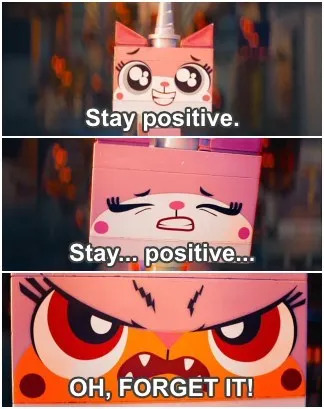
Second and arguably worse are the sugarcoaters. These people are desperate in the opposite way of the doomsayers: if the doomsayers let their bitterness run their lives, the sugarcoaters brush off legitimate grievances and focus on the perks. The perks are typically things like “I have my bed to myself! I’m in control of what I watch on Netflix! I can travel all I want!” (That last one tells me the majority of sugarcoaters have more financial stability than I do.) And while I can understand where they’re coming from, it feels like they’re bottling up their resentment, saying what they’re saying to assure themselves rather than whoever they’re talking to. Whenever I read an article about the perks of being single, I imagine it being written by Unikitty from The LEGO Movie.
Clicking between incel forums full of people who are convinced women are conspiring to make sure they die alone and blog posts written by people I wouldn’t meet in real life without moving sharp objects out of sight, I feel like screaming. After all, while I certainly would like to be in a relationship, I’ve been single my whole life. Meaning that everything good in my life–every achievement I’ve made, going to Calvin, studying abroad, all the friends I’ve made, my faith life–has happened without that special someone by my side. And yet, I feel like we can’t acknowledge that there’s gray in the black and white of singleness. It’s not all bad, nor is it all good.
So why is it hard for culture at large to acknowledge that?
The One Where the Church Has Some Explaining to Do
I’ve lived in the Christian bubble all my life. I have a pastor for a dad and spent my first three educational years homeschooled with Christian curriculum. One of the earliest pictures of me is baby me sitting with other ’99 babies from my home church. I chose to attend a private Christian university, am listening to Travis Greene as I type this paragraph, and am working on a Bible-in-a-year plan. Much like singleness, I can’t critique the Christian bubble without acknowledging most of the good things in my life happened within its confines.
But critique it I will.

The church has dropped the ball when it comes to singleness. But it’s dropped it in the same way a parent who plays favorites has. If you asked a parent who obviously favors one child over another if they were trying to emotionally scar the un-favorite child, they’d probably answer no. They might say they love their children equally or even try to justify the neglect of the second-fiddle kid as tough love. But damage their kids they will.
Similarly, the Christian bubble didn’t mean to send negative messages about singleness to those who occupy it. Purity culture, the evangelical movement centered around staying sexually pure before marriage which was especially powerful in the 1990s, intended to fight back against a sex-saturated culture. It didn’t mean to teach women that they were responsible for men’s sin as well as their own, that their worth lay wholly in their virginity, and that loss of their virginity before marriage, be it through consensual sex or sexual abuse, tainted them. It didn’t mean to instill young women with an overwhelming sense of shame. And it certainly didn’t mean to be motive for a mass shooting that left 8 people, most of them Asian women, dead. Ring by spring culture, the trend at Christian colleges of couples being engaged by spring of senior year, didn’t mean to inspire feelings of anxiety in single students or jealousy of their engaged counterparts. Yet, both of these feelings are rampant in single students at Christian colleges and universities, according to Stacy Keogh George’s research at Baylor University. Churches didn’t mean to make single people feel like second-class citizens, but according to Breaking the Marriage Idol and many of those articles I found, that’s exactly what’s happened.
The One Where We Ask, “So What Now?”
With a typical blog post, I conclude by neatly tying all the disparate threads of thought. I then schedule the post to publish and hope all the little jokes and wordplay are as clever as I thought they were when I wrote them.
I can’t really do that here, mainly because I feel like I’m only scratching the surface of the topic of singleness. So instead, here are…solutions? takeaways? opinions? somethings.
- It’s OK to be single. Tom Cruise lied to you in Jerry Maguire. You don’t need a special someone to be complete. You aren’t broken or defective if you can’t start a relationship. People in relationships aren’t better than you. It’s not some kind of curse from God if your relationship prospects are looking bleak. It’s. OK. To. Be. Single.
- Church, you need to convey it’s OK to be single. Like I said earlier, the church hasn’t meant to send negative messages about singleness. But it has, sometimes with horrible outcomes. So, the church needs to start teaching a holy way to be single. I don’t imagine that this transition will be difficult: after all, two of the most important figures in the Gospel were single.
- Single people need support spaces, not a dating pool. This is speaking to the religious and secular worlds alike. Too often, spaces specifically for single people is either formed or treated like a “get them married” club. Now granted, some people enter these spaces with that goal. Some, not all. Others want support, someone who can clap them on the shoulder and say, “I’ve been/am where you are, buddy. I’m here for ya.” And for the latter, it can be a special kind of discouraging to have a friend or a relative or a group leader shove a stranger at them and say, “You two are perfect for one another!” To paraphrase Captain America: “Secure my emotional health, then find me a date.”
- Stop romanticizing platonic friendships. Men and women can be friends. Similarly, men don’t need to be attracted to other men to want deep, emotionally intimate relationships with other men. In a perfect world, Cap and Bucky resonate due to realism, not idealism. (Two Captain America examples one after the another. Interesting…)
- Don’t settle. If you’ve been single, and especially if you’re feeling like the cosmos are dropping relationships into everyone’s laps except yours, it can be tempting to throw yourself at the first person who shows interest. Besides that falling under that desperation I mentioned earlier, a wise man once told me the fail state of a relationship isn’t “single,” it’s “misery.” Ask anyone who’s been in a toxic or abusive relationship. The worst kind of alone is when you feel alone in union. As a wise woman quoting a wise rapper once said, “The grass isn’t greener on the other side, it’s greener where you water it.” (Thank my friend Haley for that nugget of wisdom; follow her on Instagram @ha.le.s–she’s cool.)
Not since The Lost Stories of Spain have I itched to write a sequel to a blog post; I haven’t come anything close to putting down every thought I have on singleness. But that’s for another day.
To my single people: you’re OK. You’re OK if you get into a relationship tomorrow. You’re OK if you don’t have a relationship ever. You’re OK if you screw the pooch with your “Tracy.” You’re OK if you are a “Tracy” and had someone who seemed cool…not be. You’re OK if you’re recovering from an abusive or toxic relationship.
We are OK.
 The Keene Chronicles
Pingback: 100+ Books. 3 Sentences. | The Keene Chronicles
Pingback: Idols | The Keene Chronicles